
How Design-Based Information Signals Influence Consumers’ Acceptance of Sustainable Materials
Abstract
Background With the growing diffusion of green consumption values, sustainable materials are increasingly becoming a central direction in product design. However, persistent consumer skepticism regarding their performance stability, environmental authenticity, and long-term reliability remains a critical barrier to market acceptance. How visual and informational signals can be strategically designed to reconstruct consumer trust has therefore emerged as a key challenge in sustainable innovation.
Methods Drawing on trust–risk theory and the unified theory of acceptance and use of technology 2 (UTAUT2) framework, this study develops an integrated research model to examine the psychological mechanisms underlying consumer acceptance of sustainable materials. A scenario-based image questionnaire was employed to collect 402 valid responses, and the hypotheses were tested using structural equation modeling (SEM) and multi-group analysis (MGA).
Results The results indicate that perceived risk significantly weakens consumers’ trust in sustainable materials, whereas external information signals, such as environmental certification labels, effectively enhance trust and mitigate the negative effects of perceived risk. Once trust is established, consumers are more likely to develop positive performance expectancy, which subsequently translates into stronger adoption intention. Furthermore, the multi-group analysis demonstrates that the presence of certification labels significantly attenuates the negative impact of perceived risk on trust formation.
Conclusions From an interdisciplinary perspective integrating design studies and consumer behavior, this research reveals the psychological mechanisms underlying the adoption of sustainable materials and highlights the crucial role of design-mediated information signals in bridging the consumer trust gap. The findings not only enrich theoretical discussions on sustainable consumption and design research but also provide practical implications for the information design and certification labeling of sustainable products.
Keywords:
Sustainable Materials, Perceived Risk, Material Trust, UTAUT2, Trust Repair Mechanism, Environmental Certification1. Introduction
1. 1. Research Background
Driven by the United Nations Sustainable Development Goals (SDGs) and the Paris Agreement, governments, industries, and consumers are increasingly seeking ways to decouple economic growth from environmental degradation. Within this context, innovations in sustainable materials, including biodegradable plastics, recycled composites, bamboo fibers, and bio-based polymers, are widely regarded as key pillars of the green transition [1]. These materials contribute to reducing waste generation, lowering carbon emissions, and improving resource circulation efficiency. However, despite increasing technological maturity and continuous policy support, consumer adoption remains relatively slow [2].
According to the United Nations Environment Programme (UNEP), the global economy currently operates with a circularity rate of less than 10%, meaning that more than 90% of material flows still follow a linear “take–make–dispose” pattern. The Organisation for Economic Co-operation and Development (OECD) also reports that the proportion of materials recycled or reused within global value chains remains extremely limited, indicating that the bottleneck lies not only in the production sector but also in consumer acceptance [3]. A global consumer survey conducted by PwC (2024) further shows that although 79% of consumers claim to value sustainable consumption, fewer than 30% regularly purchase sustainable products [4]. This gap between environmental awareness and actual purchasing behavior represents a persistent challenge in the global transition toward sustainability [5], [6].
Behavioral science research suggests that this gap originates primarily from psychological factors rather than economic constraints. Consumers often experience cognitive tension between environmental values and risk perception. While they recognize the environmental benefits of sustainable materials, they may question their safety, durability, and reliability [7]. For example, consumers may wonder whether recycled plastics are hygienic, whether biodegradable packaging can adequately protect products, or whether plant-based textiles are sufficiently durable. A survey conducted by McKinsey & Company found that nearly two-thirds of U.S. consumers are uncertain about which packaging materials are actually recyclable, while 43% of respondents are skeptical of brands’ environmental claims. This phenomenon, often referred to as the trust gap, can hinder purchasing behavior even among environmentally conscious consumers [8].
From an academic perspective, existing research on sustainable consumption has largely adopted attitude-oriented frameworks, such as the Theory of Planned Behavior (TPB) or the Value–Belief–Norm (VBN) model, which mainly focus on how environmental attitudes, social norms, and moral responsibility influence behavioral intentions [9]. Meanwhile, the Technology Acceptance Model (TAM) explains the adoption of new technologies and products by emphasizing the influence of perceived usefulness and perceived ease of use on behavioral intention [5]. However, in many studies, trust is treated merely as a subsidiary attribute of brands rather than as a dynamically constructed psychological process [10], [11], [12]. This perspective makes it difficult to explain why environmentally friendly materials with strong technical performance still struggle to achieve widespread social adoption.
At the same time, research in risk communication and behavioral economics suggests that trust functions as a form of psychological currency in sustainable consumption [13]. When consumers perceive risk, uncertainty, or information asymmetry, they tend to rely more on subjective trust rather than objective product performance when making decisions. Trust therefore reduces uncertainty and serves as a psychological shortcut that facilitates action [13]. When consumers cannot directly verify product performance, they often rely on external informational cues to guide their judgments, such as product color, material appearance, or other recognizable indicators. These cues can help consumers interpret product attributes and reduce decision uncertainty to some extent [3], [8]. In practical consumption scenarios, such information is commonly presented through product packaging, labels, or material descriptions, forming the first interface through which consumers encounter product-related information.
From a design research perspective, these elements do not merely communicate product attributes; they can also function as design-based information signals. By presenting material-related information through the product interface, such signals may influence consumers’ judgments regarding material reliability.
Against this background, this study argues that the successful promotion of sustainable materials depends not only on the maturity of technological innovation but also on the mechanisms through which consumer trust is established and maintained. Only by revealing how perceived risk and trust formation jointly influence consumer behavioral intention, and by examining the role of external design signals such as certification labels in the process of trust repair, can the gap between pro-environmental attitudes and actual behavior be effectively reduced. Based on this perspective, the present study systematically analyzes the psychological decision-making process of consumers when evaluating sustainable materials, focusing on the relationships among perceived risk, trust formation, and adoption intention. The study aims to clarify how trust influences consumer decision-making at the psychological level and to provide practical insights for policymakers, companies, and designers, thereby promoting the broader social acceptance and application of sustainable materials.
1. 2. Research Objectives and Research Questions
This study aims to explore the psychological decision-making process of consumers when encountering products made from sustainable materials. Specifically, it examines how perceived risk, trust formation, and performance expectancy jointly influence consumers’ adoption intention, and further investigates the role of design-based information signals, such as certification labels, within this process.
Based on this objective, the study proposes the following research questions:
RQ1: How does consumers’ perceived risk influence the formation of trust in sustainable materials?
RQ2: What role do external information signals, such as certification labels, play in the process through which consumers develop trust in sustainable materials?
RQ3: How does consumers’ trust in sustainable materials further influence their performance expectancy and adoption intention?
2. Theoretical Background
2. 1. Trust–Risk Theory (TRI) and the Adoption Mechanism of Sustainable Materials
Research on Trust–Risk Theory (TRI) originated in the fields of organizational behavior and social psychology and is primarily used to explain individual decision-making under conditions of uncertainty. Das and Teng argued that risk and trust are two closely related factors in cooperative relationships, suggesting that when individuals face higher levels of uncertainty, their decisions tend to rely more heavily on trust mechanisms [14]. Subsequently, Gefen et al. introduced the risk–trust relationship into electronic commerce research, indicating that when consumers lack direct experience or sufficient information, they often rely on trust to reduce perceived risk and guide their consumption decisions [15]. Since then, the relationship between trust and risk has been widely applied in studies of online consumption, financial technology, and new product adoption, helping to explain consumer behavior when facing uncertain products or services. Within this analytical framework, perceived risk and trust are commonly regarded as key psychological variables influencing consumer decision-making.
In consumer research, perceived risk is generally defined as consumers’ subjective assessment of the potential negative consequences associated with a product, whereas trust is considered a critical psychological mechanism for reducing such uncertainty [16]. Previous studies have shown that when consumers perceive higher levels of risk regarding a product or technology, their level of trust tends to decrease, thereby influencing adoption behavior [7]. This risk–trust relationship is particularly evident in the context of sustainable material products. Because recycled materials, bio-based materials, or biodegradable materials often lack widespread market familiarity, consumers may find it difficult to directly evaluate their safety or performance, which increases the likelihood of perceived risk [16].
Therefore, in the context of sustainable material consumption, consumers often need to balance risk evaluation and trust formation. Under such circumstances, external informational cues play an important role in facilitating trust formation. Existing studies suggest that when consumers lack direct experience, cues such as product appearance, form, third-party verification, or authoritative endorsement can serve as credible signals that help consumers assess product quality and reduce uncertainty [3], [8]. In research on green consumption, such signals are considered capable of repairing or reinforcing consumer trust, thereby influencing decision-making behavior.
Accordingly, within the trust–risk framework, perceived risk, trust formation, and trust repair mechanisms are regarded as key factors in understanding consumer decision-making. Based on this theoretical perspective, the present study focuses on three main variables—perceived risk (PR), material trust (MT), and the trust repair mechanism (TRM)—to explain the process of trust formation when consumers evaluate products made from sustainable materials.
2. 2. The UTAUT2 Model and Consumer Adoption Motivation
The Unified Theory of Acceptance and Use of Technology 2 (UTAUT2) was proposed by Venkatesh et al. as an extension of the original Unified Theory of Acceptance and Use of Technology of Technology (UTAUT) framework [17]. The model integrates several major technology adoption theories and is widely used to explain individuals’ acceptance and usage behaviors when encountering new technologies or innovative products. Compared with earlier technology adoption models, UTAUT2 places greater emphasis on behavioral mechanisms within consumer contexts, and it has therefore been widely applied in research on information technology, digital services, and innovative product consumption [18].
Within the UTAUT2 framework, performance expectancy and behavioral intention are regarded as key constructs for explaining consumer adoption behavior. Performance expectancy refers to the degree to which individuals believe that using a particular technology or product will provide functional benefits or performance gains, whereas behavioral intention represents an individual’s subjective tendency to use or select the product in the future [19]. Previous studies have shown that when consumers perceive a product as providing strong functional value or effectively meeting their practical needs, their adoption intention tends to increase significantly [20]. Therefore, performance expectancy is generally considered an important antecedent of behavioral intention.
In the context of sustainable material products, once consumers establish a certain level of trust, they often proceed to evaluate whether the material can deliver sufficient performance. For instance, consumers may consider whether environmentally friendly materials demonstrate adequate durability, functionality, or usability. Consequently, consumers’ expectations regarding product performance may further influence their adoption intention. Based on this theoretical perspective, the present study focuses on performance expectancy and behavioral intention within the UTAUT2 framework to explain how consumers translate their evaluations of sustainable material product performance into adoption intention.
2. 3. Integrating Trust–Risk Theory and UTAUT2: A Psychological Pathway for Sustainable Material Adoption
Although the Trust–Risk framework (TRI) effectively explains how consumers form trust judgments under conditions of uncertainty, it primarily focuses on the relationship between perceived risk and trust, offering limited insight into how these psychological processes ultimately translate into consumer adoption behavior [14], [15]. In studies of sustainable consumption, TRI has typically been employed to analyze how consumers balance perceived risks and trust when evaluating environmentally related products. However, relatively few studies have further examined how trust subsequently transforms into concrete consumption behavior [7]. Consequently, relying solely on the trust–risk perspective makes it difficult to fully explain the behavioral decision-making mechanisms involved in the adoption of sustainable material products.
At the same time, although the UTAUT2 model provides a powerful framework for explaining consumer adoption behavior, it primarily focuses on how individuals develop behavioral intention based on perceived product value or expected usage benefits [21]. In the context of new products or emerging technologies, UTAUT2 is often used to explain how consumers form adoption intentions through evaluations of functional value and performance outcomes [17]. However, in the case of products made from sustainable materials, consumers are often confronted first with questions regarding material safety and reliability, that is, whether the material itself can be trusted. Therefore, if risk perception and trust mechanisms are ignored, and consumer behavior is explained solely through functional evaluation, the resulting analysis may still fail to capture the full complexity of the decision-making process.
In response to these theoretical limitations, the present study integrates Trust–Risk Theory (TRI) with the UTAUT2 model to construct a comprehensive analytical framework for understanding consumer decision-making in the context of sustainable materials. Within this framework, TRI is employed to explain how consumers initially form judgments about sustainable materials through the interaction between perceived risk and trust, whereas UTAUT2 is used to explain how these trust judgments subsequently influence consumers’ performance expectancy regarding the product and ultimately translate into behavioral intention. Accordingly, this study incorporates perceived risk, material trust, and the trust repair mechanism, together with performance expectancy and behavioral intention, into a unified analytical framework in order to reveal the psychological decision pathway through which consumers move from risk perception to behavioral intention when evaluating products made from sustainable materials.
Based on the above theoretical reasoning, the following hypotheses are proposed (see Figure 1):
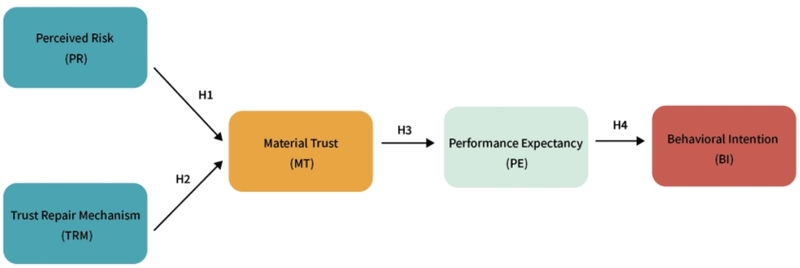
Hypothesized Research Model
H1: Perceived risk has a significant negative effect on material trust.
H2: The trust repair mechanism has a significant positive effect on material trust.
H3: Material trust has a significant positive effect on performance expectancy.
H4: Performance expectancy has a significant positive effect on behavioral intention.
3. Research Design
3. 1. Research Subjects and Sample Sources
This study focuses on urban consumers in China as the target population, and data were collected through an online questionnaire platform. Considering that consumer awareness and purchasing behavior related to sustainable material products are often associated with urban development level and purchasing power, the survey primarily targeted residents in first-tier and second-tier Chinese cities. First-tier cities included Beijing, Shanghai, Guangzhou, and Shenzhen, while second-tier cities included economically developed urban areas with relatively strong consumption capacity, such as Hangzhou, Nanjing, Chengdu, Wuhan, Chongqing, and Xi’an. The questionnaire was randomly distributed through an online platform and further disseminated through social media channels to increase sample diversity. Participation was entirely voluntary, and all respondents were required to read a research information statement and confirm informed consent before entering the questionnaire.
To ensure data quality, several screening criteria were implemented. Respondents were required to be urban residents aged 18 years or older and to possess a basic level of awareness regarding environmentally friendly products. Screening questions were therefore included, such as: “Have you ever paid attention to or learned about environmentally friendly or sustainable products?” and “Have you purchased environmentally friendly or sustainable products in the past year?” Only respondents who answered “Yes” or “Occasionally” were allowed to proceed to the main questionnaire. In this study, environmentally friendly or sustainable products were defined as products that demonstrate environmental benefits in their material sourcing, production process, or usage stage, including products made from recycled materials, biodegradable materials, or naturally renewable materials. To further enhance data quality, response time thresholds and logical consistency checks were applied to eliminate invalid responses. For example, a minimum completion time was set, and questionnaires displaying obvious logical inconsistencies were removed from the dataset.
Data collection was conducted between February and September 2025. The questionnaire was initially developed in Chinese and subsequently translated into English for academic reporting and manuscript preparation. The translation was carried out by two bilingual researchers with backgrounds in design research, and a back-translation procedure was employed to ensure semantic accuracy. Prior to the formal survey, the questionnaire items were reviewed and refined through expert evaluation and a pilot test to ensure clarity and contextual relevance for evaluating sustainable material products. The expert review involved three scholars specializing in sustainable product design and consumer behavior research, who provided suggestions for improving the questionnaire structure and variable descriptions. A pilot test (N = 50) was then conducted among urban consumers familiar with environmentally friendly products. Based on the feedback obtained, minor revisions were made to the wording of several items and the descriptions accompanying the images. The pilot test results indicated that the Cronbach’s α values for all latent constructs exceeded 0.80, suggesting that the measurement scales demonstrated good internal consistency.
3. 2. Measurement Instruments and Variable Construction
This study adopts Trust–Risk Theory (TRI) as the primary theoretical framework and incorporates adoption-related constructs from the Unified Theory of Acceptance and Use of Technology 2 (UTAUT2) to develop the research model. Based on theoretical analysis and the research context, five core latent variables were selected: perceived risk (PR), material trust (MT), trust repair mechanism (TRM), performance expectancy (PE), and behavioral intention (BI).
The measurement items for each construct were adapted from established and widely recognized scales and were semantically adjusted to fit the context of sustainable material products, ensuring conceptual alignment and contextual relevance. Specifically, the measures for perceived risk, material trust, and trust repair mechanism were primarily adapted from the studies of Featherman and Pavlou [22], Gefen et al., and Camilleri et al. [7], [15], while the measures for performance expectancy and behavioral intention were derived from the UTAUT2 framework [20], [23]. All items were assessed using a five-point Likert scale, ranging from 1 = strongly disagree to 5 = strongly agree.
In the formal survey, a 3 (material type: recycled plastic, biodegradable plastic, bamboo fiber) × 2 (external signal condition: certification vs. no certification) between-subject experimental design was implemented (see Figures 1–3). When respondents entered the second section of the questionnaire, the system automatically and randomly assigned them to one of the experimental conditions. Each participant was exposed to only one product image corresponding to the assigned condition. All images depicted brand-neutral products, with consistent backgrounds, lighting conditions, and photographic angles. The only variation across images was the presence or absence of a certification label. In the certification condition, the product image included a certification icon accompanied by the statement: “This product has been certified through third-party testing.” In the non-certification condition, this information was removed. Each image was accompanied by approximately 50 words of neutral descriptive text, which briefly described the material source and functional characteristics of the product. Apart from the certification cue, the textual content remained identical across conditions. This single-image presentation combined with random system assignment ensured that the certification label functioned as the sole external signal variable, thereby minimizing potential order effects or cognitive interference that could arise from comparing multiple images and maintaining strict experimental control.
The questionnaire consisted of four sections. The first section included screening and single-choice questions (see Table 1) designed to verify respondents’ experience with environmentally friendly products. The second section presented the scenario-based stimulus images (see Figures 2–4). The third section contained the main measurement scales (see Table 2), and the fourth section collected demographic information. The average completion time for the questionnaire was approximately 10 minutes. To ensure that respondents adequately processed the stimulus information, the image display page required a minimum viewing time of 8 seconds. All participants took part in the study on the basis of informed consent, and the entire process of data collection and analysis strictly adhered to anonymity and academic research ethics.

Respondent Background Information and Screening Questions
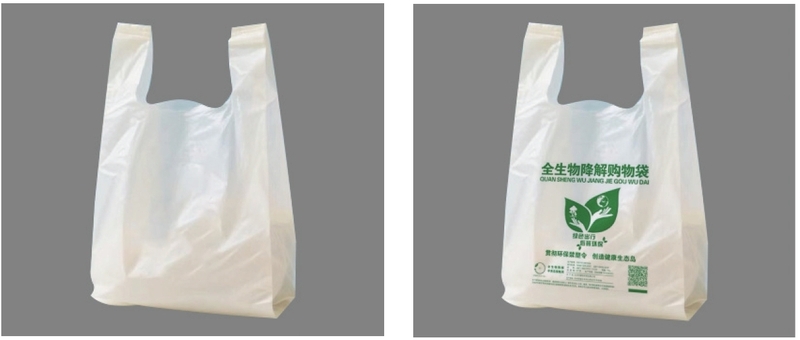
Recycled Plastic Products (Without Certification vs. With Certification)
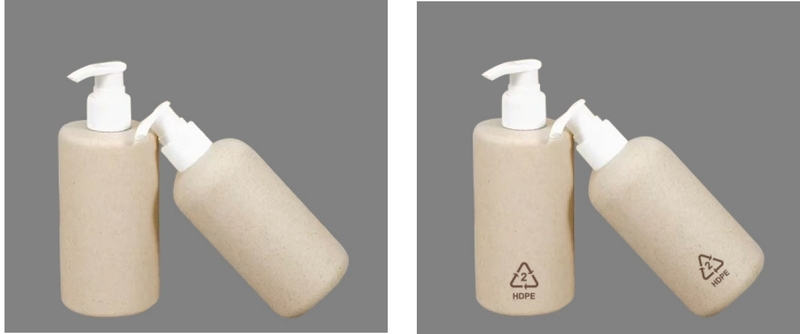
Biodegradable Plastic Products (Without Certification vs. With Certification)
Questionnaire Design and Measurement of Variables
The questionnaire items were refined through two rounds of expert review and pilot testing, ensuring clarity, semantic accuracy, and comprehensibility among respondents with diverse backgrounds. The pilot test results indicated that the Cronbach’s α values for all items exceeded 0.80, suggesting that the measurement scales demonstrated good internal consistency. Table 2 presents the definitions, abbreviations, and measurement items for the five latent variables used in this study.
3. 3. Data Analysis Methods and Modeling Strategy
This study adopts a quantitative empirical approach and employs descriptive statistical analysis, Confirmatory Factor Analysis (CFA), and Structural Equation Modeling (SEM) to test the proposed hypotheses. All statistical analyses were conducted using SPSS 27.0 and AMOS 26.0. First, reliability analysis, along with Kaiser–Meyer–Olkin (KMO) and Bartlett’s test of sphericity, was performed to examine the internal consistency of the measurement scales and the suitability of the data for factor analysis. Subsequently, Confirmatory Factor Analysis (CFA) was conducted to assess the convergent validity and discriminant validity of the measurement model. Model fit was evaluated using commonly accepted indices, including χ²/df, the Comparative Fit Index (CFI), the Tucker–Lewis Index (TLI), the Root Mean Square Error of Approximation (RMSEA), and the Standardized Root Mean Square Residual (SRMR).
In the structural model stage, the Maximum Likelihood Estimation (MLE) method was used to estimate the path coefficients and to examine the effects of perceived risk, trust repair mechanism, material trust, and performance expectancy on behavioral intention. To further explore the moderating role of certification labels, a Multi-Group Structural Equation Modeling (MGSEM) analysis was conducted to compare path differences between the certification group and the non-certification group. All statistical significance tests were evaluated at p < 0.05, ensuring the statistical robustness of the model results.
To further assess discriminant validity among the latent constructs, correlation coefficients between the constructs were calculated, and the square roots of the Average Variance Extracted (AVE) were compared with the inter-construct correlations. Additionally, Composite Reliability (CR) and AVE values were computed to evaluate the convergent validity of the measurement model. Considering the potential risk of common method bias associated with questionnaire-based data, this study conducted Harman’s single-factor test to provide a preliminary assessment of such bias. The results indicated that the single factor accounted for 38.6% of the total variance, which is below the commonly accepted threshold of 50%, suggesting that common method bias was not a significant concern in this study.
Further analysis showed that the CR and AVE values for all latent constructs met the recommended standards, and the square roots of the AVE values exceeded the correlations among constructs, indicating good discriminant validity. Through these analytical procedures, both the measurement model and the structural model were systematically evaluated, thereby providing a reliable statistical foundation for the subsequent hypothesis testing.
4. Results
4. 1. Sample Characteristics and Measurement Model Assessment
A total of 520 questionnaires were distributed in this study, of which 463 responses were returned. After data screening, 402 valid questionnaires were retained, yielding a valid response rate of 77.3%. The final sample size exceeded the minimum requirement for Structural Equation Modeling (SEM), which typically recommends a sample size greater than ten times the number of measurement items, thereby ensuring the stability of parameter estimation and adequate statistical power.
Most respondents were from first-tier and second-tier cities in China, accounting for 76.1% of the total sample. The sample primarily consisted of young and middle-aged urban consumers. In terms of education level, 73.6% of respondents held a bachelor’s degree or higher. Regarding income distribution, 63.2% of respondents reported a monthly income above RMB 6,000, indicating that the sample generally possessed relatively high educational attainment and purchasing power. Consequently, the sample can be considered broadly representative of urban consumers with potential for sustainable consumption. The demographic characteristics of the sample are presented in Table 3.
Demographic Characteristics of Respondents(N = 402)
During the data-cleaning stage, responses with abnormally short completion times (<90 seconds), zero standard deviation across items, or missing values exceeding 20% were removed. All observed variables passed the normality test, with skewness ranging from −0.81 to 0.89 and kurtosis ranging from −1.12 to 1.27, satisfying the assumption of multivariate normal distribution required for SEM analysis.
The reliability analysis indicated that the Cronbach’s α values of the latent constructs ranged from 0.834 to 0.918, with an overall reliability coefficient of 0.887, all exceeding the recommended threshold of 0.70, suggesting good internal consistency of the measurement scales. The KMO value was 0.914, and Bartlett’s test of sphericity was significant (χ² = 2478.63, p < 0.001), indicating strong correlations among the variables and confirming that the data were suitable for factor analysis. The results of the reliability and validity assessments are shown in Table 4.
Reliability and Validity Assessment of the Measurement Model
Confirmatory Factor Analysis (CFA) further verified the structural validity of the measurement model. The model fit indices all met the recommended thresholds (χ²/df = 2.47, CFI = 0.961, TLI = 0.953, RMSEA = 0.046, SRMR = 0.039), indicating a good fit between the measurement model and the sample data. The Average Variance Extracted (AVE) values of all latent constructs exceeded 0.50, and the square roots of the AVE values were greater than the correlations between constructs, confirming good discriminant validity.
Overall, the results indicate that the sample size is adequate, the measurement model demonstrates satisfactory reliability and validity, the model fit is acceptable, and the data distribution meets the assumptions required for SEM analysis. These findings provide a robust statistical foundation for the subsequent structural path analysis.
4. 2. Descriptive Statistics and Correlation Analysis
Following the reliability and validity assessment of the measurement scales, this study further conducted descriptive statistical analysis and correlation analysis to examine the overall tendencies of the latent variables and their interrelationships. The results are presented in Table 5. All variables were measured using a five-point Likert scale. The mean values ranged from 3.42 to 4.18, while the standard deviations ranged from 0.63 to 0.82, indicating that respondents generally held positive attitudes toward sustainable materials, with a moderate level of dispersion across the dimensions, suggesting good discriminant capability among the constructs.
Means, Standard Deviations, and Correlation Matrix of Latent Variables(N = 402)
From the overall distribution, behavioral intention (BI) exhibited the highest mean value (M = 4.18), indicating that most consumers hold a positive intention toward adopting sustainable materials in the future. In contrast, perceived risk (PR) had a relatively lower mean (M = 3.42), suggesting that some respondents still harbor concerns regarding the safety and durability of environmentally friendly materials.
The correlation matrix further shows that perceived risk is significantly negatively correlated with all other variables (r = -0.27 to -0.44, p < 0.01), indicating that risk perception plays a notable inhibitory role in the adoption of sustainable materials. In addition, the correlation between material trust (MT) and behavioral intention (BI) is relatively strong (r = 0.61, p < 0.01), suggesting that trust is a critical psychological factor influencing consumers’ adoption intentions.
Furthermore, the trust repair mechanism (TRM) is significantly positively correlated with both material trust (MT) and performance expectancy (PE) (r = 0.49 and 0.43, p < 0.01, respectively). This finding indicates that external informational signals, such as authoritative certification or environmental labels, can enhance consumers’ trust in sustainable materials and subsequently strengthen their positive expectations regarding product performance.
Overall, the directions of the correlations among the latent variables are consistent with the theoretical expectations, and the highest correlation coefficient does not exceed 0.70, indicating that severe multicollinearity is not present. In addition, the square roots of the AVE values for all constructs exceed their inter-construct correlations, further supporting the discriminant validity of the measurement model. Therefore, the variables in this study demonstrate satisfactory statistical distinctiveness and theoretical consistency, providing a reliable foundation for the subsequent Structural Equation Modeling (SEM) analysis.
4. 3. Structural Equation Modeling Path Analysis and Indirect Effects
After completing the reliability, validity, and correlation analyses, this study further employed Structural Equation Modeling (SEM) to test the hypothesized paths (see Table 6). The analysis was conducted using AMOS 26.0 with the Maximum Likelihood Estimation (MLE) method. The model fit indices indicate that the overall model fit is satisfactory, with all indicators meeting the recommended thresholds, suggesting that the structural model fits the sample data well.
Model Fit Indices of the Structural Equation Model
The results of the structural path analysis are presented in Table 7. All four hypotheses were supported, confirming the proposed psychological mechanism underlying consumer adoption of sustainable materials.
Path Coefficients and Significance Tests of the Structural Equation Model
The path results show that perceived risk has a significant negative effect on material trust (β = −0.42, p < 0.001). This suggests that when consumers perceive uncertainties regarding the safety, reliability, or durability of sustainable materials, their trust in such materials decreases substantially. This finding indicates that risk perception remains a major psychological barrier to the adoption of sustainable materials.
In contrast, the trust repair mechanism exerts a significant positive effect on material trust (β = 0.34, p < 0.001). This result indicates that when consumers encounter authoritative certifications, environmental labels, or other credible information sources, their level of trust in sustainable materials increases significantly. The finding highlights the role of external informational signals in repairing trust under conditions of information asymmetry and reducing consumer uncertainty.
Further analysis reveals that material trust has a significant positive effect on performance expectancy (β = 0.48, p < 0.001). This suggests that once consumers establish a basic level of trust in sustainable materials, they are more likely to form positive expectations regarding product performance, such as believing that the material can meet practical needs in terms of durability, functionality, or usability.
At the behavioral conversion stage, performance expectancy has a significant positive effect on behavioral intention (β = 0.36, p < 0.001). This finding indicates that when consumers recognize the functional value and performance benefits of sustainable materials, they are more likely to develop an intention to purchase or use products made from such materials.
To further examine the mediating effects, a bootstrap resampling analysis (5,000 samples) was conducted. The results are shown in Table 8, where all 95% confidence intervals do not include zero, indicating that the mediation effects are statistically significant.
Results of the Mediation Effect Test (Bootstrap = 5000, 95% CI)
The mediation analysis indicates that:
(1)Perceived risk indirectly weakens behavioral intention by reducing material trust, which subsequently lowers performance expectancy.
(2)The trust repair mechanism indirectly enhances behavioral intention by strengthening material trust, which in turn increases performance expectancy.
(3)Material trust indirectly promotes behavioral intention through performance expectancy, indicating that consumers’ trust in sustainable materials plays a key role in shaping their expectations of product performance.
Overall, the findings reveal a critical psychological pathway underlying consumer adoption of sustainable materials. Consumers first evaluate the risk level associated with the material, and this risk assessment directly influences the formation of trust. Once trust is established, consumers are more likely to develop positive expectations regarding the material’s performance, which ultimately translates into behavioral intention.
These findings suggest that in the design of sustainable product packaging, information visualization, and certification labeling, effectively presenting credible informational signals may help strengthen consumers’ initial trust judgments, thereby facilitating the broader social acceptance and adoption of sustainable materials.
4. 4. External Design Signal Intervention and Group Difference Analysis (MGSEM)
To further examine the role of external design signals in the adoption of sustainable materials, this study conducted a Multi-Group Structural Equation Modeling (MGSEM) analysis based on whether the product image included an environmental certification label. The sample was divided into a certification-label group (n = 204) and a non-label group (n = 198) according to the stimulus images presented in the questionnaire. No significant differences were found between the two groups in terms of gender, age, or educational background (p > 0.05), indicating that the samples were comparable.
Before conducting path comparisons, it was necessary to verify measurement invariance across the two groups to ensure the comparability of results. Three levels of invariance were tested: configural invariance, metric invariance, and scalar invariance. The results are presented in Table 9. All models demonstrated acceptable fit indices (CFI > 0.90, RMSEA < 0.08), and the change in CFI (ΔCFI = 0.004 < 0.01) was within the recommended threshold, indicating that the measurement structure remained stable across groups and that cross-group comparisons were appropriate.
Measurement Invariance Testing Results of the Multi-Group Structural Equation Model
After establishing measurement invariance, the key structural paths were compared across the two groups (see Table 10). The results indicate that some core paths differ significantly across design conditions.
Comparison of Path Coefficients Between Label Conditions
The results show that the presence of certification labels significantly weakens the negative impact of perceived risk on material trust (Δβ = 0.16, p < 0.05). This indicates that when authoritative certification information is available, consumers’ concerns regarding the safety and reliability of sustainable materials are substantially reduced, making it easier for them to develop trust.
At the same time, the positive effect of the trust repair mechanism on material trust is stronger in the certification-label group (β₁ = 0.41 vs. β₂ = 0.26, p < 0.05). This finding suggests that when product interfaces clearly present certification information, consumers are more likely to interpret such information as credible signals, thereby strengthening the process of trust formation.
In contrast, the remaining structural paths—such as material trust → performance expectancy and performance expectancy → behavioral intention—do not show significant differences between the two groups. This indicates that design signal interventions primarily influence the early stages of consumers’ psychological decision-making processes, particularly in the phases of risk reduction and trust formation, while their impact on later stages involving functional evaluation and behavioral decision-making appears relatively limited.
In other words, certification labels do not directly alter consumers’ evaluations of product performance. Instead, they reduce uncertainty and enhance perceived credibility, enabling consumers to overcome the initial trust barrier associated with sustainable materials.
Overall, the MGSEM results demonstrate that certification labels, as visual design signals, significantly influence consumers’ risk assessment and trust formation when evaluating sustainable material products. When products provide clear and credible certification information, consumers are more likely to reduce their uncertainty regarding new materials, establish basic trust, and subsequently develop stronger adoption intentions.
This finding provides important implications for the design of sustainable product packaging, information visualization, and certification labeling. By effectively presenting credible informational signals within the product interface, designers can significantly enhance consumers’ trust during the early stages of decision-making, thereby promoting the broader social acceptance and diffusion of sustainable materials.
4. 5. Summary of Results and Hypothesis Verification
To systematically present the key findings of this study, Table 11 summarizes the results of the hypothesis testing. Overall, the model demonstrates good fit, and both the direction and significance of the structural paths are consistent with the theoretical expectations. These findings indicate that the proposed trust-driven adoption model of sustainable materials possesses strong explanatory and predictive power.
Summary of Hypothesis Testing Results
Figure 4 illustrates the psychological structural model underlying consumers’ adoption of sustainable materials. The model positions material trust as the central construct, linking several key psychological stages, including risk perception, product performance evaluation, and behavioral intention, thereby highlighting the pivotal role of trust in consumer decision-making.

Bamboo Fiber Products (Without Certification vs. With Certification)
The results indicate that perceived risk significantly reduces material trust, whereas the trust repair mechanism significantly enhances material trust. This finding suggests that when consumers encounter novel environmentally friendly materials, they first focus on issues related to safety and reliability, and they tend to rely on external informational signals, such as certification labels, to reduce uncertainty. Furthermore, material trust significantly increases consumers’ performance expectancy, and performance expectancy subsequently promotes behavioral intention. These results suggest that consumers’ adoption decisions follow a sequential process, progressing from trust judgment to functional evaluation and finally to behavioral intention.
Overall, this study develops a psychological pathway model describing how consumers move from risk perception to trust formation and ultimately to behavioral adoption. Consumers first evaluate the potential risks associated with sustainable materials. Subsequently, through the influence of external informational cues—particularly certification labels—trust gradually develops. Once trust has been established, consumers are more likely to form positive expectations regarding product performance, which eventually leads to behavioral intention.
The MGSEM analysis further demonstrates that certification labels, as visual design signals, primarily influence the early stages of consumer decision-making, particularly the phases involving risk mitigation and trust formation. This finding indicates that the successful promotion of sustainable materials depends not only on their technical performance, but also on whether consumers can obtain clear and credible informational cues through the product interface.
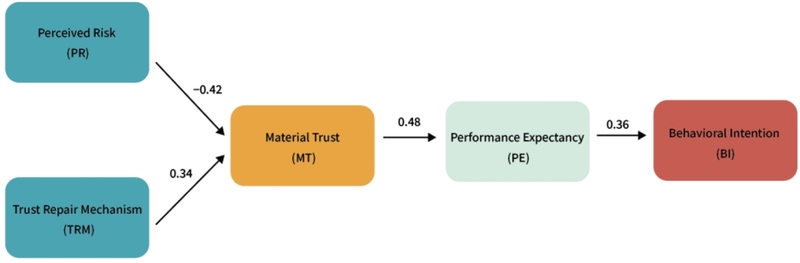
The Trust Formation and Behavioral Path Model of Sustainable Material Adoption
This model illustrates the key relationships among perceived risk (PR), trust repair mechanism (TRM), material trust (MT), performance expectancy (PE), and behavioral intention (BI). The results show that trust functions as the central mechanism in consumer decision-making, while design signals such as certification labels indirectly enhance adoption intention by strengthening trust mechanisms.
5. Conclusion
This study focuses on the challenges of insufficient information communication and the trust gap that often arise during the promotion of sustainable materials in product markets. The research aims to explore the consumer decision-making pathway linking perceived risk, trust formation, and behavioral intention. Based on Trust–Risk Theory (TRI) and the Unified Theory of Acceptance and Use of Technology 2 (UTAUT2), this study developed an integrated analytical framework. A total of 402 valid responses were collected through a scenario-based image questionnaire, and the proposed model was examined using Structural Equation Modeling (SEM) and Multi-Group Structural Equation Modeling (MGSEM) to test both the structural paths and contextual differences.
The findings reveal the psychological process underlying the adoption of sustainable materials from three main perspectives. First, the study demonstrates that consumers’ perceived risk significantly influences the formation of trust in sustainable materials. When consumers experience uncertainty regarding the safety, durability, or reliability of materials, their level of trust declines considerably. This finding suggests that when confronted with unfamiliar environmentally friendly materials, consumers typically engage in an initial risk assessment, which becomes a critical prerequisite for trust formation. In other words, the promotion of sustainable materials should not only emphasize their environmental value but also address consumers’ concerns regarding usage safety and performance stability. If consumers cannot confirm the reliability of a material, its environmental benefits alone may be insufficient to achieve market acceptance. Therefore, reducing perceived risk is a key condition for facilitating trust formation in sustainable materials.
Second, the results indicate that external design signals, such as certification labels, play a crucial role in the process of consumer trust formation. The findings show that when product interfaces provide clear certification marks or credible informational cues, consumers are more likely to develop basic trust in the material, while the negative effect of perceived risk on trust is significantly weakened. This suggests that when encountering uncertain materials, consumers tend to rely on recognizable informational cues to evaluate credibility. Certification labels, eco-labels, and related symbols can function as visual design signals, providing credibility cues that enable consumers to form trust judgments more efficiently. Therefore, in the communication of sustainable products, design information does not merely serve an explanatory function but also plays a critical role in helping consumers understand product attributes and establish trust.
Third, the study further finds that once consumers develop trust in sustainable materials, their expectations regarding product performance increase significantly, which subsequently influences their adoption intention. This result indicates that trust not only reduces consumers’ defensive responses to risk but also strengthens their positive evaluations of product functionality, thereby increasing their willingness to try or adopt the product. In this sense, trust serves as a key mediating mechanism within the consumer decision-making pathway, enabling consumers to move from the stage of risk evaluation to performance evaluation and ultimately to behavioral intention.
Based on these findings, this study proposes three practical implications. First, sustainable product design should incorporate a trust-oriented information hierarchy, placing key information such as material attributes and environmental certification signals within the primary visual layer of product interfaces or packaging design. This approach allows consumers to quickly recognize the sustainable characteristics of a product during their initial interaction, thereby reducing uncertainty and facilitating trust formation. Second, information design for sustainable products may further explore verifiable sustainability communication strategies, such as providing traceability QR codes or digital labels that enable consumers to access information about material sources, production processes, or environmental technologies. Such strategies can enhance information transparency and strengthen consumer trust. Third, product interfaces and packaging communication should develop systematic trust signal design, integrating certification labels, environmental symbols, and related information into a clear and consistent visual system. In this way, these elements function not only as technical descriptions but also as key cues that consumers rely on when evaluating product reliability. Through such strategies, design can move beyond merely conveying environmental information and instead establish a more stable foundation of trust within consumer decision-making processes, thereby promoting the broader social acceptance and application of sustainable materials.
Compared with previous studies, this research provides a new perspective on the trust formation mechanism of sustainable materials from the viewpoint of design information. Existing research on sustainable products and green consumption has largely emphasized improving material performance or product quality to reduce consumer uncertainty and thereby enhance trust in environmentally friendly products [24], [25]. Such studies generally suggest that when consumers confirm that materials meet their requirements in terms of safety, durability, and functional performance, their acceptance of sustainable products increases accordingly. However, the present study demonstrates that consumer trust in sustainable materials is influenced not only by material performance but also by informational signals presented within the product interface. Design elements such as certification labels, symbols, and explanatory cues can provide recognizable credibility signals, enabling consumers to form initial trust more easily when encountering novel materials.
Accordingly, this study reconceptualizes certification labels and related elements as design-based information signals, highlighting that design does not merely communicate product appearance or brand identity but also plays a crucial role in helping consumers interpret material attributes and establish trust. This perspective expands the understanding of trust formation mechanisms in sustainable material research by introducing a design-oriented analytical lens. Future research may further extend this direction by examining how different types of design information—such as visual labels, material descriptions, or interactive information interfaces—affect consumer trust formation under real usage scenarios or experimental conditions. Such investigations would contribute to a deeper understanding of the role of design information in sustainable material communication and consumer decision-making.
Notes
Copyright : This is an Open Access article distributed under the terms of the Creative Commons Attribution Non-Commercial License (http://creativecommons.org/licenses/by-nc/3.0/), which permits unrestricted educational and non-commercial use, provided the original work is properly cited.
References
-
Agarwal, S., Kweh, Q. L., Goh, K. W., & Wider, W. (2025). Redefining marketing strategies through sustainability: Influencing consumer behavior in the circular economy: A systematic review and future research roadmap. Cleaner and Responsible Consumption, 18, 100298.
[https://doi.org/10.1016/j.clrc.2025.100298]

-
Camilleri, M. A., Cricelli, L., Mauriello, R., & Strazzullo, S. (2023). Consumer perceptions of sustainable products: A systematic literature review. Sustainability, 15(11), 8923.
[https://doi.org/10.3390/su15118923]
- Chen, C.-C., Jiang, J.-S., & Lin, M.-H. (2022). Research on the impact of cultural and creative industry experiential marketing on brand trust and customer loyalty. The International Journal of Organizational Innovation, 14.
-
Chen, Y. S., & Chang, C. H. (2012). Enhance green purchase intentions: The roles of green perceived value, green perceived risk, and green trust. Management Decision, 50(3), 502-520.
[https://doi.org/10.1108/00251741211216250]
-
Das, T. K., & Teng, B. S. (2001). Trust, control, and risk in strategic alliances: An integrated framework. Organization Studies, 22(2), 251-283.
[https://doi.org/10.1177/0170840601222004]
-
Essiz, O., Yurteri, S., Mandrik, C., & Senyuz, A. (2023). Exploring the value-action gap in green consumption: Roles of risk aversion, subjective knowledge, and gender differences. Journal of Global Marketing, 36(1), 67-92.
[https://doi.org/10.1080/08911762.2022.2116376]
-
Featherman, M. S., & Pavlou, P. A. (2003). Predicting e-services adoption: A perceived risk facets perspective. International Journal of Human-Computer Studies, 59(4), 451-474.
[https://doi.org/10.1016/S1071-5819(03)00111-3]
-
Gefen, D., Karahanna, E., & Straub, D. W. (2003). Trust and TAM in online shopping: An integrated model. MIS Quarterly, 27(1), 51-90.
[https://doi.org/10.2307/30036519]
-
Hipólito, F., Dias, Á., & Pereira, L. (2025). Influence of consumer trust, return policy, and risk perception on satisfaction with the online shopping experience. Systems, 13(3), 158.
[https://doi.org/10.3390/systems13030158]
-
Hoyer, W. D., Kroschke, M., Schmitt, B., Kraume, K., & Shankar, V. (2022). Transforming the customer experience through new technologies. International Journal of Research in Marketing, 51, 57-71.
[https://doi.org/10.1016/j.intmar.2020.04.001]
-
IIbrahim, I. D., Sadiku, E. R., Hamam, Y., Kupolati, W. K., Ndambuki, J. M., Jamiru, T., ... & Snyman, J. (2023). Recent recycling innovations to facilitate sustainable packaging materials: a review. Recycling, 8(6), 88.
[https://doi.org/10.3390/recycling8060088]
-
Joy, A., Sherry, J. F., Venkatesh, A., Wang, J., & Chan, R. (2012). Fast fashion, sustainability, and the ethical appeal of luxury brands. Fashion Theory: The Journal of Dress, Body & Culture, 16(3), 273-295.
[https://doi.org/10.2752/175174112X13340749707123]
-
Khan, K. U., Atlas, F., Arshad, M. Z., Akhtar, S., & Khan, F. (2022). Signaling green: Impact of green product attributes on consumers trust and the mediating role of green marketing. Frontiers in Psychology, 13, 790272.
[https://doi.org/10.3389/fpsyg.2022.790272]
-
Kikko, Y., & Ishigaki, T. (2025). Divergent effects of environmental concern and risk perception on pro-environmental intention: An international study across 17 countries. Scientific Reports, 15(1), 1-13.
[https://doi.org/10.1038/s41598-025-91677-]
- McKinsey & Company. (2025). Sustainable packaging: 2025 global consumer views. McKinsey & Company. https://www.mckinsey.com/industries/packaging-and-paper/our-insights/sustainability-in-packaging-2025-inside-the-minds-of-global-consumers.
-
Monfort, A., López-Vázquez, B., & Sebastián-Morillas, A. (2025). Building trust in sustainable brands: Revisiting perceived value, satisfaction, customer service, and brand image. Sustainable Technology and Entrepreneurship, 4(3), 100105.
[https://doi.org/10.1016/j.stae.2025.100105]
- Organisation for Economic Co-operation and Development. (2023). Green transition indicators report 2023. OECD Publishing. https://www.oecd.org/en/publications/oecd-economic-outlook/volume-2023/issue-1_ce188438-en.html.
- PricewaterhouseCoopers. (2024). Voice of the consumer survey: Sustainability and inflation reshape global spending priorities. PwC. https://www.pwc.com/gx/en/about/transparency-report/2024/financials.html.
-
Salam, A., & Abdiyanti, S. (2022). Analisis pengaruh celebrity endorser, brand image dan brand trust terhadap keputusan pembelian (Studi kasus pada konsumen wanita produk skin care merek MS Glow di Kecamatan Sumbawa). Accounting and Management Journal, 6(1), 60-68.
[https://doi.org/10.33086/amj.v6i1.2204]
-
Schmitz, A., Díaz-Martín, A. M., & Yagüe Guillén, M. J. (2022). Modifying UTAUT2 for a cross-country comparison of telemedicine adoption. Computers in Human Behavior, 130, 107183.
[https://doi.org/10.1016/j.chb.2022.107183]
-
Tamilmani, K., Rana, N. P., Wamba, S. F., & Dwivedi, R. (2021). The extended Unified Theory of Acceptance and Use of Technology (UTAUT2): A systematic literature review and theory evaluation. International Journal of Information Management, 57, 102269.
[https://doi.org/10.1016/j.ijinfomgt.2020.102269]
-
Tamilmani, K., Rana, N. P., Prakasam, N., & Dwivedi, Y. K. (2019). The battle of brain vs. heart: A literature review and meta-analysis of "hedonic motivation" use in UTAUT2. International Journal of Information Management, 46, 222-235.
[https://doi.org/10.1016/j.ijinfomgt.2019.01.008]
-
Tamilmani, K., Rana, N. P., & Dwivedi, Y. K. (2021). Consumer acceptance and use of information technology: A meta-analytic evaluation of UTAUT2. Information Systems Frontiers, 23(4), 987-1005.
[https://doi.org/10.1007/s10796-020-10007-6]
- United Nations Environment Programme. (2024). Circularity: Accelerating sustainable consumption and production. UNEP. https://www.unep.org/resources/annual-report-2024.
-
White, K., Habib, R., & Hardisty, D. J. (2019). How to SHIFT consumer behaviors to be more sustainable: A literature review and guiding framework. Journal of Marketing, 83(3), 22-49.
[https://doi.org/10.1177/0022242919825649]