When Humanoids Are Too Much: Exploring the Utilitarian-Hedonic Balance in Household Robot Design
Abstract
Background Domestic robots have historically been developed along two separate trajectories: purely functional robots and purely social robots, with limited integration of both dimensions. While purely social robots have faced repeated commercial failures due to lack of utility, purely functional robots suffer from diminished long-term user engagement. This study addresses a critical gap in the pre-humanoid robot design space by investigating the optimal balance between utilitarian and hedonic interaction dimensions.
Methods A household robot named Hobbi was designed using Research through Design methodology, capable of performing both utilitarian tasks (object delivery, Internet of Things(IoT) control) and hedonic interactions (greeting, dancing, emotional expressions). Five interaction scenarios were constructed by systematically varying the utilitarian-hedonic ratio (4S0U, 3S1U, 2S2U, 1S3U, 0S4U). A within-subjects video-based evaluation was conducted with 56 participants, who rated each scenario across hedonic, utilitarian, and overall satisfaction dimensions using 9-point Likert scales.
Results An inverted U-shaped satisfaction pattern was confirmed, with the balanced condition (2S2U) yielding peak satisfaction (M = 6.75) and the purely hedonic condition (4S0U) producing the lowest scores (M = 5.65). Regression analyses revealed asymmetric synergistic effects: hedonic interactions significantly enhanced utilitarian satisfaction (β = 0.241, p < .001), while utilitarian interactions did not reciprocally enhance hedonic satisfaction (β = 0.051, p = .420). Appearance design preference strongly predicted overall satisfaction (r = 0.633, p < .001), whereas prior technology interest showed no significant relationship.
Conclusions These findings support a “utilitarian-foundation, hedonic-enhancement” design principle for domestic robots, wherein functional reliability serves as the necessary base and social-expressive interactions amplify perceived quality. The asymmetric synergy suggests that even simple hedonic behaviors yield substantial returns on utilitarian satisfaction, offering practical guidance for cost-effective robot development targeting broad consumer markets.
Keywords:
Human-Robot Interaction, Design, User Study, Non-Humanoid, Domestic Robots, Social Robotics1. Introduction
1. 1. Before Humanoid or When Humanoids are a Bit Too Much
The aspiration for fully capable humanoid robots has long captured both public imagination and research investment. Recent advancements demonstrate impressive capabilities in controlled settings, with platforms achieving sophisticated dynamic movement and manipulation skills (Tong et al., 2024, Sheng et al., 2025). However, deploying such systems in domestic environments faces substantial barriers. Han & Liu (2025) identified three critical acceptance layers for AI humanoid robots in homes (Han & Liu, 2025): technical, psychological, and social. Among these, technical challenges—particularly reliability, cost, and safety—currently present the most formidable obstacles. Current development and manufacturing expenses place humanoid robots far beyond typical household appliance budgets, while safety requirements for physical human-robot interaction demand extensive engineering investment, raising fundamental questions about near-term commercial viability (Radka et al., 2025; Koczi & Sarosi, 2025; Han & Liu, 2025).
This economic and technical reality suggests that the “humanoid-first” approach may not be the only—or even the most pragmatic—pathway for domestic robotics. User preference studies reinforce this perspective: Huang et al. (2024) found that certain consumer segments prefer general-type robots over humanoids due to economic considerations and reliability concerns (Huang et al., 2024). Dong et al. (2024) propose an alternative trajectory (Dong et al., 2024): rather than pursuing a single humanoid platform, they envision domestic robotic ecosystems where specialized robots and smart appliances work in coordination. Such systems could incrementally introduce robotic assistance through familiar appliance categories, gradually expanding capabilities while managing costs and technical complexity. Radka et al. (2025) examined user attitudes toward both humanoid and non-humanoid robots for in-home assistance and found that acceptance varies significantly based on task type, interaction frequency, and perceived appropriateness of physical embodiment (Radka et al., 2025). Their findings indicate that pre-humanoid or alternative robotic approaches may be not only economically necessary but also user-preferred for certain household applications. These considerations point toward an important design space: household robots that precede full humanoid capabilities, or that serve contexts where humanoid complexity would be excessive. Such transitional or alternative platforms must navigate a delicate balance—they require sufficient physical capability to address genuine household needs, yet must remain economically feasible and technically reliable. This raises a fundamental design question: when developing robots that are neither purely task-oriented appliances nor fully anthropomorphic companions, what should be the appropriate ratio of utilitarian to hedonic(or social) interaction?
1. 2. Utilitarian and Hedonic Dimensions in Domestic Robots
The domestic robot market has historically exhibited a clear dichotomy between purely functional robots and purely social robots, with limited successful integration of both dimensions (Lee, 2021; Mahdi et al., 2022). Bogue (2017) classified domestic robots into two distinct categories (Bogue, 2017): robots capable of object manipulation, and mobile companion robots. In the paper, social robots’ functional limitations was particularly criticized, characterizing them as “smartphones on wheels with faces attached.” This functional inadequacy has proven commercially fatal (Belanche et al., 2021)—successive market failures of primarily social robots such as Jibo, Kuri, and Cozmo demonstrate that emotional appeal alone cannot sustain a viable business model in the domestic robotics sector (Hoffman, 2019).
Gao et al. (2025) revealed that consumers expect not only socio-emotional engagement from social robots but also instrumental support such as housework assistance and practical benefits (Gao et al., 2025). However, they noted that few current robots satisfy both requirements simultaneously. This gap between user expectations and available products highlights a critical design challenge: social engagement without functional contribution fails to justify the presence of a robot in the household environment.
Conversely, purely functional robots face their own adoption barriers despite successfully performing designated tasks. Hendriks et al. (2011) found that users of cleaning robots actively seek to perceive and engage with robot personality beyond mere task completion, recommending personality models as essential tools for developing robot behavior (Hendriks et al., 2011)}. In a longitudinal study, Fink et al. (2013) observed that while users initially attempted to establish social connections with cleaning robots through personalization and identity-giving behaviors, these efforts diminished over time as the robots came to be perceived merely as simple appliances (Fink et al., 2013; Fink, 2014). This erosion of engagement resulted in decreased long-term satisfaction despite continued functional performance. Forlizzi (2007) similarly emphasized that functional capability alone is insufficient for sustained user satisfaction, arguing that social dimensions are necessary complements to utilitarian performance (Forlizzi, 2007).
The limitations of both purely social and purely functional approaches suggest that domestic robots must integrate utilitarian and hedonic dimensions. Recent research provides empirical support for this integrated perspective. Premathilake et al. (2025) demonstrated that utilitarian, hedonic, and social values all significantly contribute to user satisfaction with humanoid social robots, with these dimensions exhibiting interdependent rather than independent effects (Premathilake et al., 2025). Their findings indicate that investment in interaction capabilities yields greater returns than comparable investment in appearance alone, suggesting that the quality of utilitarian and hedonic interaction may be more critical than physical form.
This conceptual shift from viewing functionality and sociality as separate robot categories to understanding them as complementary interaction dimensions raises important design questions. If domestic robots require both utilitarian and hedonic elements, what constitutes the appropriate balance? Does user satisfaction follow a linear relationship where more of both dimensions always yields better outcomes, or does an optimal ratio exist? Furthermore, do these dimensions interact synergistically, such that hedonic elements amplify the perceived value of utilitarian performance, or vice versa?
Therefore, this study investigates the optimal ratio of utilitarian to hedonic interaction in domestic robots designed for the pre-humanoid or alternative-to-humanoid design space. We focus specifically on hedonic dimensions related to social interaction—elements that contribute to perceived relationship quality, emotional engagement, and interaction pleasure. Through systematic manipulation of utilitarian-hedonic interaction ratios, we aim to identify design principles that can guide the development of household robots that effectively balance practical assistance with appropriate social engagement.
2. Research Approach
The investigation of utilitarian-hedonic balance in domestic robots requires both appropriate measurement instruments and methodologically sound evaluation approaches.
2. 1. Measurement Instrument
Prior research has developed various measurement instruments to evaluate different dimensions of human-robot interaction, evolving from dimension-specific approaches to more integrated frameworks.
Early measurement efforts focused primarily on single dimensions. For utilitarian assessment, researchers adapted Technology Acceptance Model (TAM), originally developed for information technology, to evaluate perceived usefulness and ease of use in robotic contexts (Davis, 1989). Building on this foundation, Schneiders et al. (2021) and Pham et al. (2017) developed domain-specific measures investigating whether robots perform tasks well, provide helpful assistance, and operate conveniently in daily life contexts (Schneiders et al., 2021; Pham et al., 2017). Conversely, for hedonic and social dimensions, Chen et al. (2023) developed and validated a robot social presence measurement scale capturing perceived presence, appropriateness of interaction, and empathetic understanding between users and robots (Chen et al., 2023).
More recent work has moved toward comprehensive frameworks that integrate both dimensions. De Graaf et al. conducted a series of studies developing and validating a multidimensional evaluation framework consisting of 22 dimensions—including usefulness, sociability, and cost—which can be broadly categorized into three overarching factors: utilitarian value, hedonic value, and overall user value (De Graaf et al., 2016; De Graaf et al., 2017; De Graaf et al., 2019). Their framework, validated through long-term field studies, demonstrated effectiveness in predicting robot acceptance in home environments. Critically, their investigation of robot non-use revealed that utilitarian factors showed particularly strong influence on actual usage decisions (De Graaf et al., 2017), suggesting potential asymmetry between the two dimensions’ contributions to overall acceptance. Chatzoglou et al. (2024) similarly employed integrated utilitarian and hedonic dimensions in their acceptance model, with hedonic aspects encompassing both appearance and social characteristics such as personality and attitude (Chatzoglou et al., 2024).
While these measurement instruments provide valuable tools for robot evaluation, they have primarily been applied to assess robots with fixed utilitarian-hedonic configurations rather than to investigate how varying ratios between these dimensions affect user satisfaction. The present study builds upon these measurement traditions while adapting them to examine satisfaction patterns across systematically varied utilitarian-hedonic interaction ratios.
2. 2. Methodological Approaches in HRI
Evaluating robot interactions presents methodological challenges, particularly regarding the trade-off between ecological validity and experimental control. Two primary approaches have emerged: live interaction studies and video-based evaluation methods.
However, live robot interaction introduces multiple sources of experimental noise that can obscure the effects under investigation. Prototype fidelity significantly influences user expectations, subjective evaluations, and emotional responses (Sauer & Sonderegger, 2009), and these expectations can be substantially biased by mechanical sounds from robot actuators (Frid et al., 2018), prototype performance delays (Wiklund et al., 1992), and robot malfunctions (Garza, 2018).
Woods et al. conducted systematic comparisons between live and video-based methods in HRI research (Woods et al., 2006; Woods et al., 2006). Their findings revealed moderate to high agreement in participants’ preferences and evaluations across both methods, suggesting that video-based methodology provides sufficient validity for certain types of HRI research, particularly for evaluating non-interactive scenarios and initial user perceptions.
To maintain precise experimental control over utilitarian-hedonic ratio manipulation while eliminating these confounds, the present study adopts video-based methodology. This approach enables focus on how interaction content composition affects user satisfaction, rather than on prototype-related imperfections.
3. Design of Hobbi
This study employed Research through Design (RtD) methodology to carry out the robot design process. RtD is an approach that generates knowledge by utilizing design practice itself as a research methodology, a concept that evolved from the “research through art and design” classification proposed by Frayling (1993) (Frayling, 1993). This methodology is characterized by deriving both theoretical insights and practical knowledge simultaneously through the creation of design artifacts and iterative refinement processes (Zimmerman et al., 2007).
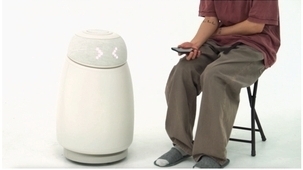
Based on this methodology, we designed Hobbi, a household robot capable of performing both utilitarian and hedonic interactions, and verified design intent through prototyping and mock-up fabrication. The overall appearance of Hobbi is shown in Figure 3. The following subsections describe the design process, from task definition and form factor to appearance, hardware implementation, and interaction design.
3. 1. Tasks
The robot proposed in this study departs from the conventional approach of treating utilitarian and hedonic functions as separate design objectives. Instead, it targets a robot in which both dimensions are organically integrated. To achieve this, the robot was designed to perform simple physical tasks alongside emotional expressions, allowing the utilitarian and hedonic dimensions to be technically blended into a seamless user experience.
To define the specific tasks the robot would perform, desk research was first conducted. Recent commercial home robots such as Amazon Astro, Samsung Ballie, and LG Q9 commonly incorporate IoT device control as a core non-physical task (Amazon, 2021; Samsung, 2024; LG, 2023), suggesting that it constitutes the dominant non-physical task in existing home robots. This is further reflected in home robot system design, where IoT and appliance control are positioned as key non-physical functions (Song & Li, 2021). Since this study aims to develop a robot capable of performing physical tasks beyond such non-physical operations, additional exploration of physical activities within the home environment was carried out. A survey on household chore aversion revealed a particularly high preference for object delivery among various service tasks (Ezer et al., 2009), and a separate analysis of household task substitution needs in South Korea further confirmed that object delivery exhibited the highest demand after cleaning-related tasks (Yoo & Kim, 2024).
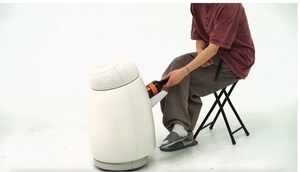
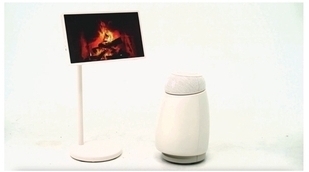
Based on these findings, the robot’s functional tasks were organized into two domains: non-physical and physical. The non-physical task was centered on IoT device control (e.g., turning on a display), which was identified as the primary function commonly observed in existing domestic robots. The physical task focused on object delivery, which was further specified into three sub-scenarios commonly expected to occur within a home environment (Ray et al., 2008): beverage delivery, object delivery, and furniture relocation.
3. 2. Form Factor
To determine the appropriate size of the robot, desk research was conducted to investigate the dimensions of the domestic environment in which the robot would operate. After examining the average dimensions of major household furniture—including chairs, desks, beds, nightstands, and sofas—the robot’s optimal height was narrowed to three candidates (500mm, 600mm, and 700mm), considering the perceived spatial intrusiveness of the robot relative to surrounding furniture (エクスナレッジ, 2022). The robot’s diameter was set at 320mm, identical to that of robot vacuum cleaners—a validated size for mobile units within domestic settings.
To verify these dimensions at full scale, low-fidelity prototypes were fabricated along with a simulated domestic environment. After comparing the height and volumetric presence of the robot against each piece of furniture, the robot’s height was finalized at 600mm.
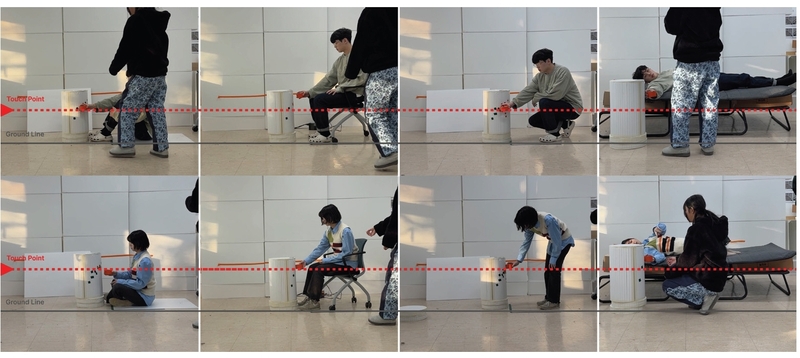
Dimension Study by Posture
To identify points of physical interaction between the robot and users, participants whose heights corresponded to the average stature of Korean males and females were observed to determine which positions on the robot their hands reached in various postures (seated, standing, lying down, etc.). This process yielded approximate regions of user–robot contact, which were divided into two zones: head and body. This division referenced the metaphor of furniture such as nightstands or dressers—objects that are opened from the side or on which items are placed on top—anticipating that the robot would utilize head or body components when performing functional tasks.
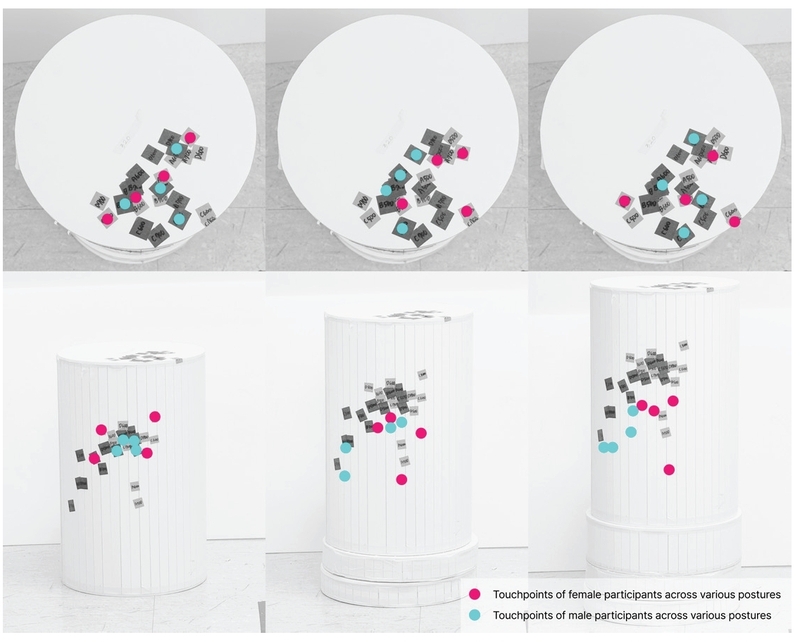
Interaction Point Study by Height
3. 3. Appearance
The appearance was designed to reflect conditions for effective domestication of home robots emphasized in prior research. Auger (2014) stressed the importance of the “Form Follows Familiarity” principle for a robot to successfully integrate into the domestic environment (Auger, 2014). He explained that when new technologies were introduced into homes in the late 19th century, adopting familiar forms enhanced their acceptance, and argued that robots should likewise borrow the visual characteristics of familiar household products.
Based on this theoretical background, Hobbi adopted a soft, roundish form instead of the mechanical and angular appearance typical of conventional robots. The use of fabric materials represents a strategy of employing materials “already adapted to the domestic environment,” aiming to reduce the psychological distance toward the robot through the tactile and visual qualities of textiles that users encounter in everyday life. Furthermore, the concept of a “Post-Utility Object”—a form that can become a target of emotional attachment beyond a mere functional tool—was incorporated into Hobbi’s design.
Additionally, considering the robot’s mobility, a simple and abstract form was adopted rather than a complex and organic one. This decision was intended to avoid excessive anthropomorphism while conferring an appropriate level of character that allows the robot to be naturally accepted as a domestic object (Walters et al., 2008; Young et al., 2009).
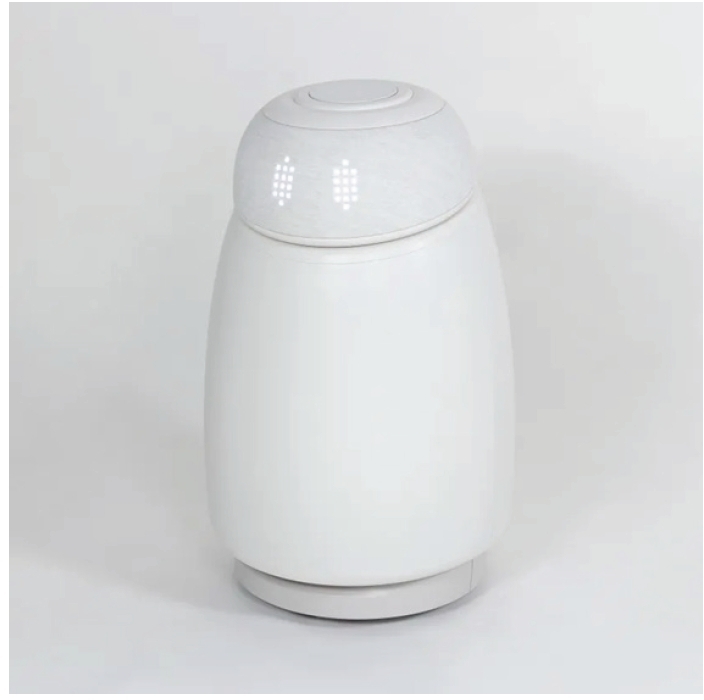
Appearance of Hobbi
3. 4. Hardware
Based on the form factor and appearance decisions described above, the mechanical structure of Hobbi was developed to realize the intended interactions. The robot comprises a 6-DoF structure organized into four main parts: head, body, side plates, and mobile platform—including four primary motions along with a dual-motor differential drive platform. The system is operated by a wireless controller, utilizing an Arduino-based architecture that integrates two DC motors, four servo motors for body control, and a facial LED panel that displays eye expressions to convey emotional states during hedonic interactions.
The head comprises two DoFs: vertical heave motion along the z-axis for height adjustment during object delivery and emphatic gestures, and 360-degree rotation along an axis tilted 10 degrees from the vertical for communicative expressions such as greeting and responding to name calls.
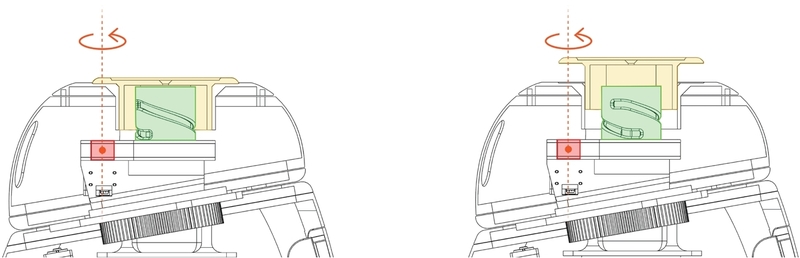
Head Plate Heave Mechanism
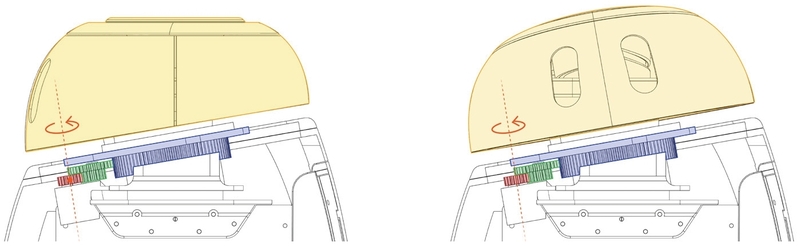
Head Rotation Mechanism
The body performs a swing motion pivoting around an axis offset 360 mm from the origin along the z-axis, enabling smooth expressive movements during hedonic tasks such as dancing.
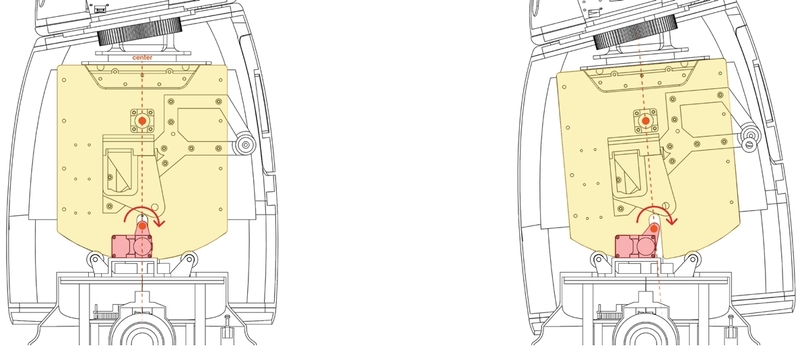
Body Tilting Mechanism
Each side plate opens and closes via a gear module mechanism, rotating up to approximately 70 degrees to provide an internal compartment for securely holding and transporting items during object delivery tasks.
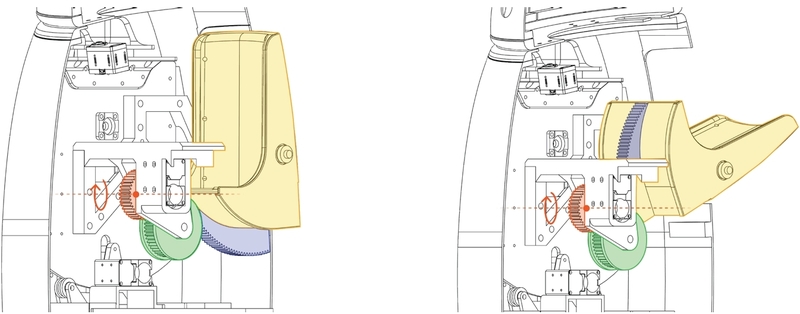
Side Plate Mechanism
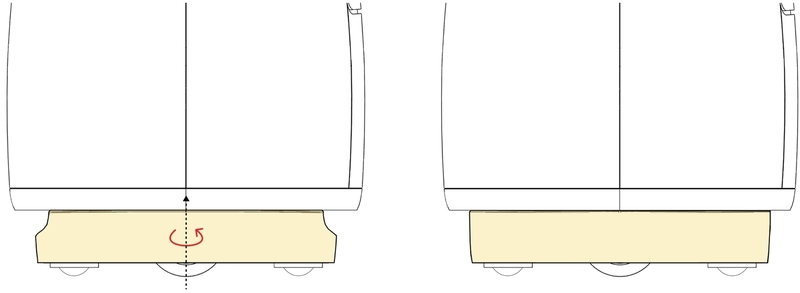
Mobile Platform Rotation Mechanism
The mobile platform employs a differential drive system with two in-wheel motors and two casters, enabling standard locomotion, in-place rotation, and seamless transitions between interactions across home environments.
3. 5. Interaction
Within the broad hedonic dimension, this study focuses on social-expressive interaction rather than attempting to address all possible hedonic aspects. Although comprehensive frameworks identify various hedonic factors such as robot personality, gender, attitude, and appearance (De Graaf et al., 2016; Chatzoglou et al., 2024), systematically manipulating all such variables could introduce excessive complexity. Therefore, this study concentrates on social-expressive behavior—empathetic responses and expressive movements—as representative hedonic elements. It was demonstrated in many studies that expressive behaviors, including gestural communication, reactive movements, and emotional expression, significantly influence user perceptions and emotional responses in human–robot interaction (HRI) (Brezeal, 2004; Venture & Kulic 2019; Bartneck & Forlizzi, 2004, Deng et al., 2019).
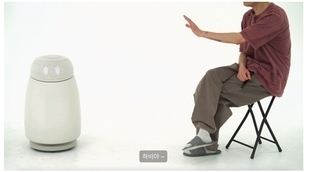
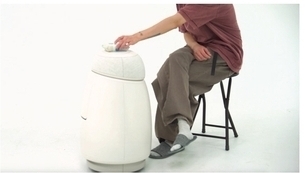
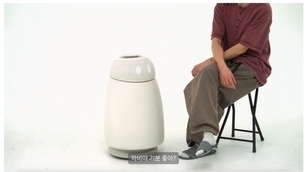
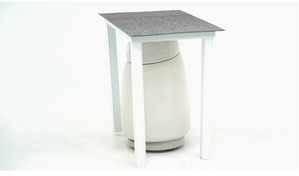
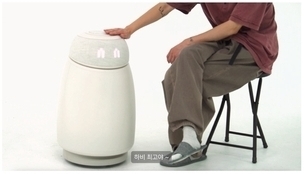
Based on these findings, a total of eight interactions were designed using the derived baseline speed and reflecting Hobbi’s design: four utilitarian interactions and four hedonic interactions. The utilitarian interactions were centered on the object delivery tasks derived from the preceding research and comprised beverage delivery, furniture relocation, item delivery, and IoT device control. The hedonic interactions were composed of emotional expressions that could naturally connect to the transitional contexts between these tasks: greeting, positive response to praise, smiling when called by name, and dancing together. According to prior research, humans tend to interpret robot movements as expressive, and the communicative power of actions increases when emotional expression is situated within the same context as the functional task rather than being separated from it (Venture & Kulic, 2019).
3. 5. 1 Stimuli
Experimental stimuli were presented in video format, each describing combinations of four social and four utilitarian interaction scenarios assembled according to a specified ratio—denoted as xSyU, where x indicates the number of social interactions and y the number of utilitarian interactions included (e.g., 4S0U = 4 social, 0 utilitarian). Each video was approximately 90 seconds in duration and recorded under consistent lighting and camera conditions to minimize extraneous visual variation. Five scenarios—4S0U, 3S1U, 2S2U, 1S3U, and 0S4U—were constructed by systematically adjusting this ratio. This was intended to explore not only whether the robot achieves its task objectives, but also how the manner of task execution and the utilitarian-hedonic ratio affect user experience.

Social and Utilitarian Interaction Scenarios
4. User Study
The study investigates three primary research questions:
RQ1. Optimal Ratio What utilitarian-hedonic interaction ratio maximizes user satisfaction? As the ratio shifts between utilitarian and hedonic interactions, does satisfaction change linearly, or does an optimal balance point exist?
RQ2. Synergistic Effects Do utilitarian and hedonic dimensions interact synergistically? Specifically, do hedonic elements enhance perceived utilitarian value, or do utilitarian elements enhance perceived hedonic value, or both?
RQ3. Individual Differences How do individual characteristics—such as appearance design preference and prior technology interest—moderate the effects of utilitarian-hedonic ratios on satisfaction?
4. 1. Experimental Design
This study employed a within-subjects design where each participant evaluated five scenarios with varied ratios, ranging from purely hedonic (4S0U: 4 social, 0 utilitarian interactions) to purely utilitarian (0S4U: 0 social, 4 utilitarian interactions), with intermediate mixed conditions (3S1U, 2S2U, 1S3U). Participants viewed pre-recorded videos of the robot performing scenario-specific interactions, with each video depicting combinations of hedonic and utilitarian behaviors according to the scenario’s ratio specification. After viewing each scenario, participants completed the evaluation questionnaire. This design enables examination of how varying ratios affect user satisfaction while controlling for individual differences.
4. 2. Measurements
A 9-item questionnaire assessed three dimensions using 9-point Likert scales (1 = strongly disagree, 9 = strongly agree). Items were adapted from the validated HRI measurement instruments discussed above:
Hedonic/Social dimension (3 items): Perceived interest from the robot, emotional impact, and empathetic understanding.
Utilitarian dimension (3 items): Daily life usefulness, task performance capability, and ease of commanding the robot.
Overall satisfaction (3 items): Home adoption intention, recommendation willingness, and perceived general interest.
The complete item set is presented in Table 2.
Evaluation Questionnaire Items
Additionally, single-item measures assessed appearance design preference and prior robot/technology interest to examine individual difference effects.
Prior to the main evaluation, a pilot study (N = 25) was conducted to assess potential order effects in scenario presentation. Participants were randomly assigned to two conditions: ascending order (0S4U → 4S0U) or descending order (4S0U → 0S4U). No significant difference in satisfaction scores was find between presentation orders. Thus, a fixed presentation sequence was used in the main study.
5. Results
A total of 56 participants (female = 42, male = 14; age M = 25.1, SD = 1.5, range = 22-28) completed the study. The sample included 18 design majors, 14 engineering majors, and 24 other majors.
5. 1. Descriptive Statistics
Table 3 shows mean satisfaction scores across the five scenarios. The balanced condition (2S2U) yielded the highest mean satisfaction (M = 6.750, SD = 1.480), while the purely social condition (4S0U) produced the lowest (M = 5.651, SD = 1.455). Conditions with utilitarian components (3S1U, 1S3U, 0S4U) demonstrated relatively similar satisfaction levels, all substantially higher than the purely social condition.
Mean Satisfaction Scores by Scenario
5. 2. Optimal Utilitarian-Hedonic Balance
We examined whether user satisfaction would be highest when utilitarian and hedonic interactions are balanced, following an inverted U-shaped pattern. A repeated measures ANOVA was conducted to test this.
Normality assessment via Shapiro-Wilk tests indicated violations for two among five conditions (2S2U: p = .031; 1S3U: p = .026). Mauchly’s test revealed sphericity violation (W = 0.302, p < .001), necessitating Greenhouse-Geisser correction (ε = 0.633).
The repeated measures ANOVA revealed a significant main effect of scenario, F(4, 220) = 35.10, p < .001, ηp2 = 0.39.
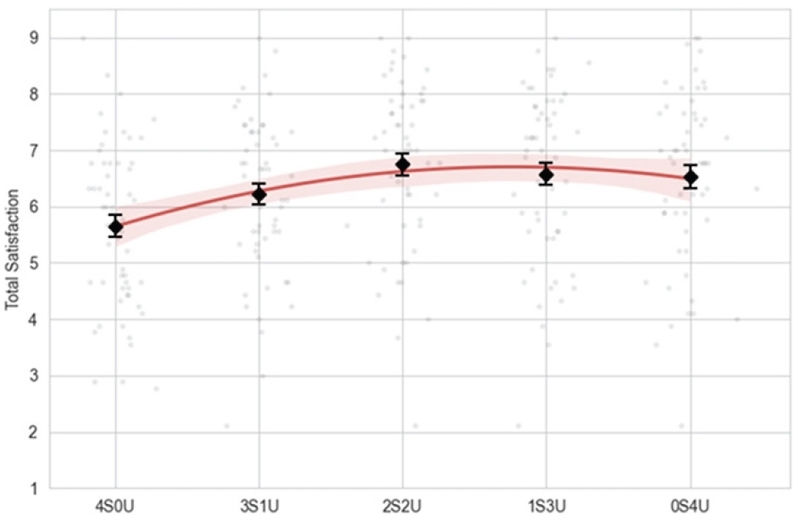
Total Scores by Scenario
Orthogonal polynomial contrast analysis was conducted to test the inverted U-shaped pattern. Both linear (t(55) = 6.21, p < .001, d = 0.83) and quadratic (t(55) = -6.97, p < .001, d = -0.93) trends were significant. The larger effect size for the quadratic trend supports an inverted U-shaped relationship, where satisfaction is highest at moderate utilitarian-hedonic ratios and lower at both extremes. The significant linear trend reflects an overall increase in satisfaction as utilitarian components increase, but this is moderated by the stronger quadratic effect.
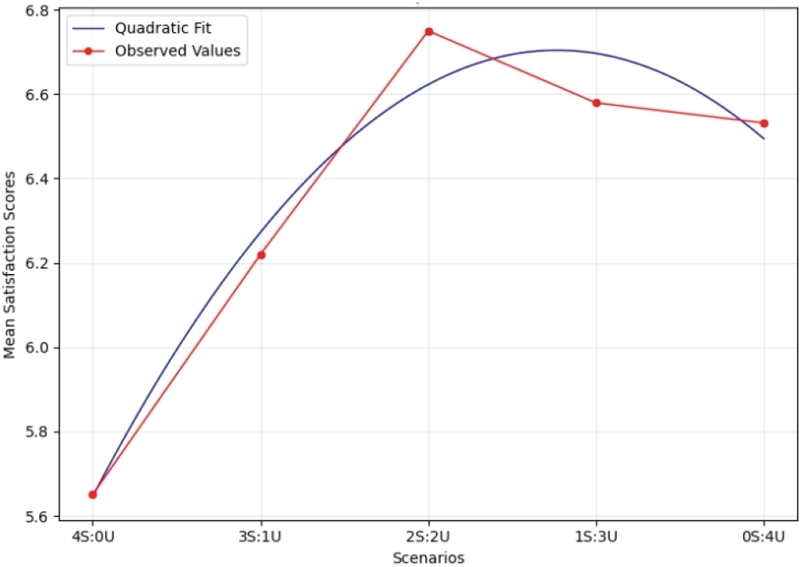
Quadratic fit
Bonferroni-corrected pairwise comparisons revealed that 4S0U differed significantly from all other conditions: 4S0U vs 3S1U (p < .001, g = 0.39), 4S0U vs 2S2U (p < .001, g = 0.74), 4S0U vs 1S3U (p < .001, g = 0.62), and 4S0U vs 0S4U (p < .001, g = 0.59). Additionally, 2S2U showed significantly higher satisfaction than 3S1U (p < .001, g = 0.36), and 1S3U exceeded 3S1U (p < .001, g = 0.24). However, conditions with utilitarian components (0S4U, 1S3U, 2S2U) did not differ significantly from each other, indicating a plateau effect once utilitarian elements are present.
5. 3. Interaction Effects Between Dimensions
We examined whether utilitarian and hedonic dimensions demonstrate synergistic interaction effects. This was tested through two directional analyses using OLS(Ordinary Least Squares) regression with interaction terms.
We first tested whether hedonic interactions would enhance utilitarian satisfaction beyond additive effects. The regression model was:
Utilitarian Satisfaction = β0 + β1 (Utilitarian Count) + β2 (Hedonic Count) + β3 (Utilitarian × Hedonic) + ε
The model was overall significant (R2 = 0.199, F(3, 276) = 22.85, p < .001). The interaction term was significant (β3 = 0.241, SE = 0.059, z = 4.07, p < .001), with Cohen’s f2 = 0.060. This demonstrates that hedonic elements amplify utilitarian satisfaction beyond their independent contributions. Both main effects were also significant: utilitarian count (β1 = 1.586, p < .001) and hedonic count (β2 = 1.081, p < .001).
We then tested the reverse effect—whether utilitarian interactions would enhance hedonic satisfaction.
Hedonic Satisfaction = β0 + β1 (Hedonic Count) + β2 (Utilitarian Count) + β3 (Hedonic × Utilitarian) + ε
While main effects were significant (hedonic count: β1 = 1.387, p < .001; utilitarian count: β2 = 1.244, p < .001), the interaction term was not (β3 = 0.051, p = .420). It confirms the absence of synergistic effects in this direction.
5. 4. Personal Traits and Satisfaction
Prior research has demonstrated that personal traits influence perceptions and acceptance of social robots (Kabacinska et al., 2025). We examined two dimension: appearance design preference and interest in robot/technology.
5. 4. 1 Appearance Design Preference
The Pearson correlation analysis between total satisfaction(mean score of all 9 questions) and design preference revealed a strong positive correlation (r = 0.633, 95% CI [0.44, 0.77], p < .001), accounting for approximately 40% of variance in satisfaction (R2 = 0.399). This substantial relationship indicates that aesthetic design constitutes a major determinant of user satisfaction, independent of interaction content.
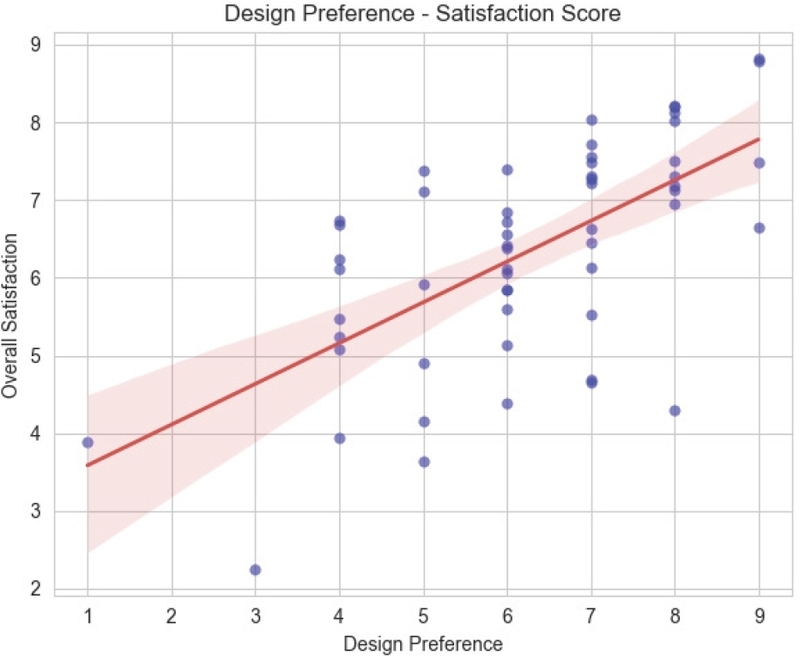
Correlation between Design Preferences and Total Score
We also tested whether participants with higher interest in robots/technology would report higher satisfaction. Pearson correlation analysis revealed no significant relationship (r = -0.064, 95% CI [-0.32, 0.20], p = .641, R2 = 0.004). The near-zero correlation and negligible variance explained indicate that prior technology interest does not influence satisfaction with the robot evaluated in this study.
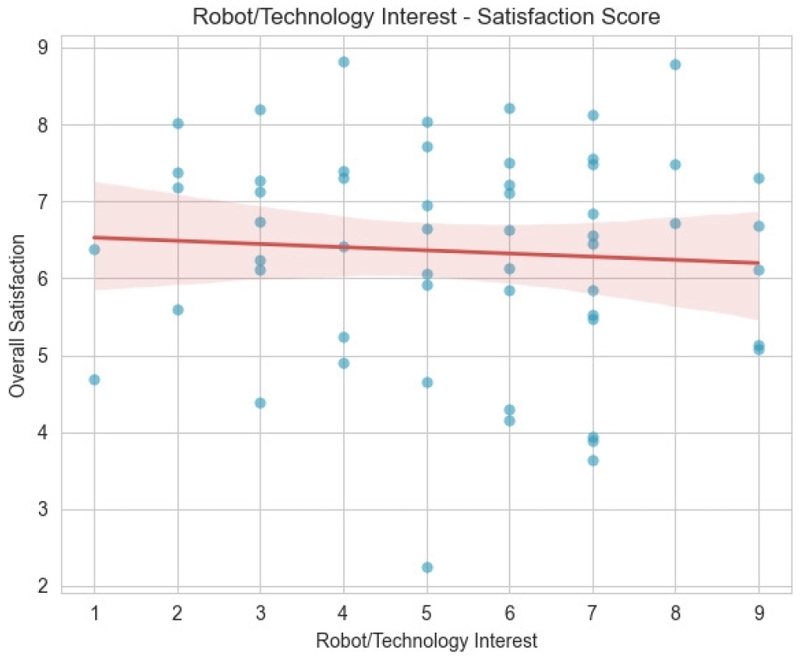
Correlation of Interest in Robot/Tech and Total Scores
An exploratory analysis examined whether overall satisfaction differed by gender. A significant gender main effect was observed, F(1, 216) = 28.14, p < .001, η² = 0.013, with female participants reporting higher satisfaction than male participants across scenarios. However, the small effect size indicates that gender accounted for only about 1.3% of the variance in satisfaction, suggesting that while a baseline difference exists, the influence of gender is modest relative to that of the utilitarian-hedonic ratio itself.
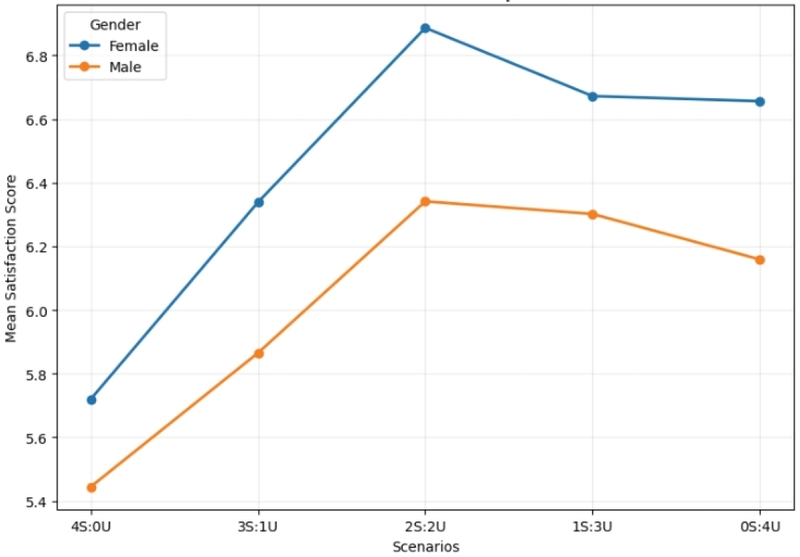
Difference in Satisfaction Scores by Gender
Summary of Main Findings
6. Discussion
This study investigated optimal utilitarian-hedonic interaction balance in domestic robot design through systematic manipulation of interaction ratios. The findings provide empirical evidence for integrated design approaches and offer practical guidance for robot development.
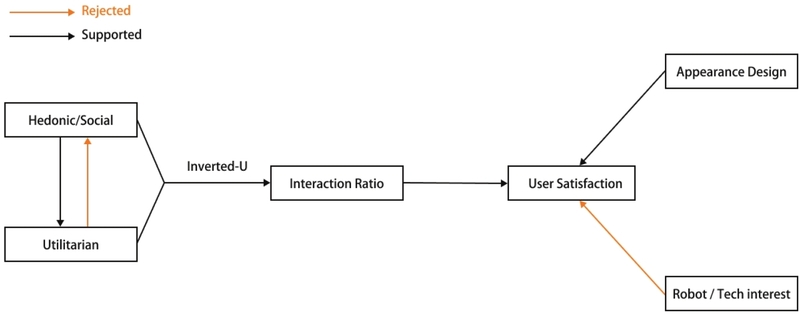
Results Overview
6. 1. Utilitarian Foundation with Hedonic Enhancement
The confirmed inverted U-shaped pattern demonstrates that balancing utilitarian and hedonic interactions represents the optimal design approach for domestic robots. The purely hedonic interaction design (4S0U) produced significantly lower satisfaction than all other conditions, indicating that even companion robots emphasizing social and emotional interaction must provide practical utility. Conversely, conditions incorporating utilitarian components maintained consistently high satisfaction, with the balanced condition (2S2U) achieving peak performance.
This pattern reveals a critical design principle: utilitarian capability serves as the foundation, while hedonic elements function as enhancement. Purely social robots risk market failure—as evidenced by commercial products like Jibo, Kuri, and Cozmo—when they lack meaningful utilitarian value. However, once utilitarian functions are established, adding hedonic elements enhances rather than detracts from user satisfaction. This suggests a ‘utilitarian-foundation + hedonic-enhancement’ development approach: prioritize functional reliability as the base layer, then augment with social interactions to amplify user experience.
The interaction analyses further revealed a critical asymmetry: hedonic elements enhance utilitarian satisfaction (β = 0.241, p < .001), but utilitarian elements do not reciprocally enhance hedonic satisfaction (β = 0.051, p = .420). Two complementary mechanisms help explain this directionality. First, Norman’s (2007) “attractive things work better” principle proposes that positive affect propagates downward to enhance perceived behavioral performance, but competence does not propagate upward to generate affect. Second, prior research has shown that users apply social heuristics to interactive technologies only when social cues are present (Nass & Moon, 2000); hedonic behaviors trigger this relational mode of evaluation, while utilitarian performance alone does not. Together, these mechanisms predict precisely the asymmetric spillover observed here.
The interview data support this account. One participant noted, “When I see robots showing expressions or interactions, I feel like they would somehow perform better even when doing the same tasks”—a direct articulation of affect-driven competence inflation. Another participant’s comment, “Since robots cannot fully perform human roles anyway, I think it would be better to emphasize cuteness and bonding that can make us understand such immaturity,” suggests a second mechanism: hedonic cues reframe the robot as a relational partner, lowering users’ tolerance threshold for functional imperfection. The desire for relational acknowledgment is further reflected in, “When I give it tasks, I’d like it to respond instead of just turning around and going away immediately.”
Overall Satisfaction = β0 + β1 (Utilitarian Count) + β2 (Hedonic Count) + ε
An additional regression of overall satisfaction on both utilitarian and hedonic counts (R² = 0.763) further supports this balance. The utilitarian dimension contributed more strongly (β1 = 0.538, p < .001), but the substantial contribution of the hedonic dimension (β2 = 0.380, p < .001) confirms that functional reliability alone is insufficient—both dimensions exert independent and substantial effects on overall satisfaction.
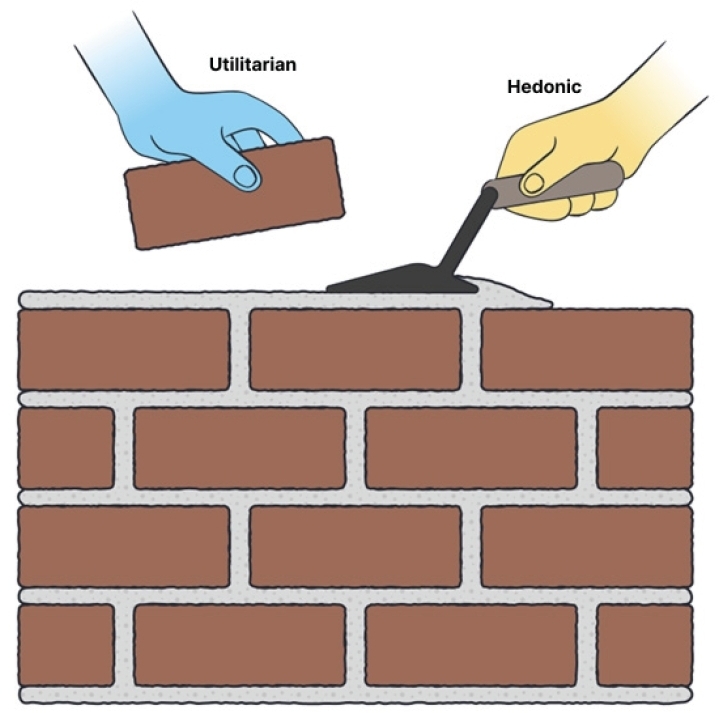
Utilitarian–Hedonic Integration
From a design perspective, this asymmetry supports cost-effective enhancement strategies: even simple expressive behaviors—brief acknowledgments, positive responses to praise, contextually appropriate reactions—can substantially boost perceived utilitarian value without requiring sophisticated implementation. As illustrated in Figure 13, just as applying cement between bricks makes them more solid, placing hedonic interactions between utilitarian ones binds them into a more cohesive user experience. This means integrated development that considers the synergy of both domains from the initial design stage, rather than simply adding hedonic dimensions after securing utilitarian dimensions.
6. 2. Appearance Design as Critical Factor
The strong correlation between appearance design preference and overall satisfaction (r = 0.633) confirms that aesthetic design constitutes a primary determinant of user acceptance, independent of interaction content. This finding is consistent with Norman’s (2007) principle that attractive things work better and with Walters et al.’s (2008) demonstration that robot appearance shapes user expectations and usability evaluations. The magnitude of the correlation—accounting for approximately 40% of variance in satisfaction—elevates appearance design from an aesthetic consideration to a strategic imperative in domestic robot development.
6. 3. Technology Interest Independence
The absence of correlation between prior robot/technology interest and satisfaction scores demonstrates that well-designed robots can achieve broad appeal across varied technology orientations. This finding challenges assumptions that domestic robots must target technology enthusiasts or early adopters. Instead, satisfaction appears determined by interaction experience itself rather than pre-existing technological attitudes. This suggests potential for mass-market penetration if robots deliver compelling utilitarian-hedonic experiences, regardless of users’ technology backgrounds.
6. 4. Design Recommendations
Based on these findings, we propose the following evidence-based design guidelines for domestic robots:
(1) Prioritize utilitarian foundation: Establish reliable functional capabilities as the base requirement. Pure hedonic design is insufficient for sustained user satisfaction.
(2) Integrate hedonic enhancement: Once utilitarian functions are established, incorporate social interactions to amplify perceived functional quality and overall satisfaction. Even simple expressive behaviors yield substantial benefits.
(3) Invest in appearance design: Allocate significant resources to aesthetic design.
(4) Target broad markets: Do not limit marketing to technology enthusiasts. Well-designed robots appeal across varied technology orientations.
(5) Design for complementarity: Develop utilitarian and hedonic elements synergistically from initial design stages rather than treating them as independent modules to be combined later.
7. Limitations and Future Research
While this study provides systematic evidence for utilitarian-hedonic balance in domestic robots, several limitations suggest directions for future research.
7. 1. Methodological Limitations
The evaluation employed video-based methodology rather than direct interaction with physical robots. While this approach enabled precise experimental control and eliminated confounding variables from prototype imperfections, practical constraints—including the complexity of robot fabrication and the logistical demands of live interaction studies—also informed this methodological decision. Physical co-presence can influence intimacy formation and satisfaction in ways not fully captured through video observation. Future research should validate these findings through live HRI studies in domestic environments. In particular, ongoing work by the authors aims to examine the relationship between a robot’s physical touch and direct human-robot interaction, which may provide empirical grounding for the tactile and spatial dimensions that video-based evaluation could not capture.
The study employed a convenience sample of young-aged participants (M = 25.1 years) within a narrow age range (22–28 years). While exploratory analyses indicated a small gender difference in baseline satisfaction, the sample composition did not adequately represent the primary target users of domestic robots—such as single-person households, older adults living alone, or families with children—whose needs and acceptance criteria likely differ substantially from those of the present sample. Optimal utilitarian-hedonic ratios may vary across life stages and household structures: older adults may prioritize utilitarian reliability and safety more strongly, while households with children may place greater value on hedonic engagement. Cross-cultural validation studies spanning diverse age groups, household types, and cultural contexts would strengthen generalizability.
7. 2. Measurement Considerations
The study assessed satisfaction through self-report questionnaires immediately following scenario exposure. Behavioral measures—such as actual adoption decisions, sustained usage patterns, or willingness-to-pay assessments—would complement self-reported attitudes and provide stronger evidence for real-world applicability. Additionally, the observed asymmetric synergy—where hedonic elements enhance utilitarian satisfaction but not vice versa—suggests deeper mechanisms warrant investigation to reveal fundamental principles about how users cognitively process and integrate different value dimensions in technology acceptance.
7. 3. Scope and Generalizability
The findings derive from evaluation of a specific robot platform (Hobbi) with particular appearance, size, and movement characteristics. Optimal utilitarian-hedonic ratios may vary across different robot morphologies, sizes, and interaction modalities. For instance, robots with more anthropomorphic appearances might shift optimal ratios due to heightened social expectations, while robots designed for physically demanding tasks might require different balances.
The scenarios emphasized discrete, episodic interactions rather than continuous ambient presence or long-term relationship development. Domestic robots operating over extended periods may require different utilitarian-hedonic balances as relationships evolve and users’ needs shift. Longitudinal studies tracking satisfaction across weeks or months of actual home deployment would illuminate temporal dynamics not captured in single-session evaluations and could capture behavioral outcomes including actual usage patterns, task delegation choices, and long-term retention rates.
Acknowledgments
This work was supported in part by the LG Electronics Home Appliance Solution Company & 2026 Hongik University Innovation Support Program Fund.
Notes
Copyright : This is an Open Access article distributed under the terms of the Creative Commons Attribution Non-Commercial License (http://creativecommons.org/licenses/by-nc/3.0/), which permits unrestricted educational and non-commercial use, provided the original work is properly cited.
References
- Amazon. (2021). Meet Astro, a home robot unlike any other. Amazon News . https://www.aboutamazon.com/news/devices/meet-astro-a-home-robot-unlike-any-other.
-
Auger, J. (2014). Living with robots: A speculative design approach. Journal of Human-Robot Interaction, 3(1), 20-42.
[https://doi.org/10.5898/JHRI.3.1.Auger]

-
Bartneck, C., & Forlizzi, J. (2004). A design-centred framework for social human-robot interaction. In Proceedings of the 13th IEEE International Workshop on Robot and Human Interactive Communication (RO-MAN 2004) (pp. 591-594). IEEE.
[https://doi.org/10.1109/ROMAN.2004.1374827]
-
Bogue, R. (2017). Domestic robots: Has their time finally come? Industrial Robot: An International Journal, 44(2), 129-136.
[https://doi.org/10.1108/IR-01-2017-0018]
- Breazeal, C. (2004). Designing sociable robots. MIT Press.
-
Chatzoglou, P. D., Lazaraki, V., Apostolidis, S. D., & Gasteratos, A. C. (2024). Factors affecting acceptance of social robots among prospective users. International Journal of Social Robotics, 16(6), 1361-1380.
[https://doi.org/10.1007/s12369-023-01024-x]
-
Chen, N., Liu, X., Zhai, Y., & Hu, X. (2023). Development and validation of a robot social presence measurement dimension scale. Scientific Reports, 13(1), 2911.
[https://doi.org/10.1038/s41598-023-28817-4]
-
Davis, F. D. (1989). Perceived usefulness, perceived ease of use, and user acceptance of information technology. MIS Quarterly, 319-340.
[https://doi.org/10.2307/249008]
-
De Graaf, M. A. M., Ben Allouch, S., & Van Dijk, J. A. G. M. (2016). Long-term evaluation of a social robot in real homes. Interaction Studies, 17(3), 462-491.
[https://doi.org/10.1075/is.17.3.08deg]
-
De Graaf, M., Ben Allouch, S., & Van Dijk, J. (2017). Why do they refuse to use my robot? Reasons for non-use derived from a long-term home study. In Proceedings of the 2017 ACM/IEEE International Conference on Human-Robot Interaction (pp. 224-233).
[https://doi.org/10.1145/2909824.3020236]
-
De Graaf, M. A. M., Ben Allouch, S., & Van Dijk, J. A. G. M. (2019). Why would I use this in my home? A model of domestic social robot acceptance. Human-Computer Interaction, 34(2), 115-173.
[https://doi.org/10.1080/07370024.2017.1312406]
-
De Graaf, M. M. A., & Ben Allouch, S. (2013). Exploring influencing variables for the acceptance of social robots. Robotics and Autonomous Systems, 61(12), 1476-1486.
[https://doi.org/10.1016/j.robot.2013.07.007]
-
Deng, E., Mutlu, B., & Matarić, M. J. (2019). Embodiment in socially interactive robots. Foundations and Trends® in Robotics, 7(4), 251-356.
[https://doi.org/10.1561/2300000056]
-
Dong, H., Liu, Y., Chu, T., & El Saddik, A. (2024). Bringing robots home: The rise of AI robots in consumer electronics. IEEE Consumer Electronics Magazine, 14(1), 4-6.
[https://doi.org/10.1109/MCE.2024.3381573]
-
Ezer, N., Fisk, A. D., & Rogers, W. A. (2009). More than a servant: Self-reported willingness of younger and older adults to having a robot perform interactive and critical tasks in the home. In Proceedings of the Human Factors and Ergonomics Society Annual Meeting (Vol. 53, pp. 136-140).
[https://doi.org/10.1177/154193120905300206]
-
Fink, J. (2014). Dynamics of human-robot interaction in domestic environments (Doctoral dissertation, EPFL).
[https://doi.org/10.5075/epfl-thesis-6329]
-
Fink, J., Bauwens, V., Kaplan, F., & Dillenbourg, P. (2013). Living with a vacuum cleaning robot: A 6-month ethnographic study. International Journal of Social Robotics, 5(3), 389-408.
[https://doi.org/10.1007/s12369-013-0190-2]
-
Forlizzi, J. (2007). How robotic products become social products: An ethnographic study of cleaning in the home. In Proceedings of the ACM/IEEE International Conference on Human-Robot Interaction (pp. 129-136).
[https://doi.org/10.1145/1228716.1228734]
- Frayling, C. (1993). Research in art and design. Research Papers in Art and Design, 1, 1-5.
- Frid, E., Bresin, R., & Alexanderson, S. (2018). Perception of mechanical sounds inherent to expressive gestures of a NAO robot: Implications for movement sonification of humanoids. In Sound and Music Computing Conference (pp. 43-51).
-
Gao, Y., Chang, Y., Yang, T., & Yu, Z. (2025). Consumer acceptance of social robots in domestic settings: A human-robot interaction perspective. Journal of Retailing and Consumer Services, 82, 104075.
[https://doi.org/10.1016/j.jretconser.2024.104075]
- Garza, C. G. M. (2018). Failure is an option: How the severity of robot errors affects human-robot interaction (Doctoral dissertation, Carnegie Mellon University).
-
Han, B., & Liu, D. (2025). Peeling back acceptance: An onion model of AI humanoid robot adoption in homes. Technology in Society, 103173.
[https://doi.org/10.1016/j.techsoc.2025.103173]
-
Hendriks, B., Meerbeek, B., Boess, S., Pauws, S., & Sonneveld, M. (2011). Robot vacuum cleaner personality and behavior. International Journal of Social Robotics, 3(2), 187-195.
[https://doi.org/10.1007/s12369-010-0084-5]
- Hoffman, G. (2019). Anki, Jibo, and Kuri: What we can learn from social robots that didn't make it. IEEE Spectrum.
-
Huang, H., Fu, W., & Chen, R. (2024). User needs for home robotic devices: A comparison between middle-aged and older adults. In International Conference on Human-Computer Interaction (pp. 226-244). Springer.
[https://doi.org/10.1007/978-3-031-60913-8_16]
-
Kabacińska, K., Dosso, J. A., Vu, K., Prescott, T. J., & Robillard, J. M. (2025). Influence of user personality traits and attitudes on interactions with social robots: Systematic review. Collabra: Psychology, 11(1), 129175.
[https://doi.org/10.1525/collabra.129175]
-
Kóczi, D., & Sárosi, J. (2025). Safety engineering for humanoid robots in everyday life-Scoping review. Electronics, 14(23), 4734.
[https://doi.org/10.3390/electronics14234734]
-
Lee, I. (2021). Service robots: A systematic literature review. Electronics, 10(21), 2658.
[https://doi.org/10.3390/electronics10212658]
- LG Electronics. (2023). LG ushers in 'zero labor home' with its smart home AI agent at CES 2024. LG Newsroom. https://www.lg.com/global/newsroom/news/home-appliance-solution/lg-ushers-in-zero-labor-home-with-its-smart-home-ai-agent-at-ces-2024/.
-
Mahdi, H., Akgun, S. A., Saleh, S., & Dautenhahn, K. (2022). A survey on the design and evolution of social robots-Past, present and future. Robotics and Autonomous Systems, 156, 104193.
[https://doi.org/10.1016/j.robot.2022.104193]
-
Nass, C., & Moon, Y. (2000). Machines and mindlessness: Social responses to computers. Journal of Social Issues, 56(1), 81-103.
[https://doi.org/10.1111/0022-4537.00153]
- Norman, D. (2007). Emotional design: Why we love (or hate) everyday things. Basic Books.
-
Pham, T. X. N., Hayashi, K., Becker-Asano, C., Lacher, S., & Mizuuchi, I. (2017). Evaluating the usability and users' acceptance of a kitchen assistant robot in household environment. In Proceedings of the 26th IEEE International Symposium on Robot and Human Interactive Communication (RO-MAN 2017) (pp. 987-992). IEEE.
[https://doi.org/10.1109/ROMAN.2017.8172423]
-
Premathilake, G. W., Li, H., Li, C., Liu, Y., & Han, S. (2025). Understanding the effect of anthropomorphic features of humanoid social robots on user satisfaction: A stimulus-organism-response approach. Industrial Management & Data Systems, 125(2), 768-796.
[https://doi.org/10.1108/IMDS-10-2023-0781]
-
Radka, B., Layne, E., & Cakmak, M. (2025). Attitudes towards humanoid robots for in-home assistance. In Proceedings of the 34th IEEE International Conference on Robot and Human Interactive Communication (RO-MAN 2025) (pp. 86-93). IEEE.
[https://doi.org/10.1109/RO-MAN63969.2025.11217783]
-
Ray, C., Mondada, F., & Siegwart, R. (2008). What do people expect from robots? In Proceedings of the 2008 IEEE/RSJ International Conference on Intelligent Robots and Systems (pp. 3816-3821). IEEE.
[https://doi.org/10.1109/IROS.2008.4650714]
- Samsung Electronics. (2024). A day in the life with Ballie: An AI companion robot for the home. Samsung Newsroom. https://news.samsung.com/us/samsung-ballie-ai-companion-robot-home-video-ces-2024/.
-
Sauer, J., & Sonderegger, A. (2009). The influence of prototype fidelity and aesthetics of design in usability tests: Effects on user behaviour, subjective evaluation and emotion. Applied Ergonomics, 40(4), 67-677.
[https://doi.org/10.1016/j.apergo.2008.06.006]
-
Schneiders, E., Kanstrup, A. M., Kjeldskov, J., & Skov, M. B. (2021). Domestic robots and the dream of automation: Understanding human interaction and intervention. In Proceedings of the 2021 CHI Conference on Human Factors in Computing Systems.
[https://doi.org/10.1145/3411764.3445629]
-
Sheng, Q., Zhou, Z., Li, J., Mi, X., Xiang, P., Chen, Z., Xu, H., Jia, S., Wu, X., Cui, Y., et al. (2025). A comprehensive review of humanoid robots. SmartBot, 1(1), e12008.
[https://doi.org/10.1002/smb2.12008]
-
Song, Q., & Li, L. (2021). Home robot control system based on Internet of Things and fuzzy control. Mobile Information Systems, 2021, 9409556.
[https://doi.org/10.1155/2021/9409556]
-
Tong, Y., Liu, H., & Zhang, Z. (2024). Advancements in humanoid robots: A comprehensive review and future prospects. IEEE/CAA Journal of Automatica Sinica, 11(2), 301-328.
[https://doi.org/10.1109/JAS.2023.124140]
-
Venture, G., & Kulić, D. (2019). Robot expressive motions: A survey of generation and evaluation methods. ACM Transactions on Human-Robot Interaction, 8(4), 1-17.
[https://doi.org/10.1145/3344286]
-
Walters, M. L., Syrdal, D. S., Dautenhahn, K., Te Boekhorst, R., & Koay, K. L. (2008). Avoiding the uncanny valley: Robot appearance, personality and consistency of behavior in an attention-seeking home scenario for a robot companion. Autonomous Robots, 24(2), 159-178.
[https://doi.org/10.1007/s10514-007-9058-3]
-
Wiklund, M. E., Thurrott, C., & Dumas, J. S. (1992). Does the fidelity of software prototypes affect the perception of usability? In Proceedings of the Human Factors Society Annual Meeting (Vol. 36, pp. 399-403).
[https://doi.org/10.1177/154193129203600429]
-
Woods, S., Walters, M., Koay, K. L., & Dautenhahn, K. (2006). Comparing human robot interaction scenarios using live and video-based methods: Towards a novel methodological approach. In Proceedings of the IEEE International Workshop on Advanced Motion Control (pp. 750-755).
[https://doi.org/10.1109/AMC.2006.1631754]
-
Woods, S. N., Walters, M. L., Koay, K. L., & Dautenhahn, K. (2006). Methodological issues in HRI: A comparison of live and video-based methods in robot-to-human approach direction trials. In Proceedings of the 15th IEEE International Symposium on Robot and Human Interactive Communication (RO-MAN 2006) (pp. 51-58).
[https://doi.org/10.1109/ROMAN.2006.314394]
-
Yoo, H.-Y., & Kim, M. (2024). Preferences and expectations for home robot tasks: Comparison according to age and household type in Republic of Korea. Behavioral Sciences, 14(11), 1070.
[https://doi.org/10.3390/bs14111070]
-
Young, J. E., Hawkins, R., Sharlin, E., & Igarashi, T. (2009). Toward acceptable domestic robots: Applying insights from social psychology. International Journal of Social Robotics, 1(1), 95-108.
[https://doi.org/10.1007/s12369-008-0006-y]
-
Zimmerman, J., Forlizzi, J., & Evenson, S. (2007). Research through design as a method for interaction design research in HCI. In Proceedings of the SIGCHI Conference on Human Factors in Computing Systems (pp. 493-502).
[https://doi.org/10.1145/1240624.1240704]
- 建築知識編集部. (2022). 一生使えるサイズ事典 住宅のリアル寸法 完全版. エクスナレッジ.