
Brand Perception and Purchase Intention of Tea Packaging Design among Generation Z in China: An Empirical SEM Analysis
초록
Background China’s Generation Z consumers (aged 18–30) are reshaping the tea market with their purchasing power and emphasis on emotional and social values. Previous research on tea packaging has primarily focused on visual aesthetics, overlooking the combined influence of emotional, social, and functional factors on brand perception and purchase intention. This study adopts the Stimulus-Organism-Response (S-O-R) framework, Norman’s three-level emotional design theory, and perceived value theory to examine how packaging stimuli—specifically perceived beauty, emotional value, social influence, and functional perception—affect brand perception and ultimately drive purchase intention among Gen Z tea consumers in China.
Methods An online survey was conducted with 484 Chinese respondents aged 18–30, using a 5-point Likert scale to measure perceived beauty, emotional value, social influence, functional perception, brand perception, and purchase intention. Reliability and validity tests confirmed the appropriateness of the scale. Structural equation modeling (SEM) was used to test nine hypothesized paths, and bootstrap analysis assessed mediating effects. Nonparametric tests were conducted to compare perceptions across different levels of purchase intention.
Results Perceived beauty (β = 0.190, p = 0.005), emotional value (β = 0.159, p = 0.004), social influence (β = 0.109, p = 0.009), and functional perception (β = 0.109, p = 0.028) all had significant direct effects on purchase intention. Brand perception partially mediated all four paths, indicating that external packaging factors positively influence Gen Z consumers’ purchasing behavior, with brand perception serving as a key linking mechanism. The findings suggest that designers and brands should adopt a collaborative design strategy. Otherwise, packaging may convey a fragmented narrative, making it difficult to foster consistent consumer preferences and actions.
Conclusions This study is the first to integrate the S-O-R framework, Norman’s emotional design theory, and perceived value theory into a unified SEM model, revealing two distinct pathways in China’s Gen Z tea market: beauty → emotion → brand → purchase and function → brand → purchase. Emotional evaluation emerged as a critical driver linking packaging cues to purchase intention, with brand awareness playing a central mediating role. For tea brands and designers, this implies the need to combine credible functionality with aesthetic elements that evoke emotional responses, reinforce brand meaning through social narratives, and maintain consistency across all consumer touchpoints to enhance brand evaluation and conversion rates.
Keywords:
Tea Packaging Design, Generation Z, Brand Perception, Purchase Intention, S-O-R Model1. Introduction
Customers in Generation Z, who are between the ages of 18 and 30, are now the main factor driving tea sales due to their growing spending power and increased health consciousness. This group has specific tastes in terms of the appearance, usefulness, and other aspects of packaging in addition to wanting premium tea. In light of this, tea brands have started to compete using structural forms, sustainability claims, cultural emblems, and visual aesthetics. The industry is currently overrun with conventional packaging designs, nevertheless, which frequently ignore the emotional needs of young customers for cultural identity, emotional resonance, and customization. Additionally, the impact of influencer endorsements, social media usage, and the increased societal influence resulting from word-of-mouth is often overlooked in brand package marketing.
Even while research on tea packaging has increased recently, not many studies have looked at how specific aspects of container design affect the purchasing decisions of young customers. Theoretically, the majority of current research concentrates on the visual content and packaging form, paying little attention to the interactions between design aspects and how they affect brand perception. In order to close these gaps, this study investigates ways to improve young customers’ views of tea brands by integrating and expanding the driving linkages among tea packaging design features. This will ultimately increase sales and brand competitiveness.
Therefore, the purpose of this study is to fill up research gaps about the dimensions of tea packaging by using empirical methodologies. It develops a Stimulus-Organize-Response (S-O-R) model that incorporates four fundamental variables: aesthetic value, emotional value, perceived functionality, and social influence. It builds on Norman’s three-level emotional design framework and perceived emotional value theory. This study then collected 484 genuine data points through a survey experiment. The intricate interactions between several variables were assessed using a structural equation model. In order to provide evidence-based support for tea packaging design and marketing strategies, route analysis and mediation analysis were finally integrated to show how internal and external variables of tea packaging affect Generation Z’s purchase intent through brand perception.
2. Literature Review
2. 1. Psychological Mechanisms of Packaging Cues: An Integration Pathway for S-O-R and Emotional Design
According to the S-O-R model, behavior is influenced by internal states that are linked to external stimuli. Packaging cues are tangible stimuli used in retail settings that change customers’ feelings and thoughts, influencing their decisions and intents to buy. In contrast to store ambiance, packaging serves as a design element as well as a means of conveying information. In addition to producing visual appeal and brand meaning, it sends messages about sustainability and functionality. This paper uses Norman’s three levels of emotional design to explain the “organism” stage. Style and color evoke visceral reactions. Clear information, simplicity of opening, and storage convenience all influence behavioral reactions. Cultural narratives, packaging’s identity, and the outside world are the sources of reflective reactions. We also use the ideas of experience consumption and perceived worth. Along with functional and social value, packaging also adds emotional value, which strengthens brand perception and encourages purchases. According to Figure 1, the study’s primary stimuli are Perception of Beauty (PB), Emotional Value (EV), Social Impact (SI), and Function Perception (FP). In the organismic stage, these elements influence how people perceive a brand and its emotional worth; in the response stage, these internal emotions then affect their intention to buy. The conceptual model for this investigation is shown in Figure 2. The S-O-R interaction is made clearer by this model, which also serves as a basis for further variable measurement and hypothesis testing.
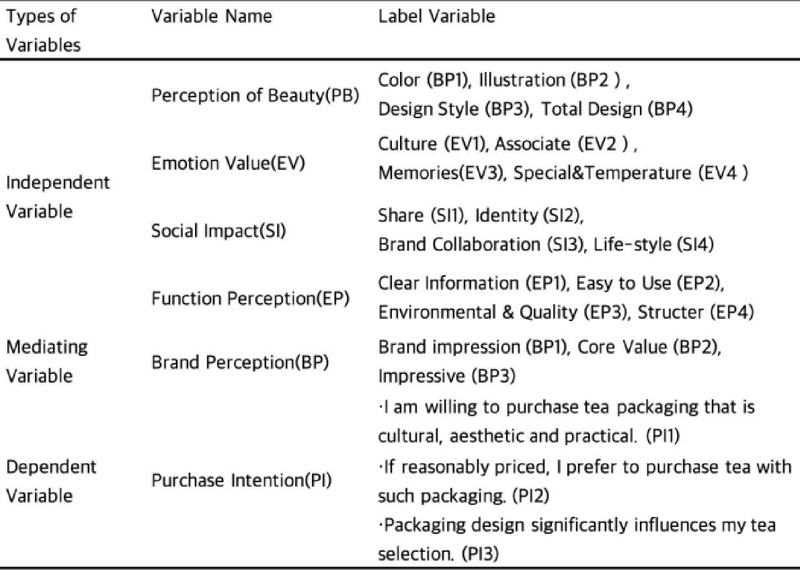
Summary of the interview results on the four dimensions of tea packaging design by Generation Z consumers
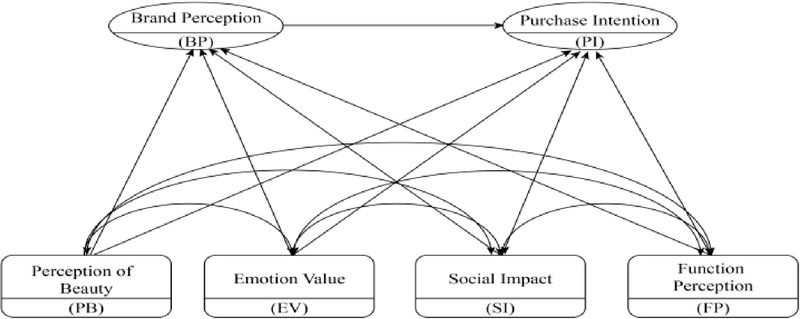
Research model
2. 2. Key Structures of Stimulus
The term “stimulus” in the S-O-R framework relates to package signals such color schemes, materials, layouts, perceptions of eco-labels, emotional reactions, and outside influences. These cues influence purchasing desire by triggering organism appraisal. According to Kıymalıoğlu’s research, brand meaning and fluency are driven by packaging color and simplicity. In order to find out how various packaging signals affect the psychological states of Generation Z, this study looks into tea packaging. Our stimulus, which is described by four characteristics, highlights psychological reactions following viewing and use. The following explains these factors and how they influence purchase intention through brand perception.
The degree of visual aesthetic appeal that packaging conveys is known as perception of beauty (PB). It displays overall style, shape, color harmony, and layout clarity. According to research by Lavie & Tractinsky (2004), visual aesthetics includes two different dimensions: pleasantness and shape evaluation. These dimensions include originality and inventiveness in the expressive aspect as well as order and clarity in the classical aspect. A consistent style in packaging design creates a favorable brand impression. Certain design styles can express concepts like elegance or naturalness. Customers that place a high importance on product aesthetics react more strongly to eye-catching designs that increase preference. Additionally, studies by Silayoi & Speece (2004) show that hedonistic and aesthetically pleasing designs improve consumers’ brand assessments and buy intentions, with the appearance of product packaging directly raising the possibility of a purchase. In light of this, we define PB as customers’ assessment of the aesthetic appeal and coherence of a package, and we put forth the following theories:
H1. Perception of beauty positively influences brand perception.
H2. Perception of beauty positively influences purchase intention.
The good emotions that packaging arouses are referred to as emotional value (EV). It focuses on how design inspires joy, emotion, or pride in customers. These feelings can be evoked by texture, color, imagery, and narrative. Emotional value is a critical component that individuals obtain from items, surpassing both price and usefulness, according to research on perceived value. Design can arouse feelings during both usage and observation, as evidenced by Desmet & Hekkert’s (2007) study on product experiences. Since people’s interpretations of brands are influenced by their emotions, packaging that is consistent in appearance and has a clear meaning improves brand impressions. Additionally, Batra & Ray (1986) discovered that happy feelings strengthen purchase intention by improving brand attitude and perceived quality. EV serves as an emotional assessment. Emotional reactions can be used as markers of processing fluency; harmonious designs are thought to be simpler to process. Furthermore, according to assessment theory, pleasant arousal speeds up the transition from perception to intention, decreases hesitation, and increases approach desire. Consequently, the following theories are put forth.
H3. Emotional value positively influences brand perception.
H4. Emotional value positively influences purchase intention.
The term “social influence” (SI) describes how peer groups and social circles affect a person’s opinions and decisions. It includes the views, endorsements, and perceived popularity of others. This is strongly related to social influence and subjective norms in consumer behavior, which shape behavioral intentions. Additionally, Bearden et al. (1989) discovered that people vary in how much they agree with the opinions of others, which affects how they react to goods and designs. Packaging is a communication to the public. It expresses taste and identity in social contexts and on social platforms. Brand impressions can be improved and implications can be shaped by visually appealing and conversational packaging. Brand impressions are enhanced when packaging is endorsed by peers or conforms to group styles. Trendiness’s ramifications also draw attention and promote social affiliation, which raises the possibility of a purchase.
The organismic component of BP is the main mechanism via which SI operates in this study. Reconstructing brand meaning through cues like trend markers, community symbols, and gift-giving appropriateness raises BP and then turns it into PI. This placement is in line with Gen Z’s consumption psychology, which values visibility for identity consistency and social appraisal but is wary of too conformist cues or symbolic packaging that has reliable environmental or functional credentials. The following theories are put out in light of this theoretical framework:
H5. Social impact positively influences brand perception.
H6. Social impact positively influences purchase intention.
A product’s overall usability and whether or not it provides a comfortable user experience are referred to as function perception (FP). It includes unambiguous product information, portability and protective performance, ease of opening and shutting, and compatibility of materials with intended usage. These elements influence consumer assessments and decisions, according to research by Silayoi & Speece (2004). Convenient features and clear labeling help customers evaluate products and make decisions. Additionally, a product’s look conveys ergonomic and functional features, which helps to establish brand perceptions. Through everyday use, packaging creates brand meaning as an information carrier. Hypotheses are put forward in light of the aforementioned theories.
H7. Function Perception positively influences brand perception.
H8. Function Perception positively influences purchase intention.
2. 3. Key Structures of Organism (Mediating Variables)
Consumer opinions and assessments of a brand are referred to as brand perception (BP). Packaging helps create this impression by communicating information and indicating elegance and quality. Customers that have a positive brand perception are more likely to make a purchase. Multiple signals transmitted through packaging are integrated into brand perception in packaging contexts. These inputs influence conclusions about quality, dependability, and self-congruence through cue processing and signal transmission, which lowers perceived risk and raises perceived value. Purchase likelihood is increased by perceived quality, brand associations, and brand image, according to prior studies. Additionally, packaging can provide brand meaning, which strengthens the desire to buy.
BP is modeled in this study as a key mediating variable that incorporates diverse packing cues into judgments that are pertinent to decisions. Color, proportion, and visual coherence are examples of aesthetic components that improve BP by enhancing perceived sophistication and fluency. Functional components that increase diagnosticity and reliability, such eco-labels, reinforce BP. Positive appraisal is increased by pleasant arousal from emotional value. Trendiness, giftability, and community symbols are social impact factors that largely change the meaning of brands rather than immediately encouraging purchases. As a result, BP mediates the flow of information to purchase intention (PI) that is motivated by both want and reason. Boundary conditions are recognized: purchasing intention (R) is influenced by social cues if they affect brand perception (O).
H9. Brand Perception positively influences purchase Intention.
H10a: Brand Perception mediates the effect of perception of beauty on purchase intentions.
H10b: Brand Perception mediates the effect of emotional value on purchase intentions.
H10c: Brand Perception mediates the effect of social impact on purchase intentions.
H10d: Brand Perception mediates the effect of function perception on purchase intentions.
2. 4. Key Structures of Response
The probability that customers will buy a product in the near future is known as Purchase Intentions (PI). According to consumer theory, the most accurate indicator of future behavior is intention. Clear and attractive packaging designs both directly boost the likelihood that a product will be purchased and encourage purchases by improving brand recognition. The “Preference Index” in this study is defined as customers’ self-reported propensity to select tea items with this particular packaging. The “Preference Index” in this study is defined as customers’ self-reported propensity to select tea items with this particular packaging. Brief phrases like “I intend to purchase,” “I plan to purchase,” and “I would consider purchasing,” all of which are drawn from validated measures, are used to measure this indicator.
3. Methods
This study created and put into practice a methodical procedure to answer the research questions. First, Chinese Gen Z adult customers (those between the ages of 18 and 30) were identified as research subjects. Perceived emotional value theory and Norman’s affective design viewpoints were combined inside the S-O-R framework to identify and measure the following important constructs: PB, EV, SI, and FP as external stimuli.PI is the behavioral result, and BP is the mediator at the organismic level. A total of 758 responses were collected. After removing cases with abnormal completion time and extreme response patterns, and restricting the sample to participants aged 18–30, 484 valid questionnaires were retained for the final analysis (Figure 3). An online survey was used to gather data, and a pretest was conducted to optimize the items and translations. The formal research then used quota sampling based on age and geography. Lastly, SEM path analysis was used to assess model fit and path correlations, and SPSS and AMOS were used for validity and reliability testing. Practical suggestions for tea packaging design and brand management are put forth in light of these findings.
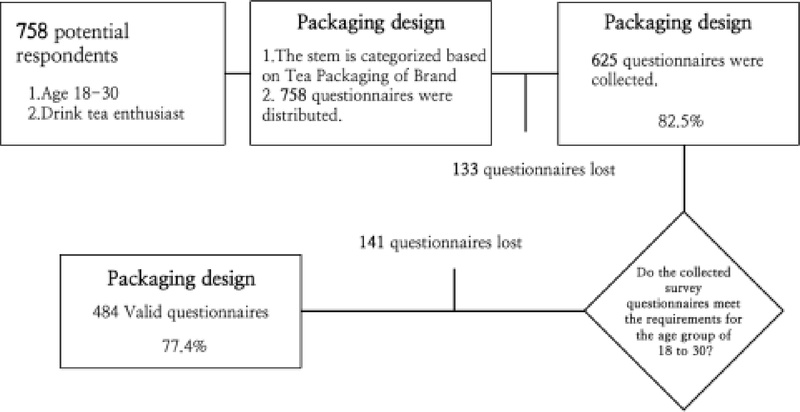
Data colletion process
3. 1. Measuring instruments
This study investigates the direct and indirect effects of tea packaging design components on Gen Z consumers’ brand perception and purchase intent. 22 assessment items encompassing functional perception, aesthetic perception, emotional value, social influence, perceived sustainability, brand cognition, and purchase intention were created and distributed for the study. And The final sample size of 484 meets commonly accepted requirements for structural equation modeling and ensures sufficient statistical power. The items mentioned in Table 1 were used to evaluate all structures and user experience aspects. These scales were modified to fit the research setting in order to guarantee semantic appropriateness, validity, and reliability. They were based on proven measuring techniques from the domains of design management, marketing, and sustainable consumption.

Cronbach’s Alpha Reliability Analysis
3. 2. Questionnaire Design
This study systematically assesses how different packaging components affect brand perception and, in turn, promote purchase intent using a single-factor, within-group comparison technique. Examining how various packaging aspects elicit psychological reactions during the Organism stage and then convert into purchase intent is the main goal of the study, which also aims to clarify the underlying mechanisms that connect these components to brand perception.
Because China is the world’s greatest producer and the country where tea originated, its consumers have access to a wealth of information on tea and a wide range of markets. China produces around half of the world’s tea, according to a recent FAO market analysis, highlighting its wide market reach and familiarity with consumers. China was thus selected as the primary research region. Because these elements offer a practical and policy-relevant setting for evaluating how Gen Z reacts to tea packaging.
3. 3. Personal Basic Information Analysis
The demographic traits of the respondents were examined in this study report. The findings demonstrated that the sample structure was balanced and appropriate. 484 of the 758 samples that were gathered satisfied the needs of Generation Z, which is defined as those who are between the ages of 18 and 30. Of them, 52.89% were women and 47.11% were men. Students made up 26.45% of the occupational categories, while office workers made up 50.21 percent. 59.09% of respondents said that they preferred to buy tea at physical stores, with presents coming in second. In conclusion, the sample’s attributes were in general in line with the tea consumption packaging’s contact characteristics. Generation Z shown more sensitivity to packaging in terms of visual appeal, readability of information, and social expression. Customers were more likely to notice the packing materials and structure than they were to notice online reviews or just visual encounters. This is due to the fact that a larger percentage of transactions take place offline than online. As a result, these data are ideal for examining the ways in which brand recognition, usability, and visual appeal are influenced by box design and how this influences purchase intentions.
3. 4. Research Methodology
The analytical methodology used in this study is “two-stage.” First, each latent variable scale’s convergent and discriminant validity were assessed using confirmatory factor analysis (CFA) in SPSS. Fornell-Larcker’s overall fit indices were employed to guarantee the measurement model’s validity and dependability. SEM was then used in AMOS to thoroughly investigate path linkages based on SOR.
4. Results
Using information from the S-O-R framework and within-subjects design, this chapter presents standardized path coefficients and significance levels for each package dimension’s impact on behavior through brand perception, based on the previously indicated research methodology and assumptions. The findings are shown in a hierarchical manner according to path level to prevent information overload and emphasize mechanism differences.
4. 1. Measurement Model
In order to verify the appropriateness of the measurement instruments, this study performed validity and reliability tests on the measurement model based on the reflective measurement paradigm put out by Ledgerwood and Shrout (2011) before moving on to structural path testing.
Harman’s single-factor test was also used in this work to evaluate common method bias (CMB). All measurement items in both sample groups were subjected to principal component analysis in accordance with Podsakoff et al. (2003). From every dataset, six factors were identified. The findings showed that the first component accounted for 38.021% of the overall variance, while the combined factors explained 73.828%. This indicates that the dataset has a significant amount of explanatory power. It was concluded that CMB had little significant influence on the findings since no single factor dominated the variation.
The reliability and validity test results for each packaging element are further presented in table 1 after the variance-explaining structure analysis. All latent variables attained acceptable levels, as shown by the findings in the figure: Good internal consistency was shown by Cronbach’s α, which ranged from 0.802 to 0.894, and composite reliability (CR), which ranged from 0.810 to 0.894. Both values were above 0.70. Each item’s standardized factor loadings, which accurately reflected related latent variables, ranged from 0.639 to 0.774. Convergent validity was supported by the Average Variance Extracted (AVE) values, which varied from 0.587 to 0.678 and were all more than 0.50. As a result, the research scale exhibits strong validity and reliability, adequately bolstering further path and mediating impact investigations.
To further confirm convergent validity, item-level CFA statistics were examined, including non-standardized estimates, standard errors, critical ratios (t-values), and p-values. All measurement items demonstrated statistically significant factor loadings (p < 0.001). The standardized loadings ranged from 0.745 to 0.843, with standard errors between 0.051 and 0.093 and t-values all exceeding 15.0. These results indicate that each indicator contributes significantly to its corresponding construct and that the measurement model meets the requirements for convergent validity.
All items have satisfactory discriminant validity based on interstructural correlations. All of the latent correlations in the packaging dimension data were moderate, demonstrating adequate separation between components, and well below the widely accepted discriminant validity limits (r < 0.70; HTMT < 0.85–0.90)(Table2). Discriminant validity was not threatened by demographic variables.
HTMT Results
We performed normalcy tests for PB, EV, SI, FP, and PI. We used the Shapiro–Wilk (S–W) test since each variable had N more than 50 (Table 3). They all show roughly normal behavior, indicating that the null hypothesis of normalcy is maintained.
Analysis results of normality test
All of the constructs have sufficient discriminant validity according to the Fornell-Larcker criterion (Table 4). Perception of Beauty has a square root of AVE of 0.792, more than its maximum absolute inter-construct correlation of 0.519. AVE = 0.823(> 0.390) for Emotional Value, 0.782 (> 0.492) for Social Influence, 0.801 (> 0.519) for Functional Perception, 0.766 (> 0.518) for Brand Perception, and 0.817 (> 0.423) for Purchase Intention. As a result, all six constructs have support for discriminant validity. And Variance Inflation Factor (VIF) values were examined to assess multicollinearity. All indicators reported VIF values between 1.69 and 2.53, far below the recommended threshold of 5, indicating that multicollinearity was not a concern in this study.
Pearson Correlation Matrix (standardized)
The entire model was then put to the test. The values of the widely used goodness-of-fit indices—CMIN/DF, IFI, TLI, CFI, and RMSEA—under different factor configurations are shown in Table 5 based on structural model analysis. Overall, a good model fit was indicated by all indices meeting suggested levels.
Results of validated factor analysis
4. 2. SEM and direct and mediated path tests
SEM is used in this study to test the proposed correlations between the variables. SEM is a thorough approach that allows for the estimation of complex route and indirect effects by concurrently evaluating measurement and structural models within a theory-driven framework (Hair, 2014). SEM evaluates the psychological processes by which various aspects of packaging influence brand perceptions and, in turn, influence the purchase intentions of Gen Z consumers within the research scenario. The structural links between the constructs are depicted in Figure 4. 22 observed items from both display situations are included in the final model after normalization and optimization based on the previously indicated modeling requirements. The ensuing sections present SEM assessments of mediated routes and direct effects based on this model.
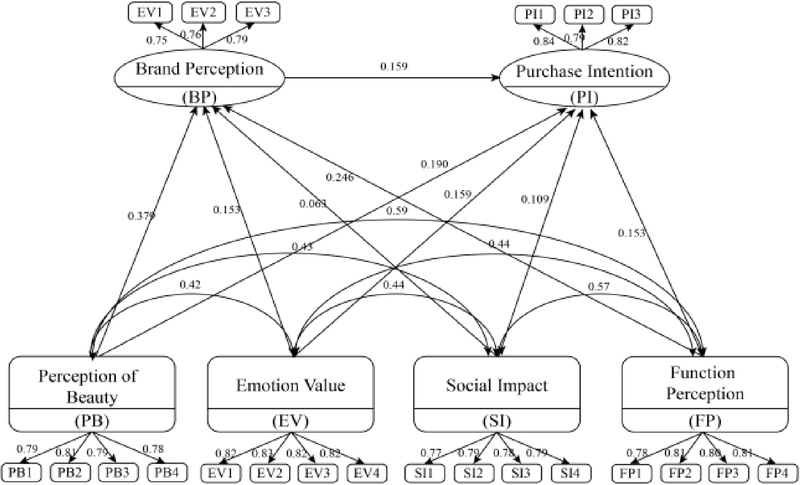
Structural equation modeling
All indices satisfy (or significantly surpass) widely advised standards, indicating excellent model fit, according to the model fit results displayed in Table 6. In particular: PNFI = 0.811, PCFI = 0.838, both above 0.50, CMIN/DF = 1.08 (less than 3), RMSEA = 0.013 (less than 0.08), GFI = 0.963, AGFI = 0.951, NFI = 0.965, IFI = 0.997, TLI = 0.997, CFI = 0.997, all exceeding 0.90. With incredibly low residual levels, these results show that the measurement model structure is strong enough to enable further path estimation and mediation effect testing.
Measurement model fit indices
By estimating path coefficients and their significance levels (using the bootstrapping approach with 5000 resamples) and the amount of path effects, the structural model path analysis evaluated the links among latent variables. First, direct effects are discussed (Table 7). PB (PB-BP, β = 0.379, p < 0.001), FP (FP-BP, β = 0.246, p = 0.037), EV (EV-BP: β = 0.153, p = 0.004), and SI (SI-BP, β = 0.063, p < 0.001) were all supported by all of the coefficients. The findings suggest that the main determinants of brand evaluation for Gen Z consumers are visual appeal and craftsmanship or functional legibility.
Testing for direct effects
It was further demonstrated by mediation analysis (Table 8) that BP had noteworthy mediating effects on each of the four routes. While its influence is comparatively smaller in FP (0.032, 0.060) and EV (0.022, 0.009) to PI, BP shows the largest indirect effect from SI to PI (0.112, 0.155), followed by PB (0.044, 0.079). This pattern indicates partial mediation because the straight path from brand to PI is likewise positive. Each cue’s impact is mediated by BP, which also acts as the primary conduit connecting packaging cues and purchase intention.
Testing for mediated effects
Finally, the results give a clearer view of consumers’ overall responses to purchase intention (Table 9). PB shows the highest total effect (0.234), which comes from both its direct effect (0.19) and its smaller mediated effect through BP (0.044). EV (0.181) and FP (0.185) have similar total effects, mainly driven by their direct paths, with only small indirect effects. SI has a smaller direct effect (0.109), but its mediated effect is strong (0.112), giving a total effect of 0.221. These combined results show the overall impact of each factor on consumers’ purchase intention.
Total effects
5. Discussion
This study looks at how Gen Z consumers’ opinions about packaging components affect their intention to buy by influencing their perception of the brand. The results validate earlier studies. Purchase intent is influenced by the tea packaging’s perceived beauty (PB), perceived utility (FP), emotional value (EV), and social impact (SI), all of which have an impact on consumption experience, emotional reactions, and outside influences. This link is partially mediated by brand perception (BP). Below is a discussion of the findings.
5. 1. Perception of beauty as the primary driver of purchase intention
The main factor influencing purchase intention is perceived beauty, which influences both direct and brand-mediated pathways. Out of all the information cues, it has the biggest impact on how people perceive a brand. Aesthetic value may improve positive emotions and processing fluency in Gen Z, integrating overall brand appraisal to increase purchase intent. As long as information clarity and material credibility are preserved, the combined effect of aesthetics on brand perception and purchase intent should be maximized in practice by giving priority to harmonious color systems, proportional or shape coherence, and achieving aesthetic consistency—for example, in thumbnails and unboxing content.
5. 2. Strong Effects of Emotional Value and Functional Perception on Purchase Intention
The route from packaging to action is made up of both functional perception and emotional value. According to this study, emotional value largely affects decision-making by raising emotional arousal, which in turn causes people to exhibit more positive emotions and behaviors. This results in a greater purchase intention since the chosen product is perceived as more appropriate and certain. This emotional resonance facilitates quick decision-making for Generation Z, who commonly use packaging as a micro-expression of their individual preferences and identities. On the other hand, functional perception lessens uncertainty. According to research by Kıymalıoğlu et al. (2024) and Tiboni-Oschilewski et al. (2024), robustness of materials, closed quality, and clear information architecture all show capabilities and dependability, turning interest into confidence and raising the chance of purchase.
5. 3. Social influence: limited direct effect, strong brand-mediated impact
Instead of immediately encouraging purchases, the social influence that packaging conveys through trend markers, community-related symbols, gift prompts, and social media-friendly clarity largely reconstructs brand meaning. These components serve as symbolic signals, placing the brand within well-known reference groups and lifestyles to improve its perceived status, current relevance, and public acceptance (Ton et al., 2024). Packaging created for these performative contexts boosts brand reputation and perceived distinctiveness, which lowers choice uncertainty given Gen Z consumers’ propensity to anticipate social judgment. Therefore, the ideal way to conceptualize social influence is as a process of brand patterns that enhances the associative network around the brand, thereby fostering favorable circumstances for subsequent decisions.
5. 4. Brand perception as the core mediator linking packaging cues to intention
An evaluation pathway that combines relevance, believability, and aesthetics is brand perception, which combines several packaging messages into a single, decision-relevant summary. Theoretically, it acts as a vital link in S-O-R responses, where decisions are based on the brand significance of stimuli but they are evaluated through emotional and functional lenses. A positive brand image raises value expectations, lowers perceived risk, and offers social justification. As a result, the model’s fundamental mediator is brand perception. A brand’s perception becomes more unified and more successfully translates into purchase intention when aesthetics, functionality, and social impact are harmonized. The transmission effect may be weakened if brand perception is fragmented due to the dominance of one dimension and the absence of others. To create a thorough brand impression, managers need concurrently maximize visual appeal, informational clarity, environmental credibility, and public trust.
6. Conclusion
This study investigates how Generation Z consumers in China form brand perceptions and purchase intentions in response to tea packaging design, focusing on four psychological mechanisms: perceived beauty, functional perception, emotional value, and social influence. Using the S-O-R framework and emotional design theory, the study confirms a stable perception-to-behavior chain: packaging cues→brand cognition→purchase intention. This provides designers and marketers with a user-centered evaluation system that translates packaging strategies into brand impact.
The study offers several innovations. Theoretically, it integrates the S-O-R model, Norman’s affective design theory, and perceived value theory into a comprehensive pathway: design stimulus→value recognition→behavioral intention. This framework connects sensory, emotional, and cognitive dimensions with social influence, enhancing theoretical coherence and addressing gaps in tea packaging research. By introducing affective variables and applying SEM for empirical validation, the study provides a solid foundation for understanding how packaging influences brand cognition and consumer behavior.
Practically, the findings highlight the importance of visual aesthetics and emotional engagement in shaping brand perception. Designers should ensure consistency in visual tone, key benefits, and sustainability claims across all touchpoints. Marketers can use these insights to better meet the needs and expectations of Gen Z consumers. Future research could explore how consumers reconcile tensions between emotional and functional dimensions to find optimal packaging strategies that enhance purchase intent.
Despite its contributions, the study has limitations. Its cross-sectional design prevents causal inference, and mediation effects reflect associations rather than processes. Longitudinal or experimental studies could better capture emotional responses and behavioral changes over time. Additionally, the sample is limited to young consumers in China, which may affect external validity. Future studies should include cross-cultural and multi-generational samples to validate and extend the findings.
Acknowledgments
This work was supported by the 2025 Hongik University Innovation Support Program Fund.
The author gratefully acknowledges the funding provided by the 2025 Hongik University Innovation Support Program Fund and the academic guidance and support of the supervising professor for this work.
Notes
Copyright : This is an Open Access article distributed under the terms of the Creative Commons Attribution Non-Commercial License (http://creativecommons.org/licenses/by-nc/3.0/), which permits unrestricted educational and non-commercial use, provided the original work is properly cited.
References
-
Ajzen, I. (1991). The theory of planned behavior. Organizational behavior and human decision processes, 50(2), 179-211.
[https://doi.org/10.1016/0749-5978(91)90020-T]

-
Anderson, J. C., & Gerbing, D. W. (1988). Structural equation modeling in practice: A review and recommended two-step approach. Psychological bulletin, 103(3), 411.
[https://doi.org/10.1037/0033-2909.103.3.411]
-
Batra, R., & Ray, M. L. (1986). Affective responses mediating acceptance of advertising. Journal of consumer research, 13(2), 234-249.
[https://doi.org/10.1086/209063]
-
Bearden, W. O., Netemeyer, R. G., & Teel, J. E. (1989). Measurement of consumer susceptibility to interpersonal influence. Journal of consumer research, 15(4), 473-481.
[https://doi.org/10.1086/209186]
-
Benevento, E., Aloini, D., Roma, P., & Bellino, D. (2025). The impact of influencers on brand social network growth: Insights from new product launch events on Twitter. Journal of Business Research, 189, 115123.
[https://doi.org/10.1016/j.jbusres.2024.115123]
-
Berger, J., & Heath, C. (2007). Where consumers diverge from others: Identity signaling and product domains. Journal of consumer research, 34(2), 121-134.
[https://doi.org/10.1086/519142]
-
Bloch, P. H., Brunel, F. F., & Arnold, T. J. (2003). Individual differences in the centrality of visual product aesthetics: Concept and measurement. Journal of consumer research, 29(4), 551-565.
[https://doi.org/10.1086/346250]
-
Byrne, B. M. (2013). Structural equation modeling with Mplus: Basic concepts, applications, and programming. routledge.
[https://doi.org/10.4324/9780203807644]
-
Chitturi, R., Raghunathan, R., & Mahajan, V. (2008). Delight by design: The role of hedonic versus utilitarian benefits. Journal of marketing, 72(3), 48-63.
[https://doi.org/10.1509/JMKG.72.3.048]
-
Creusen, M. E., & Schoormans, J. P. (2005). The different roles of product appearance in consumer choice. Journal of product innovation management, 22(1), 63-81.
[https://doi.org/10.1111/j.0737-6782.2005.00103.x]
- Desmet, P., & Hekkert, P. (2007). Framework of product experience. International journal of design, 1(1), 57-66.
-
Dodds, W. B., Monroe, K. B., & Grewal, D. (1991). Effects of price, brand, and store information on buyers' product evaluations. Journal of marketing research, 28(3), 307-319.
[https://doi.org/10.1177/002224379102800305]
- Donovan, R. J., & Rossiter, J. R. (1982). Store atmosphere: An environmental psychology approach. Journal of Retailing, 58(Spring), 34-57.
-
Eroglu, S. A., Machleit, K. A., & Davis, L. M. (2001). Atmospheric qualities of online retailing. Psychology & Marketing, 18(2), 77-93.
[https://doi.org/10.1016/S0148-2963(99)00087-9]
-
Escalas, J. E., & Bettman, J. R. (2005). Self-construal, reference groups, and brand meaning. Journal of consumer research, 32(3), 378-389.
[https://doi.org/10.1086/497549]
-
Hair, J. F., Hult, G. T. M., Ringle, C. M., Sarstedt, M., & Thiele, K. O. (2017). Mirror, mirror on the wall: a comparative evaluation of composite-based structural equation modeling methods. Journal of the academy of marketing science, 45, 616-632.
[https://doi.org/10.1007/s11747-017-0517-x]
-
Holbrook, M. B., & Hirschman, E. C. (1982). The experiential aspects of consumption: Consumer fantasies, feelings, and fun. Journal of consumer research, 9(2), 132-140.
[https://doi.org/10.1086/208906]
-
Joutsela, M., Latvala, T., & Roto, V. (2017). Influence of packaging interaction experience on willingness to pay. Packaging Technology and Science, 30(8), 505-523.
[https://doi.org/10.1002/pts.2236]
-
Keller, K. L. (1993). Conceptualizing, measuring, and managing customer-based brand equity. Journal of marketing, 57(1), 1-22.
[https://doi.org/10.1177/002224299305700101]
-
Kıymalıoğlu, A., Yetkiän Özbük, R. M., Aydın Ünal, D., Dirlik, O., & Akar, N. (2024). Unpacking Sustainable Packaging Through the Stimulus-Organism-Response Model: A Systematic Literature Review. SAGE Open, 14(4), 21582440241302320.
[https://doi.org/10.1177/21582440241302320]
- Kline, R. B. (2023). Principles and practice of structural equation modeling. Guilford publications.
-
Laviz, T., & Tractinsky, N. (2004). Assessing dimensions of perceived visual aesthetics of web sites. International journal of human-computer studies, 60(3), 269-298.
[https://doi.org/10.1016/j.ijhcs.2003.09.002]
-
Ledgerwood, A., & Shrout, P. E. (2011). The trade-off between accuracy and precision in latent variable models of mediation processes. Journal of personality and social psychology, 101(6), 1174.
[https://doi.org/10.1037/a0024776]
-
Liu, C., Samsudin, M. R., & Zou, Y. (2025). The impact of visual elements of packaging design on purchase intention: Brand experience as a mediator in the tea bag product category. Behavioral Sciences, 15(2), 181.
[https://doi.org/10.3390/bs15020181]
-
Magnier, L., & Schoormans, J. (2015). Consumer reactions to sustainable packaging: The interplay of visual appearance, verbal claim and environmental concern. Journal of environmental psychology, 44, 53-62.
[https://doi.org/10.1016/j.jenvp.2015.09.005]
-
Martynova, E., West, S. G., & Liu, Y. (2018). Review of principles and practice of structural equation modeling. Structural Equation Modeling: A Multidisciplinary Journal, 25(2), 325-329.
[https://doi.org/10.1080/10705511.2017.1401932]
- Mehrabian, A., & Russell, J. A. (1974). An approach to environmental psychology. MIT Press.
-
Netemeyer, R. G., Krishnan, B., Pullig, C., Wang, G., Yagci, M., Dean, D., ... & Wirth, F. (2004). Developing and validating measures of facets of customer-based brand equity. Journal of business research, 57(2), 209-224.
[https://doi.org/10.1016/S0148-2963(01)00303-4]
- Norman, D. A. (2004). Emotional design: Why we love (or hate) everyday things. Basic Books.
-
Orth, U. R., & Malkewitz, K. (2008). Holistic package design and consumer brand impressions. Journal of marketing, 72(3), 64-81.
[https://doi.org/10.1509/JMKG.72.3.064]
-
Raykov, T., & Marcoulides, G. A. (2000). A method for comparing completely standardized solutions in multiple groups. Structural equation modeling, 7(2), 292-308.
[https://doi.org/10.1207/S15328007SEM0702_9]
-
Samsudin, M. R., & Zou, Y. (2025). The Impact of Visual Design Elements in Tea Bag Packaging on Consumer Behaviour: A Prototype and Pilot Study. Affective and Pleasurable Design, 164, 199.
[https://doi.org/10.54941/ahfe1006076]
-
Silayoi, P., & Speece, M. (2004). Packaging and purchase decisions: An exploratory study on the impact of involvement level and time pressure. British food journal, 106(8), 607-628.
[https://doi.org/10.1108/00070700410553602]
-
Spears, N., & Singh, S. N. (2004). Measuring attitude toward the brand and purchase intentions. Journal of current issues & research in advertising, 26(2), 53-66.
[https://doi.org/10.1080/10641734.2004.10505164]
-
Sweeney, J. C., & Soutar, G. N. (1999). Consumer perceived value: The PERVAL scale. Journal of Retailing, 77(2), 203-220.
[https://doi.org/10.1016/S0022-4359(01)00041-0]
-
Tiboni-Oschilewski, O., Abarca, M., Santa Rosa Pierre, F., Rosi, A., Biasini, B., Menozzi, D., & Scazzina, F. (2024). Strengths and weaknesses of food eco-labeling: a review. Frontiers in Nutrition, 11, 1381135.
[https://doi.org/10.3389/fnut.2024.1381135]
-
Ton, L. A. N., Smith, R. K., & Sevilla, J. (2024). Symbolically simple: How simple packaging design influences willingness to pay for consumable products. Journal of Marketing, 88(2), 121-140.
[https://doi.org/10.1177/00222429231192049]
-
Underwood, R. L. (2003). The communicative power of product packaging. Journal of Marketing Theory and Practice, 11(1), 62-76.
[https://doi.org/10.1080/10696679.2003.11501933]
-
Venkatesh, V., Morris, M. G., Davis, G. B., & Davis, F. D. (2003). User acceptance of information technology: Toward a unified view. MIS quarterly, 425-478.
[https://doi.org/10.2307/30036540]
-
Wang, S., Yu, J., Yang, W., Yan, W., & Nah, K. (2025). The Impact of Role-Playing Game Experience on the Sustainable Development of Ancient Architectural Cultural Heritage Tourism: A Mediation Modeling Study Based on SOR Theory. Buildings, 15(12), 2032.
[https://doi.org/10.3390/buildings15122032]
-
Yoo, B., & Donthu, N. (2001). Developing and validating a multidimensional consumer-based brand equity scale. Journal of business research, 52(1), 1-14.
[https://doi.org/10.1016/S0148-2963(99)00098-3]
-
Zheng, Z. P. (2023). Preserving the Past, Embracing the Future: A Study of the Design Solutions for Fostering Tea Culture Space in Modern Cities for the Younger Generation in China..
[https://doi.org/10.7939/r3-2bw1-aq39]