
Proposal for a Parent-Child Mutual Dementia Prevention Brain Training Application Based on a Modified Double Diamond Process: Social and Psychological Theory and Reward Setting
Abstract
Background As societies enter a super-aged era, dementia has emerged as one of the most critical issues affecting the elderly population. While many existing solutions focus on cognitive training alone, this study offers a unique perspective by emphasizing the motivational role of parent-child interaction in promoting dementia prevention behavior. The primary objective of this research is to develop a brain training application that incorporates emotional support from adult children as a key driver for sustained engagement among elderly users.
Methods The study employed a modified Double Diamond process, with particular emphasis on the Discover and Define stages to ensure a deep understanding of the problem and user needs. Research methods included in-depth interviews with older adults and their children, field observations, focus group discussions (FGDs) with healthcare professionals, and expert consultations. These insights guided the application’s design and development.
Results The outcome of the study is “Match,” a brain training application that operates through linked versions for parents and adult children. The app’s structure is built on the insight that emotional messages from children act as a significant source of motivation for elderly users. When adult children upload supportive messages, parents encounter them as rewards during their brain training sessions. This emotional feedback loop enhances user engagement and encourages continuous use of the application.
Conclusions The application’s usability was validated through expert and user feedback, showing strong potential to support consistent brain training among the elderly. The study successfully demonstrates how the Double Diamond process can be adapted as an effective design methodology to address complex social problems, with the final contribution being the development of the “Match” application and —not the methodology itself.
Keywords:
Double-Diamond Process, Dementia Prevention Application, Social and Psychological Theories1. Background and Research Methods
1. 1. Purpose of Study
As society enters an era of super-aging, the issue of dementia has emerged as a significant social concern. As of 2023, the number of dementia patients in South Korea has surpassed one million and is projected to reach 1.42 million by 2030. This trend underscores the importance of dementia prevention and the necessity for related research. Dementia extends beyond a mere health issue; it has evolved into a social problem, making dementia prevention a critical undertaking at a national level within an aging society(Jhu 2020). In line with this trend, studies related to social applications such as digital healthcare applications are being actively pursued.
However, current research in the design field regarding social design processes or service design aimed at dementia prevention is relatively scarce. Design serves as a powerful tool for problem-solving and can provide new approaches to social issues. This study aims to examine the issue of dementia from the perspective of design and planning, combining this social issue with design thinking to create design outcomes that embody social value. In this context, the application (hereinafter referred to as ‘app’) has been conceptualized as an output for problem-solving. Furthermore, at the process level, the ‘Applied Double Diamond Process’ undertaken to derive the project outcomes is proposed as a new social design process.
1. 2. Research Methodology
This study follows the Double Diamond process, a methodology in service design, but has been adapted by placing greater emphasis on the ‘Discover-Define’ phases. This approach aims to facilitate a comprehensive research stage that fosters a broad investigation of social issues that need resolution and a deep understanding of the users involved. It is characterized by the simultaneous exploration of social and psychological theoretical backgrounds before proceeding to the planning phase. In each stage, in-depth interviews and shadowing, among other research methodologies, were employed to derive a profound understanding, leading to ideation based on the insights gathered, which solidified the app’s concept and functionality. By systematically implementing the initially planned adaptive Double Diamond process, we were able to develop an app that promotes sustainable usage for elderly users.
In the first diamond of the project, during the Discover phase, we extensively explored various issues related to dementia and conducted desk research and field research to investigate the surrounding environment and current conditions. During the desk research, we analyzed dementia-related problems and the role of brain training as a preventive measure, as well as reviewed case studies of similar applications. During the field research, we conducted in-depth interviews with senior users and their adult children as stakeholders and performed shadowing to understand the mobile device usage patterns of the senior generation. Next, in the Define phase, we defined the core of the problem based on the data collected during the Discover phase and articulated a direction for addressing it. A persona was established based on the research results to create a customer journey map and identify pain points. Using techniques such as HMW (How Might We), we derived comprehensive insights based on the research findings and identified pain points. To realize social value through human-centered problem solving, we conducted a literature review in the fields of social and psychological studies related to problems, needs, and insights throughout the Discover and Define phases to seek sustainable solutions. Additionally, we aimed to delve deeper into the stages of the first diamond to establish a clear direction for problem solving.
In the development phase of the second diamond, we established ideas and concretized them to solve the defined problem. During this phase, we explored various solutions based on the problem-solving direction set in the previous stage, and defined the app’s core and detailed features. Subsequently, we designed wireframes for systematic app implementation and created a prototype. In the design process, we referenced preliminary materials such as UI design guidelines tailored for the senior generation to enhance visual quality and ensure usability. In the final delivery phase, we conducted usability and usefulness validation processes involving users and experts regarding the end product of the implemented app. Throughout the entire second diamond phase, we sought to enhance the completeness of the final output through iterative modifications and enhancements.
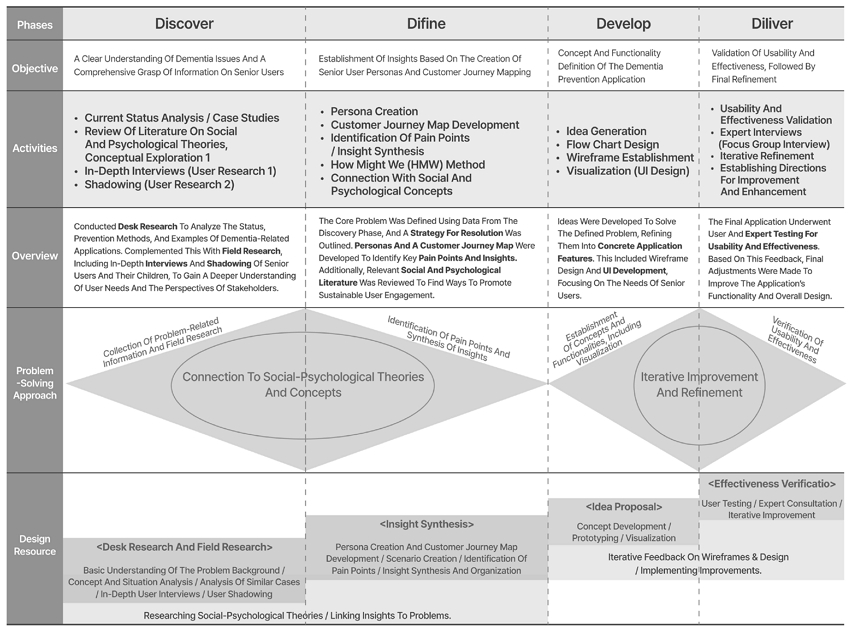
Applied Double Diamond Process
The core characteristic of this Applied Double Diamond Process lies in its emphasis on integrating social and psychological theories with field research during the first diamond phase. This approach enables the generation of deeper insights and expands the weight of the Discover and Define stages to establish a solid and well-grounded planning foundation. The proposed process is expected to serve as a valuable framework for developing design outcomes that realize social value and offer innovative solutions to complex societal challenges.
2. Theoretical Background
2. 1. Brain training and dementia prevention: necessity of motivation for dementia prevention
Dementia refers to a complex set of symptoms in which a normally developed brain is damaged or deteriorated due to external causes such as acquired trauma or illness, resulting in a general decline in cognitive functions such as intelligence, learning, and language, as well as higher-order mental functions. It primarily occurs in old age and is currently considered one of the four leading causes of death, following heart disease, cancer, and stroke, making it a critical neurological disorder (Korea Disease Control and Prevention Agency National Health Information Portal, https://health.kdca.go.kr/). The most traditional method of preventing dementia involves evenly training the six major cognitive domains to activate the entire brain. These six cognitive domains include attention, language ability, calculation ability, spatial-temporal ability, memory, and executive function. Language and calculation skills activate the left hemisphere of the brain; spatial-temporal ability stimulates the right and posterior parts of the brain; and executive function tasks stimulate the anterior region of the brain(Na, 2024).
While it is important to know the correct methods for preventing dementia, it is equally crucial to consistently and continuously implement dementia prevention behavioral guidelines. In 2014, a research team led by Professor Hong Chang-hyung of the Department of Psychiatry at Ajou University Hospital and Professor Lee Kang-soo of the Department of Psychiatry at Gangnam CHA Hospital conducted a dementia prevention program (commonly known as the ‘Gold Medal Project’) for 460 elderly individuals at the Suwon Mental Health Center. The program rewarded elderly participants who adhered well to dementia prevention lifestyle guidelines with gold medal stickers. The study revealed that cognitive decline was less prominent in the group incentivized with the gold medal symbol. This research project highlights the importance of ‘motivation’ in encouraging elderly individuals to consistently practice dementia prevention behavioral guidelines and participate voluntarily in activities(Park, 2014). Particularly, cognitive training and activities require repeated participation, and if there are no motivating factors, there is a significant likelihood that participation will cease. Therefore, it is essential to encourage elderly individuals to perceive dementia prevention activities as positive experiences that can lead to long-term behavioral changes.
2. 2. Mobile Applications as Tools for Dementia Prevention
Mobile applications (hereinafter referred to as mobile apps) are software programs that operate on mobile devices such as smartphones and tablets, contributing to users’ convenient lifestyles through a variety of functions. Mobile apps are utilized across multiple fields, including information provision, social networking, entertainment, and healthcare, with the advantages of accessibility and portability. In accordance with these benefits and characteristics, there are numerous apps developed specifically targeting elderly users. A typical example is digital healthcare apps that efficiently track physical activities, record heart rates or sleep patterns, and remind users of medication times. In other words, mobile apps can have a positive impact on enhancing the quality of life for elderly users in terms of healthcare management, fostering social connections, and increasing convenience.
The characteristics of mobile apps provide opportunities for solving issues related to dementia prevention. Currently, various government agencies, local governments, dementia-related centers, and senior community centers, including those in Seoul, are implementing programs aimed at dementia and elderly welfare initiatives for prevention; however, public awareness remains relatively low, and several challenges persist. One of the most frequently cited issues in senior leisure welfare facilities is the limited space and aging infrastructure(Song, Song, and Lee, 2021). In light of this, mobile apps that can be used anytime and anywhere without the constraints of time and place, as well as interference from others, can alleviate the inconvenience of seniors having to travel to specific locations at designated times, and may also reduce the burden on seniors who are reluctant to engage in social interactions and activities, thereby offering new possibilities for dementia prevention.
3. The First Diamond; Discover and Define
In the initial stages of the Double Diamond process, specifically the ‘Discover’ and ‘Define’ phases, research plays a pivotal role in identifying the essence of the problem and understanding user needs. However, to effectively address social issues in a human-centered and user-centered manner, it is essential to move beyond superficial investigations of problem situations and behaviors to conduct multidisciplinary and comprehensive inquiries that encompass social, psychological, and humanities dimensions. Human behavior is shaped not merely by the fulfillment of needs but by a complex interplay of various factors including psychological motivations, social relationships, and cultural backgrounds. Therefore, an understanding of social and psychological theories can significantly enhance the ability to grasp and analyze user behavior. Additionally, an understanding of the underlying psychological mechanisms and social contexts of user behavior is crucial for fostering sustainable and meaningful user experiences. Consequently, this study aims to expand the emphasis on the Discover-Define stages during the execution of the Double Diamond process for solving social issues, while simultaneously incorporating an understanding of social and psychological concepts and theories.
3. 1. Understanding the Problem: Desk Research on Dementia
A comprehensive analysis of various research findings related to dementia and its prevention has laid the groundwork for problem-solving. The desk research conducted regarding the prevalence of dementia, the level of awareness about dementia, and guidelines for dementia prevention can be summarized as follows.
First, in terms of the current status of dementia incidence, according to the Future Population Projections by Statistics Korea, South Korea is expected to enter a super-aged society by 2025. The number of dementia patients is projected to increase from 833,000 in 2020 to 3.023 million by 2050. Dementia is rapidly increasing with the aging population and has established itself as one of the most prevalent age-related diseases (Statistics Korea, 2023). In other words, dementia should be addressed as a societal issue that requires solutions from multiple perspectives, and realizing social value through such efforts is crucial.
Second, in terms of public awareness of dementia, a survey by the Korean Society for the Prevention of Cardiovascular and Cerebrovascular Diseases found that dementia ranked highest (34.4%) among the illnesses most feared by the public. In addition, a dementia awareness survey conducted by the research team at Myongji Hospital revealed that there is significant fear surrounding dementia, indicating a strong need for campaigns and educational efforts to improve awareness and interest among younger generations (Myongji Medical Foundation, 2021). Therefore, it is necessary to develop strategies that alleviate public fear of dementia and increase awareness among younger age groups. Educational and promotional efforts related to dementia prevention should be strengthened particularly for younger people.
Lastly, since dementia is a complex disease related to the overall decline in cognitive function, with various causes and prevention methods, it is not sufficient to rely on conventional, one-size-fits-all solutions. To provide effective preventative strategies, research should be grounded in validated findings from the medical domains of neurobehavioral science, brain function, cognitive science, and psychology. The following sections summarize the literature reviewed based on this perspective.
First, from the perspective of brain nutrition management, one of the most significant causes of dementia is mitochondrial dysfunction. To reduce the oxidative stress that damages mitochondria, it is important to avoid alcohol, smoking, and stress. Dietary improvements, such as adopting a “brain-reset ketogenic diet,” are also essential(Hwang et al. 2020).
Second, from a medical and neuroprotection perspective, memory Third, in terms of temporal lobe activation—a brain region essential for memory, language, emotion, and perception—positive stimulation through meaningful experiences and recording memories via photos, videos, or journaling is recommended.
Fourth, to optimize brain function, one should think positively, spend time with uplifting individuals, and maintain regular contact with loved ones (Daniel G. Amen, 2000).
Fifth, from the perspective of managing neurobehavioral symptoms, non-pharmacological interventions such as praise, repetition, and encouraging participation in daily activities are effective in reinforcing appropriate behaviors (Korean Dementia Association, 2017).
Sixth, in addressing the root causes of cognitive decline, depression—identified as an independent risk factor for dementia—must be treated promptly (Sophia Wang et al., 2018; Byers & Yaffe, 2011).
Based on these findings, four key strategies for dementia prevention were identified: (1) promoting positive experiences and enhancing self-esteem, (2) implementing brain-training techniques to improve memory, (3) fostering ongoing social interaction and participation, and (4) managing stress, maintaining proper nutrition, and receiving psychological therapy.
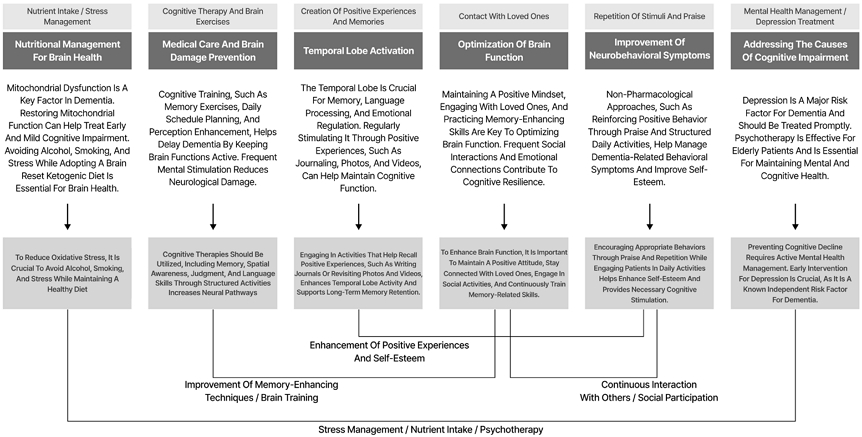
Desk Research about Dementia Prevention
3. 2. Understanding the Existing Market; Analysis of Dementia-Related Application Cases
The objective was to analyze the overview and user reviews of existing dementia prevention apps to identify the characteristics, advantages, and disadvantages of the dementia prevention applications currently available in the market. First, an analysis was conducted on three dementia prevention applications currently available in South Korea: Dementia Check, a comprehensive mobile portal for dementia screening; Descartes, which offers memory games and brain age tests; and Sylvia, an app that provides cognitive training and self-assessment tools for dementia patients. The findings from the analysis are outlined below, with references to the reviews on Google Play, the App Store, and One Store for the advantages and disadvantages.

Analysis of Dementia-Related Application Cases (1)
Next, for international examples of dementia prevention apps, we analyzed three applications: CogniFit, a leading U.S.-based brain training app that provides entertaining cognitive games; BrainHQ, developed by Posit Science to offer neuroscience-based brain training; and a Dementia Prevention App developed as a supplementary service by Taiyo Life Insurance in Japan. The analysis is summarized below, with strengths and weaknesses assessed based on reviews from Google Play, the App Store, and related press materials.
Analysis of Dementia-Related Application Cases (2)
An analysis of six dementia prevention applications—three domestic and three international—revealed that while these apps focus on enhancing cognitive functions and health management, they fall short in encouraging sustained user engagement. The Korean apps Dementia Check, Descartes, and Sylvia offer brain training and health features, but suffer from user attrition due to paywalls and repetitive content. Dementia Check, although free, is primarily diagnostic and lacks preventive or training functions. Meanwhile, international apps like CogniFit, BrainHQ, and the Taiyo Dementia Prevention App provide cognitive training based on scientific research but face limitations in motivation, interactivity, and accessibility. CogniFit and BrainHQ rely heavily on score-based feedback, which lacks long-term motivational impact, while the Taiyo app restricts access to insurance policyholders. Ultimately, these apps prioritize cognitive training, but their lack of emotionally driven motivational elements hampers sustained usage—emerging as a common limitation across the board.
3. 3. Understanding the Elderly Population: Research on Social and Psychological Aspects
Dementia, a chronic condition primarily affecting the elderly, progressively impairs brain function and diminishes cognitive abilities. To effectively grasp the multifaceted behaviors of the elderly, the core users, it necessitated an understanding of social and psychological theories. This aimed to provide a deeper insight into user behavior patterns and psychological mechanisms. The foundational theories related to the behavior and psychology of the elderly, along with the characteristics of the elderly as manifested in social and psychological contexts, can be summarized as follows.
Content of research on social and psychological theory
To ensure that the elderly consistently practice guidelines for dementia prevention and engage in ongoing cognitive training, effective methods to induce behavioral change are essential. Therefore, it is necessary to understand the psychological and social factors that sustain their participation in dementia prevention activities voluntarily. The social and psychological concepts and theories discussed below, including the concept of social support, incentive theory, self-determination theory, reinforcement theory, and socioemotional selectivity theory, explain the various motivations and mechanisms that drive human behavior.
Contents of research on social and psychological theories related to motivation
3. 4. Understanding the User: Field Research Targeting the Senior Generation and the Younger Generation
In order to understand the perspectives of seniors on dementia, as well as their efforts and experiences related to dementia prevention and their awareness of dementia prevention applications, we conducted in-depth interviews targeting this age group, which is the stakeholder most likely to face dementia-related issues. We aimed to facilitate a natural communication process to elicit responses aligned with the project’s objectives from the senior population. The criteria for the survey subjects were limited to seniors aged 65 and older, a demographic known for its high incidence of dementia. From April 1 to April 5, 2024, the researcher personally conducted in-depth interviews with a total of 8 individuals at three senior centers.
The purpose of the interview was threefold: 1) to understand the perspectives of the elderly regarding dementia and dementia prevention, as well as their related experiences; 2) to ascertain whether they have experience with dementia prevention apps and to gather feedback on their usage; and 3) to gain in-depth insight into any discomforts and areas for improvement related to their various experiences with dementia prevention. Accordingly, the interview questions were formulated, and the key responses gathered after conducting the interviews have been summarized below.
In-depth Interviews with Seniors
To explore the perceptions related to dementia and the experiences of adult children regarding their efforts to prevent dementia in their parents, we conducted in-depth interviews with three individuals from the 30s to 40s age group. The criteria for the subjects included being adult children of senior-generation parents who are at high risk for dementia, and their ages were restricted to between 30 and 55 years. From April 4 to April 7, 2024, the researcher engaged in one-on-one communication with a total of seven subjects. While we primarily aimed for face-to-face interviews, in cases where that was not feasible, we conducted the interviews using phone calls or KakaoTalk.
The aims of the interviews were: 1) to understand the perceptions of the 30s to 40s age group regarding dementia, 2) to gather experiences related to their efforts in preventing dementia for their parents, and 3) to ascertain the existence, opinions, and usage experiences of dementia prevention applications. Accordingly, we structured the interview questions and summarized the key responses gathered after the interviews as follows.
In-depth Interviews with Children of the Elderly
To assess the smartphone familiarity and usage attitudes of elderly individuals, a one-hour shadowing observation study was conducted with two seniors at a senior center, with their consent. The purpose of the shadowing was to 1) understand the usage attitudes and behavior patterns of the senior generation regarding digital devices, and 2) identify moments when seniors feel discomfort or enjoyment while using applications. The overview and results of the shadowing can be summarized as follows.
Overview of the Senior Generation Shadowing
Result of Shadowing
Additionally, brief interview was conducted regarding mobile phone usage following the shadowing session, where respondents were asked, “When do you find the most joy in using your phone?” The answer consistently reflected that the participants felt happiest during video calls with their adult children (or grandchildren) or when sending photos via KakaoTalk, which all other shadowing subjects agreed with. Through observing how elderly individuals interact with digital devices and applications, we gained insights that “while the senior generation faces limitations in maintaining prolonged focus on mobile phones as a digitally vulnerable population, they demonstrated quick response times and high engagement levels when receiving news from their adult children or viewing photos on their devices. Moreover, we gained further insight that there is a need for UI screen designs that consider the physical characteristics of the senior generation.
The results of the field research utilizing in-depth interviews and shadowing methodologies are summarized as follows. First, the elderly were making efforts to prevent dementia, primarily engaging in practices that were feasible within their daily lives. Additionally, dementia prevention apps were not considered familiar or approachable by the elderly, and users who had experience with these apps generally evaluated their sustainability negatively. Second, most adult children in their 30s and 40s had experiences of trying to aid their parents in dementia prevention, and given their relatively young demographic characteristics, they were aware of the existence of dementia prevention apps. They had experiences of encouraging their parents to use these apps due to the convenience of apps that are not constrained by time and space However, they mentioned that drawbacks such as the paid subscription model, inconvenient usability, and the lack of motivation, led them to give low ratings to the effectiveness of dementia prevention apps. Finally, the elderly, as a demographic vulnerable to digital devices, had limitations in maintaining prolonged focus on their phones; nonetheless, they exhibited quick response times and high engagement levels while receiving news from their adult children or viewing photographs on their phones.

User Research & Shadowing
3. 5. Utilizing Methodology; Identifying Pain Points based on Customer Journey Mapping
To gain a more detailed and systematic understanding of the experiences that senior users may encounter, and to derive user-centric ideas, we created personas and ‘customer journey maps’. By analyzing various data collected through research, interview content, and shadowing results, we aimed to identify user needs, motivations, and behavioral patterns, while also discovering common patterns or characteristics. Subsequently, we developed a hypothetical persona that reflects the representative traits of each user segment, aiming for it to align closely with actual senior users, and then constructed the customer journey map as outlined below. Based on the goals, behavior patterns, and characteristics of the persona extracted from field research, we established the key stages of utilizing the dementia prevention app and mapped the actions, emotions, and thoughts of the persona at each stage. Throughout this process, we identified the touchpoints at which the persona interacts with the app and outlined the potential pain points that could arise at each touchpoint.
Subsequently, a virtual persona was created to reflect the key characteristics of each user segment that is closely aligned with actual senior users. Based on this persona, a customer journey map was developed as outlined below. The major stages involved in using the dementia prevention app was established by utilizing the goals, behavioral patterns, and traits derived from field research, which creates a mapping of the actions, emotions, and thoughts of the persona at each stage. During this process, interaction points between the persona and the application were identified, along with potential issues at each point.
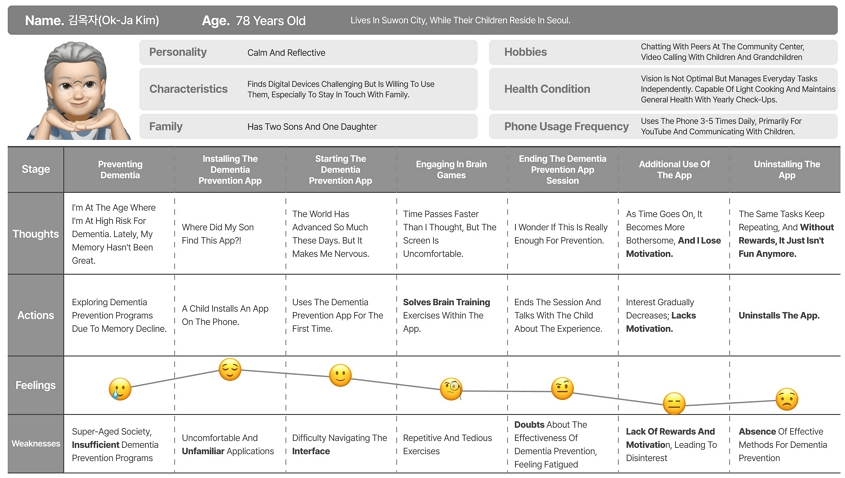
Persona & Journey Map
The results of the customer journey mapping revealed two key pain points. First, the currently available dementia prevention apps result in dissatisfaction among users from the senior demographic in terms of UX/UI. While the app has the advantage of providing convenient brain training, older users experience discomfort due to the cumbersome UI and repetitive, uniform training methods. Secondly, the existing dementia prevention apps lack a reward system and motivational elements that encourage sustained use. This deficiency makes it challenging to maintain continued engagement, leading to disillusionment with the dementia prevention experience. Therefore, it is essential to develop dementia prevention apps that address these pain points.
3. 6. Establishing Insights and Problem-solving Direction: ‘Support from Adult Children’ as a Reward
This study employed the HMW (How Might We) method based on field research and customer journey map pain point analysis to derive a creative problem-solving direction. As a result, the key challenge was defined as motivating elderly users to continue using dementia prevention applications consistently. Most existing dementia prevention apps adopt a score-based feedback system aimed at enhancing cognitive abilities. However, this approach provides only a sense of accomplishment and lacks the depth required to serve as a long-term motivational factor. This limitation is particularly evident among older adults who are less familiar with digital technology—score increments alone are often insufficient to sustain engagement. Thus, a stronger motivational mechanism was necessary. To address this, the researcher analyzed the moments when seniors most actively engage with smartphones. Previous findings indicated that the moment when older users most actively use their smartphones is when communicating with their adult children. This suggests that the elderly are more engaged not merely during cognitive training tasks, but when they receive emotional satisfaction through encouragement and support from their adult children.
Based on this insight, this study proposed a core solution that offers communication with adult children as a form of reward within the brain training process. By introducing the concept of emotional motivation—an element absent from existing dementia prevention apps—the goal was to move beyond basic score feedback and instead utilize emotional bonding as a means of fostering sustained engagement.
To validate the effectiveness of this concept, several social-psychological theories related to elderly motivation were applied. First, according to Social Support Theory, emotional support provided by adult children positively influences the psychological well-being of their parents, thereby helping them sustain consistent behaviors. In addition, both Incentive Theory and Socioemotional Selectivity Theory suggest that receiving messages or support from one’s adult children can act as an extrinsic reward that enhances emotional satisfaction and, in turn, fosters motivation. Furthermore, through the application of Self-Determination Theory and Reinforcement Theory, emotional exchanges with adult children serve as ongoing motivational stimuli for elderly users, reinforcing positive perceptions of brain training and increasing the likelihood of sustained participation.
In conclusion, the application was designed not simply around a score feedback system, but rather on a novel approach that utilizes “emotional connection with one’ child” as the core motivational factor. Unlike existing dementia prevention apps that focus solely on cognitive training, this approach incorporates emotional family interactions, thus functioning as a practical and emotionally engaging solution that can effectively trigger user behavior.
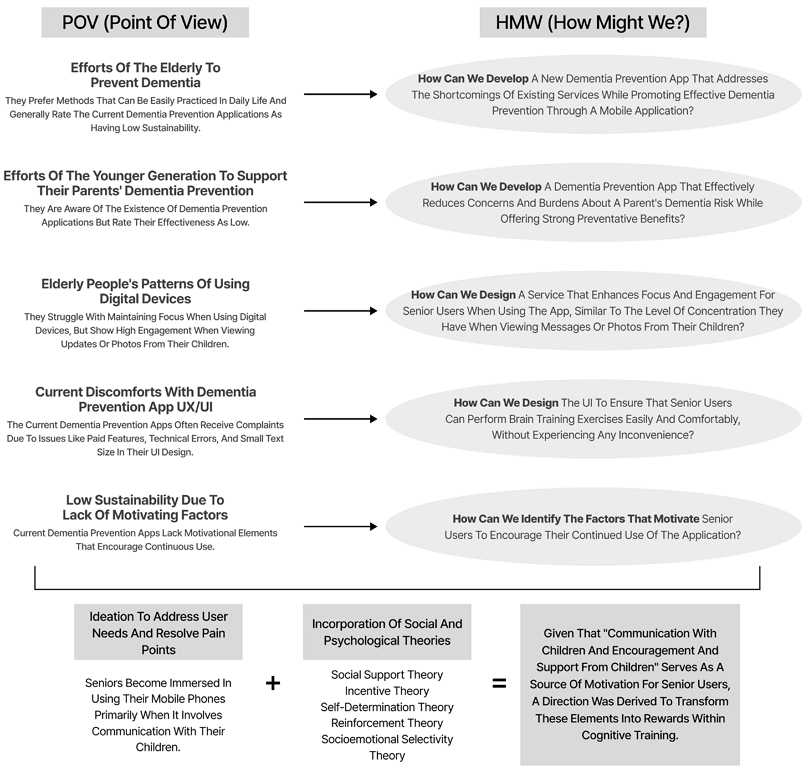
Insight
4. The Second Diamond; Develop and Deliver
4. 1. Establishment of the application concept and features
In accordance with the sequential process outlined above, it is noted that communication with adult children, along with their encouragement and support, can serve as significant rewards for enhancing the happiness of the senior generation. Accordingly, a reward system was developed in the app to display adult children’s and grandchildren’s faces. As a result, a system of two interconnected apps was devised: one for parents and one for adult children. When adult children leave encouraging messages, audio, photos, or videos in the their version of the app, parents are presented with these reward elements each time they engage in brain training through the parents’ version of the app, thus providing sustained motivation for their training efforts. The reward system offered by the app can provide psychological satisfaction to senior users by enabling them to experience emotional connections with their adult children, extending beyond mere cognitive training.
After defining the app’s core concept and functionalities, each feature was planned, and an app name and slogan were created to convey the service’s value clearly. Under the fundamental feature of “providing motivation through mutual interconnection of the two apps,” the parents’ version includes detailed functions such as “adjusting brain training difficulty,” “viewing encouragement messages,” and “checking adult children information,” while the adult children’s version includes “leaving encouragement messages,” “viewing parents’ training results,” and “checking parent information.” In terms of naming and slogan, we finalized the app name as ‘Match’ which reflects a playful linguistic twist on the word ‘dementia’ (when read in reverse in Korean) while embodying the value of connection between parents and adult children. Consequently, the slogan was finalized as ‘Overturning Dementia and Realizing the Value of Connection, Match.’
4. 2. Application Designing; Wireframe
In the app design process, creating a flowchart followed by wireframes is essential to systematically structure the user experience. First, a flowchart was created to visually map out the transitions between features and screens within the app, allowing for a clear and comprehensive planning of the overall user flow. This helped anticipate the sequence and manner in which key features would be implemented and enabled the logical design of user interactions. To ensure ease of use for the senior generation, unnecessary complexity was minimized and core functionalities were clearly communicated. Based on this structured flowchart, the parent version of the app was designed with a simplified and intuitive interface to deliver brain training and support messages from children, while the child version was designed to allow users to easily view their parent’s training results and send supportive messages in various formats.
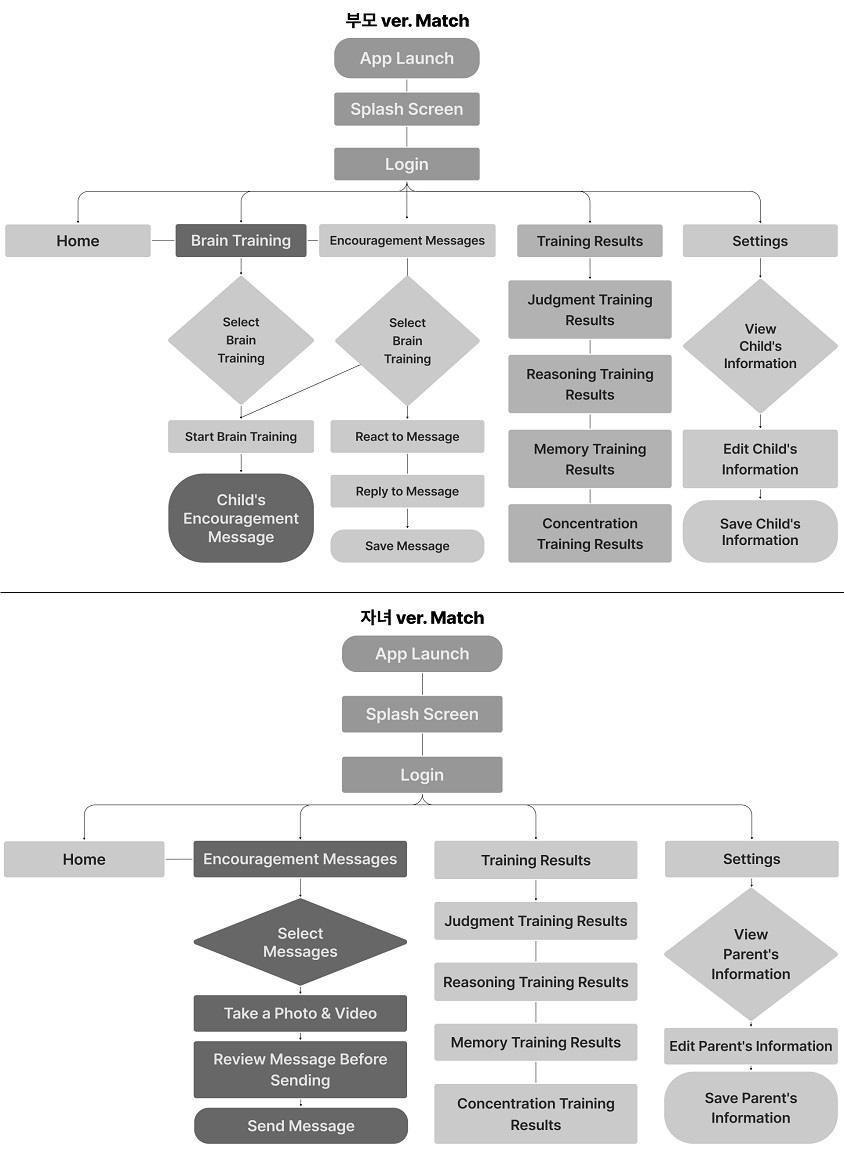
Match Wireframe
4. 3. Application Implementation; UI design by functionality
(1) Parent Version of the Application
The main interface of the Match parent version can be divided into three screens: ‘Home screen’, ‘Brain Training’, and ‘View and Display Child Encouragement’. Firstly, the primary functions of Brain Training, View Child Encouragement, and View Training Results are easily accessible on the Home screen. Furthermore, users can intuitively check the brain training history and scores of the day, enabling them to gauge their progress in the activities.
Secondly, the proposed application is fundamentally a brain training application. According to research findings, frequent use of the brain in daily life can reduce neurological damage, indicating that increased cognitive activity helps prevent dementia. Through consistent brain training, it is possible to delay the onset of dementia by increasing the number of neural transmission pathways. In particular, activities such as memory exercises, orientation, perception, concentration, judgment, spatial awareness, numerical reasoning, language tasks, and journaling are known to be effective in this regard(Jung., et al., 2018). In the case of Brain Training, users can select from one of four training options that aid in brain activation (cognitive ability, judgment, concentration, memory). For each training session, a time limit is established to enhance concentration, and a variety of problems is presented to minimize boredom.
Lastly, when users correctly answer questions or achieve high scores during Brain Training, a motivational video (or image) featuring their child is displayed randomly. This feature serves as a key differentiator of the application, as it has the potential to motivate users to solve problems or to maintain engagement in brain training activities. The non-dominant hemisphere of the brain—responsible for functions not typically carried out by the dominant hemisphere—plays a role in recognizing facial expressions and processing vocal tones or intonations from others (Daniel G. Amen et al., 2000). This contributes to emotional stability and influences the temporal lobe of the non-dominant hemisphere. The encouragement content can be reviewed after the training is over, but with restricted access to only contents that was viewed during the training of that particular day, thereby promoting consistent engagement in brain training. As an additional feature, the application prompts users—before exiting the app—to recall the most memorable message received from their child during the day’s training session and write down why it was particularly meaningful. This encourages memory-based activation of the temporal lobe and provides a thoughtful conclusion to the training session.
In terms of UI design, accessibility was prioritized, reflecting the characteristics of the elderly demographic. A relatively eye-comforting green color was employed, alongside a sans-serif typeface to enhance readability. Considering the visual capabilities of the senior generation, adjustments were made to the font size of the main text and titles, positioning essential information in the center for ease of recognition. Graphic elements were designed with large buttons and intuitive icons to facilitate accurate touch interactions and to further enhance accessibility.
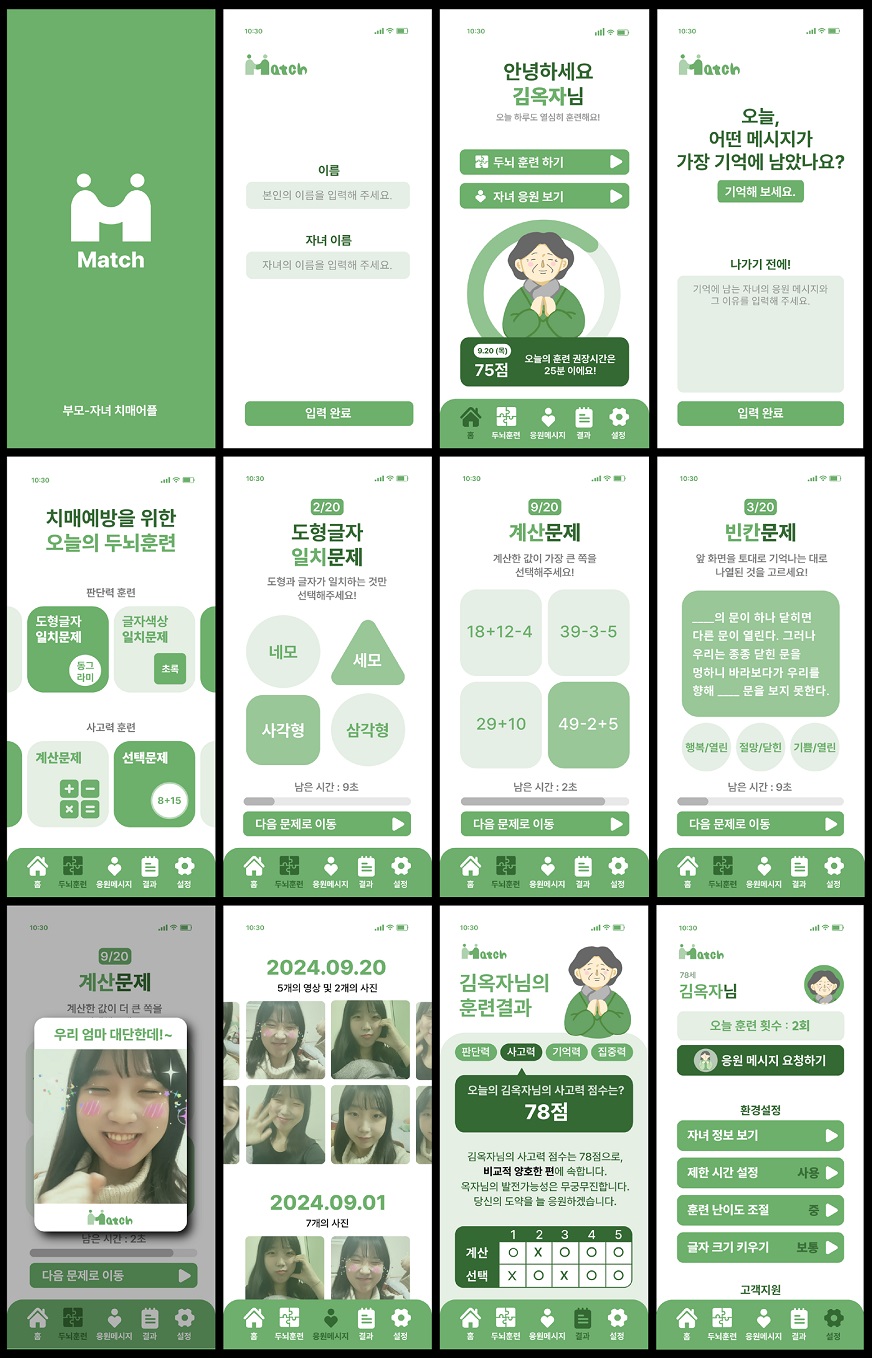
Application “Match” (1)
(2) Adult Child Version of the Application
The main screen of the Match child version can be divided into two sections: ‘Home’ and ‘Leave a Support Message.’ Firstly, on the Home screen, cheildren can view the real-time results of their parent’s brain training activities at a glance, and by clicking on the activity history button, they can access detailed records of the brain training activities, scores, and levels of dementia prevention, among other information. A large button is prominently placed to facilitate easy and convenient access to this primary function. Next, the ‘Leave a Support Message’ feature, which is the most crucial function, allows the adult children to leave encouraging messages in the form of images or videos, and when opting for video messages, a suggestion feature for commentary is provided to enable users to easily create a variety of support messages. This functionality is designed to encourage ongoing support and encouragement to parents without burden, thereby enhancing the interactivity between the two applications.
In terms of UI design, the application reflects the digital affinity and aesthetic preferences of the 30-40 age group. While maintaining an overall consistency with the parent version, the same color scheme is utilized as the main color to strengthen the brand identity. A sans-serif typeface is employed, with the body text set at 14-16points and titles at 20-28points to improve readability. As for the layout, it is structured simply and intuitively to enhance the efficiency of information navigation, with critical information positioned at the top of the screen to capture the user’s attention. For graphic elements, a minimalistic and intuitive approach is taken, providing appropriately sized buttons and touch areas.
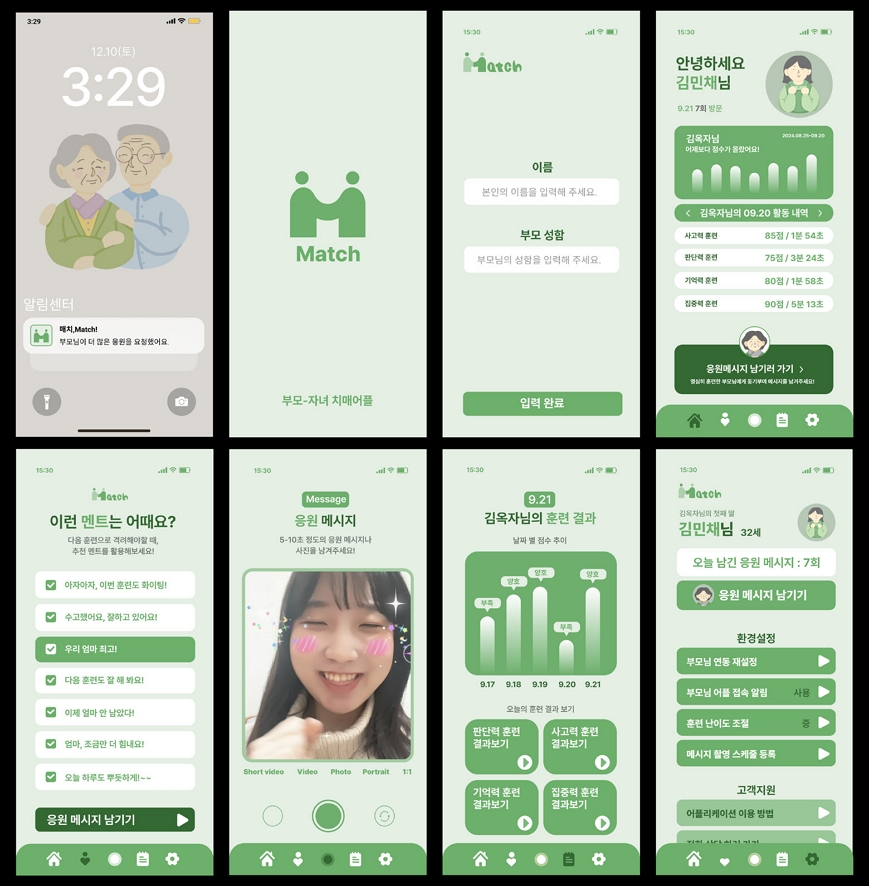
Application “Match” (2)
(3) Interaction Between the Parent and Child Versions of the Application
Match is a parent–child interactive dementia prevention application developed based on insights obtained through Double Diamond process-driven research, and is guided by the core solution of “connection with one’s child” as a form of motivational reward. The interaction between the parent version and the child version of the application unfolds as follows.
First, the child user utilizes the “Send a Support Message” feature to upload photos, videos, or voice messages intended for their parent. Once uploaded, these messages are automatically updated and linked to the parent’s version of the application. During brain training sessions, the parent version is designed to display the child’s support messages at key moments—either upon solving a set number of problems or when the difficulty level increases. For example, while the parent is engaged in concentration training, a randomly selected message from the child may appear after the parent answers a specific number of questions correctly. These emotionally resonant messages are intended to inspire and motivate the parent through positive reinforcement.
Importantly, the messages are not accessible on demand; they can only be viewed in the midst of brain training sessions. This ensures that emotional feedback is directly tied to the user’s engagement in cognitive activity, encouraging continuous participation. Once all available support messages have been delivered and viewed by the parent, the child receives a push notification prompting them to upload new support messages via the child version of the app.
This mode of interaction functions as a meaningful reward mechanism for the parent, offering emotional motivation that is absent in existing dementia prevention applications. The system is specifically designed to activate motivation by enhancing emotional bonds and communication between senior users and their adult children. By satisfying the needs of both the primary user group (the elderly) and their indirect stakeholders (adult children), this solution addresses previously identified pain points and demonstrates the potential to deliver tangible social value through a human-centered digital service.
4. 4. Evaluation for Users and Experts
To validate the effectiveness of the application and ensure user satisfaction, it is essential to conduct user testing along with expert consultation/validation. During this user testing, elderly participants engage with the application, allowing for the identification and rectification of potential issues and areas for improvement beforehand. Additionally, expert validation from related fields enhances the application’s reliability and assesses its market potential. Accordingly, testing was conducted on the final outcome of planning and UI design process, involving three senior users, three users from the younger generation, and five experts in UXUI and service development. Referencing prior research (Yoo et al., 2024) and analyzing the evaluation criteria from the Smart App Awards, UX evaluation factors were collected and compiled to construct a total of ten questions across three categories: utility, usability, and aesthetics, as outlined below. The evaluation utilized a Likert scale (ordinal scale), ranging from ‘Strongly Disagree (1 point)’ to ‘Strongly Agree (5 points)’.
Focus Group Interview Question
The testing was conducted by presenting the application screen to both the user and expert groups and evaluating the metrics accordingly. The results of the test yielded an average score of 3.9 from user participants, while child participants gave a score of 4.7. Expert users gave a score of average 4.1. Additionally, an unstructured interview was conducted with the expert group following the test. Four experts, actively engaged in the fields of UX/UI, service design, and product development and planning, provided in-depth evaluations from technical, design, and user experience perspectives, highlighting detailed aspects that could be overlooked during the development process, thus contributing to the delivery of a higher quality service to actual users. The expert validation results is summarized as follows.
Verification and Feedback Content
In addition, the usability of the application developed in this study was reviewed not only by UX experts but also by medical professionals specializing in geriatric care. A supplementary focus group interview (FGI) was conducted with three healthcare professionals—a physician from a long-term care hospital in Gangwon Province, a former practitioner at a geriatric hospital, and an internist specializing in elderly care—to assess and anticipate the actual effectiveness and contribution of the application to dementia prevention. The expert review results suggested that, compared to existing dementia prevention applications, this application may offer a more effective motivational mechanism to encourage continued use among elderly users. In particular, the medical professionals involved in the FGI commonly noted that the parent–child interaction model proposed by the app could serve as a meaningful form of emotional reinforcement for older adults, and they expressed a generally positive outlook on the app’s usability. However, several participants also emphasized the need for further experimental research. Specifically, while the expert evaluations offer encouraging insights, they alone are insufficient to fully validate the app’s effectiveness in the absence of clinical trials. As such, the experts recommended developing a Minimum Viable Product (MVP) and conducting real-world user testing to empirically verify whether the proposed solution can produce a significant impact on dementia prevention.
Verification and Feedback Content
5. Conclusion
5. 1. Summary and Significance of the Research
This study aimed to propose a brain training application for dementia prevention and achieved meaningful outcomes from both procedural and result-oriented perspectives. From a procedural standpoint, the study employed an Applied Double Diamond Process as a systematic approach to solving a pressing social issue. In contrast to the conventional Double Diamond process, this adapted version placed a greater emphasis on the Discover and Define stages, strengthening in-depth research and multifaceted analysis. Through a combination of literature reviews, field research, user interviews, and customer journey map analyses, the study systematically identified the genuine needs of senior users and the key motivational factors necessary for effective dementia prevention. This comprehensive approach enabled the development of a creative and targeted direction to address the shortcomings of existing dementia prevention applications.
From a result-oriented perspective, the study proposed a motivational strategy centered around emotional interaction between parents and adult children, moving beyond the conventional focus on cognitive training alone. While existing applications primarily aim to enhance cognitive functions, they often fall short in sustaining long-term user engagement. The solution proposed in this study introduces “encouragement from adult children” as a form of emotional reward to promote continued brain training. This approach is rooted in insights drawn from dementia prevention research, social-psychological theories, and observational methods, and it reflects a significant differentiation from existing dementia prevention applications.
More importantly, the solution proposed in this study goes beyond mere functional improvements; it presents a new direction for dementia prevention applications by incorporating practical motivational factors tailored to senior users. By encouraging consistent brain training through emotional reinforcement, this approach is expected to enhance the effectiveness of dementia prevention efforts and improve the overall quality of life for elderly individuals.
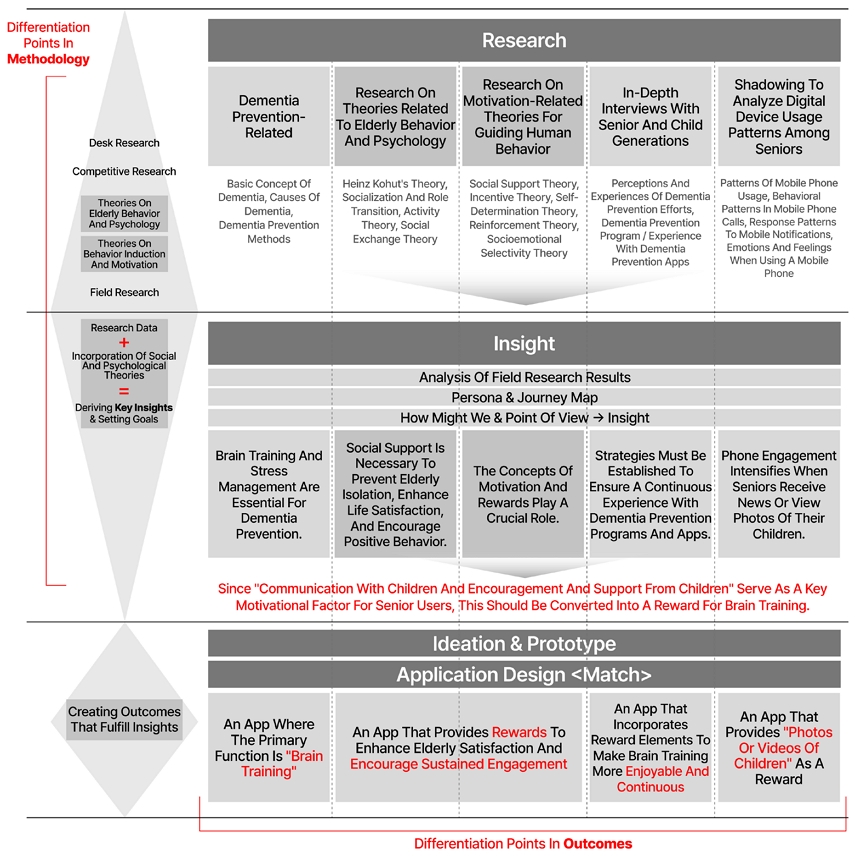
Differentiation in Research Methodology and Outcomes
5. 2. Limitations and Suggestions for Future Research
This study proposed a dementia prevention application that encourages sustained brain training in senior users by leveraging emotional interactions with their adult children as a motivational strategy. Through this approach, the study aimed to address the limitations of existing dementia prevention applications and contribute to the development of more effective cognitive training solutions. However, to enhance the academic and practical impact of this research, further empirical verification and supplementary studies are necessary.
First, there is a need for more quantitative validation of the actual impact of parent-child interaction on app usage. While this study identified parent-child interaction as a motivational factor for seniors based on social-psychological theories and user interviews, empirical validation was limited. Future research should incorporate experimental designs and detailed survey items that can specifically measure the influence of adult children’s encouragement on the continuity of brain training in parents. For instance, adding evaluation questions such as, “Did receiving a support message from your child increase your motivation to continue brain training?”—along with general UI/UX questions—would allow researchers to obtain more objective data on the effectiveness of the proposed motivational approach.
Second, in line with the above, longitudinal usability research based on actual user testing is required. Although this study built a prototype and conducted expert evaluations with UX/UI specialists and healthcare professionals, the application was not officially launched. Thus, follow-up research should focus on deploying the application in a real-world context, collecting long-term user data, and analyzing patterns of engagement and sustained use. Such a study would allow for empirical assessment of whether emotional interactions between parents and adult children function as a meaningful motivational reward over time, and whether this interaction has only a short-term effect or also contributes to long-term app engagement and training adherence.
In conclusion, this study holds significance in that it proposed a novel approach to sustaining user engagement in dementia prevention applications. However, future research should quantitatively verify the motivational effect of parent-child interaction, evaluate long-term usability and dementia prevention outcomes based on real user data, and explore broader applications across diverse user groups. These efforts would further strengthen the academic and industrial contributions of this research.
Notes
Copyright : This is an Open Access article distributed under the terms of the Creative Commons Attribution Non-Commercial License (http://creativecommons.org/licenses/by-nc/3.0/), which permits unrestricted educational and non-commercial use, provided the original work is properly cited.
References
- Amen, D. G. (2000). Change Your Brain, Change Your Life. Hanmunhwa.
- Blazer, D. G. (1982). Depression in Later Life. St. Louis: C.V. Mosby.
- Blazer, D. G. (2007). 노년기 정신건강 [Mental Health in Later Life]. HAKJISA.
-
Cassel, J. (1976). The Contribution of the Social Environment to Host Resistance. American Journal of Epidemiology, 104, 107.
[https://doi.org/10.1093/oxfordjournals.aje.a112281]

- Fries, J. F., & Crapo, L. M. (1981). Vitality and Aging: Implications of the Rectangular Curve. San Francisco: W. H. Freeman and Co.
- Hwang, S. H., & Lee, Y. H. (2020). 잠든 당신의 뇌를 깨워라 [Awaken Your Sleeping Brain]. Book&Edu.
- Jhu, Y. (2020, October). The Seoul Asan Medical Center research team validates the effectiveness of the 'Smartphone App' for cancer patients. Medical Observer. Retrieved from http://www.monews.co.kr/news/articleView.html?idxno=214345.
- Jung, J. H., Hong, M. H., Kim, H. J., & Koo, D. H. (2018). 치매가족을 위한 치매관리 프로그램 [Dementia Management Program for Families]. Elman, p.161.
- Jung, S. H., & Jang, Y. S. (2015). 자기결정성이론의 HRD 적용에 대한 논의 [Discussion on Applying Self-Determination Theory in HRD]. HRD Research, 17(3), 101.
- Kim, M. A., Kim, T. J., Moon, M. Y., & Kim, T. H. (1999). 사회적 노화이론에 대한 고찰 [Review of Social Aging Theory]. Journal of Korean Gerontological Nursing, 85-96.
- Kim, Y. M. (2024). Cogging Brain Exercise Workbook. Seoul,: Keungeulja Publishing.
- Korea Psychological Counseling Center. (2022, June 27). Motivation: What is it? Retrieved from https://www.mykpcc.com/43/?q=YToyOntzOjEyOiJrZXl3b3JkX3R5cGUiO3M6MzoiYWxsIjtzOjQ6InBhZ2UiO2k6MTM7fQ%3D%3D&bmode=view&idx=11962424&t=board.
- Korean Dementia Association Neurobehavioral Research Group. (2017). 치매의 신경행동증상 [Neurobehavioral Symptoms of Dementia]. The Korean Medical Publishing, pp. 48-52.
- Ma, S. E., & Baek, C. H. (2014, May). 유아용 사운드 인터랙티브 식사도구 "베베포크" 강화이론 기반 연구 [Study on Sound-Interactive Tableware "Bebe Fork" for Infants Based on Reinforcement Theory]. Proceedings of the Korean Society of Design Science, 142.
- Myongji Hospital Dementia Research Institute. (2021, December). Evaluation tool for dementia awareness and survey. Myongji Medical Foundation.
- Nam, M. K. (n.d.). Validation of Socioemotional Selectivity Theory (Doctoral dissertation, Ewha Womans University). Seoul, Korea: Ewha Womans University.
- Na, D. R. (2024). 90% Chance of Dementia Prevention. Seoul: Neumin.
- Park, H. J. (2014). Preventing dementia while trying to win a 'Gold Medal'. Modern Health News. Retrieved from http://hnews.kr/news/view.php?no=23594.
-
Rodin, J. (1986). Control and Well-being in the Elderly. Sciences, 233, 1271.
[https://doi.org/10.1126/science.3749877]
- Sophia, W., & Nussbaum, A. M. (2018). Pocket Guide for Elder Mental Health. HAKJISA.
- Song, M. J., Song, J. S., & Lee, H. W. (2021, April). 경로당의 시설규모와 치매 예방 프로그램 운영 [Research on the Facility Size of Senior Centers for Dementia Prevention Programs]. Journal of the Architectural Institute of Korea, 41(1), 579.
- Statistics Korea. (2023, September 26). 2023 Statistics on the Elderly. Retrieved from https://kostat.go.kr/board.es?mid=a10301010000&bid=10820&act=view&list_no=427252.
-
Zimet, G. D., Dahlem, N. W., Zimet, S. G., & Farley, G. K. (1988). The Multidimensional Scale of Perceived Social Support. Journal of Personality Assessment, 52(1), 30-41.
[https://doi.org/10.1207/s15327752jpa5201_2]