
Reducing Cigarette Butt Littering through a Design-led Intervention: The Case of a University Campus
Abstract
Background Cigarette butt littering poses a critical issue in South Korea, with millions discarded daily and similar challenges exist on university campuses. Traditional measures such as more bins, more smoking areas, and stricter enforcement fail to address behavioral root causes. This study applies the theory of planned behavior (TPB) to analyze littering behavior and develops a design-led intervention with feedback and feedforward mechanisms to effectively reduce cigarette butt littering.
Methods Field observations identified a campus location with significant cigarette butt littering. A preliminary survey (n=147) investigated motivations, smoker characteristics, and TPB constructs. Survey insights were combined with in-depth interviews with student smokers to develop a representative persona, which guided the intervention design. The intervention was deployed for three weeks, and its impact was evaluated through pre- and post-intervention counts of discarded cigarette butts. Afterward, interviews were conducted with one cleaning staff member and two student smokers, and a follow-up survey with 10 smokers was used to gauge changes in behavior and perceptions.
Results The intervention significantly reduced cigarette littering behavior, with an overall 55.9% reduction when compared to the pre-intervention week. Specifically, there was a 44.3%, 71.9%, and 55.9% reduction in Week 1, Week 2, and in Week 3, respectively, indicating a lasting impact during the intervention period. Interviews revealed that the intervention raised awareness of littering, resulting in more conscious disposal and a sense of accountability among smokers. However, the long-term sustainability of these behavioral changes remains uncertain. The findings emphasize the significance of design in facilitating behavior change while indicating potential limitations of the strategies employed, highlighting the importance of adaptable methodologies to achieve long-term success.
Conclusions This case study investigated cigarette butt littering on a university campus and introduced a design-led intervention grounded in behavioral theory to address limitations found in existing measures. The intervention enhanced smokers’ awareness and sense of responsibility, resulting in more responsible disposal practices. Despite its single-site scope, the study underscores the potential of integrating design and behavioral strategies to address complex environmental issues. By demonstrating feasibility and effectiveness, the study provides valuable insights into future replication and exploration in diverse contexts.
Keywords:
Design-led intervention, Cigarette butt littering, Design for Sustainable Behavior, Feedback, Feedforward1. Introduction
Cigarette butt littering is a significant environmental concern, with approximately 4.5 trillion cigarette butts discarded improperly each year worldwide (World Health Organization, 2023). In South Korea, cigarette butt littering poses similar environmental challenges. The Ministry of Environment (2020) estimated that approximately 12.5 million cigarette butts are discarded on the streets daily, accounting for 7.25% of the country’s total cigarette consumption. The issue of cigarette butt littering is also prevalent on university campuses. Recent university news outlets have highlighted the severity of cigarette butt littering and its associated problems (Joo & Park, 2024; DAU Media Center, 2019). For instance, one campus organized a plogging event aimed at reducing cigarette waste and managed to collect the equivalent of 3.5 1.2-liter plastic bags of cigarette butts in just 50 minutes (Yonsei Chunchu, 2023).
These discarded butts lead to two major issues by causing environmental damage and reinforcing littering behavior. Cigarette butts release toxic chemicals that can leach into soil and waterways, poison wildlife, and contribute to marine pollution (Komatz, 2022; United States National Park Service, 2022). In addition, discarded cigarette butts create visual cues that not only prompt further littering but also foster environments that discourage desirable behaviors (Schultz et al., 2013; Stern, 2005).
In response to these issues, the South Korean government has implemented efforts such as increasing the number of disposal bins, expanding cleaning staff, strengthening enforcement, and launching public awareness campaigns (Ministry of Environment, 2020). However, these approaches are limited by cost and labor, and they lack long-term sustainability as they fail to address the underlying behavioral causes. As the Ministry of Environment (2020) notes, there is a need for research and development of behavioral models to effectively alter smokers’ littering behavior. However, academic research in South Korea has centered primarily on the environmental impacts of cigarette butt littering (Na & Hwang, 2022) or examined the issue about secondhand smoke prevention and the protection of smokers’ rights (Kim et al., 2023; Lee, 2019) rather than addressing the behavioral factors or developing intervention strategies.
To effectively address this littering behavior, design has the potential to be an effective solution by guiding individuals toward more desirable and sustainable actions (Niedderer et al., 2014). A growing body of research has explored design-led interventions to reduce cigarette butt littering around the world. These studies have investigated a variety of strategies, including nudge-based voting bins (Marcu et al., 2016), gamified ashtrays targeting group-smoking dynamics (Huang et al., 2019), anti-littering messages printed on cigarette packaging (Morgan et al., 2022), and trash cans designed to reinforce social norms (de Kort et al., 2008). Although such interventions have shown promise in raising awareness and prompting short-term behavioral change, many are limited by their reliance on singular data collection methods (e.g., observation, self-reported surveys, or interviews) and a lack of theoretical grounding. As a result, their ability to explain and sustain behavioral change remains limited.
To address these limitations, this study identified the root causes of littering behavior using the Theory of planned behavior (TPB) as a theoretical framework. Although the intervention was implemented on a single campus, both quantitative and qualitative data were collected to evaluate its impact, role, and overall effectiveness from multiple perspectives, thereby enhancing the credibility and validity of the research findings.
The study follows a nine-step process: it begins with field observation to identify site context, and uses a survey and in-depth interviews based on the TPB to identify the factors influencing littering behavior. A design workshop subsequently developed the intervention, which is evaluated through counting cigarette butts at pre- and post-intervention stages and the analysis was supplemented by survey and interview data from the site users. This paper contributes by demonstrating how a theory-driven, design-led intervention can effectively reduce cigarette butt littering, using a comprehensive approach to promote sustainable behavior change.
2. Literature Review
2. 1. Understanding the Behavioral Drivers of Cigarette Butt Littering
Before designing interventions to instigate a behavior change, it is essential to identify the underlying reasons for cigarette butt littering. Prior research highlights three primary factors contributing to this issue.
First, some smokers do not perceive cigarette butts as “real” litter. Rath et al. (2012) found that many individuals, especially smokers, regarded cigarette butts as harmless, which strongly predicted whether they would discard them improperly. One reason for this misperception is the small size and seemingly negligible impact of cigarette butts, which leads people to underestimate their environmental harm. Consequently, highlighting that even a single discarded butt can contribute to pollution is crucial for shifting public perception and promoting responsible disposal.
Second, in environments already littered with cigarette butts, the visible presence of discarded butts can normalize further littering. Several studies show that littered cigarette butts serve as a visual cue, triggering additional littering and diminishing individuals’ motivation to dispose of them properly (Sagebiel et al., 2020; Schultz et al., 2013; Stern, 2005; Miller & Burbach, 2020). This cycle underscores how environmental cues and perceived social norms collectively perpetuate cigarette butt littering, ultimately complicating efforts to maintain clean public spaces.
Finally, some smokers blame a lack of disposal bins or designated smoking areas for their littering behavior (The Ministry of Environment, 2020). However, recent findings suggest that expanding infrastructure alone, such as adding more bins, may be insufficient to address the root causes of littering (Turner, 2018). Wilson et al. (2014) reported that installing bins at bus stops did not significantly decrease littering behavior, while Miller and Burbach (2020) argue that disposal options may help but remain ineffective without broader behavioral strategies. Thus, relying solely on increasing the availability of bins or smoking areas may temporarily reduce littering but is unlikely to achieve sustainable behavioral change.
2. 2. Theoretical Background
Understanding the behavioral processes underlying a target action is crucial for implementing successful behavior-change designs. Research shows that theory-based interventions have demonstrated greater effectiveness than those lacking a theoretical foundation, leading to higher success rates in achieving desired behaviors (Aldenaini et al., 2020; Giacobbi, 2016). Behavioral theories not only provide a structured framework for observing behavior and evaluating interventions, but also elucidate the mechanisms through which specific strategies influence behavioral change.
Among the numerous theoretical frameworks, the Theory of planned behavior (TPB) is one of the most extensively studied social cognitive theories that has been utilized to develop and evaluate behavioral interventions (Hardeman et al., 2002). The TPB posits that a person’s behavior is influenced by their intention to act, which is shaped by three key factors: attitudes (positive or negative feelings about the behavior), subjective norm (perceived social pressure to engage in or avoid the behavior), and perceived behavioral control (knowledge and competence in their ability to perform the intended behavior) (Ajzen, 1991) (Figure 1).
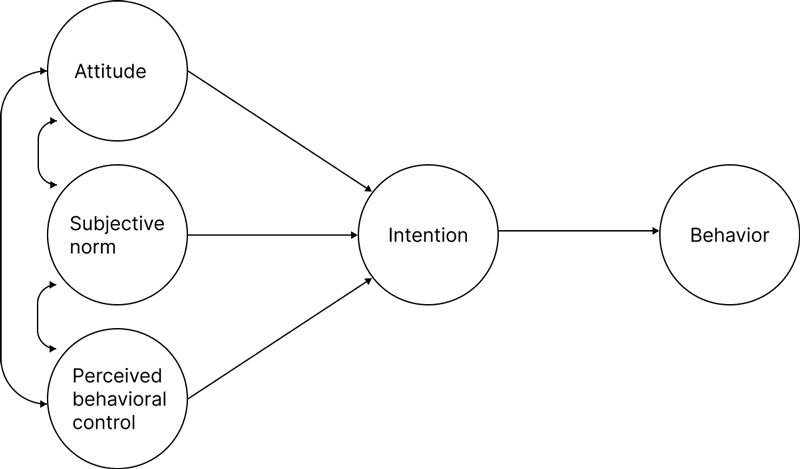
Theory of Planned Behavior. Redrawn by the author (Ajzen, 1991)
However, scholars have also recognized the limitations of focusing solely on individual-level cognitive variables. Alternative frameworks such as the Attitude-Behavior-Context (ABC) theory offer a broader perspective by integrating the influence of contextual conditions on behavior (Stern, 2000). While TPB is effective in explaining behavioral intentions and has been widely used to interpret intervention outcomes, the ABC model underscores the dynamic interplay between personal attitudes and external factors. According to this theory, behavior results not only from internal dispositions (e.g., environmental concern) but also from situational constraints (e.g., infrastructure availability, social norms).
As Jackson (2005) notes, the ABC model demonstrates that the relationship between attitude and behavior can be significantly weakened or even entirely overridden by contextual constraints. This perspective challenges the adequacy of interventions that focus solely on individual-level beliefs or motivations. Such interventions may achieve short-term success but often fail to produce lasting behavioral change, particularly in situations where behavior is strongly regulated or constrained by external factors.
These insights highlight the complexity of behavior change and the need for theoretically grounded interventions that enhance understanding of behavior and ensure the intervention is well suited to its context.
2. 3. Strategies for Designing Behavior Change
Design research has explored numerous strategies for promoting sustainable behavior, ranging from the provision of information and feedback to the reshaping of choices and incentives, as well as the implementation of goal-setting and scripted interactions (Coskun, Zimmerman, & Erbug, 2015; Lilley et al., 2005). Especially, Lilley et al. (2005) propose a spectrum of intervention strategies from passive information provision to more assertive approaches that guide user behavior, noting that effectiveness often depends on matching the strategy to the specific behavioral context.
Among these strategies, feedback is particularly relevant for design interventions. It directly links individual actions to their consequences, thereby making outcomes visible and prompting self-assessment against personal or normative standards (Norman, 2013; Abrahamse et al., 2005). This reflection fosters potential behavioral adjustment by influencing cognitive processes crucial for learning and self-regulation (Michie et al., 2013). Furthermore, feedback can impact group behaviors by making the collective impact of individual actions tangible, potentially leveraging mechanisms like shared responsibility to encourage pro-social or pro-environmental conduct (Ferguson & Branscombe, 2010).
Unlike feedback, feedforward anticipates future states and guides action preemptively towards desired goals, often by simulating potential outcomes in advance, without waiting for feedback (Basso & Olivetti Belardinelli, 2006). It represents a proactive approach that anticipates future changes and adjusts inputs preemptively to achieve desired performance (Nise, 2007). This future-oriented approach helps overcome a limitation of the feedback approach, which can lose users’ attention over time (Coskun et al., 2015). Integrating feedforward with feedback may therefore enhance behavioral internalisation and persistence of target behaviors (Shin & Bull, 2019).
Beyond these, additional strategies such as nudging, incentives, and gamification also have been employed in design research to influence decision-making processes. Nudging subtly restructures choice environments to promote beneficial actions without curtailing autonomy (Thaler & Sunstein, 2008), whereas incentives rely on extrinsic rewards or penalties that may lose effectiveness once withdrawn (Deci & Ryan, 2000). Gamification leverages playful elements to sustain user engagement (Seaborn & Fels, 2015).
In the context of habitual behaviors such as cigarette butt littering, these strategies may fall short in addressing the cognitive gaps and lack of awareness that underpin such actions. Fischer (2008) explains that breaking existing habits and making conscious decisions are essential for new norms to influence the decision-making, a stage he terms ‘norm activation.’ In this stage, people recognize alternatives, understand their behavior’s relevance to a problem, and realize their ability to enact change. Feedback and feedforward can facilitate this process by consistently highlighting the effects of new or adjusted behaviors.
3. Methodology
This research employed a systematic, stepwise process to develop and evaluate a design-led intervention aimed at reducing cigarette littering behavior. A mixed-method approach (Creswell & Inoue, 2024) incorporated both quantitative and qualitative data from multiple sources, enabling a comprehensive assessment of the intervention. An overview of the methodology is provided in Table 1.

Research Methodology Steps
3. 1. Field Observation and Site Selection
Field observations were conducted across multiple campus locations to identify the most suitable experimental site for intervention deployment. These observations focused on areas where cigarette butt littering was both frequent and problematic. Three criteria informed the final selection: (1) a high number of smokers at a prohibited smoking area, (2) repeated complaints and substantial litter accumulation, and (3) sufficient space to deploy the intervention. The selected site (Figure 2) allowed close monitoring of littering behaviors and provided an appropriate environment for testing a design-led intervention.
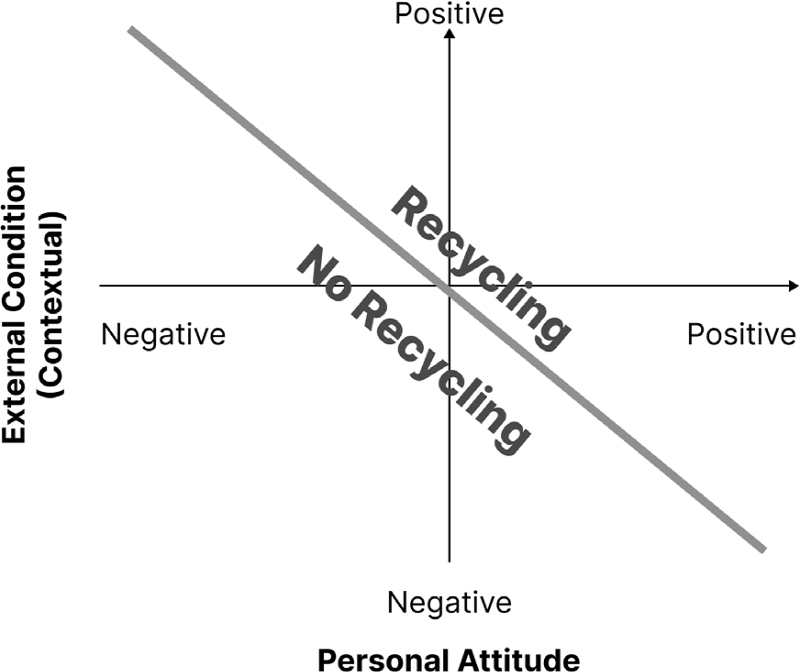
ABC model of recycling. Redrawn by the author (Stern, 2000)
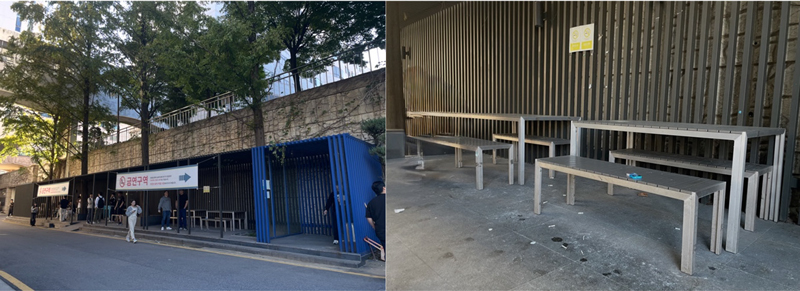
Selected Site for intervention (left: smokers in the prohibited smoking area; right: contaminated area filled with littered butts)
3. 2. Survey Design
The TPB framework was selected to guide survey design based on its established validity in predicting environmental behaviors and its clear structure for identifying actionable factors influencing cigarette littering behavior. According to the TPB, intention to perform a behavior is shaped by three key constructs, each of which was operationalized in our survey design.
- Attitude: Smokers who litter may believe that cigarette butts are small and harmless, or they may not consider the environmental or social consequences significant. A positive attitude toward littering (e.g., “It’s not a big deal”) can reinforce improper disposal.
- Subjective norm: If smokers observe others littering or perceive that their social group considers the behavior acceptable, they are more likely to adopt this behavior. The absence of visible disapproval or the perception that “Everyone does it” normalizes improper disposal. Conversely, when larger groups exhibit responsible behavior, individuals are likely to conform to this subjective norm.
- Perceived behavioral control: Smokers’ likelihood of properly disposing of cigarette butts is influenced by their perceived ability to do so. The availability and accessibility of a disposal bin or a lack of knowledge about where to discard butts may become factors that lower perceived behavioral control.
Addressing these factors through tailored interventions could potentially alter the behavior and help reduce improper cigarette littering behavior.
A preliminary survey served two main objectives. First, it explored smokers’ underlying motivations for discarding cigarette butts inappropriately, uncovering potential leverage points for a design intervention. Second, it applied the Theory of planned behavior (TPB) framework to investigate the roles of attitudes, subjective norms, and perceived behavioral control.
A total of 147 individuals responded to an online questionnaire over the course of one week, with 84% admitting to having littered cigarette butts outside designated bins at least once (Figure 4, left). While limited facilities and habitual tendencies were cited as key factors, 57% of smokers confessed to littering even when a disposal bin was within easy reach(Figure 4, right), suggesting that habit exerts a strong influence on disposal decisions. Further analysis revealed significant correlations among the three TPB constructs and littering behavior: attitude (r = .433, p < .01), subjective norm (r = .380, p < .01), and perceived behavioral control (r = .403, p < .01). These findings confirm that cigarette butt littering is influenced by individual beliefs, social acceptance, and perceived ease of disposal, thus forming a critical empirical basis for the design-led interventions developed in this study.
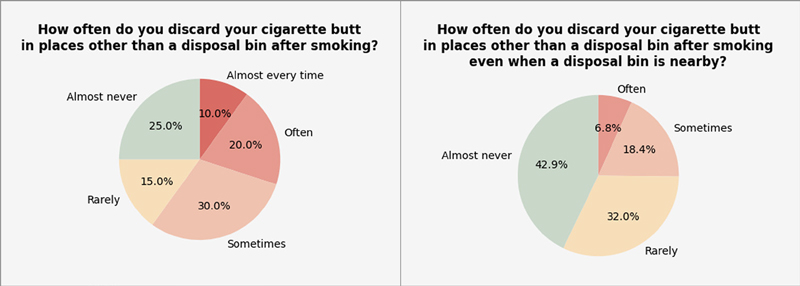
Survey Results
3. 3. Interviews
To gain deeper insights into behavioral drivers and inform further intervention strategies, follow-up interviews were conducted with two student smokers who regularly used the designated site. The discussions revealed that attitudes and subjective norms are pivotal in shaping cigarette butt littering behavior. Both participants reported that observing an area already strewn with cigarette butts normalized improper disposal; at a personal level, discarding a single butt was perceived as inconsequential (“It’s not a big deal”). Subjective norms further compounded the issue through social imitation, as the belief that “everyone does it” undermined collective pressure to maintain cleanliness. These insights underscore the need for interventions that target both individual attitudes and broader social norms. In particular, the interviews indicate that design strategies incorporating feedback mechanisms can heighten awareness of the collective consequences of littering, while feedforward approaches can foster positive behavioral objectives.
3. 4. Intervention Design
Building on the insights gathered so far, a persona was created to encapsulate the core behavioral patterns identified. The persona—a 30-year-old male graduate student who smokes regularly and often discards cigarette butts on the ground—served as a focal point for design decisions. By examining the persona’s characteristics and reasons for improper disposal, the research team aimed to develop an intervention specifically aimed at reducing cigarette butt littering behaviors. Information about the persona is provided in Figure 5.
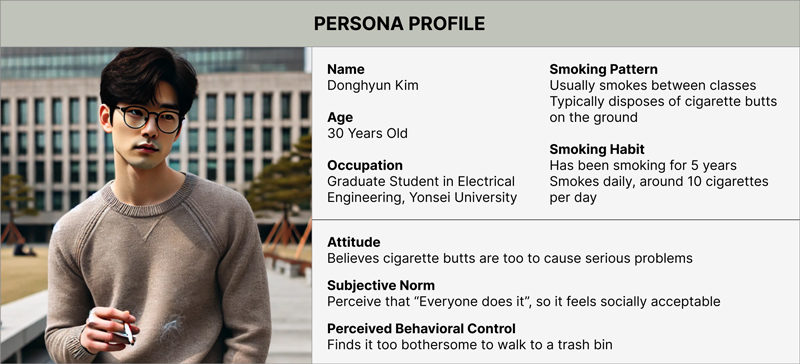
Persona
A multi-disciplinary group of six researchers from design, social science, human ecology, and engineering conducted an ideation workshop, utilising a matrix framework inspired by Shin and Bull (2019). This approach bridges theoretical insights from TPB with practical design strategies, ensuring that intervention concepts addressed specific behavioral determinants identified in our preliminary research. The framework cross-referenced feedback and feedforward strategies with the dimensions of information and empowerment, enabling systematic exploration of both user- and product-driven solutions. Concepts ranged from public awareness campaigns to automated systems. Each idea was evaluated for its ethical considerations, practicality, and expected impact on habit formation (Figure 6).
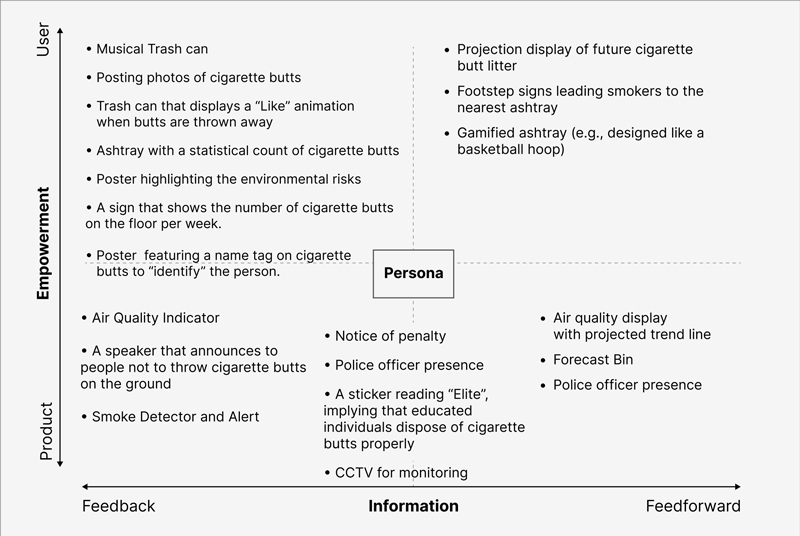
A Matrix Framework for Design Ideation
This iterative process culminated in an integrated intervention that combined visual feedback, which displayed the daily and weekly accumulation of discarded cigarette butts to highlight current behavior, with feedforward, a future-oriented approach illustrating how minor behavioral changes could prevent further accumulation. By linking observed outcomes (i.e., the growing number of littered butts) to anticipated benefits of responsible disposal, the design aimed to foster both immediate awareness and a forward-looking mindset conducive to sustained behavior change.
The final intervention prototype featured two transparent glass jars labeled “Last Week” and “This Week,” accompanied by a pink poster (Figure 7). By integrating feedback—which visualized the consequences of past and current littering—and feedforward—which emphasized convenient, future-oriented actions—this design addressed the three core constructs of the Theory of planned behavior: attitude, subjective norms, and perceived behavioral control.
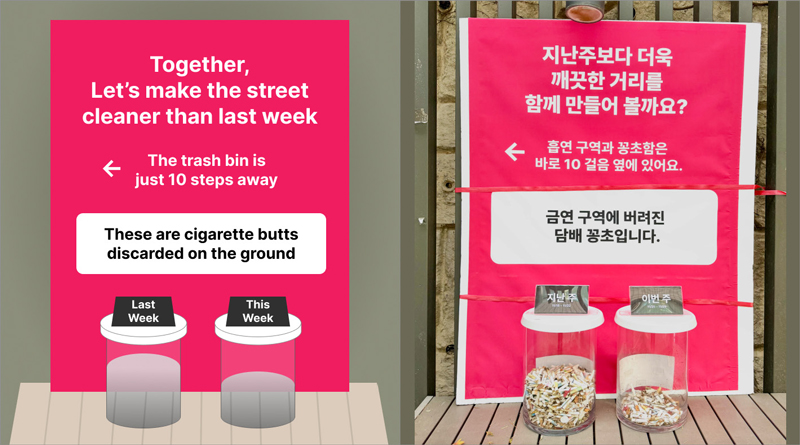
Conceptual prototype (left) & Implemented intervention (right)
To shift attitudes, the jars made the cumulative scale of cigarette butt littering more visible. “Last Week” displayed the total number of butts collected during the preceding week, while “This Week” was updated daily to reveal new accumulations. This visual feedback highlighted how seemingly trivial, often unconscious acts of littering collectively add up to a noticeable accumulation of waste. By confronting smokers with tangible evidence of cumulative waste, the intervention encouraged them to reconsider the idea that disposing of a single cigarette butt is inconsequential.
In an effort to influence subjective norms, the jars were placed in a high-traffic area, ensuring that the steady buildup of cigarette butts could not be overlooked. By making the daily impact of improper disposal evident, the intervention signaled that littering is neither negligible nor universally condoned. The pink poster’s message—“Let’s make our streets cleaner together”—reinforced a sense of shared responsibility, suggesting that holding onto a cigarette butt or using a proper receptacle is the socially appropriate choice. This collective framing aimed to weaken the belief that “everyone does it,” thereby fostering group disapproval of littering.
Lastly, the intervention sought to enhance perceived behavioral control by emphasizing how straightforward and beneficial proper disposal can be. The proximity of a disposal bin was highlighted as a simple yet impactful step that smokers could take to prevent further buildup in the “This Week” jar. This feedforward component underscored the idea that a small act—walking a few extra steps—could decisively reduce future accumulations. By lowering perceived barriers and offering a clear alternative, the intervention encouraged individuals to adopt more responsible behaviors.
In summary, the final intervention combined feedback with feedforward to influence attitudes, subjective norms, and perceived behavioral control in tandem. Through ongoing visual reminders, collective responsibility cues, and practical guidance, this design-led approach aimed to disrupt habitual cigarette butt littering and foster more sustainable disposal practices.
3. 5. Baseline data collection
Prior to implementing the intervention, a baseline measurement was established by counting the number of discarded cigarette butts at the experimental site over one week. Under consistent conditions to ensure reliability, a total of 1,673 cigarette butts were recorded. This figure served as a reference for gauging subsequent changes in littering behavior once the intervention was introduced.
3. 6. Intervention Deployment
Following baseline data collection, the intervention was deployed over a three-week period. Each morning at 11:00 AM, the newly discarded cigarette butts from the designated area were collected and placed into the “This Week” jar. Every Monday, the jars were switched: the contents of “This Week” were transferred to “Last Week,” and “This Week” was then reset to visually mark the start of a new cycle. At the end of the three-week interval, the entire setup was removed from the site.
3. 7. Post-intervention data collection
To gain a more nuanced understanding of the intervention’s effectiveness, post-intervention interviews and a post-survey was conducted. First, interviews were conducted with one cleaning staff member and two smokers. These interviews complemented the quantitative measures by capturing subjective experiences and perceptions that might not be fully evident in numerical data alone. The cleaning staff member was interviewed before (pre), during (mid), and after (post) the intervention, providing longitudinal insights into shifts in daily routines and the broader campus environment. Additionally, a brief post-intervention survey of ten participants, coupled with follow-up interviews with two smokers, offered deeper reflections on awareness, attitudes, and disposal behaviors.
3. 8. Data Analysis
Data analysis was conducted using a mixed-methods approach that integrated quantitative and qualitative techniques to comprehensively evaluate the intervention.
For the quantitative analysis, descriptive statistics were used to summarize cigarette butt counts collected during the baseline and intervention periods, and percentage changes were calculated to objectively assess behavioral shifts. Pre-intervention survey responses—designed to assess the core constructs of the Theory of planned behavior in relation to littering behavior—were analyzed using Pearson correlation analysis to determine the strength and direction of these associations. In the post-intervention survey, participants rated design awareness, perceived effectiveness of the intervention, and the extent of behavior change on a five-point Likert scale; the frequency of responses for each question was computed to quantify these perceptions.
Qualitative data were obtained through interviews with cleaning staff and site users. The interview with the cleaning staff focused on their perceptions of the design’s effectiveness in reducing cigarette littering, while interviews with site users explored whether the intervention influenced their own behavior, attitudes, and perceived behavioral control, as well as those of people around them. Detailed field notes were taken during these interviews and later summarized descriptively.
3. 9. Ethical Considerations
Informed consent was obtained from all participants prior to their involvement in surveys and interviews. Additionally, the study was conducted in accordance with the ethical principles outlined in institution’s Research Ethics Guidelines. In line with these guidelines for low-risk, observational design involving both surveys and interviews, formal ethical review was not deemed necessary.
4. Findings
4. 1. Quantitative Changes in Cigarette Butt Littering
The intervention appears to have had a notable impact on cigarette littering behavior, as reflected in the weekly trends of discarded cigarette butts (Figure 8).
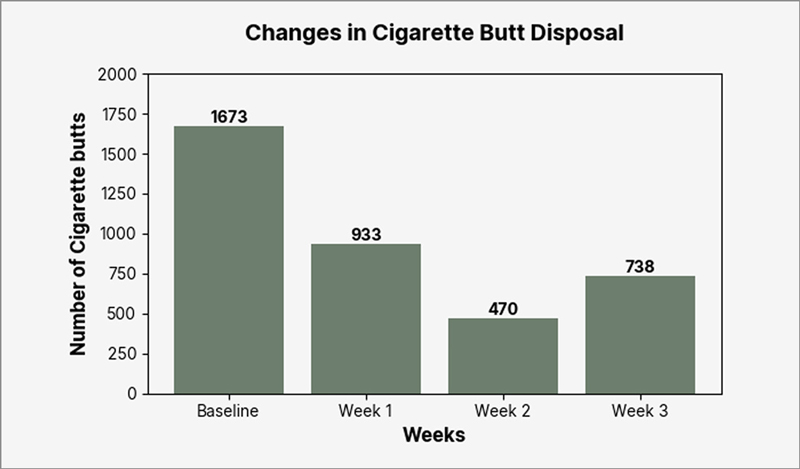
Changes in the number of cigarette butts collected over four weeks
During the pre-intervention week (baseline), 1,673 cigarette butts were collected, highlighting the severity of the issue and confirming that the selected location was appropriate for implementing the intervention.
In Week 1, once the intervention was introduced, the number of littered cigarette butts dropped sharply to 933—a 44.3% reduction from the baseline. This initial decrease suggests that the visual cues (transparent jars) and messaging (poster) may have heightened awareness and motivated smokers to dispose of cigarette butts properly. In Week 2, the reduction became even more pronounced, with only 470 cigarette butts collected, marking a 71.9% decrease from the baseline. In Week 3, the count increased slightly to 738, however overall, the total number of discarded cigarette butts throughout the intervention period remained 55.9% lower than at baseline.
The observed reduction suggests that the intervention effectively reduced cigarette litter. Despite potential influences from uncontrolled external factors such as foot traffic or weather, the consistent reduction in cigarette litter indicates that the intervention played a key role in driving the behavior change.
4. 2. Perspectives from the Cleaning Staff
To complement the quantitative data and gain deeper insights, a semi-structured interview was conducted with the cleaning staff member who was responsible for maintaining the intervention site. Given his daily exposure to the area, the staff’s observations were valuable for assessing changes in littering behavior over time. Interviews were carried out at three time points: pre-, mid-, and post-intervention. Prior to the intervention, the cleaning staff expressed skepticism regarding the effectiveness of a design-led intervention, recalling that previous campaigns and posters had yielded limited impact. However, during the mid-intervention stage, a noticeable reduction in daily cigarette butt accumulation was observed, requiring less frequent and less intensive cleaning:
“Honestly, I didn’t think it would make much of a difference, but I was surprised by how few cigarette butts were on the ground this week. I can tell there’s been a decrease when I’m cleaning.” (Cleaning Staff)
One week after the intervention was removed, the staff member reported a slight increase in litter, suggesting a partial relapse of old habits. Nonetheless, the volume remained noticeably lower compared to the pre-intervention phase. This perspective highlights both the immediate effectiveness of the intervention and the challenge of sustaining behavior change once the visual cues are no longer present.
4. 3. Smoker Perspective
A brief post-intervention survey (Figure 9), combined with in-depth interviews with two frequent smokers, was employed to examine the intervention’s influence from multiple angles. All participants indicated awareness of the design, and the majority (8 out of 10) considered it at least somewhat effective in prompting responsible disposal. In terms of behavioral changes, 7 out of 10 respondents reported improvements—such as more frequent use of designated bins—while the remaining participants observed only slight or no change.
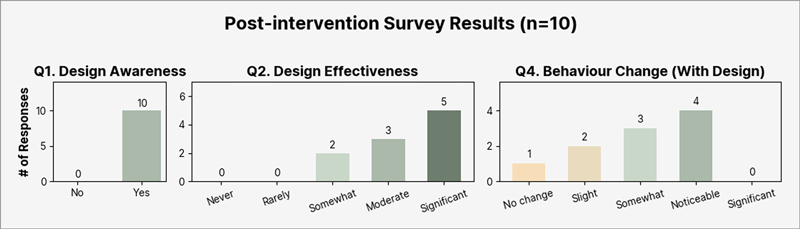
Results from the post-intervention survey
Interviewees indicated a notable shift in attitude when they realized that a seemingly trivial act—dropping a cigarette butt on the ground—could accumulate into a much larger outcome than anticipated. The transparent glass jars, which visibly tallied weekly cigarette butt accumulations, made individuals reflect on their behavior and recognize its consequences:
“I realized we have been discarding far more cigarette butts than I thought. Although I knew it was a bad habit, I used to toss them on the ground out of convenience, but after seeing the design, I tried to dispose of them properly.” (P1)
“I was surprized at how many cigarette butts piled up in just one week. I ended up using disposal bins more often. It gave us something to think about and helped us stay more aware, at least for a while.” (P2)
A mild shift in subjective norm was noted, as some smokers discussed the jars and appeared to recognize a collective responsibility for campus cleanliness. Although participants did not report strong social pressure to conform, they did observe changes in peer behavior, at least initially:
“It seemed like the number of discarded butts had visibly decreased. People actually paid attention to the design, looked at it, and even discussed it.” (P1)
“At first, people seemed to pay attention because it caught their eye, but over time they started ignoring it again and went back to throwing butts on the ground.” (P2)
Such observations indicate that a shared sense of what was “normal” began to form around the proper disposal of cigarette butts, even if it did not always translate into a lasting practice. An initial increase in perceived behavioral control was also observed, as smokers made more conscious efforts to locate and use disposal bins. Over time, however, participants voiced concerns about the intervention’s sustainability, particularly if visual cues were discontinued or if repeated exposure eventually caused individuals to become desensitised to the design.
Overall, integrating observational counts, surveys, and interview data revealed that the intervention heightened smokers’ awareness and prompted more conscientious disposal in the short term.
5. Conclusion
5. 1. Summary of Results
This study addressed the pervasive cigarette butt littering on a university campus through a design-led intervention. Traditional approaches, such as awareness campaigns or increasing the availability of disposal bins, have often proven insufficient for effecting meaningful behavioral change. In contrast, this case study attempted to change people’s behavior by changing attitude, subjective norms, and perceived behavioral control with a theory-based design-led intervention.
The intervention was grounded in the Theory of planned behavior (TPB), which helped identify key opportunities for change. Drawing on preliminary studies, the design combined feedback and feedforward strategies to shift attitudes, promote both individual and collective responsibility, and strengthen perceived behavioral control.
Quantitative findings supported this impact, demonstrating a 44.3% decrease in cigarette litter in the first week and a 71.9% decrease in the second week compared to the pre-intervention week. Although littering slightly increased during the third week, the overall levels remained 55.9% lower than baseline.
Post-intervention interviews with the cleaning staff, a survey with ten smokers and follow-up interviews with two smokers further validated these findings The cleaning staff observed a noticeable reduction in cigarette litter during the intervention, while smokers reported increased awareness and changes in disposal behavior. The intervention’s visual cues, particularly the transparent jars displaying cigarette butts, reinforced both individual and collective responsibility, contributing to the observed behavioral change.
Overall, the findings demonstrate how a design-led intervention-developed through a theory-based analysis of behavior and refined through a structured design ideation process-can effectively influence cigarette butt littering. Additionally, the multifaceted methods employed in this study offer a systematic approach to tackling complex behavioral issues and evaluating effectiveness from multiple perspectives. By identifying a specific problem, devising a tailored intervention, and rigorously assessing its outcomes, this case study advances the field by illustrating how a design-led approach can foster sustainable behavior change.
5. 2. Limitation and Recommendations
While this study provides meaningful insights into behavior change related to cigarette butt littering, certain limitations should be acknowledged to guide future research.
First, the three-week duration may have constrained the ability to fully assess sustainable behavioral change over time. Although the short-term data provided strong evidence of initial behavior modification, the modest increase observed in Week 3 leaves it unclear whether this reflects natural short-term variability or an early indication of a waning intervention effect, underscoring the need for longer observation periods to draw definitive conclusions. Extended observation periods are needed to evaluate the long-term impact and persistence of these changes. Second, the study was conducted at a single site, which may limit the generalisability. Because this is a case study, future research should replicate the intervention across multiple campuses to examine its scalability and effectiveness in diverse contexts. Third, interview data were collected from a limited number of participants. Although various data sources were incorporated, future research would benefit from larger, more diverse participant groups. Lastly, external factors, such as foot traffic variations and environmental conditions, were not controlled and may have influenced the results. Future research could incorporate systematic measurements and controls for these variables. Future research should systematically measure and control for external factors such as foot traffic and weather, for instance by tracking daily visitor flow and weather data, to better isolate the intervention’s true effects.
Overall, this study provides a compelling case for the efficacy of design-led interventions to tackle social problems. The limitations identified offer pathways for future research to build upon these findings, ensuring continuous improvement in the development of design for sustainable behavior.
Notes
Copyright : This is an Open Access article distributed under the terms of the Creative Commons Attribution Non-Commercial License (http://creativecommons.org/licenses/by-nc/3.0/), which permits unrestricted educational and non-commercial use, provided the original work is properly cited.
References
-
Abrahamse, W., Steg, L., Vlek, C., & Rothengatter, T. (2005). A review of intervention studies aimed at household energy conservation. Journal of Environmental Psychology, 25(3), 273-291.
[https://doi.org/10.1016/j.jenvp.2005.08.002]

-
Ajzen, I. (1991). The theory of planned behavior. Organizational Behavior and Human Decision Processes, 50(2), 179-211.
[https://doi.org/10.1016/0749-5978(91)90020-T]
-
Aldenaini, N., Alqahtani, F., Orji, R., & Sampalli, S. (2020). Trends in persuasive technologies for physical activity and sedentary behavior: A systematic review. Frontiers in Artificial Intelligence, 3, 7.
[https://doi.org/10.3389/frai.2020.00007]
-
Basso, D., & Olivetti Belardinelli, M. (2006). The role of the feedforward paradigm in cognitive psychology. Cognitive Processing, 7(2), 73-88.
[https://doi.org/10.1007/s10339-006-0034-1]
-
Coskun, A., Zimmerman, J., & Erbug, C. (2015). Promoting sustainability through behavior change: A review. Design Studies, 41, 183-204.
[https://doi.org/10.1016/j.destud.2015.12.001]
-
Creswell, J. W., & Inoue, M. (2024). A process for conducting mixed methods data analysis. Journal of General Family Medicine, 26(1), 4-11.
[https://doi.org/10.1002/jgf2.736]
- DAU Media Center. (2019, March). 담배꽁초가 즐비한 캠퍼스... 이대로 괜찮을까? [Cigarette butt littering on campus: A growing concern]. Dong-A University DAU Media Center, Retrieved from http://dongan.dau.ac.kr/news/articleView.html?idxno=11514.
-
de Kort, Y. A. W., McCalley, L. T., & Midden, C. J. H. (2008). Persuasive Trash Cans: Activation of Littering Norms by Design. Environment and Behavior, 40(6), 870-891.
[https://doi.org/10.1177/0013916507311035]
-
Ferguson, M. A., & Branscombe, N. R. (2010). Collective guilt mediates the effect of beliefs about global warming on willingness to engage in mitigation behavior. Journal of Environmental Psychology, 30(2), 135-142.
[https://doi.org/10.1016/j.jenvp.2009.11.010]
-
Fischer, C. (2008). Feedback on household electricity consumption: A tool for saving energy? Energy Efficiency, 1(1), 79-104.
[https://doi.org/10.1007/s12053-008-9009-7]
-
Giacobbi, P. R. (2016). Theoretical, critical, and practical reflections on the long-term maintenance of health behavior change. American Journal of Lifestyle Medicine, 10(6), 377-380.
[https://doi.org/10.1177/1559827616662435]
-
Hardeman, W., Johnston, M., Johnston, D. W., Bonetti, D., Wareham, N. J., & Kinmonth, A. L. (2002). Application of the theory of planned behavior in behavior change interventions: A systematic review. Psychology & Health, 17(2), 123-158.
[https://doi.org/10.1080/08870440290013644]
-
Huang, S., Scurati, G. W., Elzeney, M., Li, Y., Lin, X., Ferrise, F., & Bordegoni, M. (2019, July). AIM: An interactive ashtray to support behavior change through Gamification. In Proceedings of the design society: international conference on engineering design (Vol. 1, No. 1, pp. 3811-3820). Cambridge University Press.
[https://doi.org/10.1017/dsi.2019.388]
- Jackson, T. (2005). Motivating sustainable consumption: A review of evidence on consumer behavior and behavioral change. Sustainable development research network, 29(1), 30-40.
-
Morgan, J. C., Jeong, M., Mendel-Sheldon, J., Noar, S. M., Ribisl, K. M., & Brewer, N. T. (2022). The impact of cigarette pack anti-littering messages. Addictive behaviors, 126, 107184.
[https://doi.org/10.1016/j.addbeh.2021.107184]
- Joo, H., & Park, H. (2024, June). 유명무실한 금연구역, 무분별한 흡연 멈춰야 할 때 [Ineffective Non Smoking Zones: Time to Put an End to Reckless Smoking]. Kookmin University Press. Retrieved from https://press.kookmin.ac.kr/news/articleView.html?idxno=103420.
-
Klunin, A., Sloboda, M., Sicakova-Beblava, E., & Pavlovsky, P. (2024). One Nudge Can Be Enough: Reducing Cigarette Butt Littering in Public Areas. Cent. Eur. Pub. Admin. Rev., 22, 9.
[https://doi.org/10.17573/cepar.2024.2.01]
- Kim, M., Jeong, H., & Oh, G. (2024, October 6). Smoking situation on the Yonsei International Campus uncomfortable for both smokers and non-smokers. The Yonsei Chunchu. https://chunchu.yonsei.ac.kr/news/articleView.html?idxno=31617.
-
Kim, S., Lee, Y., Han, C., Kim, M. K., Kawachi, I., & Oh, J. (2023). Effects of municipal smoke-free ordinances on secondhand smoke exposure in the Republic of Korea. Frontiers in Public Health, 11, 1062753.
[https://doi.org/10.3389/fpubh.2023.1062753]
- Komatz, K. (2022, September). Fire Prevention 52: Cigarette Butts. National Park Service. Retrieved from https://www.nps.gov/articles/p52-cigarette-butts.htm.
- Lilley, D. (2005). Designing for behavioral change: reducing the social impacts of product use through design (Doctoral dissertation, Loughborough University).
- Lee, K. (2019). 흡연규제정책 개선에 관한 연구 : 금연구역지정 정책을 중심으로 [A study on the improvement of smoking control policy : with a focus on non-smoking area designation policy] (Master's thesis, Konkuk University).
- Marcu, G., Selagea, V. I., Simeanu, C.-M., Stancu, E. A., & Iordanescu, E. (2016). Nudge: Influencing smokers' behavior of cigarette butts throwing. In Proceedings of the IV International Scientific and Practical Seminar: Psychology of Political and Economic Self-Constitution.
-
Michie, S., Richardson, M., Johnston, M., Abraham, C., Francis, J., Hardeman, W., Eccles, M. P., Cane, J., & Wood, C. E. (2013). The Behavior Change Technique Taxonomy (v1) of 93 Hierarchically Clustered Techniques: Building an International Consensus for the Reporting of Behavior Change Interventions. Annals of Behavioral Medicine, 46(1), 81-95.
[https://doi.org/10.1007/s12160-013-9486-6]
-
Miller, M. R., & Burbach, M. E. (2020). Cigarette butt disposal behavior: A case study of a public beach on Jekyll Island, Georgia, USA. Environment and Natural Resources Research, 10(3), 27-43.
[https://doi.org/10.5539/enrr.v10n3p27]
- Na, K. I., & Hwang, H. P. (2022). 2022년 세계 금연의 날- 우리 환경에 대한 담배의 위협 [World no Tobacco Day 2022 - Tobacco: Threat to our environment]. Public Health Weekly Report, 15(22), 1536-1540.
- Niedderer, K., Cain, R., Clune, S., Lockton, D., Ludden, G., Mackrill, J., & Morris, A. (2014, September). Creating sustainable innovation through design for behavior change: summary report. University of Wolverhampton, CADRE. Retrieved from http://hdl.handle.net/2436/336614.
- Nise, N. S. (2007). Control systems engineering (5th ed.). John Wiley & Sons.
- Norman, D. (2013). The design of everyday things: Revised and expanded edition. Basic Books.
-
Rath, J. M., Rubenstein, R. A., Curry, L. E., Shank, S. E., & Cartwright, J. C. (2012). Cigarette litter: Smokers' attitudes and behaviors. International Journal of Environmental Research and Public Health, 9(6), 2189-2203.
[https://doi.org/10.3390/ijerph9062189]
-
Sagebiel, J., Karok, L., Grund, J., & Rommel, J. (2020). Clean environments as a social norm: a field experiment on cigarette littering. Environmental research communications, 2(9), 091002.
[https://doi.org/10.1088/2515-7620/abb6da]
-
Schultz, P. W., Bator, R. J., Large, L. B., Bruni, C. M., & Tabanico, J. J. (2013). Littering in context: Personal and environmental predictors of littering behavior. Environment and Behavior, 45(1), 35-59.
[https://doi.org/10.1177/0013916511412179]
-
Shin, H. D., & Bull, R. (2019). Three dimensions of design for sustainable behavior. Sustainability, 11(17), 4610.
[https://doi.org/10.3390/su11174610]
-
Stern, P. C. (2000). New environmental theories: Toward a coherent theory of environmentally significant behavior. Journal of Social Issues, 56(3), 407-424.
[https://doi.org/10.1111/0022-4537.00175]
- Stern, P. C. (2005). Understanding individuals' environmentally significant behavior. Environmental Law Reporter News & Analysis, 35, 10785.
- The Ministry of Environment. (2020, May). Research report on establishing a cigarette butt management system [담배 꽁초 관리 체계 연구 용역]. Retrieved from https://www.prism.go.kr/.
- Turner, Julia. (2018) A Component Analysis of Low-Cost Interventions to Decrease Cigarette Butt Litter in the Natural Environment. Culminating Projects in Community Psychology, Counseling and Family Therapy. https://repository.stcloudstate.edu/cpcf_etds/55.
- United States National Park Service. (2022, March). Wildfire causes and evaluations. Retrieved from https://www.nps.gov/articles/wildfire-causes-and-evaluation.htm.
-
Wilson, N., Oliver, J., & Thomson, G. (2014). Smoking close to others and butt littering at bus stops: Pilot observational study. PeerJ, 2, e272.
[https://doi.org/10.7717/peerj.272]
- World Health Organization. (2023, July). WHO report on the global tobacco epidemic, 2023: Protect people from tobacco smoke. Retrieved from https://www.who.int/publications/i/item/9789240077164.