
The Effect of Industrial Design on Corrugated Cardboard Packaging Optimization
Abstract
Background Today, packaging is essential for protection, marketing, storage, transport, and product information. Cardboard is widely used for its practicality, low cost, light weight, easy production, and eco-friendliness. This article examines the impact of packaging design on strength, cost, production speed, and material use and explores ways to enhance this impact through packaging design. The article highlights the importance of design in corrugated packaging and demonstrates how measurable methods, such as box compression tests and CAD programs, can optimize packaging.
Methods An experimental study was conducted to mathematically demonstrate the impact of design on packaging strength, cost, material use, production and setup time. Various packaging models were created using a Kongsberg XL22 cutting table, and box compression tests were performed. Material consumption, production speed and costs were also calculated, supported by a literature review and experimental work on corrugated cardboard boxes.
Results First, to optimize packaging strength, cost, production speed, material use, and environmental impact, developing an optimal design is key. Second, different box designs offer varying benefits: lock tuck top insert bottom boxes are fastest to produce, while customer lock top slotted bottom boxes are slowest. Third, glued insert bottoms take longer to produce but allow quicker customer assembly, while slotted bottoms require tape and inserts. Boxes with interlocked bottoms and extra inserts provide the highest strength, whereas glued insert bottoms offer the least. Fifth, inserts improve strength, with automatic inserts being the strongest. Sixth, corners, folded edges, and monoblock surfaces strengthen boxes, while cuts and holes weaken them.
Seventh, balancing production speed with cost is essential. Eight, standardizing packaging, optimizing die-cut layouts and reducing unnecessary components help minimize waste, time, and energy, requiring collaboration among designers and engineers.
Conclusions This research identifies key factors in corrugated packaging design, focusing on cost, strength, material use, and production speed. Design optimization improves these areas by considering size, shape, cardboard type, fluting, inserts, adhesive and bending. The study combines experimental findings with theoretical and technical knowledge, utilizing techniques like box compression tests, edgewise crushing tests and design software.
The results offer insights for enhancing packaging strength, reducing costs, and minimizing production time and material waste, thus providing valuable guidance for packaging designers and industry professionals.
Keywords:
Industrial Design, Cardboard Packaging, Optimization, Sustainability1. Introduction
The increasing demand for packaging, competitive market conditions and limited resources require the creation of higher-quality packaging. There are certain timeless components in the packaging field that remain relevant. In addition to these, there are contemporary requirements dictated by the needs of the modern age. Meeting these requirements, making a difference, contributing significantly to the packaging field, and creating added value are only possible through industrial design.
Like many products around us, packaging is also an industrial design and should be developed from a design perspective. This article addresses the contributions that can be offered to the field of corrugated cardboard packaging through industrial design. Design principles to be considered in corrugated cardboard packaging design are identified, and the contribution of technical studies to packaging design is emphasized.
The demand for packaging is rising, with corrugated cardboard widely used for its lightness, strength, low cost, storage efficiency, and eco-friendliness (Fitas et al., 2023). Increasing market demands and competition drive the need for optimization, which improves durability, reduces waste and costs, and minimizes environmental impact (Mrówczy ´nski et al., 2006). Optimized designs meet specifications, providing both strategic and sustainability benefits (Ojstersek et al., 2020).
Optimization of corrugated cardboard packaging can be approached in various ways, with this article examining it from an industrial design perspective. It highlights how design choices impact durability, material consumption and production efficiency, supported by experimental studies and calculations.
While previous studies have focused on technical factors like adhesive type, cardboard structure and packaging dimensions, this article uniquely emphasizes the role of industrial design. Unlike other studies, the originality of this article lies in its holistic approach to revealing the effects of packaging design on strength, cost, production and setup time, and material consumption. It covers key aspects such as packaging typology, lid models, inserts, adhesives, costs, production processes and material consumption. The article defines the interrelations between the factors affecting corrugated cardboard packaging. These relationships are demonstrated both practically through box compression tests and mathematically through calculations. Another unique aspect of the article is its examination of the design’s impact on packaging strength using box compression tests. Titled “Effect of Industrial Design on the Optimization of Corrugated Cardboard Packaging Optimization” the article is organized into five sections. It begins by outlining the study’s objectives and methodology, followed by an exploration of packaging history, design factors, and optimization strategies. The authors present their own packaging designs, box compression tests and calculations for material consumption, cost, and production time. The fourth section, which constitutes the original and significant part of the article, presents the results of box compression tests conducted on different types of corrugated cardboard packaging. The results of box compression tests, varying based on box, insert, lid, and flute types, are shared for the examined box combinations. The impact of corrugated packaging’s industrial design on strength, cost, material consumption, and production/setup time is explained and mathematically validated through tests and calculations. Based on the data, the designs with the highest and lowest performance in these aspects are identified, and their distinguishing features are described. The features resulting from these packaging designs are described.
In the final section, the research findings are discussed, and the resulting design principles for corrugated packaging are presented. Additionally, the final section provides guidelines that serve as a reference for future studies.
This research demonstrates how design can enhance packaging strength, minimize material usage, reduce costs, and optimize production. It explores design variations with different strengths, costs, environmental impacts, and production speeds, offering recommendations based on experimental findings and literature.
1. 1. Hypothesis
The article hypothesizes that the design of cardboard packaging plays a crucial role in packaging optimization. It demonstrates through experiments, measurements, and calculations that industrial design significantly impacts the cost, strength, production speed, and material consumption of cardboard packaging. The article focuses on the industrial design of cardboard packaging and presents its design principles. It advocates for a holistic approach to packaging design, considering various components such as form, material, cardboard and flute types, adhesive types, amounts and placements, folding locations and quantities, size, and cutting plan. It also emphasizes the importance of utilizing technical analyses in the packaging design process.
1. 2. Purpose of the Study
The article highlights the importance of packaging design by exploring both its creative and technical aspects. It demonstrates how industrial design can improve corrugated cardboard packagingthrough measurable methods like box compression tests and computer simulations. The key objectives are to show how design affects strength, cost, material use, and production speed, while also providing valuable insights for designers and manufacturers.
2. Method
The article is based on a literature review and findings from experimental studies. Sources include industry publications, books, academic papers and interviews with experts, with only relevant literature highlighted. Box compression tests were conducted on corrugated cardboard boxes designed by the second author, as described in the article and illustrated in Figure 1.
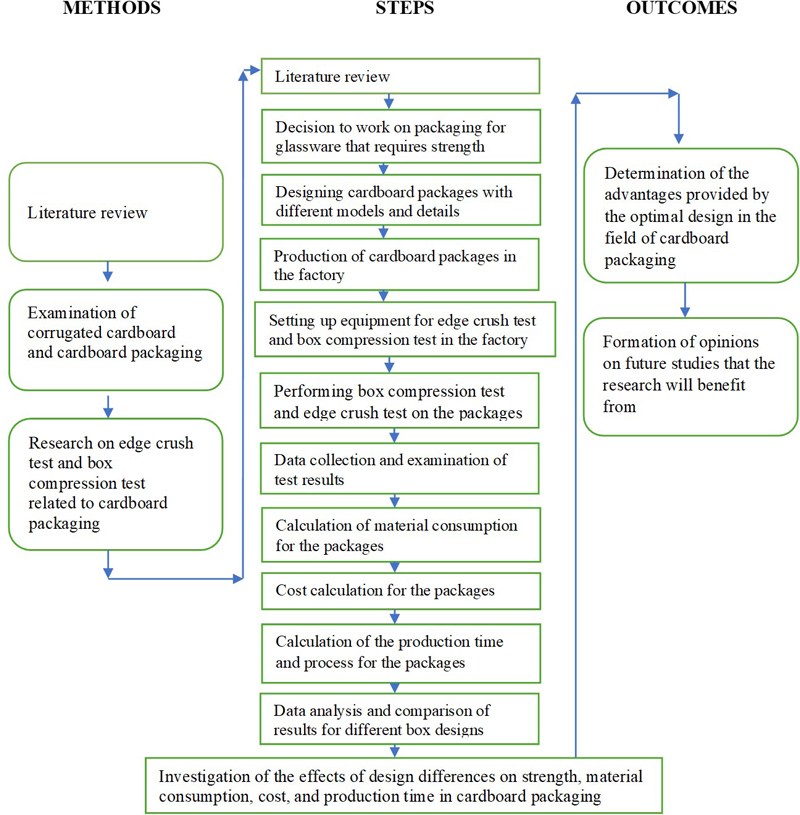
Flowchart of the research on effect of industrial design on corrugated cardboard
The study used ArtiosCAD for packaging design and conducted factory-based box compression tests to measure strength. Using computer programs, the production dimensions, weights, cardboard consumption, costs, production and setup times were determined. The article demonstrates that the design process can be quantified through mechanical tests and computer-based calculations, enhancing the creative design process with computational techniques. Additionally, it explores topics such as optimal packaging design (Maltenfort, 1988), comparisons of different models (Yingzhe, 2014), material usage and the design of an optimal box shape and cost (Chen et al., 2011).
3. Packaging
Packaging is an outer covering made from materials such as metal, paper, cardboard, glass and plastic, designed to protect products from environmental factors and physical damage. It facilitates transportation, storage, distribution, promotion and marketing, ensuring an economical path to consumers. Additionally, packaging provides essential information—like weight, price, production date, expiration date, content, manufacturer and usage instructions—for consumer convenience (MEB, 2011). The mechanical properties of corrugated cardboard are determined by its layered composite structure, which varies based on the type of cardboard, outer surface paper and flute type. The fluted inner layer offers strength and flexibility while flat outer liners enhance overall rigidity. Cardboard’s fibers provide strength in the machine direction but are weaker perpendicular to it. The advantages of cardboard packaging—such as high strength, rigidity, lightweight nature and cost-effectiveness—have contributed to its widespread use (Fitas et al., 2023).
3. 1. History and Development of Corrugated Cardboard
Corrugated cardboard is commonly used for fruit boxes, courier deliveries and various packaging applications, with its origins dating back to the mid-19th century. Initially, wooden crates were prevalent until they were replaced by cardboard boxes. In 1856, Edward G. Healy and Edward E. Allen developed wavy paper for hat molds, leading to the layered corrugated cardboard we know today. Albert L. Jones was the first to use corrugated cardboard as protective packaging in 1871 for wrapping glass bottle (Fitas et al., 2023).
In 1874, Oliver Long improved Jones’s design by adding layers and a liner, enhancing the material’s shock-absorbing properties. The first corrugated cardboard boxes were produced in 1894 by Henry Norris and Robert Thompson for Wells Fargo. These boxes offered advantages like durability, lightweight, low cost and easy storage, becoming popular in the early 20th century, especially for packing glass items. After 1910, corrugated cardboard evolved from mere packaging to an engineering material, with optimization efforts focusing on properties such as compression resistance, bending and durability. The Technical Association of the Pulp and Paper Industry (TAPPI) was established in 1915 to set standards for corrugated cardboard packaging, starting with flute types (Fitas et al., 2023). The demand for corrugated cardboard packaging has surged due to growth in the pharmaceutical, cosmetics, food and beverage sectors and e-commerce. This revolutionary packaging material is low-cost, lightweight, safe, sturdy and eco-friendly, making it a preferred alternative to non-biodegradable plastics (Adamopoulos, 2006; Mrówczy et al., 2022).
3. 2. The Need for Optimization in Cardboard Packaging
Increasing market demands and competition necessitate continuous innovation and optimization in corrugated cardboard packaging for manufacturers (Adamopoulos, 2006; Mrówczy et al., 2022). Although global production capacity has risen, escalating resource costs compel manufacturers to minimize material usage and expenses (Garbowski, 2024). Factors such as raw material shortages, climate change and growing global demands make optimization crucial for efficient resource utilization, sustainability, and industry efficiency (Flatscher, 2007).
Optimizing corrugated cardboard packaging aims to enhance durability while balancing various design variables like size, shape and topology (Fitas et al., 2023).
Size optimization includes parameters like height, thickness and layers of cardboard. Shape optimization addresses the design of outer layers, inner flutes and overall structure (Mei et al., 2021). Topology optimization concentrates on the cardboard’s structural integrity and wall configuration (Fitas et al., 2023). Effective optimization leads to increased durability, reduced waste and environmental impact, lower costs and improved performance, providing a strategic advantage and promoting sustainable industrial practices (Ojstersek et al., 2020).
Several articles address the goals of packaging optimization. One highlights the waste hierarchy model, which aims to reduce material waste, enhance efficiency and carbon dioxide emissions during production. Achieving these goals requires optimal use of corrugated cardboard, recycled materials and eco-friendly designs. A sustainable packaging model can be developed using these variables. Technical design focuses on optimizing packaging structure and materials for protection and efficiency, while supply chain design aims to minimize waste from design to post-consumption (Dominic et al., 2014). Environmental design seeks to enhance material reuse and reduce emissions throughout the supply chain. This article, based on the European Waste Hierarchy Directive, explores material efficiency and design strategies to minimize material use in corrugated cardboard glassware packaging (Figure 2). It highlights the crucial role of industrial design in achieving waste hierarchy goals—avoidance, reuse, recycling, recovery, and disposal. Optimal design reduces material consumption, waste, and energy use by ensuring proper sizing, selecting recyclable materials, and streamlining production processes.
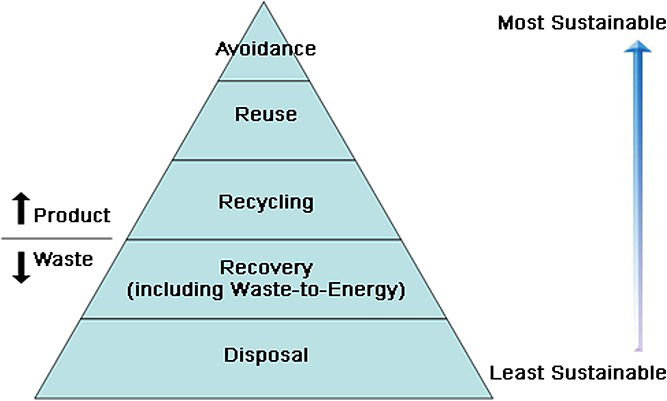
Waste hierarchy model (Dominic et al., 2014)
3. 3. Effective Factors in Corrugated Cardboard Packaging
There are various effective criteria in packaging design. Key criteria in packaging design include box type, corrugated cardboard structure, die-cut placement, bending stiffness and flute direction. Design also impacts cost, strength, material use, environmental effects and production speed.
3. 4. Packaging Design and Box Types
Packaging design is shaped by factors such as product characteristics, box weight and dimensions, appearance, transportation and stacking methods, sales location, production details, storage and customer demands. All these elements must be considered during the design process (Box Basics, 2016; Cardboard Packaging Design and Production, 2024). Various box types are created from corrugated cardboard, each with distinct shapes, sizes and functions (European Database for Corrugated Board Life Cycle Studies, 2011). Some boxes incorporate inserts for added strength and protection, including glued, automatic, slotted, wrapped and support inserts (Cardboard Packaging Design and Production, 2024; Most Popular Insert Types for Corrugated Boxes, 2024).
Corrugated inserts offer the same durability and cost-effectiveness as the boxes (Most Popular Insert Types for Corrugated Boxes, 2024). Different box and insert types can be combined to create diverse designs. The most commonly used corrugated packaging typologies and features, insert models, corrugated and flute types are shown in Figure 3. The designs of the boxes determine their characteristics. Depending on the box designs, the packaging’s strength, material usage, setup time, production speed and cost vary.
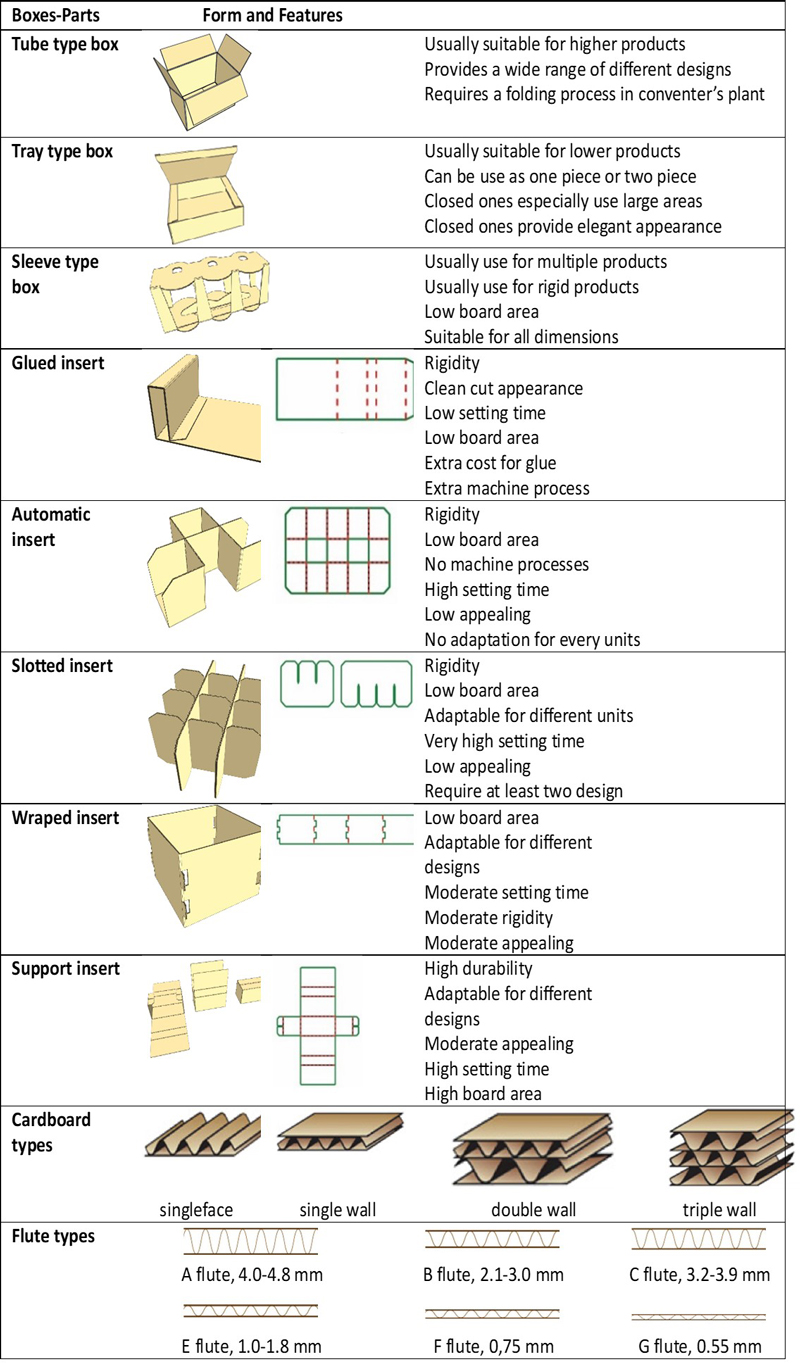
Box, cardboard and flute types (Torgay, 2016; Box Basics, 2016; Cam İş Ambalaj, 2015)
3. 3. 2. Structure of Corrugated Cardboard
The composition of layers in corrugated cardboard, including thickness, weight and flute types, impacts packaging strength during transport and stacking. The correlation between paper, corrugated board and box is shown in Figure 4. The corrugated board of the packaging consists of an outer liner and an inner fluted layer. The fluted inner layer offers strength and flexibility while flat outer liners enhance overall rigidity. The tensile stiffness and bending stiffness of the liner and corrugated cardboard are crucial as they influence the results of the crushing stiffness test, ring crushing test, concora liner test, and corrugated crushing test. These tests affect the results of the edgewise crushing test and the box compression test. Therefore, the layered composite structure formed by the liner and corrugated cardboard, along with the box form, edge bending, and packaging dimensions, significantly impacts the packaging strength and the results of the box compression test (Figure 4).
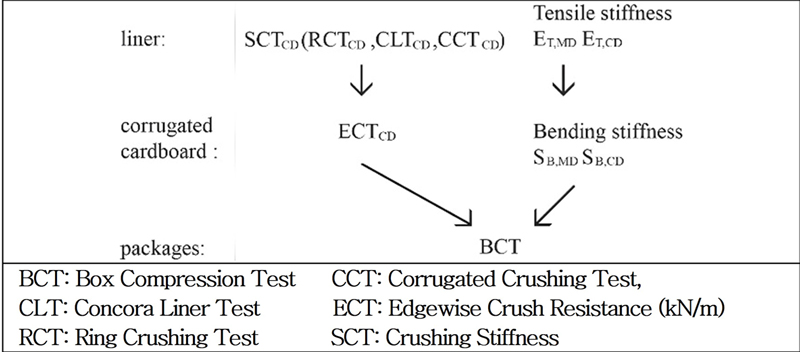
Correlation between paper, corrugated board and box
The optimal combination for packaging is tailored to the product and typically features the hardest inner liner, the weakest center liner and second-hardest outer liners (Maltenfort, 1988). The middle layer’s strength relies on the flute structure. Electrical appliance companies have successfully reduced five-layer cardboard to three layers by using high-strength corrugated cardboard, enhancing both strength and environmental impact (Chen et al., 2011).
3. 3. 3. Bending Stiffness of Corrugated Cardboard
Bending stiffness in corrugated cardboard is affected by the liner materials, center materials and thickness. It reflects the relationship between the applied bending moment and deflection in the elastic region (Markström, 1999). High bending stiffness also relies on the production process, but crushing during production can reduce thickness and strength. Greater bending stiffness improves packaging strength against internal loads and stacking pressures.
3. 3. 4. Space Utilization in Packaging Design
Space utilization in packaging has both advantages and disadvantages. A larger surface area enhances strength but increases cost and weight, which is not ideal for designers, customers or sustainability. Efficient cardboard use is essential without sacrificing strength. Adjusting the layout and orientation on the cardboard sheet can reduce space usage and improve strength (Maltenfort, 1988).
Designers should aim to minimize material use and create eco-friendly packaging. Cost-effectiveness should be a priority, focusing on minimizing dimensions. Significant savings can be achieved by optimizing die-cut dimensions and conditions (Figure 5). Since production line dimensions are machine-specific, designs must be nested efficiently within die-cuts, making alignment and overall dimensions crucial.
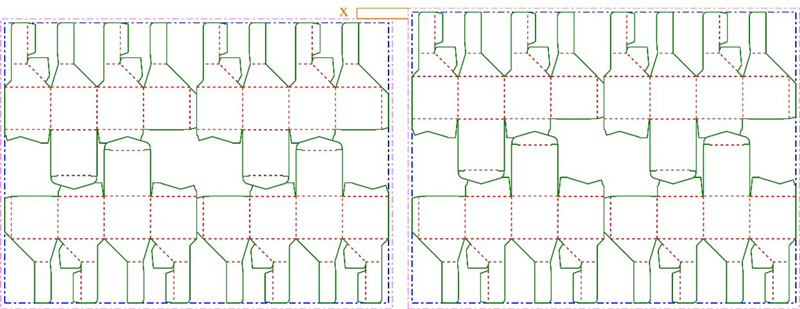
Two different nests containing four same packaging designs
Comparing layouts on a cardboard sheet shows financial differences; an optimal layout reduces material waste and costs. Using smaller paper rolls minimizes waste and provides environmental benefits. Attention to die-cut dimensions, product units, packaging graphics and roll length is necessary to further reduce waste.
When designing packaging, the box’s dimensions should be considered. A 2:1:2 length/width/depth ratio offers an optimal regular slotted container for board area (Cardboard Packaging Design and Production, 2024). However, factors like printed material, content shape, pallet arrangements and packaging machinery affect the layout. The best board area doesn’t always ensure the ideal design. It’s important to focus on the specified criteria and optimal ratios.
3. 3. 5. Flute Direction and its Consequences on Design
Flute direction is an important design factor. Designers must assess the packaging’s use and analyze various packages and inserts to determine the optimal flute direction. Typically, the flute should run parallel to the package height; however, exceptions exist. For instance, narrow packages stacked horizontally have perpendicular flute directions, while horizontal dropbox inserts with corrugated edges protect fragile items from horizontal pressure.
3. 3. 6. Strength Cost Material Usage and Speed in Packaging Design
Key criteria influenced by packaging design include strength, cost, material usage, environmental impact and production speed. The optimal packaging should be cost-effective, durable, quickly produced and eco-friendly.
Figure 6 illustrates how corrugated board packaging design influences strength, material usage, cost, and production/setup time. These factors are closely interconnected, with design choices—such as shape, size, board type, flute type, folds, adhesive application, and cutting patterns—playing a crucial role. While industrial design is not restricted in its impact on these criteria, it should align with corrugated board design principles. For example, excessively thin board should not be used merely to cut costs, nor should inadequate surface area be chosen just to minimize material usage.

Effects of corrugated cardboard packaging design on cost, strength, production time and material consumption
Cost: Factors affecting the cost of corrugated cardboard packaging include flute type, grammage, thickness, box design, internal components, die-cut dimensions, cutting and folding processes, machine specs, paper roll sizes, amount of adhesive and production quantity (Figure 6a). The primary cost driver is raw material, as corrugated cardboard is a multi-layered structure of paper and glue. Cardboard prices vary based on their physical properties.
Strength: Strength is a key aspect of packaging design, influenced by factors like box design, dimensions, glue amount, corrugated board type, flute type and material combinations (Camiş Ambalaj, 2015). Factors such as surfaces, glue, locking mechanisms, weaknesses and reinforcements affect the strength of the design. These factors are shown in the figure (Figure 6b).
Production and Setup Time: Calculating production and setup time is complex due to various influencing factors. Speed is evaluated separately for production and setup. Key factors include box model, tops, bottoms, inserts, number of folds, glue quantity and machine specifications (Figure 6c). Machine selection can be optimized for speed and efficiency, with setup times varying by design. For instance, side-sealed boxes require 30 minutes to set up, while glued insert boxes take two hours. The gluing process can also reduce manual tasks. Considerations like setup, filling, closure and manual operations like taping are important for manufacturers, customers, and users (Figure 6c).
Material Usage: Material usage in packaging is influenced by box and insert design, diecut dimensions, corrugated cardboard type, flute type, glue amount, waste ratio and total cardboard quantity (Figure 6d). Key factors impacting environmental effects include the amount of corrugated cardboard, waste ratio and box weight. Different cardboard types, with varying paper combinations, flutes, and thicknesses, have distinct environmental impacts (Oluklu Mukavva Sanayicileri Derneği, 2015). Excessive glue areas in box designs should be minimized (Kirwan, 2012). Companies should strive for environmentally friendly packaging designs, as illustrated in the figure (Figure 6).
4. Experimental Study on Packaging
Figure 7 shows the contents of various papers related to corrugated cardboard packaging (Fitas et al., 2023, p. 11-16). Various research papers on corrugated cardboard packaging cover topics such as lifecycle phases, design, size, shape, topology, manufacturing, distribution, material, dynamic size-related parameter changes, fibers, and adhesives (Figure 7). Many studies focus on optimizing packaging by examining adhesive type and quantity, bonding locations, curing temperatures, paper composition, weight, strength, and water absorption. Others explore box dimension optimization using the finite element method. Reviews indicate that most research optimizes corrugated cardboard based on one or a few parameters (Fitas et al., 2023).
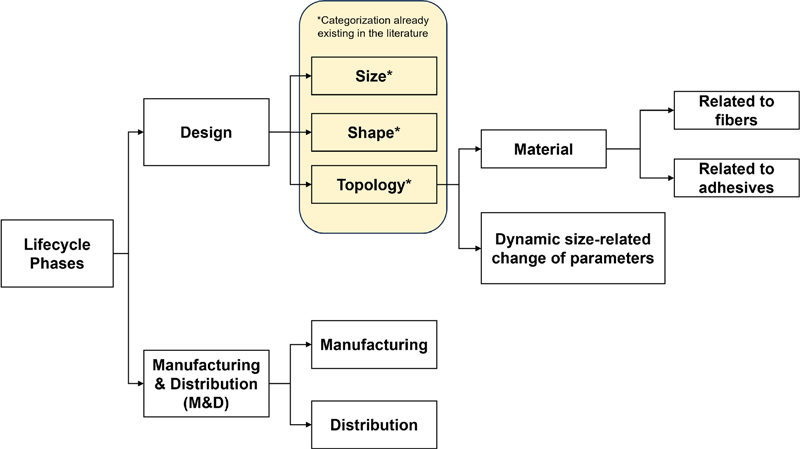
Research Topics on Corrugated Cardboard Packaging (Fitas et al., 2023, p. 11-16)
While many articles on corrugated cardboard packaging focus on specific aspects, this article emphasizes industrial design. It explores optimizing packaging design by considering type, box typology, dimensions, lid model, adhesive, cost, production process and strength criteria. The relationship between these components of cardboard packaging and its industrial design is also examined.
In this research, the second author designed and produced box models, which were then tested through experimental studies. The examined corrugated cardboard packages for glassware are standardized rectangular prisms that facilitate stacking, storage and protection. While they may appear similar externally, these packages differ in their cardboard types, form typologies, base and lid designs, internal supports, folding locations and adhesive placements.
This article explores how design variations impact strength, processing, cost, production speed, and material usage, highlighting the design’s influence on key packaging factors. It proposes that an optimal corrugated cardboard packaging design is cost-effective, durable, resource-efficient, and quick to produce. Therefore, box designs are assessed based on their cost, strength, material usage, and production/setup speed.
This research involved designing tube-type corrugated cardboard boxes produced with the Kongsberg sample machine. Their strength was evaluated using a box compression test machine, and the areas, weights, and costs were calculated based on the production of 10,000 units for each model (Markström, 1999). The experiments focused on tube-type boxes, commonly used for packaging glassware and suitable for taller items, which can be shaped as triangular, octagonal, or rectangular prisms.
The four common tests for corrugated cardboard packaging are the edge crush test, flat crush test, bursting test and water absorption test (The Complete Guide to Understanding Corrugated Boxes, 2024). Quality assessments follow the DIN 55468 standard, which evaluates burst strength, edge crush resistance and puncture resistance (Corrugated cardboard: History, manufacture, structure and types of corrugation, 2024). This article conducted box compression tests in accordance with the relevant standards.
4. 1. Box Compression Test
The McKee equation and Finite Element method are commonly used in corrugated packaging, relying on assumptions and software-based calculations. However, this paper conducts practical box compression tests, directly measuring box strength. The box compression test is a reliable and accurate method, offering direct testing on the packaging. The box compression test evaluates the stacking strength of corrugated board packages under transport conditions (Markström, 1999). It involves placing a sealed box between flat plates that compress at a speed of 10-13 mm/min, measuring the maximum force and strain at failure. Proper calibration and machine setup are essential for accurate results (Cardboard Packaging Design and Production, 2024). This test is commonly used to estimate specifications based on the, type of corrugated cardboard before production (Torgay, 2016).
Understanding the nature of the packaged product is vital for effective compression testing. For example, crushable items require additional protection, while liquid containers generate internal pressure, influencing packaging design. In contrast, robust products can handle more stress, allowing for lower box compression test values. Safety factors vary depending on the type of product being packaged (E. Yapca, personal communication, April 19, 2016).
4. 2. Examined Corrugated Cardboard Packaging Designs
This study tested tube-type corrugated cardboard boxes designed for glassware, crucial for protecting fragile items (Figure 3). A total of 24 boxes were created, resulting in 60 configurations by combining various boxes and inserts, which included automatic and slotted designs. The boxes were made from E flute corrugated cardboard while the inserts utilized both E and B flute materials. Each box accommodated six conical glass cups, each with a diameter of 70 mm and a height of 100 mm. Although the boxes appear as anonymized prismatic shapes, they feature distinct design elements (Figure 8). The standard box types referenced are based on the “International Fibreboard Case Code” published by the European Solid Board Organisation in 2016.
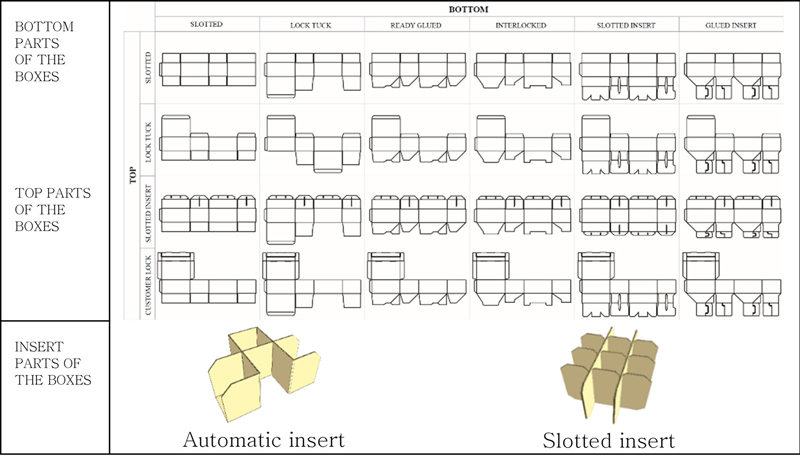
Box combinations analyzed in the experimental study
4. 3. Research Findings
This article summarizes test results in tables prepared from preliminary data which referenced the World Standard Comparison Chart by the European Federation of Corrugated Board Manufacturers. The findings are organized into four categories: strength, cost, production and setup speed and material consumption. The results are presented below.
Box compression tests were conducted using the Devotrans test device following the TAPPI T804 standard. The results are shown in Figure 9. The strongest box configuration featured a customer lock top and slotted insert bottom. Among customer lock top boxes, the strength ranking is: slotted insert bottom, interlocked bottom, lock tuck bottom, glued insert bottom, ready-glued bottom and slotted bottom. For slotted top boxes, the slotted insert bottom performed best, followed by glued insert bottom, interlocked bottom, lock tuck bottom, slotted bottom and ready-glued bottom.
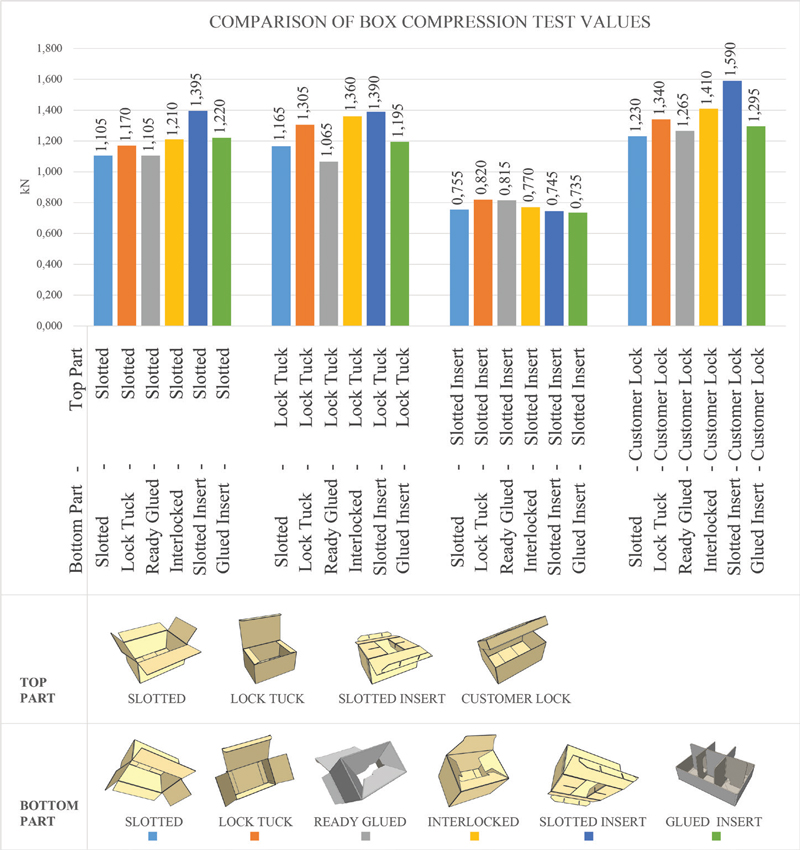
Comparison of box compression test results by box type.E flute slotted inserts are used
The tests indicated that customer lock top boxes with a slotted insert bottom are the strongest design while slotted top boxes with glued insert bottoms are the weakest. The folded edge in customer lock boxes increases strength while slotted inserts weaken due to cuts and the absence of corners. Inserts enhance box strength overall with vertical surfaces and double walls contributing to durability. Boxes with automatic inserts performed better than those with slotted inserts due to more corners and folded edges. Additionally, boxes with thicker B-flute corrugated cardboard showed higher strength (Figure 10).
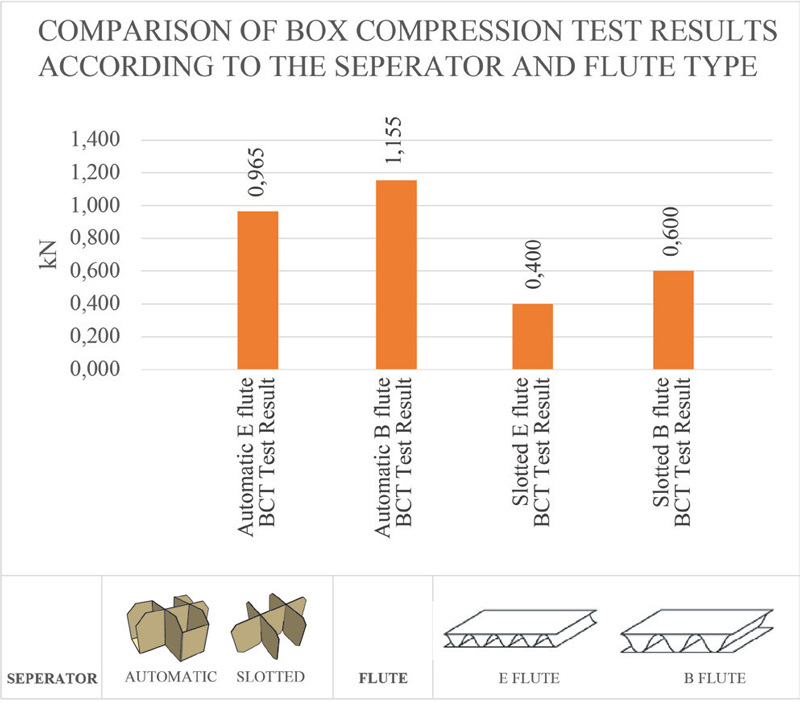
Comparison of box compression test results based on insert and flute type
The number of corrugated cardboard sheets used in packaging depends on die-cut dimensions, influenced by box designs and the number of units per die-cut based on their length, width and depth. As the units per die-cut increase, the required sheets decrease.
The package shapes also affect layout and quantity, with shape, size and adhesive amount determining material consumption.
Material usage, measured in kilograms, varies by box model, with calculations based on ArtiosCad drawings (Figure 11). The paper and adhesive amounts are considered environmental impact indicators due to their measurability. Other factors affecting environmental impact include material, energy, water inputs and outputs, transportation and emissions (European Database for Corrugated Board Life Cycle Studies 2011).
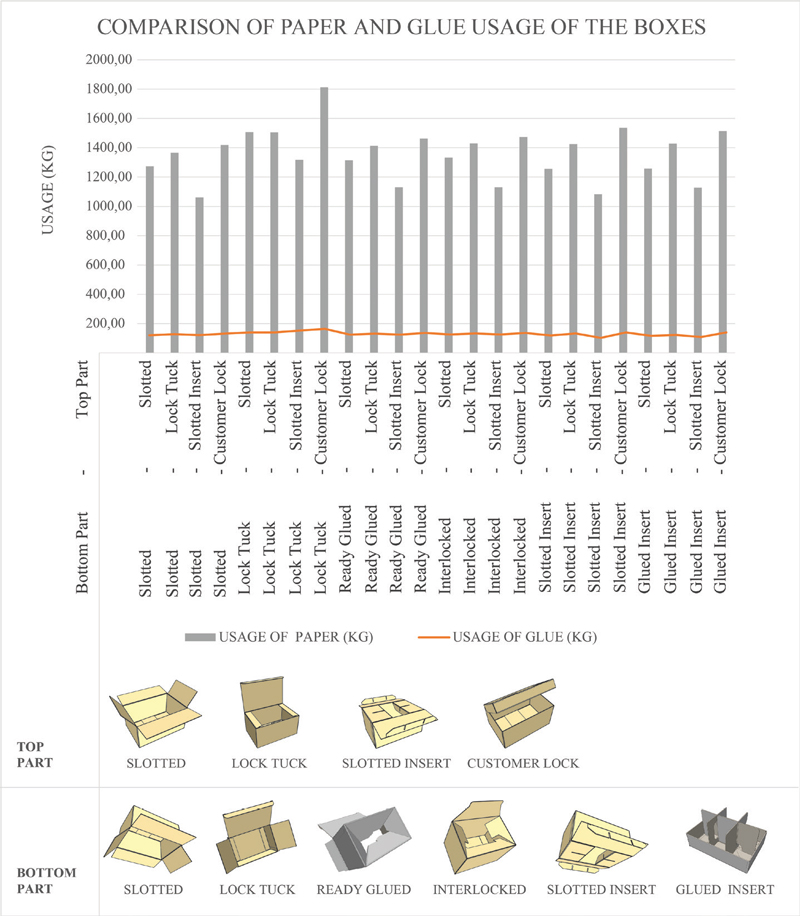
Comparison of paper and glue usage of the boxes
The findings show that the customer lock top and lock tuck bottom box has the highest material consumption while the customer lock top and slotted insert bottom box ranks second due to reduced material usage. In contrast, the slotted insert bottom and slotted top box has the lowest consumption, followed by the slotted insert top and slotted bottom box, as they lack corners and folded edges. Design of the boxes and their inserts significantly influences material usage (Figure 10).
In packaging design, cost is a crucial factor that includes all related criteria. Various elements such as the structure and properties of corrugated cardboard, die-cut specifications, machine characteristics, total manufacturing time, order quantity and transportation, all influence the overall cost.
Materials are the primary contributors to packaging costs. Corrugated cardboard, composed of paper layers and adhesive, varies in price based on its structure and manufacturer. The total cost depends on the quantity of cardboard sheets and adhesive used, which the packaging design influences. Packaging design also affects cutting and folding processes during production, impacting costs further. For packages with inserts, the cost chart was based on average prices for four different inserts: automatic, slotted, E flute and B flute combinations. All cost calculations utilized the Camiş preliminary cost system (Camiş Ambalaj, 2015).
The costs of different box models are shown below (Figure 12). The customer lock top-locktuck bottom box has the highest cost due to its folded edges and large surface area. Conversely, the slotted insert bottom with slotted top box is the least expensive, as it uses less material and avoids folding processes. Generally, customer lock top designs are more costly, followed by lock tuck top, slotted top and slotted insert top boxes. The amount of cardboard and glue used per box directly impacts its cost. Higher material usage correlates directly with higher costs. Different box designs incur varying costs, influenced by their shape and material usage.
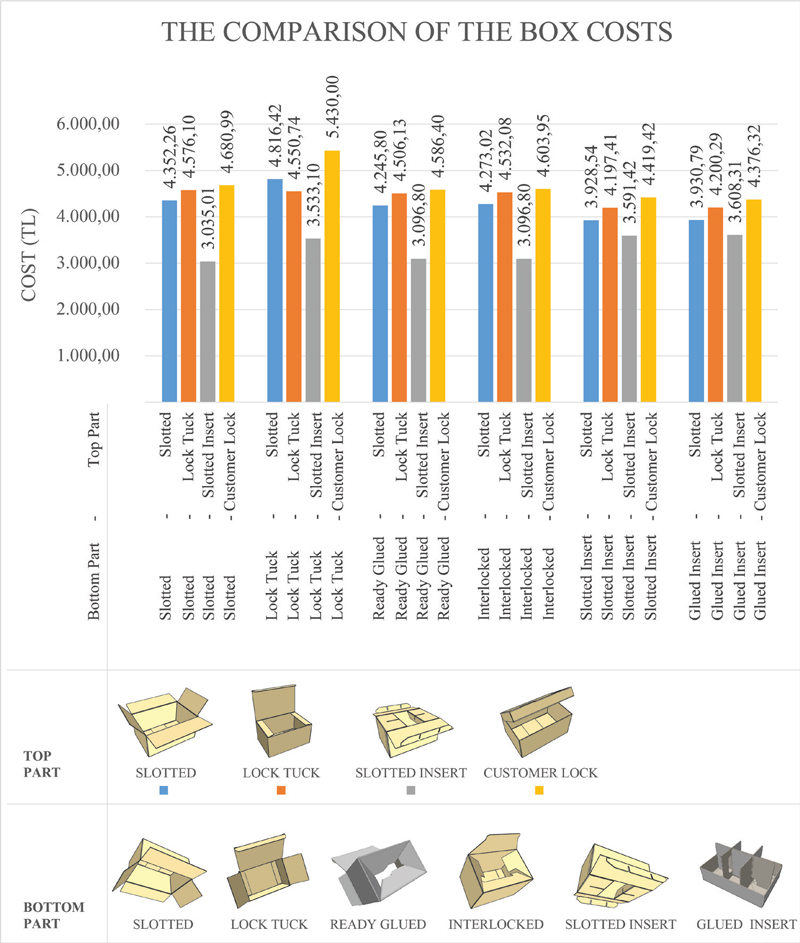
Comparison of the box costs
Production and setup times encompass the duration of processes like packaging production, setup, filling and sealing. Packaging design significantly impacts speed; designs that facilitate quick filling and sealing are preferred while some may require longer machine setups, slowing the process. Effective communication between manufacturers and customers is essential to identify the optimal design.
Speed varies by design. While corrugated die-cutters are efficient, limited dimensions may necessitate time-consuming manual processing. Self-insert boxes eliminate the need for additional adjustments, streamlining production. Production times depend on personnel experience and knowledge (Korol et al., 2021).
Data on production times were collected from Camiş Ambalaj San. A.Ş. and categorized by box types, including machine setup times (Camiş Ambalaj, 2015). The figure illustrates the production times for various boxes (Figure 13). The customer lock top-lock tuck bottom box has the longest production and setup times, while the slotted insert top-ready glued bottom box has the shortest production time with average setup time (O. Çelik, personal communication, March 16, 2016). The lock tuck top-glued insert bottom box has the shortest setup time but similar production times to others.
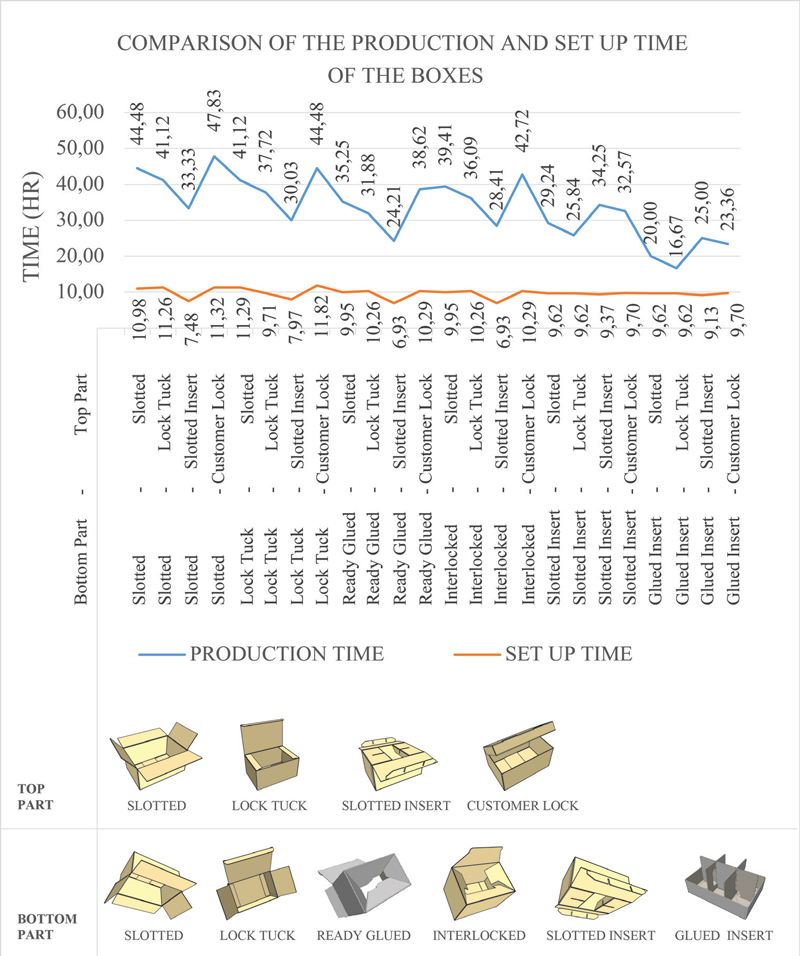
Comparison of the production and setup time of the boxes
Generally, glued inserts increase production time, while slotted bottom boxes require extra components.
Production times vary based on box design. Some boxes have long production times but short setup times while others are the opposite. Overall, box designs should balance production and setup speeds for optimal efficiency.
Different box designs have distinct advantages and disadvantages. The research identifies which designs have the highest and lowest values for strength, cost, material usage, production and setup times (Figure 14).
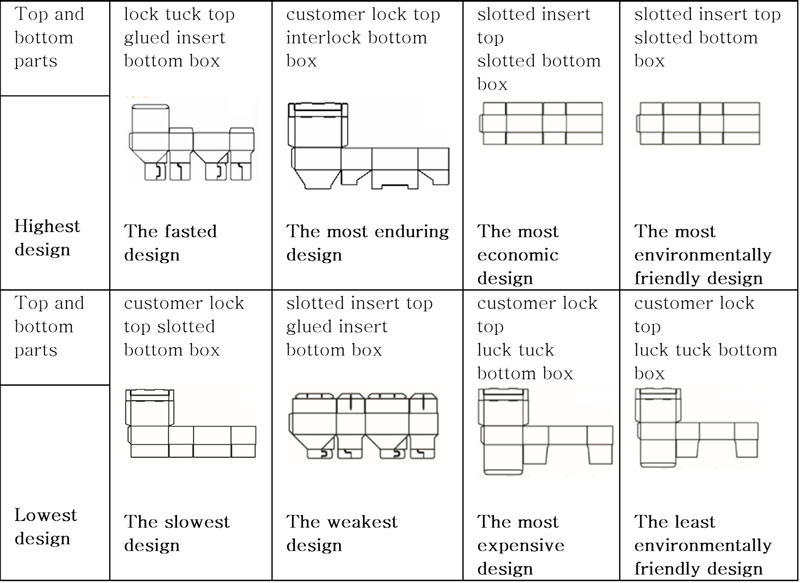
Designs with the highest and lowest strength, cost, material usage, production and setup time
The fastest design is the lock tuck top-insert bottom box while the slowest is the customer lock top-slotted bottom box. Glued insert bottoms take longer to produce but are easier to setup. The strongest design is the interlocked bottom-customer lock top with extra inserts while the weakest is the glued insert bottom-slotted insert top box.
Self-insert boxes excel in cost, speed and environmental impact but offer lower strength. Because the inserts aren’t attached to the main body. Double-layer boxes are stronger and the slotted insert top design is the most cost-effective and eco-friendly. In contrast, the lock tuck bottom-customer lock top box is the most expensive due to higher material use (Torgay, 2016). Overall, inserts improve strength, but also impact space and cost efficiency.
5. Conclusion and Guideline
“Improving manufacturing and transportation processes is also key to quality improvement, consequently reducing costs and improving customer satisfaction. By improving production efficiency and reducing costs, packaging can be made more affordable and less susceptible to damage during transportation. This would result in faster delivery times and longer-lasting packaging” (Fitas et al., 2023).
“As the world becomes more environmentally conscious, the corrugated board industry faces new challenges. Waste management is a growing concern, as even though corrugated boards are made from recyclable materials, they can still contribute to waste if not properly managed. The industry must promote recycling and reusability while also reducing the amount of material used in the first place. This ‘lightweight’ approach can result in significant savings in costs, energy, and raw materials and is an important step towards sustainability. The industry is also looking to find more sustainable inks, adhesives, and other materials for corrugated board manufacturing, to further promote environmental stewardship” (Fitas et al., 2023).
Different approaches can be explored to address the challenges faced by the packaging industry. This article explores how industrial design can be used to address packaging-related problems. One objective of this study is to illustrate the significance of design in corrugated packaging. Another aim is to show that packaging design can be enhanced using measurable methods like box compression tests and computer-aided design programs. Through these goals, the research highlights key aspects of corrugated packaging design and serves as a guide for optimizing cardboard packaging.
The research examines the effects of packaging design on cost, strength, material consumption, production and setup speed. Based on literature reviews and experimental findings, key factors for corrugated packaging design have been identified (Table 1).

Designs Principles and Guidelines for Corrugated Cardboard Packaging
These insights will aid packaging designers, manufacturers and customers. Important considerations in cardboard packaging design include the dimensions of secondary packaging, pallet sizes, the product being packaged, production capacities, existing components, printing on packaging, production and setup times.
Cardboard packaging effectively protects products due to its strength which is closely linked to design. Box designs should prioritize functionality and incorporate various components like automatic, slotted and glued inserts, each affecting strength differently. To maximize strength, an optimal design using the appropriate cardboard type is essential.
In multi-packs, employing a variety of inserts can be beneficial. But for production efficiency, it’s best to use a single insert type per box. Different inserts necessitate varying cutting sizes and settings.
Since industrial design is a very broad field, the priorities and weights of the criteria to be considered in the design of different products may vary.
Corrugated cardboard packaging, as an example of industrial design, should be designed according to general design principles, packaging field, packaging standards and current conditions. In cardboard packaging design, aspects such as form, size, durability, appearance and functionality are important, just as in other industrial designs. However, in addition to these, factors such as increasing population, product diversity, and packaging needs, declining resources, rising material, production, storage, and transportation costs, the demand for fast production and practical assembly, environmental impacts, and sustainability must also be taken into account.
Based on the studies covered in the article, principles for corrugated cardboard packaging design have been determined (Table 1). It is believed that the identified principles and recommendations will guide designers and manufacturers working in the field of corrugated cardboard packaging.
The thickness, flute type and paper combination of cardboard influence box dimensions, so the corrugated cardboard type should be selected based on specific needs. When choosing inserts, it’s important to consider their impact on strength, cost and production time. Automatic inserts are stronger and faster to assemble but cost more while slotted inserts may extend setup time. Factors such as shape, size, surface area, corners, edges and thickness of inserts all contribute to the overall strength of the box.
Placing double-wall cardboards vertically with aligned flutes boosts box strength, ideal for high-strength needs. Taller bottom inserts also enhance strength depending on the type. Automatic inserts provide the most strength, followed by slotted while glued inserts are the weakest.
Key design factors like corners, folded edges and monoblock surfaces strengthen the box while cuts and holes reduce strength. Avoiding unnecessary cuts, especially at corners, is important. Maltenfort suggests each reinforcement adds 0.05 units of strength while each weakening subtracts 0.05 units. While larger areas can increase strength, they also raise costs, so designers should aim for an optimal balance.
In packaging, it’s curicial to use an optimal amount of cardboard, inserts and adhesive while considering technical details (Paperboard Packaging Council, 2000). Box compression tests and strength measurements should be tailored to the product, as its sturdiness affects packaging strength requirements (E. Yapca, personal communication, April 19, 2016). For instance, squashable or powder products may lose their shape while liquid containers can exert pressure on the packaging, potentially damaging it. In contrast, solid products are self-supporting. Thus, the required Box Compression Test value should be lower for stable products compared to more vulnerable ones.
In packaging design, prioritizing factors depends on customer needs, leading to varied decisions for different packaging types. While cost is important in corrugated packaging, especially in competitive industries, it doesn’t always indicate strength. Lower costs don’t guarantee reduced strength, nor do higher costs ensure greater strength. Strong and low-cost packaging can be achieved through effective design and production planning. Inserts, cardboard type, material quantity, glue, visual effects, packaging form and production volume all impact costs, making careful consideration of these factors crucial for optimizing performance and cost-effectiveness.
In corrugated packaging, production and setup speed are crucial due to customer demands for quick turnaround. Factors such as packaging design, machinery capacity and customer facilities affect production time. While ready-to-use glued inserts and trays may cost more, they are preferred for high-volume production because they streamline setup and filling.
Balancing production speed with cost is crucial for optimizing the packaging process. Designers must consider that complex box designs requiring customer assembly can significantly extend setup times. Research indicates that manual filling and setup can take longer than production itself. Standardizing packaging and production is essential for achieving fast rates and collaboration among designers, engineers and workers is key to optimizing processes.
Unnecessary extensions and components should be avoided in packaging design to reduce resource waste, production time and energy consumption. The amount of corrugated board and glue used is closely linked to production volume. Simple designs help reduce waste. The amount of cardboard largely depends on the die-cutting layout, so optimizing designs to reduce die-cut size is crucial. Additionally, the environmental impact should be considered when developing optimal packaging designs.
This research compares various cardboard glass cup packaging models and future studies can explore diverse designs based on these findings. The analyzed cardboard packages can be revised and redesigned for better outcomes, with the effects of these changes evaluated. As an eco-friendly and lightweight material, corrugated cardboard has potential applications beyond packaging. The design principles highlighted in this article can guide its use in various industries.
Given limited global wood resources, it’s essential to minimize waste and explore alternative materials (Korol et al., 2021; Kwidzi´nski et al., 2021). Reusing materials and producing lightweight furniture with cardboard can enhance sustainability, potentially increasing the use of corrugated cardboard in wood-intensive industries like furniture (Jivkov et al., 2021). Designers must understand these principles to effectively utilize cardboard in various contexts. While the article focuses on packaging, it highlights key design principles applicable to future corrugated cardboard products in different fields. The article combines research findings with theoretical and technical knowledge in cardboard packaging design. Current techniques, such as box compression tests, edgewise crushing tests, and computer programs, can assist designers in the design process. Integrating creative and technical elements can lead to more effective packaging designs.
Utilizing technical studies during the design process is not a cost-increasing or time-consuming task. Such studies are beneficial as they help eliminate potential errors in the future. Developing corrugated cardboard packaging designs based on the technical studies and packaging design principles outlined in the article is important for achieving optimization in packaging design.
Paying attention to the corrugated cardboard packaging design principles outlined in the article during packaging production will provide various direct and indirect benefits on both micro and macro scales beyond those mentioned here.
Industrial design offers several contributions to the field of corrugated cardboard packaging. Some of these contributions are as follows:
Contributing to service system design by ensuring the promised service is delivered effectively.
Supporting service system design by enabling the secure protection, storage, and transportation of corrugated cardboard packaging and the products they carry.
Enhancing user-centered design by ensuring customer satisfaction for those who order the packaging.
Contributing to user-centered design by allowing users to assemble the packaging quickly and practically.
Extending the lifespan of packaging and the products it contains by ensuring the packaging functions as intended, thus contributing to the product life cycle.
Enabling the production of environmentally friendly products and packaging by reducing material usage and minimizing environmental impacts.
Corrugated cardboard is a lightweight, insulating, eco-friendly and cost-effective material suitable for various industries. This research provides valuable insights into corrugated cardboard packaging, helping designers improve strength, reduce costs and minimizing production time and material waste. The article highlights the potential applications of corrugated cardboard across various fields and serves as a resource for both customers and packaging designers. Additionally, it offers insights relevant to diverse sectors, including exhibitions, furniture, lighting, transportation, visual arts, architecture, interior design, civil engineering, industrial design and logistics.
Declaration of competing interest
The authors declare that they have no known financial or non-financial competing interests in any material discussed in this paper.
Funding information
No funding was received from any financial organization to conduct this research.
Ethical approval statement
Ethical approval is not applicable for this research.
Notes
Copyright : This is an Open Access article distributed under the terms of the Creative Commons Attribution Non-Commercial License (http://creativecommons.org/licenses/by-nc/3.0/), which permits unrestricted educational and non-commercial use, provided the original work is properly cited.
References
- Adamopoulos, S. (2006). Fiber analysis techniques for sustainable manufacturing of corrugated board and packaging. International Conference on Sustainable Management Development of Mountainous and Island Areas, September 29-30 & October 1, Naxos Island, Cyclades, Greece.
- Box Basics. (2016, July 2). Promat. Retrieved from https://www.promat.com.tr/en/cardboard-packaging-design-and-production.
- Camiş Ambalaj San. A. Ş. (2015). Dalga Oluklu Üretimi [Wave Corrugated Cardboard Production]. İstanbul.
- Camiş Ambalaj San. A. Ş. (2015). Ön Maliyet Tekrar İşlemi [Pre-Costing Process]. İstanbul.
- Cardboard Packaging Design and Production. (2024, February 2). Promat. Retrieved from https://www.promat.com.tr/en/cardboard-packaging-design-and-production.
-
Chen, J., Zhang, Y., Li, Z., & Sun, J. (2011). An overview of the reducing principle of design of corrugated box used in goods packaging. ScienceDirect, 10, 992-998.
[https://doi.org/10.1016/j.proenv.2011.09.159]

- Corrugated cardboard: History, manufacture, structure and types of corrugation. (2024, July 3). Packaging Warehouse. Retrieved from https://www.packagingwarehouse.com/en/magazine/corrugated-cardboard-history-manufacture-structure-and-types-of-corrugation-130.php.
-
Dominic, C. A. S., Östlund, S., Buffington, J., & Masoud, M. M. (2014). Towards a conceptual sustainable packaging development model: A corrugated box case study. Packaging Technology and Science, 28(5), 397-413.
[https://doi.org/10.1002/pts.2113]
- European Database for Corrugated Board Life Cycle Studies. (2011, February 2). Fefco Corrugated Packaging. Retrieved from https://www.fefco.org/lca/introduction.
-
Fitas, R., Schaffrath, H. J., & Schabe, S. (2023). A review of optimization for corrugated boards. Sustainability, 15(21), 15588.
[https://doi.org/10.3390/su152115588]
- Flatscher, T. (2007). Modellierung der Steifigkeit und der Stabilität von Wellpappe [Doctoral dissertation], Technische Universität Wien.
-
Garbowski, T. (2024). Revolutionizing corrugated board production and optimization with artificial intelligence. BioResources, 19(2), 2003-2006.
[https://doi.org/10.15376/biores.19.2.2003-2006]
-
Garbowski, T., Gajewski, T., & Grabski, J. K. (2021). Estimation of the compressive strength of corrugated cardboard boxes with various perforations. Energies, 14, 1095.
[https://doi.org/10.3390/en14041095]
-
Jivkov, V., Simeonova, R., Antov, P., Marinova, A., Petrova, B., & Kristak, L. (2021). Structural application of lightweight panels made of waste cardboard and beech veneer. Materials, 14(17), 5064.
[https://doi.org/10.3390/ma14175064]
-
Kirwan, M. J. (2012). Handbook of paper and paperboard packaging technology. John Wiley & Sons.
[https://doi.org/10.1002/9781118470930]
-
Korol, J., Hejna, A., Wypiór, K., Mijalski, K., & Chmielnicka, E. (2021). Wastes from agricultural silage film recycling line as a potential polymer material. Polymers, 13(9), 1383.
[https://doi.org/10.3390/polym13091383]
-
Kwidzinski, Z., Bednarz, J., Pedzik, M., Sankiewicz, Ł., Szarowski, P., Knitowski, B., & Rogozinski, T. (2021). Innovative line for door production TechnoPORTA-Technological and economic aspects of application of wood-based materials. Applied Sciences, 11(10), 4502.
[https://doi.org/10.3390/app11104502]
- Maltenfort, G. G. (1988). Corrugated shipping containers: An engineering approach. Jelmar Publishing Co.
- Markström, H. (1999). Testing methods and instruments for corrugated boards. Lorentzen & Wettre.
- Milli Eğitim Bakanlığı. (2011). Ambalajlama malzemeleri (840UH0037). MEB Yayınları.
-
Mei, L., & Wang, Q. (2021). Structural optimization in civil engineering: A literature review. Buildings, 11(2), 66.
[https://doi.org/10.3390/buildings11020066]
-
Mrówczyński, D., Knitter-Piątkowska, A., & Garbowski, T. (2022). Optimal design of double-walled corrugated board packaging. Materials, 15(6), 2149.
[https://doi.org/10.3390/ma15062149]
- Oluklu Mukavva Sanayicileri Derneği. (2015). Oluklu Mukavva El Kitabı [Corrugated Cardboard Handbook]. Küçük Matbaacılık San. ve Tic. Ltd. Şti.
-
Ojstersek, R., Brezocnik, M., & Buchmeister, B. (2020). Multi objective optimization of production scheduling with evolutionary computation: A review. International Journal of Industrial Engineering Computations, 11(3), 359-376.
[https://doi.org/10.5267/j.ijiec.2020.1.003]
- Paperboard Packaging Council. (2000). Paperboard packaging: Ideas and innovation. Alexandria.
-
Rogalka, M., Grabski, J. K., & Garbowski, T. (2023). Identification of geometric features of the corrugated board using images and genetic algorithm. Sensors, 23.
[https://doi.org/10.3390/s23136242]
- 6 most popular insert types for corrugated boxes. (2024, July). Brown Packaging. Retrieved from https://brownpackaging.com/6-most-popular-insert-types-for-corrugated-boxes/.
- The complete guide to understanding corrugated boxes. (2024, July 3). Bennet. Retrieved from https://bpkc.com/blogs/blog/the-complete-guide-to-understanding-corrugated-boxes.
- Torgay, B. (2016). Optimization in folding carton packaging design [Master's thesis]. İstanbul Technical University Institute of Science, İstanbul.
-
Xiao, Y., & Huang, X. (2014). Comparison study of multi-layer and folding liners of corrugated cartons-Domestic ceramic packaging. Applied Mechanics and Materials, 607, 909-914.
[https://doi.org/10.4028/www.scientific.net/AMM.607.909]