
Exploring Team Mental Models in Fashion Design Collaboration Using Virtual Reality Environments
Abstract
Background Globalization and digital advancement are transforming the fashion industry, posing new challenges and opportunities for design teams. To remain competitive, collaboration is recognized as a key strategy, requiring diverse stakeholders to share ideas and resources. Team mental models (TMMs) are crucial for successful communication in collaborative efforts. However, research on TMMs in fashion design remains limited. As virtual reality (VR) emerges as a prominent tool, understanding its cognitive impact on design collaboration is essential for reshaping traditional work processes. This study explores how a virtual reality environment (VRE) affects collective problem-solving in multidisciplinary fashion design collaboration, focusing on TMM formation.
Methods This study investigated the early stages of fashion design collaboration using VREs. Verbal and behavioral interactions were analyzed among five multidisciplinary design teams, each consisting of three participants from different fashion disciplines. A mixed-method approach combined quantitative analysis of shared mental model (SMM) alignment using Pearson correlation coefficients and qualitative observation of team interactions, communication patterns, and problem-solving behaviors.
Results The findings highlighted VRE’s potential in enhancing SMM similarity, influencing team communication and problem-solving in the initial design phase. High SMM score groups excelled in verbal inputs and transitions, fostering effective communication by aligning with the theoretical dimensions of task- and team-related knowledge, while low SMM score groups prioritize goal clarification and evaluation during their interactions. In collaborative problem-solving, high SMM score groups exhibited increased cognitive actions, aligning with fashion design’s creativity focus, while low SMM groups prioritized establishing clear objectives and quality control.
Conclusions This study emphasizes the significant role of VREs in supporting TMM formation, thereby facilitating effective multidisciplinary fashion design collaboration. The findings provide valuable guidance for fashion professionals and educational institutions to prioritize TMM development for enhanced collaborative problem-solving when using VREs.
Keywords:
Design Collaboration, Fashion Design Collaboration, Shared Mental Models, Team Mental Models, Virtual Reality Environment1. Introduction
The fashion industry is currently undergoing significant transformations due to globalization and digital advancement. These changes have introduced new challenges and opportunities for design teams, particularly as they seek to integrate digital-mediated collaboration processes and adapt to novel communication methods (Hodges et al., 2020). To stay competitive, design firms increasingly recognize collaboration as a promising strategy for design innovation and organizational efficiency (McDonnell, 2012; Wang et al., 2017). Successful design collaboration requires efforts from diverse stakeholders, including designers, manufacturers, retailers, and consumers, with their interaction involving the sharing of ideas, resources, expertise, and responsibilities to drive innovation and optimize team performance. A key component of such collaboration is the establishment of team mental models (TMMs), which involve shared beliefs, knowledge, and assumptions among team members. These models are crucial for effective communication, coordination, and mutual understanding in collaborative settings, as emphasized in theoretical frameworks by Klimoski and Mohammed (1994).
Meanwhile, advancements in digital technology have prompted fashion companies to adopt digital-mediated collaboration tools, with virtual reality (VR) emerging as a transformative technology that offers immersive and interactive environments for team interactions, replacing traditional physical collaboration methods (Flavián et al., 2019). Virtual reality environments (VREs) provide a unique platform to explore design collaborations, as their potential to enhance information processing, communication, and creative problem-solving capabilities intersects with the core principles of TMM frameworks. However, the theoretical basis for utilizing TMMs in VRE-based design collaboration remains underdeveloped, particularly in the fashion domain. This lack of understanding not only limits the effective application of VREs in industry and education but also hampers efforts to optimize team performance by leveraging these technologies.
Therefore, this study aimed to address this gap by comprehensively analyzing the cognitive impacts of VREs on fashion design collaboration. The research employed an experimental approach, focusing on operationalizing TMM constructs, including task-related and team-related knowledge, through a combination of quantitative assessment of shared mental model (SMM) alignment and qualitative observations of team dynamics. Specifically, the study sought to identify the differentiated impacts of VREs on TMM formation during multidisciplinary collective problem-solving processes involved in fashion design concept generation. It examined the conditions under which VREs either facilitate or challenge TMM formation and explored how TMM formation in VREs compares to that in traditional collaborative settings. By addressing these questions, the study contributes to the theoretical development of VRE-based design collaboration frameworks. The findings are intended to provide valuable insights for enhancing the use of VREs in both industry and educational contexts, fostering more effective, innovative and collaborative design practices.
2. Background
2. 1. Fashion design collaboration
Design collaboration has strategically evolved, fostering design innovation and problem-solving by engaging various stakeholders (Badke-Schaub et al., 2010). Normoyle and Tegtmeyer (2020) emphasized the significance of collaboration in developing innovative design concepts through diverse perspectives and social interactions. These interactions facilitate the exchange of knowledge, experiences, and skills, making collaboration a cornerstone of creative industries like fashion. In contemporary fashion, collaboration increasingly aligns with advances in digital technologies. Tools such as CLO have demonstrated how digital technologies enhance collaboration among stakeholders, enabling interactive processes and streamlined communication (Lee, 2022). Similarly, virtual reality (VR) technologies offer immersive environments where multidisciplinary design teams can engage in real-time collaborative problem-solving (De Silva et al., 2019; Lee et al., 2021). These technologies facilitate synchronous communication and interaction, which are critical for fostering shared cognitive structures, such as TMMs, during design collaboration.
Design, as a cognitive process rooted in complex problem-solving (Schön, 1983), inherently involves collaborative exploration and negotiation among team members (Badke-Schaub, 2000). This process not only addresses task-related challenges but also navigates team dynamics, including coordination efforts, conflict resolution, and consensus-building. Collaborative design requires balancing individual creativity with collective input, making it a multifaceted activity that extends beyond technical tasks into interpersonal and strategic realms (Cirella, 2021). In the fashion context, collaboration during the initial concept development stage involves intertwining diverse information, visuals, and idea sketches to produce innovative outcomes. This process is often accompanied by complex decision-making under uncertainty, requiring effective teamwork and shared cognitive understanding (Tam et al. 2008). Visual representations such as sketches, mood boards, and digital prototypes play a pivotal role in externalizing individual mental models, facilitating communication, and aligning team perspectives. These tools enable teams to collaboratively refine ideas and ensure the creative objectives are understood and achieved collectively.
Improving team creativity, particularly in the context of addressing the appearance and functionality of new fashion design products, remains a crucial yet challenging endeavor. It requires not only individual innovation but also the ability to synthesize diverse perspectives into a cohesive vision (Alexander and Contreras, 2016). Shared cognitive structures, such as TMMs, are instrumental in this process, as they underpin effective communication, coordination, and collective decision-making (Cikis and Ek, 2010).
2. 2. Team mental model
Team mental models (TMMs) are cognitive frameworks that shape team interaction, information exchange, and decision-making processes, directly influencing the success of design projects (Badke-Schaub et al., 2010). These models represent the collective understanding of tasks, roles, and workflows, enabling a team to coordinate decisions effectively and achieve their objectives (Cannon-Bowers et al., 1993).
A foundational element of TMMs is Shared Mental Models (SMM), which refers to the degree of alignment among individual team members’ cognitive structures. SMMs capture how well team members share a common understanding of project goals, procedures, and contextual factors (Cooke et al., 2000; Klimoski & Mohammed, 1994). High SMM alignment fosters a solid foundation for effective communication, coordination, and decision-making, whereas misalignment can result in misunderstanding and inefficiencies.
TMMs are typically categorized into two primary domains: task-related knowledge and team-related knowledge (Cooke et al., 2000; Espinosa and Carley, 2001). Task-related knowledge involves an understanding of task procedures, strategies, and environmental constraints necessary for achieving project goals. Conversely, team-related knowledge involves awareness of team members’ roles, expertise, and interpersonal dynamics, which are essential for effective collaboration (Rouse et al., 1992). These domains collectively enable teams to navigate complex problems, anticipate each other’s actions, and coordinate their efforts effectively.
In collective design problem-solving, TMMs play a pivotal role in integrating diverse perspectives and ensuring team members share a synchronized understanding of task requirements and the capabilities (Cooke et al., 2000). This shared understanding minimizes misunderstandings and enhances decision quality. Furthermore, as outlined by Cannon-Bowers et al. (1993), TMMs support solution-finding by addressing tasks, equipment, team composition, and interaction sub-models.
In design contexts, particularly multidisciplinary collaborations, TMMs expand to include knowledge of processes, group competence, and contextual factors, such as team motivation and expectations (Neumann et al., 2006). Addressing variations and gaps in TMMs is crucial, as misalignments can significantly hinder team performance and decision-making effectiveness (Stout et al., 1999). To evaluate TMMs in collaborative exploration, this study employed both aggregated and holistic analysis approaches (Cooke et al., 2000; Stempfle and Badke-Schaub, 2002). Aggregated analysis quantitatively measures SMM alignment, providing precise metrics to assess cognitive similarity among team members. These metrics provide a structured framework for investigating the subsequent development of TMMs. Holistic analysis complements this by qualitatively examining the dynamic and relational processes that drive TMM formation. Together, these approaches form a comprehensive framework for evaluating both statistical cognitive alignment and dynamic interactions essential to multidisciplinary design collaborations.
As collaborative efforts in fashion increasingly rely on digital environments, such as VREs, understanding and developing TMMs becomes essential for addressing the unique challenges of multidisciplinary design collaboration.
2. 3. Virtual reality-based collaboration
In design collaboration, VR offers realistic visualizations and immersive experiences that empower designers to fully engage with their concepts in terms of spatial relationships and design aesthetics, facilitating informed real-time decision making (Yang & Lee, 2020). As the fashion industry transforms, VR technology reshapes design team dynamics. Immersive design reviews using VR streamline iterative processes, leading to more efficient workflows, saving time and resources in prototyping, and fostering creativity (Chang et al., 2022). A standout feature of VR is its capacity to eliminate geographical barriers, enabling seamless collaboration among multidisciplinary team members in shared virtual spaces. This facilitates real-time communication and collaborative problem-solving, contributing to a more interconnected design process (Rosenman et al., 2007).
Despite challenges such as initial cost and workflow integration, the future of VR in design collaboration holds immense promise. However, successfully integrating VR’s unique benefits into design collaboration workflows requires considerations beyond technical challenges, including software compatibility, team training, and establishing effective collaboration protocols. Above all, the key to successful implementation is understanding the cognitive impacts of VR on the design team and their performance (Ghanem, 2022). Identifying potential challenges for designers utilizing VR technology and formulating strategies to enhance their design processes are crucial for ensuring a seamless transition to VRE-based collaboration. Therefore, focusing on investigating the cognitive impacts of VRE on team mental models will provide valuable insights. This exploration sheds light on how VRE influences team interactions, communication, and decision-making processes.
3. Methodology
This study aimed to investigate how VREs influence TMM formation in fashion design collaboration. By focusing on early-stage concept generation, the research explored the distinct characteristics of shared cognitive structures and collaborative problem-solving dynamics within VRE-based design collaboration. The experimental design of this study integrated the assessment of TMM constructs, such as task-related and team-related knowledge, defined by Cannon-Bowers et al. (1993) and Cooke et al. (2000), into a structured research framework. Task-related dimensions focused on evaluating participants’ shared understanding of task-specific procedures, strategies, and constraints. This included measurements of how teams aligned their goals, generated creative concepts, and refined solutions collaboratively. Team-related dimensions addressed the dynamics of interpersonal collaboration, analyzing participants’ awareness of roles, communication patterns, and their ability to utilize individual expertise for achieving shared objectives. These elements were evaluated through a dual analysis approach, such as aggregated analysis and holistic analysis. Aggregated analysis involved a quantitative assessment of shared mental model (SMM) alignment using a Likert-scale survey targeting task and team-related dimensions. Holistic analysis involved qualitative observation of team interactions, verbal communication patterns, and collaborative problem-solving behaviors. The combined approach ensured a robust evaluation of how VREs influence TMMs in multidisciplinary collaboration settings, capturing both static alignments and dynamic interaction.
To analyze the data, an aggregated approach quantified SMM alignment through Pearson correlation coefficients, measuring the degree of cognitive overlap within task-related and team-related domains. A holistic approach complemented this by categorizing qualitative observations into key interaction dimensions, including task planning, information management, evaluation, interpersonal coordination, and conflict resolutions, etc. Together, these methods provided a comprehensive view of how VREs influence the formation and effectiveness of TMM in multidisciplinary collaboration.
3. 1. Experimental design
The study involved two distinct collaborative environments. The first setting utilized a VRE-based approach (E1) where participants collaborated through the immersive capabilities of Meta’s Oculus Quest 2 and the Spatial app. This environment enabled real-time manipulation of design elements and offered enhanced visualization of creative concepts. To ensure familiarity with the tools, participants underwent a one-hour training session before commencing tasks. The second setting used an online tele-meeting environment (OTE)-based (E2) approach facilitated through the Zoom app, where participants engaged in traditional remote collaboration without immersive features. The experiment’s procedures included task-specific activities such as goal alignment, ideation, and solution evaluation, all documented through surveys, video recordings, and observational coding. Figure 1 shows the experimental scenes for each group.
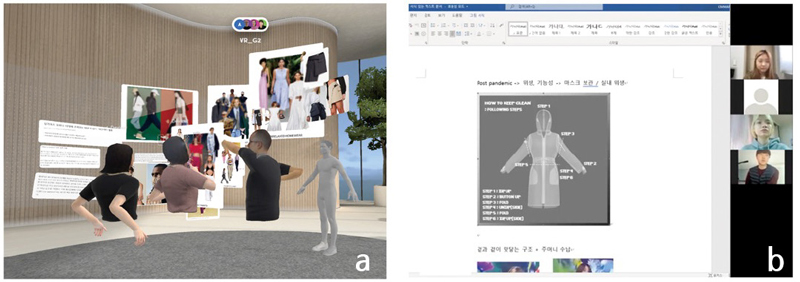
Experimental scenes: (a) E1 - VRE-based experiment and (b) E2 - OTE-based experiment
Comparative experiments focused on the collaborative fashion design concept generation through group brainstorming (Paulus et al., 2002). Both settings provided similar tasks to ensure comparability, focusing on generating fashion concepts related to the COVID-19 pandemic, a topic selected for its relevance to participants’ expertise. Visual tools such as sketches and mood boards, recognized in design cognition literature as key instruments for externalizing mental models (Cikis and Ek, 2010), were used to capture participants’ ideas. Mood boards helped define the thematic direction by integrating various images and colors. Participants were informed that the quality of the sketches would not be subject to evaluation, ensuring a focus on conceptual creativity rather than technical execution.
Participants included fifteen graduate students specializing in planning, design, and production majors. These students formed five multidisciplinary teams (Table 1), each participating in both VRE and OTE settings. The inclusion of participants with diverse expertise ensured a representative mix of disciplines critical to successful fashion collaboration. In line with optimal team performance principles (Cross & Cross, 1995; Stempfle & Badke-Schaub, 2002), each team had three participants with over five years of professional experience. Table 2 summarizes the duration, procedures, design task topics, and data collection methods for each experimental group.

Participant demographics
Experiment procedure and methods
3. 2. Analysis frameworks
The analysis framework used both aggregated and holistic approaches to assess TMMs in multidisciplinary fashion design collaboration. This combined method provides a comprehensive evaluation of cognitive alignment, capturing both individual and team-level perspectives, while directly applying concepts from TMM frameworks.
The aggregated approach quantitatively assesses SMMs by measuring the degree of cognitive alignment among team members, providing critical insights into their shared team perception and understanding during collaboration (Cannon-Bowers et al., 1993; Mathieu et al., 2000). As a foundation for TMMs, SMMs reflect the similarity in team members’ cognitive representations, which is essential for coherent team dynamics (Cooke et al., 2000; Klimoski & Mohammed, 1994).
A 46-item Likert-scale survey was designed to evaluate SMM similarity across seven dimensions, including cognitive alignment, communication efficacy, and collaborative decision-making (Table 3). Adapted from Burkhardt’s (2009) evaluation model, the survey incorporated both positively and negatively worded pairs of statements to reduce response bias. The survey equally weighted 23 indicators, such as “Fluidity of Collaboration,” “Sustaining Mutual Understanding,” and “Information Exchange for Problem-Solving,” to ensure balanced assessment.
Dimensions and indicators of SMM in aggregated approach
Pearson correlation coefficients were calculated to measure the pairwise similarity between team members’ responses, with higher correlation values indicating stronger alignment in cognitive perceptions (Cooke et al., 2000). By averaging pairwise correlation scores within each team, the study derived cohesive SMM similarity scores, which reflect how well team members align in understanding collaborative tasks.
This approach enabled the identification of SMM alignment patterns and misalignments, offering insights into shared understanding essential for TMM formation. The findings demonstrated how cognitive alignment influences critical collaborative tasks and enhances understanding of SMMs in VRE-based multidisciplinary design collaboration (Cannon-Bowers et al., 1993; Leyer et al., 2023).
The holistic approach in this study provides a detailed framework for analyzing collective problem-solving dynamics in multidisciplinary fashion design collaboration. By integrating verbal communication analysis, real-time team interaction behaviors, and a structured categorization framework based on the KATKOMP categorization system (Stempfle and Badke-Schaub, 2002), this method revealed the complex interplay between shared cognition and problem-solving during fashion design concept generation. Complementing the aggregated approach, it offered a process-oriented perspective, highlighting not only what team members do but also how they interact to address design challenges, resolve conflicts, and collectively achieve collaborative solutions (Stempfle & Badke-Schaub, 2002). To explore these dynamics, teams were grouped based on their SMM scores (e.g., high-scoring groups G2 and G5 vs. low-scoring groups G3 and G4) to analyze differences in communication patterns and team interactions. Verbal communication, critical for constructing shared mental models during design collaboration, was examined using the think-aloud method (Cooke et al., 2000), focusing on how teams shared their thoughts, negotiated solutions, and aligned on task. Real-time team interaction behaviors were also observed and coded to further analyze process-oriented and relational aspects of collaborative problem-solving during the collaboration. Observations focused on how team members coordinated their actions, allocated tasks, and managed conflicts, with particular attention to relationship dynamics, such as relationship management and emotional expressions. The study also assessed how teams engaged with tools to facilitate effective problem-solving in their multidisciplinary and collaborative design processes.
Using the KATKOMP categorization system (Stempfle & Badke-Schaub, 2002), team dynamics were structured into four domains: content, process, interpersonal relations, and environmental interaction. To highlight the unique context of fashion design problem-solving, this study modified the task-related content domain to reflect the sequential processes that define collaborative design work. This content domain focused on task-related activities that are central to fashion design concept generation, including goal clarification, idea generation, idea management, evaluation, decision-making, and implementation control. The process domain focused on task planning, group coordination, conflict resolution, and evaluation of group performance, while interpersonal relations examined relational dynamics critical to creative collaboration, including conflict management, group organization, and emotional expression. Environmental interaction domain analyzed engagement with tools and interfaces relevant to collaborative tasks. Observational codes provided detailed insights into team behaviors at each phase of the collaborative problem-solving process, as outlined in Table 4.
Codes of categorizing system identifying team interactions
4. Result
4. 1. Comparative analysis of SMMs: Aggregated approach
The study employed the Pearson correlation coefficient as a similarity metric to calculate SMM scores for each team member pair within all experimental groups from the aggregated approach. Specifically, pairwise correlation values for survey responses across the 23 indicators were averaged to produce an overall SMM similarity score for each group. As illustrated in Figure 2, the results show that participants in VRE-based fashion design collaboration (E1) showed higher SMM similarity compared to those in OTE-based collaboration (E2). This indicates that VRE facilitates greater alignment in team members’ cognitive perceptions, fostering a more cohesive understanding of the design tasks. In contrast, the lower similarity scores in OTE-based collaboration suggest challenges in achieving shared cognition.
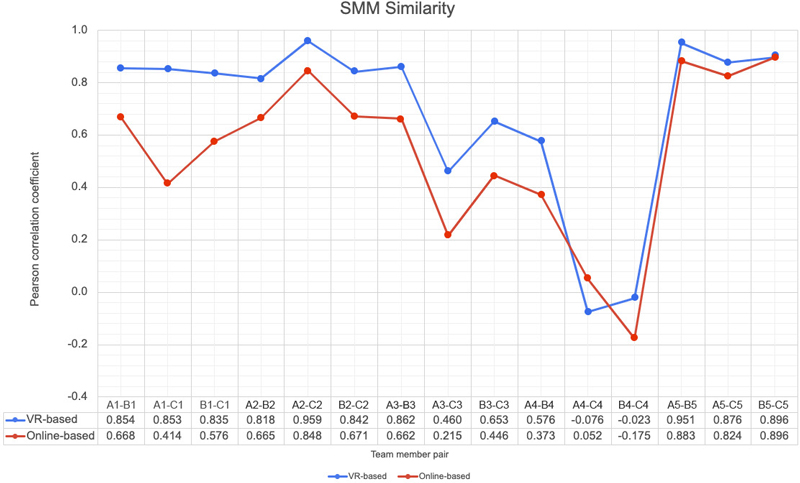
Comparison of general SMM score between E1 and E2
Regarding collaboration task performance, participants of E1 (VR-based) had higher similarity (mean: 0.77, SD: 0.4) in SMM compared to E2 (OTE-based), with a mean SMM score of 0.97 (SD: 0.2), as illustrated in Figure 3. The most notable difference in similarity scores between the two experimental groups emerged in questions related to maintaining consistency throughout idea generation activities, where E1’s participants exhibited the highest SMM similarity. Minimal differences were observed in language exchange flexibility and idea generation for design problem solving related to fashion concept development.
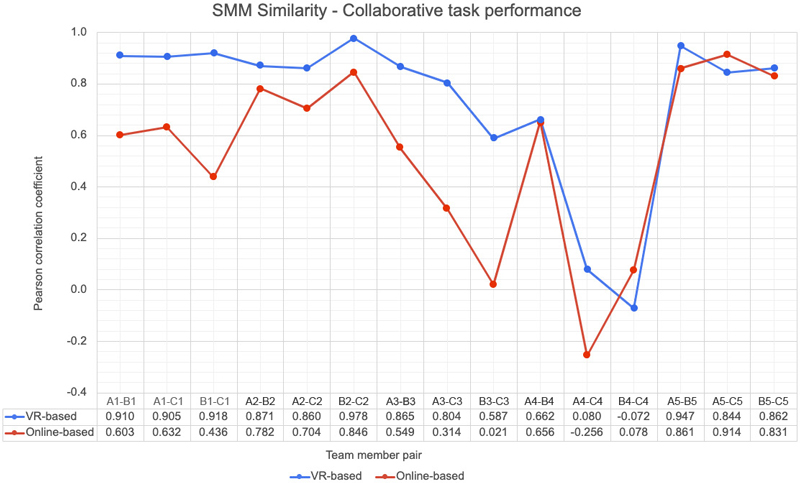
Comparison of SMM scores in collaborative task performance between E1 and E2
Regarding collaboration time and workflow, E2 participants using OTE-based collaboration (mean: 0.96, SD: 0.34) demonstrated higher SMM similarity to E1 (mean: 0.9, SD: 0.24) using VRE. While E1 participants had the highest SMM similarity in interdependence among team members in task processing, E2 participants demonstrated the highest SMM in time management, as illustrated in Figure 4. This suggests that while VRE may excel in maintaining consistency in idea generation, OTE-based collaboration showed strength in managing the allocation of tasks and workflow efficiency.
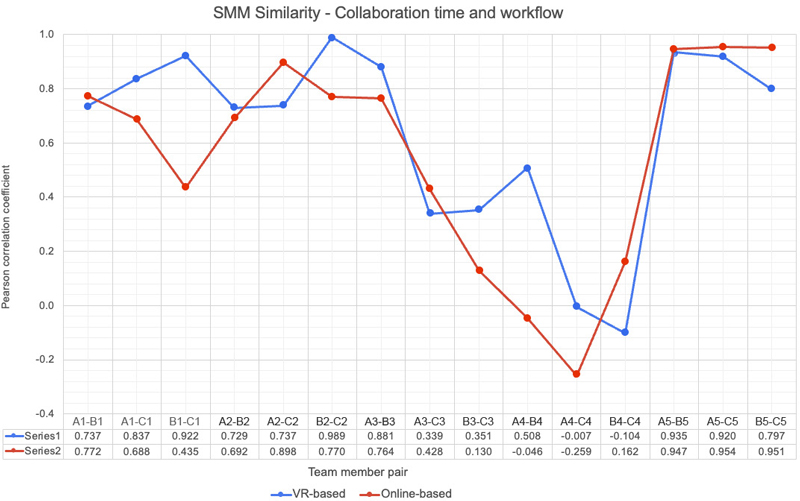
is Comparison of SMM scores in collaboration time and workflow between E1 and E2
In terms of team member collaboration, the SMM of E2 averaged 0.77 (SD: 0.49) demonstrating higher similarity than the SMM of E1, with a mean score of 1.07 (SD: 0.28), as illustrated in Figure 5. The most significant difference emerged in questions about experiences diverging from the development process of agreed-upon ideas among team members, where E2 exhibited the highest SMM similarity. Conversely, E1 participants showed the highest SMM similarity in questions about balanced participation in collective design choices. This implies that VRE may facilitate more equitable involvement in decision-making among team members.
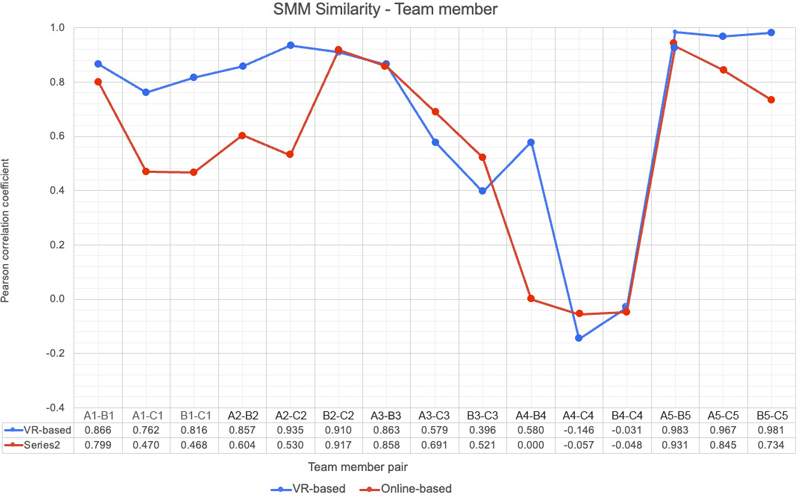
Comparison of SMM scores in team member collaboration between E1 and E2
These findings suggest that VRE-based design collaboration excels at fostering shared understanding and consistency of idea generation among team members in the process of fashion concept generation. On the other hand, OTE-based collaboration exhibits strengths in managing workflow efficiency, handling task allocation, and navigating divergent ideas during the design process. Consequently, it can be concluded that high-quality SMM in VRE-based fashion design collaboration enables precise explanations and expectations for collaborative design tasks, facilitating coordinated actions and responses to team member’s requirements.
4. 2. Comparative analysis of team-based cognitive processes: a holistic approach
Utilizing a holistic approach, the comparative analysis assessed in-depth communication contributions, team dynamics, and collaborative problem-solving activities in collaborative fashion design concept generation.
Key metrics in collaborative design sessions were compared, including session duration, verbal inputs, and cognitive action segments in each group. Statistical analyses were conducted to validate the observed differences and ensure reliability.
Firstly, the values presented for verbal output frequency were calculated by averaging the total number of verbal inputs across all teams within each experimental group. Independent samples t-tests were performed to compare the mean verbal output frequency and cognitive action segments between the groups in each experimental condition. While no significant differences were observed in the average total time spent during experiments, E1 demonstrated a statistically significant 29.38% increase in verbal output frequency (375.2, SD = 42.7) compared to E2 (290, SD=38.2). Similarly, for collaborative cognitive action segments, E1 exhibited a statistically significant 42.6% increase (129.2, SD = 13.6) compared to E2 (90.6, SD = 10.4). These values are presented in Table 5, which provides an overall coding of the collaborative sessions.
Overall coding results
To explore communication dynamics among high SMM score (G2, G5) and low SMM score (G3, G4) groups, verbal input frequencies were compared using one-way ANOVA followed by Tukey’s post-hoc tests (Abdi & Williams, 2010). In E1, high SMM score groups demonstrated significantly higher verbal input frequencies (406 and 424, respectively) compared to low SMM score groups (384 and 398, respectively). Post-hoc analysis revealed that G2 and G5 significantly differed from G3 (p = 0.004) and G4 (p=0.003), highlighting higher verbal contributions by high SMM groups in VRE-based environments. Conversely, the comparison between G3 and G4 showed no significant differences (p = 0.467), suggesting similar verbal input patterns among low SMM score groups.
In contrast, in E2, high SMM score groups showed no statistically significant differences in verbal input frequencies compared to low SMM score groups. Tukey’s test confirmed that the verbal inputs of G2 and G5 did not significantly differ from those of G3 and G4 (p<0.05 for all pairwise comparisons).
The analysis of verbal transition aspects, evaluated using Chi-square tests of independence, highlighted significant patterns in E1’s active interactions. High SMM score groups demonstrated a greater frequency of verbal transitions across team members, particularly between P2 (marketers) and P3 (manufacturers), compared to E2, where interactions were predominantly limited to P1 (designers) and P2, as detailed in Table 6. This indicates that high SMM groups utilized more diverse communication pathways, engaging multiple team members across roles, which likely contributed to enhanced collaborative efficiency. In contrast, in E2, the Chi-square analysis indicated a more constrained interaction pattern primarily involving P1 (designers) and P2 (marketers). This suggests that lower verbal transition diversity in E2 may have hindered the effectiveness of communication among team members.
Comparison of verbal transition among team members
Figure 6 shows differentiated patterns of verbal transition between high and low SMM score group members.
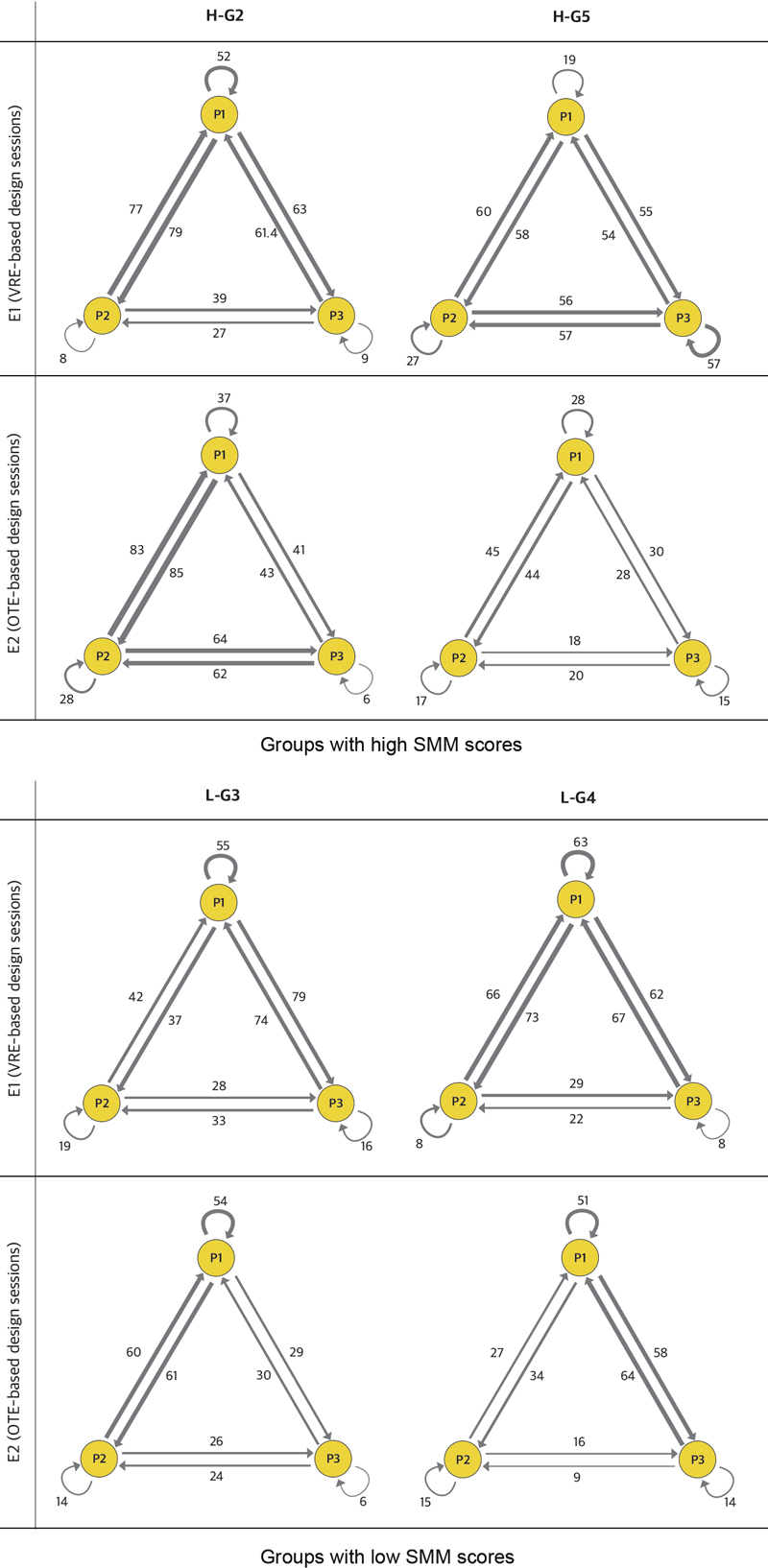
Comparison of verbal transition between high and low SMM score
A two-way ANOVA was conducted to analyze the interaction effects of SMM scores (high and low) and experimental conditions (E1 and E2) on cognitive action frequencies. Significant main effects were found for both SMM scores and experimental conditions, with a notable interaction effect.
In E1, high SMM score groups (G2, G5) exhibited significantly higher frequencies of CIM (Content-Information Management) actions (Mean = 19.5, SD = 1.8) compared to low SMM score groups (Mean = 6.0, SD = 1.2), consistent with Table 7 values (G2: 19, G5: 18). CIM actions, involving organizing and synthesizing design ideas, connecting relevant information, and integrating diverse perspectives, are critical in generating coherent fashion design concepts (Hu & Liu, 2017). These results suggest VREs effectively support teams in managing complex and iterative creative processes for high SMM groups. In E2, while CIM scores remained higher for high SMM groups (G2: 10, G5: 9), the difference was less pronounced compared to E1.
Overall coding results
Similarly, high SMM groups in E1 exhibited increased CE (Content-Evaluation) actions (Mean = 18.5, SD = 2.0) compared to low SMM groups (Mean = 14.0, SD = 1.6). This indicates that VREs enable cognitively aligned teams to engage in deeper critical evaluation and improvement of their concepts, leading to more refined design outcomes.
In E2, high SMM score groups showed significantly higher frequencies of CG (Goal clarification) actions (Mean = 18.0, SD = 2.5) and PIM (Process-Information Management) actions (Mean = 20.5, SD = 3.0) compared to low SMM score groups. Conversely, low SMM score groups (G3, G4) did not exhibit significant increase in CG actions when transitioning to VREs compared to E2. These findings highlight the enhanced cognitive engagement of high SMM groups in goal clarification and planning processes within VREs, allowing for better cognitive alignment, strategizing, and coordination.
In the relationship categories, high SMM groups in E1 demonstrated significantly higher RM (Relationship Management) actions (Mean = 9.0, SD = 1.1) and RE (Relation-Emotional Expression) actions (Mean = 6.5, SD = 1.2) compared to low SMM groups (RM: Mean = 3.0, SD = 0.9; RE: M = 4.0, SD = 0.8). This suggests that high SMM groups demonstrated stronger abilities in managing and emotionally expressing relationships during collaborative tasks.
For EI (Environmental Interaction), high SMM groups in E1 exhibited significantly higher frequencies of EI actions (Mean = 12.0, SD = 1.5) compared to low SMM groups (Mean = 6.5, SD = 1.2), indicating greater proficiency in utilizing VREs for collaborative design tasks. In contrast, E2 revealed no significant differences in EI actions between high and low SMM groups, indicating that immersive environments uniquely enhance environmental engagement.
Overall, the findings emphasize the critical role of cognitive alignment in optimizing team dynamics and collaborative problem-solving, particularly within VRE-based design settings. Figures 7 and 8 provide a comparative visualization of the cognitive flows exhibited by high and low SMM score groups during collective problem-solving in VREs.
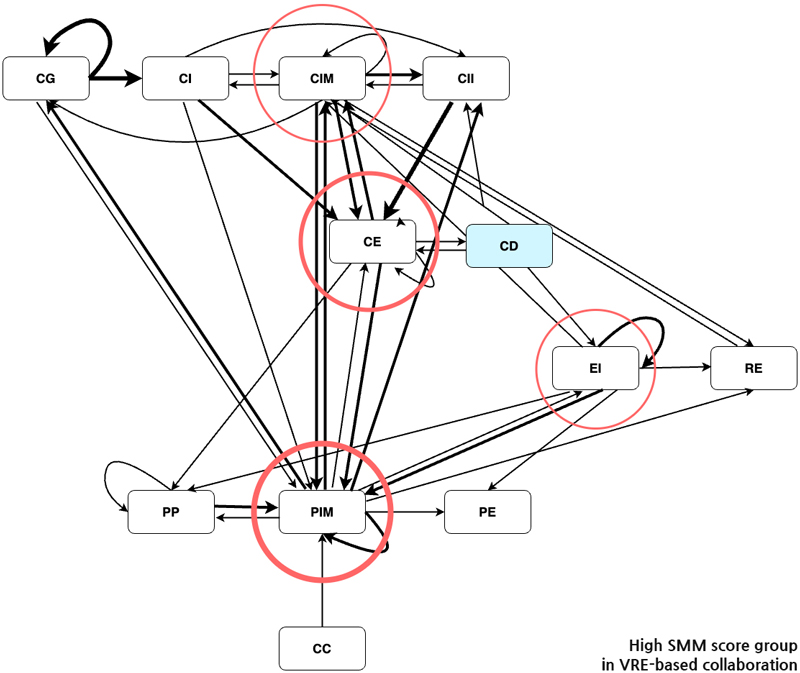
Cognitive transition flow of the high SMM score group using VREs
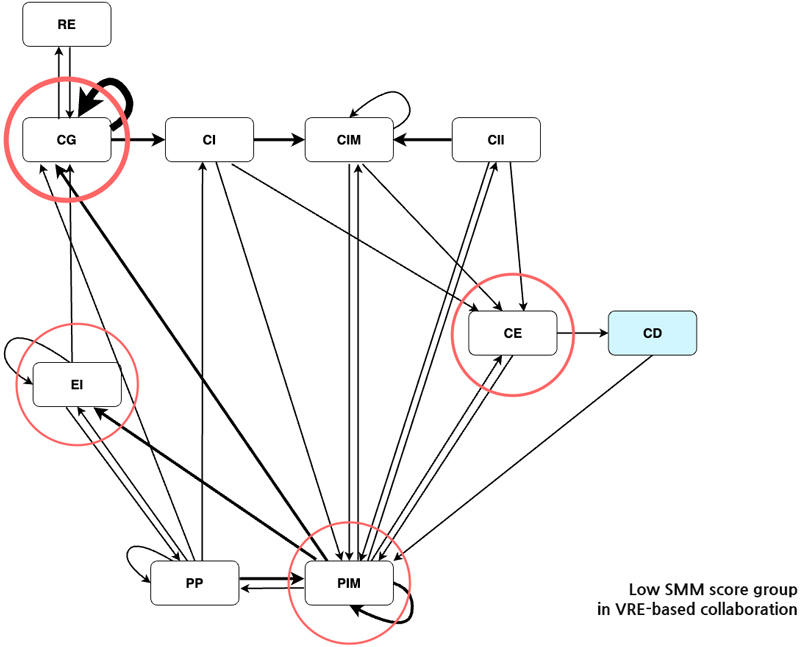
Cognitive transition flow of the low SMM score group using VREs
4. 3. Participant’s perceptions
To gain deeper insights into participants’ experiences during VRE-based fashion design collaboration, we conducted interviews with two groups.
Participants in high SMM score groups (G2, G5) exhibited highly effective collaboration by utilizing the immersive features of VREs. G2 highlighted using tools such as real-time style sketching and fabric texture visualization, enabling them to rapidly iterate on garment designs, explore color and material combinations, and evaluate how design structures and elements interacted visually in three dimensions. This capability simplified the process of identifying and addressing design challenges collaboratively. Participants described that the virtual environment allowed them to test garment proportions, adjust silhouette details, and integrate accessories seamlessly, enhancing the iterative process. G5 participants emphasized that VREs facilitated interactive decision-making processes akin to working in a virtual studio, providing immediate and visually enriched feedback. They particularly valued the platform’s ability to dynamically adjust design features based on team input and visualize alternative concepts in real time. One participant remarked, “Seeing our sketches come to life together in 3D made our decision-making process faster and more informed. Another participant highlighted that the VRE broke down geographical barriers, describing it as an effective collaborative platform for streamlining design communication and promoting creative synergy.
Conversely, participants in the low SMM score groups (G3, G4) expressed concerns about the challenges of integrating VRE tools into their workflow. G3 reported difficulties adapting to the VR platform, particularly for team members with limited prior experience with 3D design tools. This lack of familiarity slowed their ability to contribute equally, creating a noticeable gap in productivity. A participant in G3 stated, “As someone without enough 3D design experience, I often felt like I was lagging behind the designers, which hindered our collaboration.” They pointed out that while the platform’s potential was evident, the steep learning curve for non-designers created a gap in productivity within multidisciplinary teams. Some participants in G4 echoed frustration with syncing updates across team members and stated that these delays disrupted the creative flow. Additionally, they highlighted difficulties using advanced features, such as integrating reference images from external software or platforms, which further complicated their workflow.
In summary, the interviews underscore that participants’ actions in VRE-based collaboration were influenced by their team mental models. High SMM groups effectively utilized VREs’ interactive tools, such as real-time sketching, material visualization, and collaborative editing, to tailor their workflow to fashion design concept generation, enhancing their productivity and innovation. Conversely, low SMM groups encountered barriers related to tool adoption and workflow integration, particularly among non-designers, which highlighted the need for comprehensive training and improved user support. These findings underscore the critical role of aligning team members’ technological proficiency and shared team mental models to optimize collaboration and achieve successful outcomes in multidisciplinary VRE-based fashion design collaboration.
5. Discussion
5. 1. Insights into team mental models in VRE-based fashion design collaboration
The research findings provide crucial insights into VRE-based fashion design collaboration and its impact on TMMS, especially when compared to commonly used OTEs for remote collaboration. The findings suggest that VREs enhance SMM similarity among individual participants, influencing TMMs, including task performance, work efficiency, and team member interaction, especially in early fashion design collaboration. Leveraging VREs improves cognitive effectiveness in fashion design collaboration, emphasizing TMMs’ pivotal role in team coordination and creative problem-solving.
Specifically, this study explored how differences in SMM scores influence communication dynamics, design problem-solving, and participant perceptions during the collaborative design process. Our findings indicate that groups with high SMM scores excel at generating and evaluating innovative design concepts. These groups demonstrate active verbal engagement and effective use of VREs to enhance collaboration. In problem-solving tasks, high SMM score groups engage in more cognitive actions related to information management and critical evaluation, which aligns well with fashion design’s creativity demands. This suggests that their stronger coordination and decision-making capabilities contribute to more cohesive and innovative design outcomes (Cannon-Bowers et al., 1993; Cooke et al., 2000). Conversely, groups with low SMM scores tend to focus more on goal clarification and evaluation, placing significant emphasis on defining clear objectives and maintaining rigorous quality control. However, these groups struggle with aligning their mental models, which leads to less dynamic and less cohesive ideation during the concept generation phase. Participant perceptions vary, with high SMM groups expressing enthusiasm for VRE-based collaboration, while low SMM score groups raise concerns about the learning curve and challenges in adapting to the new working environment for design collaboration, emphasizing the need for adequate training and support to ensure a smooth transition and minimize disruptions. These findings highlight the importance of fostering high SMM alignment in collaborative fashion design processes using VREs. Enhancing SMM among participants can optimize communication, problem-solving, and ultimately, the creative exploration of design concepts in virtual environments.
In summary, the study underscores the relevance of TMMs in VRE-based fashion design collaboration, influencing communication, creative problem-solving, and user experiences. These dynamics significantly impact the quality and innovation in fashion design processes, guiding fashion companies and educational institutions to optimize design collaboration and educational methods using advanced digital environments, such as VREs.
5. 2. Implementation of the research findings
In the dynamically evolving landscape of the fashion industry and educational environments, our findings emphasize the pivotal role of TMMs in facilitating multidisciplinary design collaboration utilizing VREs. These insights, crucial for collaborative exploration in the early concept generation of fashion design, illuminate the intricate interplay of team communication and cognitive action for effective problem-solving, thereby enhancing our understanding of VRE-based collaborative design processes. To translate these findings into practical applications, we recommend that designers and practitioners focus on improving team communication by implementing structured tool training sessions and regular feedback mechanisms. These measures will help minimize the learning curve associated with VREs, thereby enhancing collaborative performance and design outcomes.
Our findings on the role of TMMs focused on specialized approaches in the context of the fashion design process but are also applicable to other design disciplines that require multidisciplinary collaboration, such as architecture and industrial design. In architecture, for example, collaboration often involves a multidisciplinary team, including architects, engineers, and urban planners. Similar to fashion design, these teams must develop shared understanding throughout the design process. The TMM framework we utilized in our study can be directly applied to these collaborative efforts, aiding in the alignment of team members’ mental models. Similarly, in industrial design, the integration of diverse expertise in product development can benefit from the enhanced communication and coordination that TMMs support. By focusing on how VREs can facilitate the development of TMMs, our study provides insights that are applicable to other fields, helping teams navigate the complexities of collaborative design projects.
In fashion design education, our insights suggest that priority should be given to developing TMMs within collaborative teams to ensure that training in the use of VREs functions as a critical skill for collaborative problem-solving. This approach involves fostering a shared understanding among team members, improving communication strategies, and enhancing cognitive problem-solving skills, thereby aligning digital design education programs with the demands of the digital-driven fashion industry by integrating user-centered practices with VREs.
To bridge the gap between academia and industry, we propose the development of educational models that incorporate VRE-based design collaboration as a core component of the curriculum, including creative brainstorming, design evaluation, and seamless communication. This can equip students with adaptive skills and cognitive readiness for future digital fashion challenges, ensuring that they are prepared to navigate the complexities of future digital design implementation, making them valuable to both academia and industry. Furthermore, the adoption of TMMs-focused training modules in both academic settings and professional development programs could enhance team collaboration and innovation in real-world fashion design projects. By providing such examples, we hope to demonstrate the broader applicability of our research, encouraging the adoption and advancement of educational practices and industry standards in digital fashion design.
6. Limitation and Conclusion
As the fashion industry undergoes a digital transformation, integrating Virtual Reality Environments into design practice and education emerges as a strategic imperative. Our research prioritizes understanding the cognitive aspects of VREs, aiming to enhance collaborative problem-solving skills for both designers and students throughout their utilization of VREs.
However, it is crucial to acknowledge the limitations of our study. The research focused specifically on the cognitive influences of the VRE-based fashion design collaboration process. While our findings provide foundational insights, further exploration is needed. Future investigations should explore more empirical descriptions of design collaboration among team members, with case studies serving to enrich our understanding of the practical implications of VREs. Additionally, the generalizability of our findings may be constrained by the specific context of design collaboration and the demographics of the participants involved. A potential bias to consider is the additional one-hour training session provided to the VRE sessions to ensure participants were comfortable using the tools. While necessary, this training may have inadvertently offered additional time for team bonding and task familiarization, potentially influencing SMM similarity. To mitigate this, we controlled the total task duration in the VRE settings to ensure that the interaction time was consistent across experimental conditions.
Although our study provides valuable insights, it is important to note that these findings were derived from a lab-based experimental setting. To fully understand the long-term impacts and scalability of VREs across various design contexts, additional research is required. This acknowledgement sets the stage for ongoing exploration and refinement of our understanding of the multifaceted role that VREs play in shaping the future landscape of fashion design collaboration.
Acknowledgments
This work was supported by the Ministry of Education of the Republic of Korea and the National Research Foundation of Korea (NRF-2020S1A5B5A16082911).
Disclosure statement
No potential conflict of interest was reported by the authors.
Notes
Copyright : This is an Open Access article distributed under the terms of the Creative Commons Attribution Non-Commercial License (http://creativecommons.org/licenses/by-nc/3.0/), which permits unrestricted educational and non-commercial use, provided the original work is properly cited.
References
- Abdi, H., & Williams, L. J. (2010). Tukey's honestly significant difference (HSD) test. In N. Salkind (E.d.), Encyclopedia of research design. SAGE.
-
Alexander, B., & Contreras, L. (2016). Inter-industry creative collaborations incorporating luxury fashion brands. Journal of Fashion Marketing and Management, 20(3), 254-275.
[https://doi.org/10.1108/JFMM-09-2015-0075]

- Badke-Schaub, P. (2000). Group effectiveness in design practice: Analysis and training by a critical-situation-approach. In Stumpfle, S. & Thomas, A. (Eds.), Diversity in Groups (pp. 338-355). Lengerich: Pabst Verlag.
- Badke-Schaub, P., Roozenburg, N., & Cardoso, C. (2010). Design thinking: A paradigm on its way from dilution to meaninglessness. In Proceedings of the 8th Design Thinking Research Symposium (DTRS8), (pp. 39-49). Sydney, Australia.
- Burkhardt, H. (2009). On strategic design. Educational Designer, 1(3). Retrieved from: http://www.educationaldesigner.org/ed/volume1/issue3/article9bu.
- Cannon-Bowers, J. A., Salas, E., & Converse, S. (1993). Shared mental models in expert team decision making. In N. J. Castellan, Jr. (Ed.), Individual and group decision making: Current issues (pp. 221-246). Lawrence Erlbaum Associates, Inc.
-
Chang, Y., Kao, J.-Y., & Wang, Y.-Y. (2022). Influences of virtual reality on design creativity and design thinking. Thinking Skills and Creativity, 46, 101127.
[https://doi.org/10.1016/j.tsc.2022.101127]
-
Cikis, S. E., & Ek, I. (2010). Conceptualization by visual and verbal representations: An experience in an architectural design studio. The Design Journal, 13(3), 329-354.
[https://doi.org/10.2752/146069210X12766130824975]
-
Cirella, S. (2021). Managing collective creativity: Organizational variables to support creative teamwork. European Management Review, 18(4), 404-417.
[https://doi.org/10.1111/emre.12475]
-
Cooke, N. J., Salas, E., Cannon-Bowers, J. A., & Stout, R. J. (2000). Measuring team knowledge. Human Factors: The Journal of the Human Factors and Ergonomics Society, 42, 151-173.
[https://doi.org/10.1518/001872000779656561]
-
Cross, N., & Cross, A. C. (1995). Observations of teamwork and social process in design. Design Studies, 16(2): 143-170.
[https://doi.org/10.1016/0142-694X(94)00007-Z]
-
De Silva, R. K., J., Rupasinghe, T. D., & Apeagyei, P. (2019). A collaborative apparel new product development process model using virtual reality and augmented reality technologies as enablers. International Journal of Fashion Design, Technology and Education, 12(1), 1-11.
[https://doi.org/10.1080/17543266.2018.1462858]
- Espinosa, J. A., & Carley, K. M. (2001). Measuring team mental models. In Proceedings of the academic of management conference organizational communication and information systems division, Washington, DC, August.
-
Flavián, C., Ibáñez-Sánchez. S., & Orús C. (2019). The impact of virtual, augmented, and mixed reality technologies on the customer experience. Journal of Business Research, 100, 547-560.
[https://doi.org/10.1016/j.jbusres.2018.10.050]
-
Ghanem, S. Y. (2022). Implementing virtual reality - Building information modeling in the construction management curriculum. Journal of Information Technology in Construction, 27, 48-69.
[https://doi.org/10.36680/j.itcon.2022.003]
-
Hodges, N., Watchravesringkan, K., Min, S., Lee, Y., & Seo, S. (2020). Teaching virtual apparel technology through industry collaboration: an assessment of pedagogical process and outcomes. International Journal of Fashion Design, Technology and Education, 13(2), 120-130.
[https://doi.org/10.1080/17543266.2020.1742388]
-
Hu, Y.,& Liu, Y. (2017). A study on the conceptual design of fashion product. Art and Design Review, 5, 241-251.
[https://doi.org/10.4236/adr.2017.54020]
-
Klimoski, R., & Mohammed, S. (1994). Team mental model: Construct or metaphor? Journal of Management, 20(2), 403-437.
[https://doi.org/10.1177/014920639402000206]
-
Lee, J. (2022). Toward sustainable fashion product development: The use of 3D virtual prototyping technologies in the synchronous remote learning classroom. Journal of Educational Technology Systems, 51(2), 215-235.
[https://doi.org/10.1177/00472395221132305]
-
Lee, J. H., Yang, E. K., Lee, E. J., & Min, S. Y. (2021). The use of VR for collaborative exploration and enhancing creativity in fashion design education. International Journal of Fashion Design, Technology and Education, 14(1), 48-57.
[https://doi.org/10.1080/17543266.2020.1858350]
-
Leyer, M., Schneider, S., & Strohhecker, J. (2023). Measurement and performance impact of team mental models on process performance. Current Psychology, 42, 21805-21819.
[https://doi.org/10.1007/s12144-022-03293-7]
-
Mathieu, J. E., Heffiner, T. S., Goodwin, G. F., Salas, E., & Cannon-Bowers, J. A. (2000). The influence of shared mental models on team process and performance. Journal of Applied Psychology, 85(2), 273-283.
[https://doi.org/10.1037/0021-9010.85.2.273]
-
McDonnell, J. T. (2012). Accommodating disagreement: A study of effective design collaboration. Design Studies, 33(1), 44-63.
[https://doi.org/10.1016/j.destud.2011.05.003]
- Neumann, A., Badke-Schaub, P., & Lauche, K. (2006). A framework for measuring team mental models in design. In D. Marjanovic (Ed.), Proceedings of the Design 2006 - 9th International Design Conference (pp. 1491-1498). Design Society.
-
Normoyle, C., & Tegtmeyer, R. (2020). Critical and collaborative making with augmented technical tools, in Boess, S., Cheung, M., & Cain, R. (eds.), Synergy - DRS International Conference 2020, 11-14 August, Held online.
[https://doi.org/10.21606/drs.2020.378]
-
Paulus, P. B., Dugosh, K. L., Dzindolet, M. T., Coskun, H., & Putman, V. L. (2002). Social and cognitive influences in group brainstorming: Predicting production gains and losses. European Review of Social Psychology, 12, 299-325.
[https://doi.org/10.1080/14792772143000094]
-
Rosenman, M. A., Smith, G., Maher, M. L., Ding, L., & Marchant, D. (2007). Multidisciplinary collaborative design in virtual environments. Automation in Construction, 16(1), 37-44.
[https://doi.org/10.1016/j.autcon.2005.10.007]
-
Rouse, W. B., Cannon-Bowers, J. A., & Salas, E. (1992). The role of mental models in team performance in complex systems. IEEE Transactions on Systems, Man, and Cybernetics, 22, 1296-1308.
[https://doi.org/10.1109/21.199457]
- Schön, D. (1983). The reflective practitioner: How professionals think in action. New York: Basic Books.
-
Stempfle, J., & Badke-Schaub, P. (2002). Thinking in design teams - an analysis of team communication. Design Studies, 23, 473-496.
[https://doi.org/10.1016/S0142-694X(02)00004-2]
-
Stout, R. J., Cannon-Bowers, J. A., Salas, E., & Milanovich, D. M. (1999). Planning, shared mental models, and coordinated performance: An empirical link is established. Human factors, 41(1), 61-71.
[https://doi.org/10.1518/001872099779577273]
-
Tam, A. I., Au, J. S., & Taylor, G. (2008). A theoretic framework of factors influencing fashion design in Hong Kong. The Design Journal, 11(2), 183-202.
[https://doi.org/10.2752/175630608X329244]
-
Wang, L., Shen, B., & Liu, X. (2017). The value of design collaboration in the fashion business: A literature review. The Design Journal, 20(6), 795-820.
[https://doi.org/10.1080/14606925.2017.1370667]
-
Yang, E. K., & Lee, J. H. (2020). Cognitive impact of virtual reality sketching on designers' concept generation. Digital Creativity, 31(2), 82-97.
[https://doi.org/10.1080/14626268.2020.1726964]