
A Relational Nature Play Framework: A Case Study of Urban Generation Alpha’s Nature Play Using TerraToy
Abstract
Background This research responds to the concern surrounding Generation Alpha’s disconnection from nature and limited design studies exploring relational aspects of nature play intervention. To address this gap, we devise a ‘relational nature play framework,’ incorporating a sense of nature connection, ecological affordance theory, and ludic design for nature play.
Methods We developed an interactive toy mimicking a companion species and tested its influence on children’s sense of nature connection and ecological affordances. We conducted a qualitative study using participant observation and interviews with 20 children (age=11) living in urban areas to explore their nature play experiences. We also used pre/post-play testing to measure the changes in the participants’ sense of nature connection and ecological affordances.
Results The ludic design approach to nature play increased children’s sense of nature connection and expanded and reinforced actualized affordances between children and nature, fostering reciprocal relationships. Based on these results, we propose design strategies for relational nature play: flexible interactions that provide eco-feedback and open-ended interfaces compatible with various aspects of the natural elements.
Conclusions This research contributes to the field of human-nature interaction design by providing theoretical and empirical knowledge of relational nature play and design strategies tailored to Generation Alpha’s disconnection from nature.
Keywords:
Generation Alpha, Relational Nature Play, Human-nature Interaction Design, Ludic Design, Affordance, Sense of Nature Connection1. Introduction
Generation Alpha, children born after 2010 (McCrindle, 2021), are increasingly disconnected from nature due to urbanization and their heavy use of digital technologies. To address this issue, human-nature interaction design studies have explored design approaches to reestablishing their relationships with nature (Biggs et al., 2021; Oogjes & Wakkary, 2022; Poikolainen Rosén et al., 2022). For example, research on technologies for engagement with nature (Nisi et al., 2020; Webber et al., 2023) explores how to create novel nature experiences and nurture positive engagement with nature during childhood (Anggarendra & Brereton, 2016).
Studies have shown a link between nature play (Dankiw et al., 2020) and positive outcomes in children’s development and well-being (Ernst et al., 2021; Vander Donk, 2023). However, it requires more than being in nature to enable nature play (Laaksoharju & Rappe, 2017). This is where ludic design can contribute. Ludic design can promote players’ curiosity and creativity and stimulate play motivations, thus fostering meaningful engagement with situations through technology (Nam & Kim, 2011).
While nature play offers benefits, some see it as lacking the focus on relationships with nature. In environmental education, children’s nature connection is critical to becoming an ecological citizen, as it is positively related to environmental knowledge (Cheng & Monroe, 2012), nature conservation (Richardson et al., 2020), and pro-environmental behaviors (Mackay & Schmitt, 2019). They argue that nature play does not necessarily cultivate an understanding of interconnectedness with nature and potentially reinforces anthropocentrism (Wilson, 2020). To design relational nature play interventions, a theoretical and empirical understanding of the relational aspects of children’s nature play is crucial (Webber et al., 2023). However, research exploring multifaceted relationships in nature play interventions remains limited (Ernst et al., 2021). One promising avenue lies in exploring the concepts of affordances (Kyttä, 2002) - the behavioral relationship between humans and the environment - and a sense of nature connection (Chawla, 2020), encompassing cognitive and affective nature connection.
This study examines the potential of a ludic design approach to nature play in fostering a stronger nature connection among urban Generation Alpha in South Korea, a demographic increasingly disconnected from the natural environment. Based on the findings, we propose design strategies for relational nature play. Three research questions guide this exploration: (RQ1) How does a ludic design approach to nature play impact children’s relationship with nature? (RQ2) How does the ludic design approach to nature play influence children’s sense of nature connection? (RQ3) What are the design strategies of relational nature play?
To address these questions, we reviewed literature on human-nature interaction design, nature play, ludic design, sense of nature connection, and affordance. Based on this review, we devised a relational nature play framework. Subsequently, we designed an interactive block toy kit called the TerraToy to foster playful engagement with nature. This kit allows users to collect natural debris and create their own nature spirits. An empirical study incorporating participant observations, interviews, and pre/post-testing was conducted with Generation Alpha in Seoul. Drawing on the findings, we discuss potential design strategies of relational nature play.
2. Literature Review
2. 1. Child-nature Interaction Design
Called ‘digital natives’ for their fluency in digital technologies, Generation Alpha (children born after 2010) (McCrindle, 2021) faces the extinction of nature experiences (Soga & Gaston, 2004). Increased screen time (Korea Press Promotion Foundation, 2022; Ministry of Science and ICT, 2022) and dwindling green spaces caused by urbanization (Timar et al., 2022) are curtailing their opportunities to experience nature (Michaelson et al., 2020). Furthermore, social factors in urban environments exacerbate this trend. The privatization of natural places and parents’ anxieties about traffic and stranger danger further restrict Generation Alpha’s nature experiences (Dowdell et al., 2011).
To address this disconnect with nature, human-nature interaction design researchers are rethinking our relationship with nature (Biggs et al., 2021; Oogjes & Wakkary, 2022; Poikolainen Rosén et al., 2022). Webber et al. (2023) proposed leveraging various computational technologies, such as interactive devices, mobile apps, AR/VR, and AI, to foster engaging citizen science, environmental monitoring, and educational experiences in nature. Notably, research with children focuses on fostering learning about nature, nature exploration, and nature knowledge-building activities (Anggarendra & Brereton, 2016).
2. 2. Ludic Design for Children’s Nature Play
Nature play is a specific type of outdoor play where children engage with natural elements in natural spaces (e.g., forests, parks, gardens) (Dankiw et al., 2020; Lee et al., 2022). These elements, such as trees, bark, and branches, become loose parts and play props (Moore, 2014; Puhakka et al., 2019), fostering unstructured play in children. Mud play, gathering natural debris, building sand castles, and treasure hunts are all examples of child-led activities within nature play. These experiences engage multiple senses, immerse children in nature, and provide positive emotions, such as enjoyment (Bento & Dias, 2017). Crucially, nature play is distinguished from structured nature-based learning programs (Dankiw et al., 2020) by emphasizing unstructured, child-directed play (Skar et al., 2016).
Ludic design, known for fostering intrinsic play motivation and playful engagement, can support nature play (Back et al., 2017; Deterding et al., 2011). Unlike games with pre-defined objectives, tasks, and rules, ludic design is intentionally unstructured (Deterding et al., 2011). It encourages player-led play by sparking players’ exploration, curiosity, and creativity (De Valk et al., 2012; Gaver et al., 2010). Theoretical works in this area provide play strategies, such as flexible interaction and open-ended interface (Duncan, 2011; Nam & Kim, 2011).
Flexible interaction can allow players to interact with natural elements in diverse ways, fostering actions that extend beyond the designer’s initial intentions (Bertran et al., 2020). For instance, The interactive table “Keep Up With Me” enabled player-led actions rather than enforcing a specific way of interaction in the context of dining (Mitchell et al., 2015). The players explored comfortable eating positions and adapted their play behaviors based on the situation, even incorporating elements of competition (Mitchell et al., 2015).
An open-ended interface can offer players open-ended resources instead of activities or artifacts with pre-defined rules and structures (Duncan, 2011). Classic toys with open-ended interfaces, such as sandboxes and Legos, provide various action possibilities, empowering players to actively engage and dynamically reshape playstyle (Back et al., 2017).
Despite the relevance of ludic design strategies to children’s nature play, existing research in human-nature interaction design often prioritizes game and gamification-based approaches with pre-defined goals and tasks related to nature (Fletcher, 2017; Palacin-Silva et al., 2018; Reetz et al., 2021). Studies exploring ludic design interventions encouraging child-led, unstructured play in nature remain limited. Additionally, some argue that nature play, on its own, may not foster the same level of relationship-building with nature as seen in environmental education (Wilson, 2020). To bridge this gap, research on nature play should delve into a more profound understanding of the relational aspects of nature play (Beery, 2020; Ernst et al., 2021).
2. 3. Sense of Nature Connection
Sense of nature connection is a psychological construct that captures an individual’s sense of their relationship with nature, a feeling of being linked to the natural community (Brügger et al., 2011). This connection has both cognitive and affective aspects. The cognitive side involves understanding the interconnectedness of nature, valuing nature, and viewing oneself as part of it (Nisbet & Zelenski, 2013; Schultz, 2002). The emotional connection involves enjoyment, responsibility, empathy, and sympathy for nature (Cheng & Monroe, 2012; Dutcher et al., 2007; Ernst & Theimer, 2011; Chawla, 2020). A strong sense of nature connection fosters a virtuous cycle that leads to active participation in conservation efforts (Prévot et al., 2018; Richardson et al., 2020) and pro-environmental behaviors (Beery & Wolf-Watz, 2014; Mackay & Schmitt, 2019; Nisbet et al., 2008; Otto & Pensini, 2017; Tam, 2013).
2. 4. Affordance
Affordance refers to the action possibilities that the environment offers (Gibson, 2014). For example, there is a ‘climbable’ affordance between a child and a tree and a ‘runnable’ affordance between a child and a flat surface. While Gibson (2014) viewed the emergence of behaviors as a result of the relationship between the individual and the environment, design researchers approached affordance from a cognitive perspective as part of a strategy to induce user behaviors (Gaver, 1991; Hartson, 2003; Norman, 1988). This cognitive approach has limitations in explaining individual differences in the use of objects and user behaviors that go beyond the designer’s intention, such as creative play.
The concept of affordances in the ecological approach has been used to explain children’s interaction with the environment in the context of nature play. Greeno (1994) extended Gibson’s notion of affordances by incorporating the individual’s abilities, which led to a more nuanced understanding of how the level of playful engagement varies across individuals. Kyttä (2002) further distinguished between potential affordances and actualized affordances. Potential affordances are the action possibilities inherent in the environment, while actualized affordances are those that are perceived, utilized, or shaped by the individual (Table 1). In other words, potential affordances reside in the ‘environment,’ while actualized affordances are enacted by the ‘individual.’ The degree to which affordances are actualized depends on the individual’s characteristics and abilities. The actualization can also be facilitated or constrained by interventions (Kyttä, 2002, 2004).

Degree of Affordances (Kyttä, 2002)
3. Research Context
3. 1. Relational Nature Play Framework
The relational nature play framework is designed to guide the designing of nature play experiences that foster an individual’s cognitive, affective, and behavioral relationships with nature. Understanding how children connect with nature during play is crucial for designing relational nature play. Specifically, children’s interests may not always align perfectly with the interests of nature itself. Theoretically grounded on the concepts of a sense of nature connection and ecological affordances, we thus devised the relational nature play framework (see Figure 1). We used the framework to guide the design intervention, data collection, and analysis.
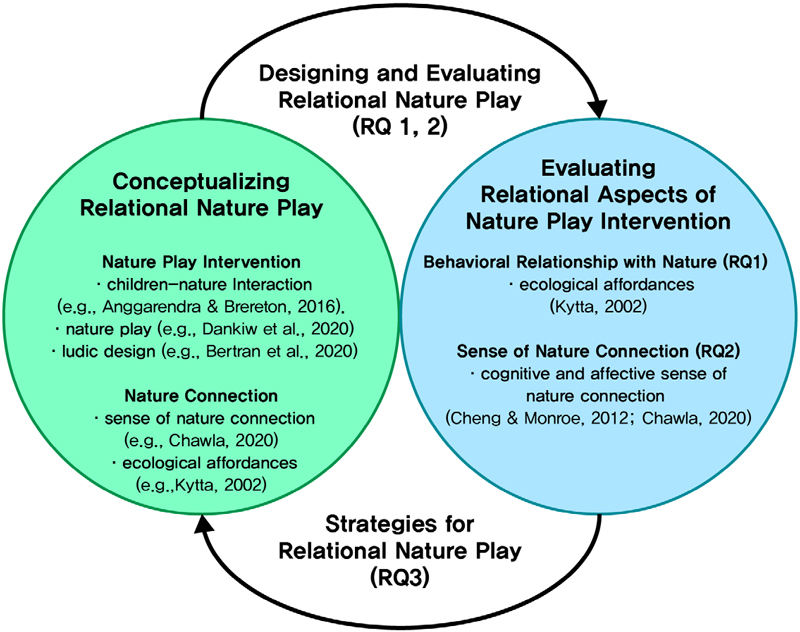
Relational Nature Play Framework
3. 2. Design Process
Prior to this study, we conducted semi-structured interviews with 17 urban Korean Generation Alpha children (aged 10-11) about their nature connection and daily nature experiences to investigate the nature connection challenges and needs of Generation Alpha. We analyzed the qualitative data and established our design direction by creating Generation Alpha and non-human personas along with a journey map. This revealed several design opportunities, including limited access to nature, negative emotions towards urban natural elements, and inequitable perceptions of the human-nature relationship. Drawing on previous research in nature connection and ludic design, we formulated potential solutions, which were subsequently reviewed by child and family studies experts. In this study, we evaluate the nature play intervention and propose new design strategies based on the findings.
3. 3. TerraToy
TerraToy is an interactive toy inspired by Donna Haraway’s (2003) concept of companion species. According to Haraway (2003), companion species extend beyond a single species, encompassing the interconnected relationships between humans, animals, and machines. In this context, ‘Terra’ is a sentient spirit embodying the interconnectedness of various non-human beings within a local nature. Users collect natural debris generated by these non-human beings, such as fallen leaves, twigs, or feathers, and use them to create new shapes of Terra.
Highlighting the interconnectedness and emotions of Terra’s non-human inhabitants, the TerraToy has a modular design consisting of magnetic blocks, including an interactive module. The interactive module features a 0.96-inch LED display, speaker, and microcontroller. Infused with anthropomorphic expressions (Epley et al., 2007), it embodies the flexible interaction characteristics of the ludic design. It provides players with feedback through over ten short videos displaying the changing facial expressions of the sentient spirit (Figure 2) and corresponding sounds played through the speaker. This feedback aims to stimulate utilized affordances, which are players’ responses to the environment and situations with diverse actions (Laaksoharju & Rappe, 2017; Wojciehowski & Ernst, 2018). Especially, the movable eyes (up, down, left, right) pique children’s interest in natural elements (Hammond & Drummond, 2019). Hidden facial expressions (smiling, sleepy, angry) and sounds further support flexible interaction. This allows children to control their behaviors or discover new ways to engage with Terra and nature.
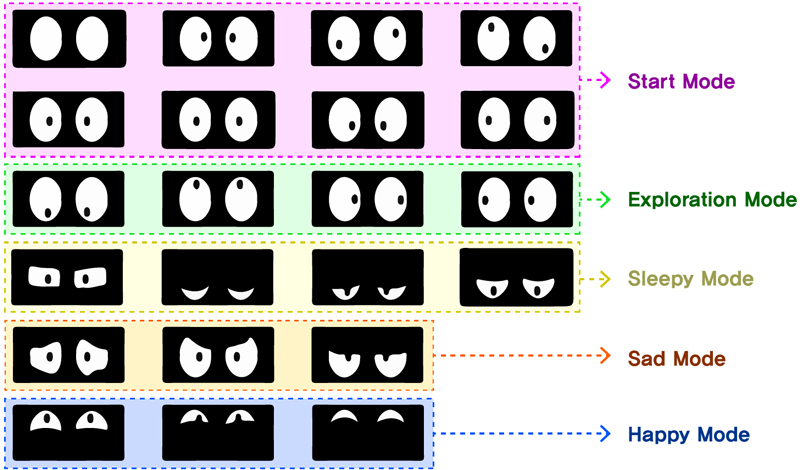
TerraToy’s Facial Animations (Vin.X.Mod, 2022)
TerraToy employs an open-ended interface, empowering children to express the spirit of the local nature (Figure 3). The kit features magnetic blocks in various shapes for easy assembly and disassembly, each measuring 25 x 50mm. These blocks can also be combined with natural debris, such as twigs, leaves, and stones, secured with wires. Children choose one of the various shapes formed by assembling and disassembling TerraToy blocks and natural debris. This open-ended interface supports shaped affordances between children and nature by stimulating imagination, interpretation, and expression of local nature’s spirit.
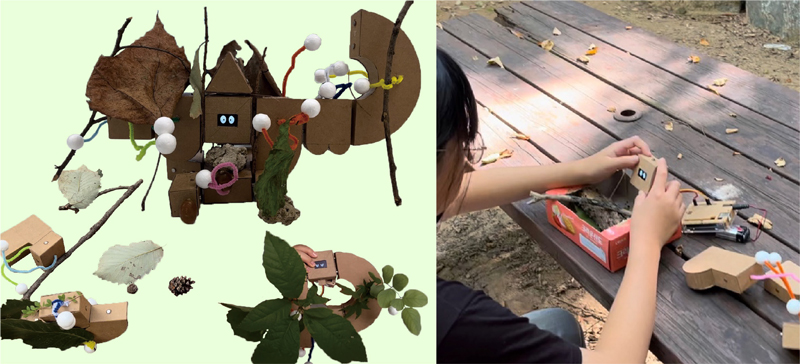
TerraToy
4. Methods
4. 1. Data Collection
This study explores how the TerraToy influences children’s relationships with nature. To understand the influence of the TerraToy on children’s sense of nature connection, quantitative and qualitative data were collected using pre- and post-intervention surveys and interviews with both intervention and comparison groups. We also conducted participant observation, recognizing the need to delve into the affordances between children, TerraToy, and local nature during nature play. The study spanned from August 2023 to February 2024 and was approved by the Yonsei University Institutional Review Board (7001988-202306-HR-1932-02).
In this field study, we recruited 20 Generation Alpha children (Table 2). Participants were recruited using purposive and snowball sampling techniques. We focused on the oldest Generation Alpha, limiting participation to children aged 11. These children were then divided into two groups: an intervention group and a comparison group. Each group comprised five boys and five girls, adhering to the minimum sample size requirement for interviews (Nielsen, 1994; Creswell, 2013). Recruitment targeted local online communities and elementary school bulletin boards. Only those who expressed interest and met the pre-defined criteria of age, gender, smartphone ownership, and residence were eligible to participate. Finally, informed consent was obtained from parents and children before study participation.
Participant demographics
This study employed the Connection to Nature Index developed by Cheng and Monroe (2012) to assess children’s affective nature connection. Designed for elementary school-aged children, the Connection to Nature Index comprises 21 items that measure four dimensions: enjoyment of nature (7 items), empathy for living things (4 items), sense of oneness with nature (2 items), and sense of responsibility towards nature (3 items). Semi-structured interviews were conducted using a protocol based on Chawla’s (2020) theory of nature connection. The protocol included questions on children’s perceptions of nature (1 item), their perceived relationship with nature (1 item), and experiences of nature play (5 items), as detailed in Table 3. Additionally, intervention group participants answered five questions about their experiences using the TerraToy.
Interview Questionnaires
We used a journey map as a prompt during interviews to help guide the children in identifying significant experiences and reflecting on their thoughts and emotions in nature (Figure 4). The map included both drawing and writing spaces to allow the children to describe their nature experiences in whichever mode they felt most comfortable. Participants were given ample time and access to various drawing tools, including colored pencils, markers, and regular pencils.
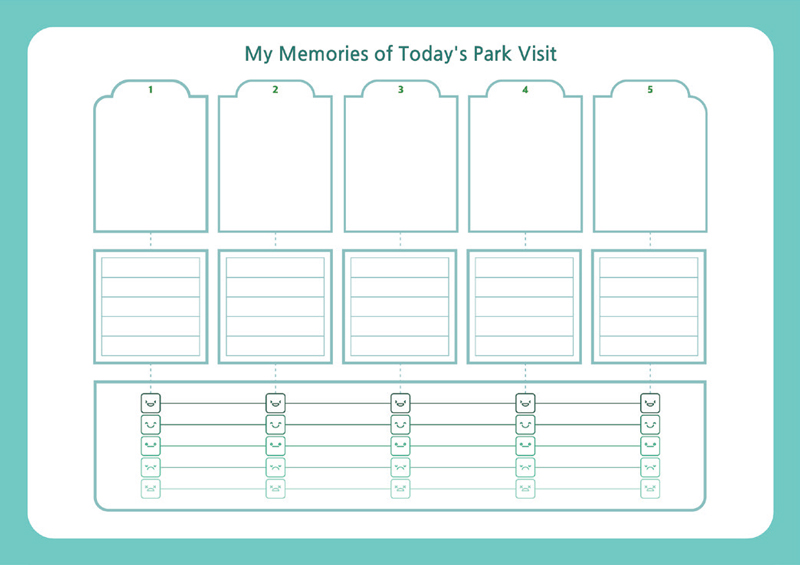
Journey Map
Data collection occurred from August to October 2023, with participants involved in the study for approximately two hours (Figure 5). Before participating in the field test, participants completed the Connection to Nature Index (Cheng & Monroe, 2012). The intervention and control groups were selected, followed by a pre-test for baseline equivalence. On the day of the field test, the researcher reiterated the study’s purpose and content to the participants. To build rapport and mutual trust, the researcher allowed sufficient time for conversation before proceeding to the research site. The data collection process was videotaped and recorded.
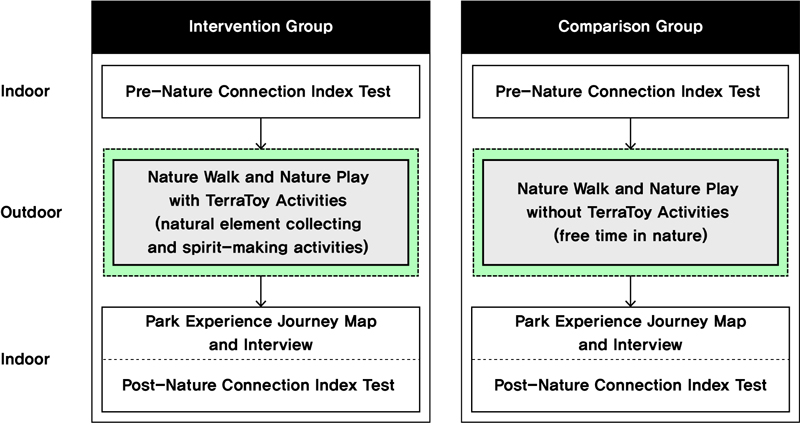
Research Process
The field study was undertaken at the Underwood Memorial Park, located in Seodaemun-gu, Seoul, South Korea. This park borders Ansan Mountain and exhibits similar flora and fauna (Moon & Song, 2015). Encompassing an area of 86,025.56 m², the park features rolling hills, open spaces, benches, staircases, and stone walls. A site visit conducted by the first author from May to July documented the presence of various natural debris (piles of twigs, leaves, and stumps) and a diverse range of living things (flowers, trees, birds, and insects). As a typical urban green space, the park also has convenient access to transportation and offers a safe environment, with a hospital within a 10-minute walking distance.
Field data was collected through field notetaking and video recording according to the participant observation research method. Prior to the activity, the researcher introduced the TerraToy to the participants, providing each with a kit and collection bag. Ample time was allotted for participants to engage in nature play. To gain insight into their thoughts and emotions, the researcher encouraged participants to verbalize their thoughts and feelings throughout the activity (think-aloud technique). When significant changes in participant behavior emerged, the researcher inquired about their underlying thoughts and feelings. Aside from these focused questions, researcher interaction was minimized during the intervention. The researcher primarily focused on observing and recording the interactions between participants and the natural elements.
Following their nature play, the children were invited back indoors to describe their memories at the park by drawing, writing about, and evaluating their nature experiences using the journey map (Figure 4). The session began with a tutorial on how to use the map. Most participants completed the task without difficulty, while some children needed to be reminded of their activities based on the researchers’ field notes. Subsequently, participants engaged in individual interviews and completed the post-Connection to Nature Index survey.
4. 2. Data Analysis
We analyzed the data guided by the relational nature play framework. Participant thoughts and emotions were analyzed through the lens of a sense of nature connection (Cheng & Monroe, 2012; Chawla, 2020). Additionally, participants’ interactions with nature were analyzed using the concept of ecological affordance theory (Kyttä, 2002).
Due to the participant’s quantitative data distribution, non-parametric statistical tests were employed for analysis, avoiding assumptions about population parameters. Collected quantitative data were analyzed using SPSS 24.0. The following procedures were implemented: First, a Mann-Whitney U test was conducted to assess whether the intervention and comparison groups were equivalent at baseline. Second, Wilcoxon signed-rank tests were performed within each group to evaluate changes in scores between pre- and post-intervention. Lastly, a Mann-Whitney U test was again used to compare the change scores between the intervention and comparison groups.
All qualitative data (videos, field notes, visuals from interviews, and observations) were transcribed by the first author for analysis. Two researchers experienced in qualitative research then analyzed the transcribed data using a 6-step process outlined in Taylor et al. (2015). First, the researchers familiarized themselves with the data by reading the transcripts over and over and gained a comprehensive understanding of the content. Second, we identified and coded key elements and their meanings. Third, emerging themes and concepts were identified throughout the analysis. The data were then segmented into meaning units, categorized, and integrated to develop a typology (Erlingsson & Brysiewicz, 2017). Next, the researchers interpreted the identified typologies through a theoretical lens. Finally, the findings were visualized to illustrate the various ways children connect with natural elements during their nature play. The data analyzed from the relational nature play framework were represented through the following steps: (1) Identification: Diverse actors (children, natural elements, artifacts, etc.) within the three categorized levels of affordances were identified. (2) Mapping children’s emotions: Children’s emotional responses to other actors (natural elements or artifacts) were mapped onto their corresponding affordances. (3) Aggregation: The mapped emotional responses were aggregated to the highest level of affordances. (4) Refining the model: All affordances except for the highest level were removed to focus on the overarching connections.
To enhance the credibility of the analysis (Lincoln & Guba, 1985), we conducted peer debriefing by discussing among ourselves the analysis, findings, and conclusions and triangulation by cross-checking interview transcripts with field notes, visuals, and other data sources.
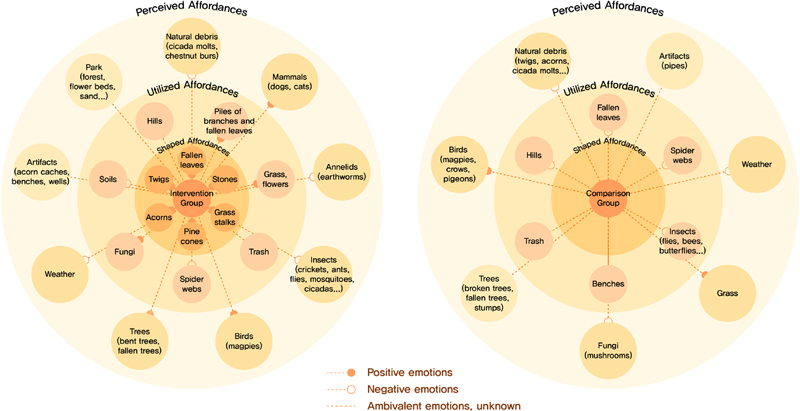
Generation Alpha’s Nature Play Experiences Results (Left Graph-Intervention Group, Right Graph-Comparison Group)
5. Results
5. 1. Affordances
The intervention group exhibited greater affordances (n=554) than the comparison group (n=436) (Table 4). These affordances in the intervention group can be categorized as perceived (51.62%, n=286), utilized (34.30%, n=190), and shaped affordances (14.08%, n=78). In contrast, the comparison group primarily consisted of perceived affordances (72.02%, n=314) with some utilized affordances (27.98%, n=122). It is noteworthy that the comparison group lacked any shaped affordances. That is, the intervention fostered a stronger and more expansive form of playful engagement with nature among participants.
Observed affordances between participants and nature
During nature play, some participants perceived various affordances of the surrounding natural elements, such as trees, fallen leaves, and cicadas. For example, they perceived affordances to hunt a cicada and affordances to collect natural debris.
We also observed that other participants in the comparison group failed to perceive affordances by ignoring their surroundings and natural elements. For instance, C12 showed little interest in the environment, stating, “I didn’t think about anything,” “I was looking at the ground,” and “saw nothing” during their visit. This lack of engagement was reflected in their feeling “nothing special” afterward and their inability to recall any activities. Another participant, C06, shared a similar focus, aiming solely to “climb up” the park’s hill.
In contrast, participants in the intervention group expressed curiosity about the TerraToy and nature play activities. They actively explored the natural space while interacting with the TerraToy. Notably, the eye movements on the TerraToy screen elicited their attention to their surroundings, leading to more active exploration (Hammond & Drummond, 2019). For example, C16 saw the eye movements on the screen and thought that Terra “wanted to look around,” prompting her to lift and turn it to look around.
The intervention group expanded their perceived affordances by actively seeking “new,” “useful,” or “beautiful” materials. Participants adopted a deliberate pace, employing a zigzag pattern or venturing off-trail into bushes to collect their desired natural elements. Some participants gravitated towards areas with accumulated natural debris. These experiences increased their opportunities to perceive affordances with smaller, concealed natural elements.
However, a negative relationship with nature limited the utilization of some perceived affordances. Some participants who perceived affordances expressed negative emotions such as disgust, discomfort with the natural elements, or fear of potential dangers. These negative emotions acted as barriers to utilizing the perceived affordances. For example, one participant encountered an overturned insect and, despite perceiving an affordance to help it, was prevented from doing so by feelings of disgust. Similarly, another participant perceived an affordance to collect a fallen chestnut bur but refrained due to perceived danger.
The study found that utilized affordances were the second most common level of affordances after perceived affordances. The utilized affordances include the affordance to zigzag uphill, the affordance to collect fallen leaves, the affordance to pick up litter, and the affordance to dig the ground. Mainly, the affordances to collect natural elements were concentrated in areas affluent with natural debris, such as bushes, piles of fallen leaves, and gravel patches. This led to the utilization of other affordances, such as the affordance to dig the ground to uncover hidden natural elements, the affordance to throw fallen leaves, and the affordance to return the collected natural elements to their original locations.
The TerraToy’s dynamic audiovisual output further enhanced affordances between the intervention group and the local nature. Participants utilized affordances from both natural elements and the TerraToy to elicit positive facial expressions on the screen. For instance, participants C14 and C19 mentioned adapting their behaviors to nature when Terra appeared to be “frowning” or “unhappy.”
However, the observed relationships with nature in some participants’ utilized affordances were not always reciprocal. While some participants expressed positive emotions (joy, happiness) through collecting natural elements such as leaves, twigs, and stones, they did not consider the potential negative impact on the environment. This one-sidedness is further exemplified by some participants engaging in the anti-environmental affordance to collect living things such as leaves and grass.
Among the affordances observed in the study, shaped affordances were the least frequent. These involved children combining TerraToy blocks with natural elements to create imagined forms such as spirits, sailboats, and weapons. Particularly, these affordances emerged solely from the interaction between the intervention group and nature. They required assembling and disassembling blocks of various shapes to build structures and incorporating collected natural elements for decoration. Additionally, most perceived and utilized affordances played a role in forming shaped affordances.
The open-ended interfaces of both the TerraToy and the natural elements facilitated shaped affordances (Yusof et al., 2022). Children in the intervention group (n=6) used the blocks and natural elements to imagine their own spirits. Notably, they perceived and assigned meaning to the open-ended features of the surrounding natural elements. For example, C13 stated, “When I saw a branch, I tried to make a leg. When I saw a three-pronged leaf, I tried to make a hand.” C07 described the park spirit as a “spirit with stone legs,” while C16 envisioned it as a “spirit with green flowers in both hands,” even relating it to themself as a being similar to herself “who really loves nature.” In essence, the natural elements inspired the creation of spirits, and the children identified these elements with the TerraToy spirits.
During nature play, the changing facial expressions on the TerraToy screen fostered a reciprocal relationship between the children and the natural elements. The children expressed positive emotions such as joy during their play, and they recognized the positive emotions of the spirits they imagined by the on-screen facial expressions. This led participants who perceived anti-environmental affordances to collect living things such as leaves and grass to control or replace them with natural debris to elicit positive expressions and sounds on the screen.
Additionally, some participants (n=3) based their final creations on the changing expressions. For instance, C14 acknowledged the spirit’s reaction to their creation by asking, “Um…is this okay?” and replaced the natural elements with another if a negative reaction was displayed. This suggests that the child was creating anew while considering the emotional response of the TerraToy, fostering a collaborative process where both the child and the natural elements participated and contributed to the creative activity.
5. 2. Sense of Nature Connection
During nature play experiences, participants exhibited a range of emotions. Those who felt positively described a sense of restoration, comfort, and wonder from sensory encounters with nature. For example, participant C15 reported “feeling like their eyes were getting better” while observing the forest, and C13 found the birdsong “calming.” Additionally, interactions with animals such as ants, butterflies, magpies, and crows elicited positive emotions. Intervention group participants further expressed feelings of excitement, accomplishment, and fun during exploration, collection, and creative activities. C8 described exploring bushes as “thrilling,” highlighting positive experiences with the perceived challenge of the natural space. Participants experiencing accomplishment shared their enjoyment of collecting and creating with natural debris, as exemplified by C13’s statement, “It was really fun! It was fun to combine natural materials.”
However, participants also reported negative emotions. As the nature experience occurred in summer (August to early October), the heat caused fatigue. Some participants expressed disgust at encountering insects such as mosquitoes, flies, and bees, which they typically found “creepy” or “scary.” C6, who disliked insects, desired to escape the negative experience, stating, “This is taking forever! I don’t want to rush, but the mosquitoes are biting me now... This is why I hate the mountains.” Interestingly, some participants even expressed fear of non-existent natural elements. Intervention group participants occasionally reported discomfort or anxiety during exploration or collection activities. For example, C7 felt uncomfortable when dirt or dust got on their hands while collecting stones or leaves.
Some participants expressed a sense of responsibility and empathy with nature. Notably, empathy and responsibility emerged primarily when the intervention group participants encountered natural objects whose collection could have negative consequences (n=4). For instance, when considering collecting leaves, C19 expressed a sense of responsibility and empathy by stating, “We should not take off the leaves… They are also living things, so we shouldn’t take them off and kill them at will... I can feel their pain” (C19)
To assess baseline equivalence between the intervention and comparison groups, the Mann-Whitney U test was conducted with pre-test measures of affective nature connection and its subfactors (enjoyment of nature, empathy for nature, sense of oneness, and sense of responsibility). All p-values exceeded 0.05, indicating that the groups were comparable at baseline.
Wilcoxon signed-rank tests were used to analyze pre- and post-test changes within each group for affective nature connection and its subfactors (Table 5). In the intervention group, the affective nature connection significantly increased after the intervention (Z=-2.192, p<.05), while the comparison group change was insignificant. Examining the subfactors, the sense of oneness in the intervention group showed a significant increase after the intervention (Z=-2.264, p<.05). Furthermore, the sense of responsibility in the comparison group significantly decreased after the intervention (Z=-2.328, p<.05).
Comparison of Pre- and Post-Intervention Affective Nature Connection by Group
The Mann-Whitney U test (Table 6) revealed significant differences in affective nature connection changes between the intervention and comparison groups (Z=-2.729, p<.01). This pattern was mirrored in the subfactors: sense of oneness (Z=-2.381, p<.05) and sense of responsibility (Z=-2.556, p<.05).
Comparison of Changes in Affective Nature Connection between Groups
6. Discussion
Research in human-nature interaction design has paid limited attention to the relational aspects of interventions (Webber et al., 2023). As a result, previous studies tended to overlook the environmental impact of hidden actors and even cause negative user experiences in the pursuit of promoting pro-environmental behaviors (Pimentel, 2021). In response to this gap, we devised the relational nature play framework, which theoretically grounded the concept of a sense of nature connection and ecological affordance theory. The findings guided by the framework led us to propose design strategies for relational nature play.
6. 1. Understanding Nature Play Interventions through Relational Nature Play Framework
The relational nature play framework aims to support the conception and evaluation of nature play interventions through the lens of human-nature relationships. It can equip researchers with a relational perspective to uncover issues within human-nature interactions and guide the development of more inclusive and responsible solutions (Eyster et al., 2023).
Integrating ludic design strategies into nature play interventions expanded and strengthened Generation Alpha’s behavioral relationships with nature. The observed differences in affordances between the intervention and control groups suggest that the ludic features embedded in the artifacts stimulated the intervention group’s motivations to play and facilitated playful engagement with nature (Bertran et al., 2020; Back et al., 2017). Firstly, the open-ended interface of the TerraToy increased the intervention group’s interest in natural elements. Exploring materials to construct their own ‘spirits’ played an important role in building behavioral relationships with the natural elements. Secondly, the flexible interaction accommodated the children’s diverse behaviors. The intervention group children utilized diverse affordances according to TerraToy’s dynamic facial expression and sound. The TerraToy’s positive feedback also encouraged players to actualize pro-environmental behaviors. Finally, the open-ended interfaces of the TerraToy and natural elements fostered the children’s shaped affordances with the environment. This aligns with previous studies reporting that open-ended objects promote child-directed play and enhance sensory perception, imagination, and creativity (Laaksoharju & Rappe, 2017; Yusof et al., 2022).
The results of the study using the relational nature play framework suggest that nature play interventions can foster a reciprocal relationship between Generation Alpha and nature. However, the study also revealed diverse relationships with nature. In some cases, Generation Alpha’s sensory experiences in nature were negative, or the relationships between participants and nature were not balanced. Additionally, the comparison group showed a significant decrease in their sense of responsibility, reflecting prior research that nature play is not always relationship-oriented (King et al., 2020; Wilson, 2020).
In contrast, the intervention group using the TerraToy expressed positive emotions such as curiosity, joy, and accomplishment during nature play. They reasoned the positive emotions of nature, took conservation actions to elicit positive expressions, and even considered the agency of nature during creative activities. Notably, their affective nature connection significantly increased, demonstrating a clear difference from the comparison group.
6. 2. Design Strategies for Relational Nature Play
Nature play research calls for exploring relational nature play, which fosters a sense of interconnectedness with nature (Ernst et al., 2021) and encourages players to engage positively with nature. In response to this call, we propose the following design strategies.
While nature play offers numerous benefits to players, it is crucial to consider its potential negative impacts. Studies have shown evidence of damage caused by unsupervised nature play, such as broken branches, peeled leaves, and bark wounds (Browning et al., 2013). Similarly, our study suggests that participants engaged in activities that could directly affect the local nature, shaping the one-sided children-nature relationship. This might hinder the development of the ecocentric thinking of Generation Alpha (Wilson, 2020). Therefore, it is essential to implement strategies that guide children, either directly or indirectly, to control behaviors that negatively impact nature and replace them with more sustainable practices.
Encouraging voluntary behavioral changes is possible through eco-feedback strategies (Froehlich et al., 2010; Lilley, 2009). Our study’s TerraToy exemplifies this concept with its dynamic facial expressions for flexible interactions. The changing expressions motivated children to change the TerraToy’s facial expressions positively. This shift led them to actualize pro-environmental behaviors while encouraging self-control of anti-environmental behaviors. Additionally, interactive systems that respond to environmental impact and children’s actions within nature could be explored (Nisi et al., 2020). Real-time feedback on children’s behavior can enhance their awareness and promote positive change.
This study highlights the importance of an open-ended interface that accommodates diverse natural elements for fostering a stronger behavioral relationship between children and nature. While the natural space provided various shapes and sizes of natural elements, the natural elements afforded the intervention group were limited to fallen leaves, branches, stones, and pinecones. Participants expressed a desire to incorporate natural elements such as sharp chestnuts and large branches, which were restricted by the potential danger and oversize. An open-ended interface that allows engagement with a wider variety of natural elements is crucial for fostering behavioral relationships with nature.
One approach to achieving this is integrating sensory data of natural elements alongside physical natural elements. By providing sensors and actuators, children could record and manipulate data from nature, including videos, images, and sounds. This enables them to utilize various aspects of natural elements as loose parts in their creative activities (Yan et al., 2023). For instance, Yan et al. (2023) described a case where children used an interactive collage creation technology, Nacanva, to record cricket chirps and wind sounds. They then edited these recordings to incorporate them as resources in their collages. We propose that using multi-modal sensory data of natural elements as loose parts can enhance children’s nature connection by encouraging exploration and fostering creativity around new aspects of nature. Furthermore, collecting sensory data through sensors instead of directly manipulating natural objects could minimize potential negative environmental impacts (Browning et al., 2013).
Relational nature play, designed to foster reciprocal relationships between humans and nature, can ideally contribute to the well-being of both (Zelenski et al., 2023). This study focused on nature play interventions’ psychological and behavioral impacts on individuals. The artifacts facilitated playful engagement and strengthened the children’s psychological nature connection. This nature connection can potentially translate into conscious pro-environmental and conservation behaviors in the future (Mackay & Schmitt, 2019; Prévot et al., 2018). Future research using the relational nature play framework should investigate the intervention’s impact on nature at various levels, from individuals to microorganisms, communities, and even global ecosystems. By elucidating these impacts, the intervention can be optimized to benefit both humans and nature. This would necessitate a multidisciplinary approach, incorporating fields such as microbiology, ecology, and environmental education.
7. Conclusions
This study utilized a relational nature play framework to explore the impact of a ludic design approach to nature play on Generation Alpha’s relationship with nature. We aimed to propose design strategies for fostering relational nature play experiences. Quantitative and qualitative data, including pre/post-play testing, participant observation, and interviews, were collected and analyzed through the lens of the relational nature play framework in the context of TerraToy, designed to promote children’s nature play.
The findings from the relational nature play framework suggest several key points. Firstly, the TerraToy expanded and strengthened Generation Alpha’s behavioral relationship with nature. A positive relationship type emerged within the shaped affordances. Secondly, the intervention group that used the TerraToy exhibited a significant increase in their sense of nature connection compared to the control group. Finally, the study proposes flexible interaction providing environmental impact feedback and open-ended interfaces compatible with diverse aspects of natural elements as design strategies for relational nature play.
The study acknowledges several limitations. Firstly, the research was conducted solely during the summer months, limiting the findings’ generalizability. Seasonal and weather variations could influence the results. To address this, future studies should involve interventions conducted at different times of the year to confirm the impact on nature connection across seasons. Secondly, the sample size was insufficient to establish statistical parameters for the quantitative data, limiting the generalizability of those results. Future studies should recruit larger participant pools to enable quantitative analysis with statistically sound parameters. Thirdly, the study focused solely on the individual level of human-nature relationships through the relational nature play framework. Future research should investigate the impact on nature at various ecological scales, encompassing microorganisms, communities, and the global environment. This broader understanding can inform the development of improved design strategies.
Despite these limitations, the study proposes a relational nature play framework that can be valuable for exploring the relational aspects of nature play within human-nature interaction design research. The findings provide empirical knowledge and theoretical foundations for relational nature play. Additionally, the relational nature play strategies specifically tailored to address Generation Alpha’s disconnection from nature contribute to the field of human-nature interaction design.
Acknowledgments
This work was supported by the Ministry of Education of the Republic of Korea and the National Research Foundation of Korea (NRF-2021S1A3A2A03088949)
Notes
Copyright : This is an Open Access article distributed under the terms of the Creative Commons Attribution Non-Commercial License (http://creativecommons.org/licenses/by-nc/3.0/), which permits unrestricted educational and non-commercial use, provided the original work is properly cited.
References
-
Altarriba Bertran, F., Márquez Segura, E., & Isbister, K. (2020, April 21). Technology for Situated and Emergent Play: A Bridging Concept and Design Agenda. Conference on Human Factors in Computing Systems - Proceedings (pp. 1-14).
[https://doi.org/10.1145/3313831.3376859]

-
Anggarendra, R., & Brereton, M. (2016). Engaging children with nature through environmental HCI. Proceedings of the 28th Australian Conference on Computer-Human Interaction, 310-315.
[https://doi.org/10.1145/3010915.3010981]
-
Back, J., Segura, E. M., & Waern, A. (2017). Designing for Transformative Play. ACM Transactions on Computer-Human Interaction (TOCHI), 24(3), 1-28.
[https://doi.org/10.1145/3057921]
-
Beery, T. (2020). Exploring Access to Nature Play in Urban Parks: Resilience, Sustainability, and Early Childhood. Sustainability, 12(12), 4894.
[https://doi.org/10.3390/su12124894]
-
Beery, T. H., & Wolf-Watz, D. (2014). Nature to place: Rethinking the environmental connectedness perspective. Journal of Environmental Psychology, 40, 198-205.
[https://doi.org/10.1016/j.jenvp.2014.06.006]
-
Bento, G., & Dias, G. (2017). The importance of outdoor play for young children’s healthy development. Porto Biomedical Journal, 2(5), 157-160.
[https://doi.org/10.1016/j.pbj.2017.03.003]
-
Biggs, H. R., Bardzell, J., & Bardzell, S. (2021). Watching Myself Watching Birds: Abjection, Ecological Thinking, and Posthuman Design. Proceedings of the 2021 CHI Conference on Human Factors in Computing Systems (pp. 1-16).
[https://doi.org/10.1145/3411764.3445329]
-
Browning, M. H. E. M., Marion, J. L., & Gregoire, T. G. (2013). Sustainably connecting children with nature - An exploratory study of nature play area visitor impacts and their management. Landscape and Urban Planning, 119, 104-112.
[https://doi.org/10.1016/j.landurbplan.2013.07.004]
-
Brügger, A., Kaiser, F. G., & Roczen, N. (2011). One for All? European Psychologist, 16(4), 324-333.
[https://doi.org/10.1027/1016-9040/a000032]
-
Cheng, J. C. H., & Monroe, M. C. (2012). Connection to nature: Children's affective attitude toward nature. Environment and Behavior, 44(1), 31-49.
[https://doi.org/10.1177/0013916510385082]
-
Chawla, L. (2020). Childhood nature connection and constructive hope: A review of research on connecting with nature and coping with environmental loss. People and Nature, 2(3), 619-642.
[https://doi.org/10.1002/pan3.10128]
-
Dankiw, K. A., Tsiros, M. D., Baldock, K. L., & Kumar, S. (2020). The impacts of unstructured nature play on health in early childhood development: A systematic review. PLOS ONE, 15(2), e0229006-.
[https://doi.org/10.1371/journal.pone.0229006]
- De Valk, L., Rijnbout, P., Bekker, T., Eggen, B., De Graaf, M., & Schouten, B. (2012). Designing for playful experiences in open-ended intelligent play environments. IADIS International Conference Games and Entertainment Technologies, 310, 318.
-
Deterding, S., Dixon, D., Khaled, R., & Nacke, L. (2011). From game design elements to gamefulness: defining "gamification." Proceedings of the 15th International Academic MindTrek Conference: Envisioning Future Media Environments, 9-15.
[https://doi.org/10.1145/2181037.2181040]
-
Dowdell, K., Gray, T., & Malone, K. (2011). Nature and its influence on children's outdoor play. Journal of Outdoor and Environmental Education, 15, 24-35.
[https://doi.org/10.1007/BF03400925]
- Duncan, S. C. (2011). Minecraft, beyond construction and survival.
-
Dutcher, D. D., Finley, J. C., Luloff, A. E., & Johnson, J. B. (2007). Connectivity with nature as a measure of environmental values. Environment and Behavior, 39(4), 474-493.
[https://doi.org/10.1177/0013916506298794]
-
Epley, N., Waytz, A., & Cacioppo, J. T. (2007). On seeing human: a three-factor theory of anthropomorphism. Psychological Review, 114(4), 864.
[https://doi.org/10.1037/0033-295X.114.4.864]
-
Erlingsson, C., & Brysiewicz, P. (2017). A hands-on guide to doing content analysis. African Journal of Emergency Medicine, 7(3), 93-99.
[https://doi.org/10.1016/j.afjem.2017.08.001]
-
Ernst, J., McAllister, K., Siklander, P., & Storli, R. (2021). Contributions to Sustainability through Young Children's Nature Play: A Systematic Review. Sustainability, 13(13).
[https://doi.org/10.3390/su13137443]
-
Ernst, J., & Theimer, S. (2011). Evaluating the effects of environmental education programming on connectedness to nature. Environmental Education Research, 17(5), 577-598.
[https://doi.org/10.1080/13504622.2011.565119]
-
Eyster, H. N., Satterfield, T., & Chan, K. M. A. (2023). Empirical examples demonstrate how relational thinking might enrich science and practice. People and Nature, 5(2), 455-469.
[https://doi.org/10.1002/pan3.10453]
-
Fletcher, R. (2017). Gaming conservation: Nature 2.0 confronts nature-deficit disorder. Geoforum, 79, 153-162.
[https://doi.org/10.1016/j.geoforum.2016.02.009]
-
Froehlich, J., Findlater, L., & Landay, J. (2010). The design of eco-feedback technology. Proceedings of the SIGCHI Conference on Human Factors in Computing Systems, 1999-2008.
[https://doi.org/10.1145/1753326.1753629]
-
Gaver, W., Blythe, M., Boucher, A., Jarvis, N., Bowers, J., & Wright, P. (2010). The prayer companion: openness and specificity, materiality and spirituality. Proceedings of the SIGCHI Conference on Human Factors in Computing Systems, 2055-2064.
[https://doi.org/10.1145/1753326.1753640]
-
Gaver, W. W. (1991). Technology affordances. Proceedings of the SIGCHI Conference on Human Factors in Computing Systems, 79-84.
[https://doi.org/10.1145/108844.108856]
-
Gibson, J. J. (2014). The ecological approach to visual perception: classic edition. Psychology press.
[https://doi.org/10.4324/9781315740218]
-
Greeno, J. G. (1994). Gibson's affordances.
[https://doi.org/10.1037//0033-295X.101.2.336]
-
Hammond, S. I., & Drummond, J. K. (2019). Rethinking emotions in the context of infants' prosocial behavior: The role of interest and positive emotions. Developmental Psychology, 55(9), 1882.
[https://doi.org/10.1037/dev0000685]
- Haraway, D. J. (2003). The companion species manifesto: Dogs, people, and significant otherness (Vol. 1). Prickly Paradigm Press Chicago.
-
Hartson, R. (2003). Cognitive, physical, sensory, and functional affordances in interaction design. Behaviour & Information Technology, 22(5), 315-338.
[https://doi.org/10.1080/01449290310001592587]
-
King, H., García-Rosell, J.-C., & Noakes, S. (2020). Promoting children-nature relations through play-based learning in ecotourism sites. Journal of Teaching in Travel & Tourism, 20(3), 190-201.
[https://doi.org/10.1080/15313220.2020.1797612]
- Korea Press Promotion Foundation. (2022). Teenage in South Korea Media Use Survey 2022. https://www.kpf.or.kr/front/board/boardContentsView.do?board_id=246&contents_id=29ff236264724e3fbe02e544185aac03.
-
Kyttä, M. (2002). Affordances of children's environments in the context of cities, small towns, suburbs and rural villages in Finland and Belarus. Journal of Environmental Psychology, 22(1-2), 109-123.
[https://doi.org/10.1006/jevp.2001.0249]
-
Kyttä, M. (2004). The extent of children's independent mobility and the number of actualized affordances as criteria for child-friendly environments. Journal of Environmental Psychology, 24(2), 179-198.
[https://doi.org/10.1016/S0272-4944(03)00073-2]
-
Laaksoharju, T., & Rappe, E. (2017). Trees as affordances for connectedness to place- a framework to facilitate children's relationship with nature. Urban Forestry & Urban Greening, 28, 150-159.
[https://doi.org/10.1016/j.ufug.2017.10.004]
-
Lee, E.-Y., de Lannoy, L., Li, L., de Barros, M. I. A., Bentsen, P., Brussoni, M., Crompton, L., Fiskum, T. A., Guerrero, M., Hallås, B. O., Ho, S., Jordan, C., Leather, M., Mannion, G., Moore, S. A., Sandseter, E. B. H., Spencer, N. L. I., Waite, S., Wang, P.-Y., … members, participating Pl.-N. (2022). Play, Learn, and Teach Outdoors-Network (PLaTO-Net): terminology, taxonomy, and ontology. International Journal of Behavioral Nutrition and Physical Activity, 19(1), 66.
[https://doi.org/10.1186/s12966-022-01294-0]
-
Lilley, D. (2009). Design for sustainable behaviour: strategies and perceptions. Design Studies, 30(6), 704-720.
[https://doi.org/10.1016/j.destud.2009.05.001]
-
Lincoln, Y. S., & Guba, E. G. (1985). Naturalistic inquiry. sage.
[https://doi.org/10.1016/0147-1767(85)90062-8]
-
Mackay, C. M. L., & Schmitt, M. T. (2019). Do people who feel connected to nature do more to protect it? A meta-analysis. Journal of Environmental Psychology, 65, 101323.
[https://doi.org/10.1016/j.jenvp.2019.101323]
- McCrindle, M. (2021). Generation Alpha. Hachette UK.
-
Michaelson, V., King, N., Janssen, I., Lawal, S., & Pickett, W. (2020). Electronic screen technology use and connection to nature in Canadian adolescents: a mixed methods study. Canadian Journal of Public Health, 111(4), 502-514.
[https://doi.org/10.17269/s41997-019-00289-y]
- Ministry of Science and ICT. (2022). Smartphone Over-dependence Survey. https://www.msit.go.kr/bbs/view.do?sCode=user&mId=99&mPid=74&pageIndex=&bbsSeqNo=79&nttSeqNo=3173539&searchOpt=ALL&searchTxt=.
-
Mitchell, R., Papadimitriou, A., You, Y., & Boer, L. (2015). Really eating together: a kinetic table to synchronise social dining experiences. Proceedings of the 6th Augmented Human International Conference, 173-174.
[https://doi.org/10.1145/2735711.2735822]
-
MOON, Y.-T., & SONG, J.-H. (2015). A Flora of Mt. Ansan (Seoul). Korean Journal of Nature Conservation, 13(3_4), 111-124.
[https://doi.org/10.30960/kjnc.2015.13.3_4.111]
- Moore, R. (2014). Nature play and learning places. Creating and managing places where children engage with nature.
- Nam, T.-J., & Kim, C. (2011). Design by Tangible Stories-Enriching Interactive Everyday Products with Ludic Value. International Journal of Design, 5(1), 85-98.
-
Nielsen, J. (1994). Estimating the number of subjects needed for a thinking aloud test. International Journal of Human-Computer Studies, 41(3), 385-397.
[https://doi.org/10.1006/ijhc.1994.1065]
-
Nisbet, E. K., Zelenski, J. M., & Murphy, S. A. (2008). The Nature Relatedness Scale: Linking Individuals' Connection With Nature to Environmental Concern and Behavior. Environment and Behavior, 41(5), 715-740.
[https://doi.org/10.1177/0013916508318748]
-
Nisbet, E., & Zelenski, J. (2013). The NR-6: a new brief measure of nature relatedness. Frontiers in Psychology, 4.
[https://doi.org/10.3389/fpsyg.2013.00813]
-
Nisi, V., Prandi, C., & Nunes, N. J. (2020). Towards eco-centric interaction: urban playful interventions in the anthropocene. Making Smart Cities More Playable: Exploring Playable Cities, 235-257.
[https://doi.org/10.1007/978-981-13-9765-3_11]
- Norman, D. A. (1988). The psychology of everyday things. Basic books.
-
Oogjes, D., & Wakkary, R. (2022). Weaving Stories: Toward Repertoires for Designing Things. Proceedings of the 2022 CHI Conference on Human Factors in Computing Systems.
[https://doi.org/10.1145/3491102.3501901]
-
Otto, S., & Pensini, P. (2017). Nature-based environmental education of children: Environmental knowledge and connectedness to nature, together, are related to ecological behaviour. Global Environmental Change, 47, 88-94.
[https://doi.org/10.1016/j.gloenvcha.2017.09.009]
-
Palacin-Silva, M. V, Knutas, A., Ferrario, M. A., Porras, J., Ikonen, J., & Chea, C. (2018). The Role of Gamification in Participatory Environmental Sensing: A Study In the Wild. Proceedings of the 2018 CHI Conference on Human Factors in Computing Systems, 1-13.
[https://doi.org/10.1145/3173574.3173795]
-
Pimentel, D. (2021). The Peril and Potential of XR-based Interactions with Wildlife. Extended Abstracts of the 2021 CHI Conference on Human Factors in Computing Systems (pp. 1-9).
[https://doi.org/10.1145/3411763.3450378]
- Poikolainen Rosén, A., Normark, M., & Wiberg, M. (2022). Towards more-than-human-centred design: Learning from gardening. International Journal of Design, 16(3), 21-36.
-
Prévot, A.-C., Cheval, H., Raymond, R., & Cosquer, A. (2018). Routine experiences of nature in cities can increase personal commitment toward biodiversity conservation. Biological Conservation, 226, 1-8.
[https://doi.org/10.1016/j.biocon.2018.07.008]
-
Puhakka, R., Rantala, O., Roslund, M. I., Rajaniemi, J., Laitinen, O. H., Sinkkonen, A., & the ADELE Research Group. (2019). Greening of Daycare Yards with Biodiverse Materials Affords Well-Being, Play and Environmental Relationships. International Journal of Environmental Research and Public Health, 16(16).
[https://doi.org/10.3390/ijerph16162948]
-
Reetz, A., Valtchanov, D., Barnett-Cowan, M., Hancock, M., & Wallace, J. R. (2021). Nature vs. Stress: Investigating the Use of Biophilia in Non-Violent Exploration Games to Reduce Stress. Proc. ACM Hum.-Comput. Interact., 5(CHI PLAY).
[https://doi.org/10.1145/3474674]
-
Richardson, M., Passmore, H.-A., Barbett, L., Lumber, R., Thomas, R., & Hunt, A. (2020). The green care code: How nature connectedness and simple activities help explain pro-nature conservation behaviours. People and Nature, 2(3), 821-839.
[https://doi.org/10.1002/pan3.10117]
-
Schultz, P. W. (2002). Inclusion with nature: The psychology of human-nature relations. In Psychology of sustainable development (pp. 61-78). Springer.
[https://doi.org/10.1007/978-1-4615-0995-0_4]
-
Skar, M., Gundersen, V., & O'Brien, L. (2016). How to engage children with nature: why not just let them play? Children's Geographies, 14(5), 527-540.
[https://doi.org/10.1080/14733285.2015.1136734]
-
Soga, M., & Gaston, K. J. (2004). Extinction of experience : the loss of human-nature interaction. Frontiers in Ecology and the Environment, 14(2), 94-101. www.niye.go.jp.
[https://doi.org/10.1002/fee.1225]
-
Tam, K.-P. (2013). Concepts and measures related to connection to nature: Similarities and differences. Journal of Environmental Psychology, 34, 64-78.
[https://doi.org/10.1016/j.jenvp.2013.01.004]
-
Taylor, S. J., Bogdan, R., & DeVault, M. L. (2015). Introduction to qualitative research methods: A guidebook and resource. John Wiley & Sons.
[https://doi.org/10.1002/9781394260485]
- Timar, E., Gromada, A., Rees, G., & Carraro, A. (2022). Places and Spaces: Environments and Children's Well-Being. Innocenti Report Card 17. UNICEF Office of Research-Innocenti. Via degli Alfani 58, 50121, Florence, Italy.
-
Vander Donk, K. (2023). Nature play with children under three: a case study of educator risk-taking. Journal of Outdoor and Environmental Education, 26(3), 447-462.
[https://doi.org/10.1007/s42322-023-00149-x]
- Vin.X.Mod. (2022, February 10). Arduino OLED Moving Eyes. https://ctmprojectsblog.wordpress.com/2022/02/10/arduino-oled-eyes/.
-
Webber, S., Kelly, R. M., Wadley, G., & Smith, W. (2023). Engaging with Nature through Technology: A Scoping Review of HCI Research. Proceedings of the 2023 CHI Conference on Human Factors in Computing Systems (pp. 1-18).
[https://doi.org/10.1145/3544548.3581534]
- Wilson, R. (2020). Why sustainability is an early childhood issue. Exchange, 252, 16-21.
- Wojciehowski, M., & Ernst, J. (2018). Creative by Nature: Investigating the Impact of Nature Preschools on Young Children's Creative Thinking. International Journal of Early Childhood Environmental Education, 6(1), 3-20.
-
Yan, Z., Wu, Y., Luo, D., Zhang, C., Jin, Q., Chen, W., ... & Mi, H. (2023). NaCanva: Exploring and Enabling the Nature-Inspired Creativity for Children. Proceedings of the ACM on Human-Computer Interaction, 7(MHCI), 1-25.
[https://doi.org/10.1145/3604262]
-
Yusof, J. N., Said, I., Aziz, N. F., & Rusli, N. (2022). Afford to paddle, afford to swim: exploring the affordances of the outdoor environment at a coastal community in affecting young children's play behaviour. Children's Geographies, 20(2), 143-159.
[https://doi.org/10.1080/14733285.2021.1919997]
-
Zelenski, J., Warber, S., Robinson, J. M., Logan, A. C., & Prescott, S. L. (2023). Nature Connection: Providing a Pathway from Personal to Planetary Health. Challenges, 14(1).
[https://doi.org/10.3390/challe14010016]