
Reassuring Invisibility: Designing AI Health Platforms for Intergenerational Caregiving
Abstract
Background Invisible artificial intelligence (AI) health platforms are increasingly proposed as unobtrusive infrastructure for supporting aging populations within family care environments. However, systems designed to operate in the background also introduce tensions related to trust, surveillance, autonomy, and interpretability. Most existing research has examined individual technology adoption and older-adult usability, with comparatively less attention to how invisible AI is anticipated and evaluated within intergenerational caregiving relationships before deployment.
Methods This study employed an explanatory sequential mixed-methods design. A quantitative survey of baby boomers and adult children (N = 375) examined relationships among anticipated usability, eHealth literacy, and perceived wellbeing in relation to a proposed invisible AI health platform. Participatory design interviews with adult children (N = 16) subsequently explored how participants interpreted, constrained, and redesigned the platform within everyday caregiving contexts. Qualitative data were analyzed using Saldaña’s two-cycle coding approach, with inter-coder agreement assessed using Cohen’s kappa.
Results Anticipated usability was strongly associated with perceived wellbeing, and the estimated indirect effect of eHealth literacy on perceived wellbeing through anticipated usability was statistically significant. The direction and significance of these results remained after three semantically proximate items were excluded, although discriminant validity between anticipated usability and perceived wellbeing was not supported. Changes in model-fit indices supported metric and scalar invariance across the two groups despite marginal configural fit, providing qualified support for pooled analysis. Selected differences in construct means and in the anticipated usability–perceived wellbeing path remained. Qualitative analysis produced four themes, which were developed through integration into four proposed conditions of acceptability: relational fit, bounded and verifiable trust, dignity preservation, and coordination over intervention.
Conclusions The study develops reassuring invisibility as a conditional relational state in which the potential inspection deficit created by background operation is counterbalanced by relational, epistemic, and governance conditions. Within this framework, invisibility is treated not solely as a technical property but as a relationally achieved state. The concept extends calm technology, ambient intelligence, and privacy-by-design by proposing an account of the conditions under which unobtrusive AI may become supportive rather than opaque, intrusive, or unaccountable. These conditions require further testing with deployed systems and direct participation by older adults.
Keywords:
Invisible AI, Reassuring Invisibility, Family Care, AI Health Platform, Participatory Design, Calm Technology1. Introduction
By 2030, one in six people worldwide will be aged 60 years or over (World Health Organization [WHO], 2025). As populations age, much of the everyday support required by older adults continues to be provided by family members and other informal caregivers, although the extent of this reliance varies across countries and care systems (Lindeman et al., 2020; Rocard & Llena-Nozal, 2022). Many older adults prefer to remain in familiar homes and communities while retaining choice, independence, autonomy, and meaningful relationships (Wiles et al., 2012). At the same time, family members frequently contribute to care coordination, monitor changes in health or routine, and connect care recipients with information, services, and healthcare professionals (Lindeman et al., 2020). These arrangements can create tension between an older adult’s desire for autonomy and a caregiver’s need for sufficient information to provide timely support.
Recent developments in digital health have expanded the range of AI-mediated systems proposed for supporting aging in place and family caregiving. These developments draw on calm technology, which considers how computing may move between the center and periphery of attention (Case, 2015; Weiser, 1991; Weiser & Brown, 1996), ambient intelligence, which envisions context-aware computational capabilities embedded within everyday environments (Aarts & Wichert, 2009), and privacy-by-design, which seeks to embed privacy protections into system architecture and operation (Cavoukian et al., 2010; Langheinrich, 2001). Assisted-living and remote-care systems increasingly incorporate connected sensors, ambient monitoring, automated analysis, and platform-based coordination to support safety and care without requiring continuous direct interaction (Lindeman et al., 2020; Sapci & Sapci, 2019). Their appeal lies in the possibility of providing support that remains available without becoming continuously demanding. However, reduced visibility can also make sensing, inference, information sharing, and automated intervention more difficult to inspect, evaluate, or contest.
Research on aging-in-place technologies has identified numerous factors affecting acceptance before and after implementation, including perceived usefulness, usability, privacy, need, available alternatives, and social influence (Peek et al., 2014). Nevertheless, existing work offers more limited guidance on how a background AI health platform is evaluated before deployment when the relevant judgment is distributed across an older adult, adult children, and potentially health professionals. This problem has three connected facets. Temporally, initial evaluation necessarily precedes use, while background operation may subsequently provide fewer opportunities for direct inspection than a conventional interactive system. Relationally, technology decisions in family care may involve people who evaluate, introduce, configure or coordinate a system with or on behalf of an older adult (Lindeman et al., 2020). Gerontechnology research has also shown that design practices do not merely respond to older users but actively configure assumptions about older age, capability, dependency and participation (Bischof & Jarke, 2021). Conceptually, calm technology, ambient intelligence, and privacy-by-design provide important guidance concerning peripheral interaction, contextual responsiveness, and privacy protection, but provide less explicit guidance on how relational fit, epistemic assurance, dignity, and proportionality should jointly govern invisible AI in family care.
The present study addresses these facets through an explanatory sequential mixed-methods design. RQ1 examines how anticipated usability and eHealth literacy are associated with perceived wellbeing before deployment. RQ2 examines how adult children interpret, constrain, and redesign a proposed invisible AI health platform in relation to caregiving practices. RQ3 integrates the quantitative and qualitative findings to develop candidate conditions under which background operation may become acceptably unobtrusive. The study combines a quantitative survey of baby boomers and adult children (N = 375) with participatory design interviews involving adult children (N = 16). Figure 1 represents the proposed platform as a background coordination layer situated across family activities, communication practices, and distributed health-support arrangements rather than as a standalone technology.
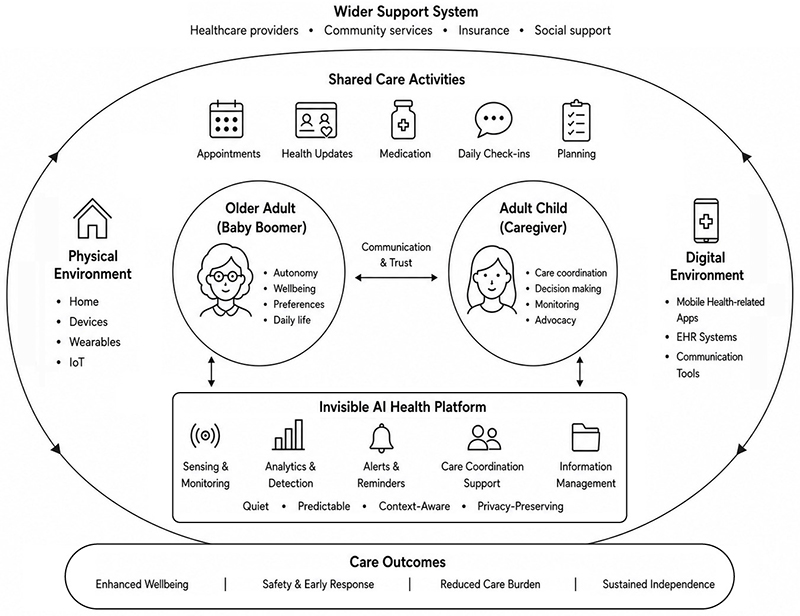
Intergenerational Caregiving Ecosystem with Invisible AI Health Platform
To address the conceptual problem, the study develops reassuring invisibility as a conditional relational state in which a system can remain peripheral to attention because those affected retain credible grounds to evaluate, contest, and govern its consequential behavior. The concept treats acceptable invisibility not solely as a technical property but as an evaluative outcome shaped by relational fit, verifiable trust, dignity-preserving governance, and proportionate intervention. These conditions are developed through integration of the study findings and are presented as propositions requiring further comparative, longitudinal, and experimental testing. Section 2 presents the theoretical framework and research questions. The term invisible artificial intelligence (AI) health platform is used as the primary descriptor throughout the manuscript; the shortened terms invisible AI, system, and platform are used where the intended meaning is clear.
2. Literature Review
2. 1. Invisible AI Platform in Intergenerational Caregiving
In this study, invisible AI health platform is used as a working term for an AI-mediated system that can perform routine sensing, analysis, monitoring or coordination in the background without requiring sustained user attention. Such a system is not assumed to be continuously imperceptible or entirely interaction-free. Instead, routine functions may remain peripheral while consequential actions such as information sharing, scheduling, escalation, or changes in access require visible explanation, confirmation or control. This definition draws on ubiquitous and calm computing, ambient intelligence, and research on AI-supported and remotely monitored care environments (Aarts & Wichert, 2009; Sapci & Sapci, 2019; Weiser, 1991; Weiser & Brown, 1996).
In eldercare contexts, relevant technologies include connected fall-detection systems, medication and appointment support, physiological monitoring, symptom-related decision support, and digital communication or coordination tools for older adults and caregivers (Karimian et al., 2022; Lindeman et al., 2020; Sapci & Sapci, 2019). These functions differ in their visibility and level of autonomy. Some operate through passive or ambient sensing, while others require conversation, configuration, confirmation or review. Their common objective is not to eliminate interaction but to reduce unnecessary cognitive and behavioral demands by embedding routine support within everyday activities.
This direction is particularly relevant to intergenerational caregiving, in which older adults and family caregivers may negotiate competing needs for autonomy, reassurance, safety and access to information. Research on aging in place indicates that many older adults value independence, choice, continuity of place, and meaningful relationships (Wiles et al., 2012). Family caregivers may contribute to monitoring, health-information exchange, service coordination, and communication with healthcare professionals, including through digital platforms and connected technologies (Lindeman et al., 2020; Quinn et al., 2019). Background systems may assist these arrangements, but their acceptability cannot be inferred from functional convenience alone.
The ambient operation of these technologies introduces corresponding ethical and epistemic tensions. Systems that reduce interruption may also make sensing, inference, information sharing and automated recommendations more difficult to notice, interpret, or question. Research on algorithmic systems and ambient intelligence in healthcare has identified concerns involving surveillance, privacy, informed consent, opacity, autonomy, fairness, and overreliance on automated outputs (Crawford & Calo, 2016; Karimian et al., 2022; Mittelstadt et al., 2016). These concerns may become especially complex when older adults, family members and health professionals have different informational needs and unequal authority over system deployment and use.
Research on older-adult technology acceptance has examined perceived usefulness, usability, privacy, social influence, cost, need, and alternatives to technology before and after implementation (Chen & Chan, 2014; Peek et al., 2014; Vaportzis et al., 2017). However, this literature provides comparatively limited guidance on how background AI is evaluated across family relationships or how responsibilities for consent, interpretation, configuration, and intervention should be distributed within intergenerational care. This study addresses the gap by examining both prospective evaluations of a proposed platform and the relational and ethical boundaries articulated by adult children.
2. 2. Theoretical Framework
This study draws on three complementary theoretical traditions: calm technology, ambient intelligence, and privacy-by-design. Calm technology, developed from ubiquitous-computing research, considers how information technologies may move between the center and periphery of human attention (Weiser, 1991; Weiser & Brown, 1996). Rather than demanding continuous interaction, a calm system should communicate in ways proportionate to the user’s current needs and draw focused attention when circumstances require it. Later design work elaborated principles for reducing unnecessary interruption in increasingly networked environments (Case, 2015). These ideas provide an attentional perspective for systems intended to perform routine functions in the background.
Ambient intelligence concerns computational capabilities embedded within everyday environments that sense context and respond to users or changing circumstances (Aarts & Wichert, 2009). In healthcare and aging research, this tradition has informed smart-home technologies, connected sensors, assisted-living systems, and remote monitoring intended to support safety and independent living (Sapci & Sapci, 2019; Sixsmith & Gutman, 2013). Ambient responsiveness can reduce the need for repeated direct input, but it also raises questions about the validity of system inferences, the visibility of sensing, and the appropriateness of automated responses.
Privacy-by-design argues that privacy should be incorporated proactively into system architecture, default settings, data practices, and governance rather than added after deployment (Cavoukian et al., 2010; Langheinrich, 2001). This approach is especially relevant to background health systems because their operation can involve persistent data collection, sensitive inferences, multiple information recipients, and limited awareness of when processing occurs. Privacy-by-design provides safeguards for these information practices, although privacy protection alone does not determine whether a system is clinically credible, relationally appropriate, or proportionate to a caregiving need.
Together, these traditions clarify important dimensions of invisible AI. Calm technology addresses attentional positioning, ambient intelligence addresses context-aware sensing and responsiveness, and privacy-by-design addresses proactive information protection and governance. These traditions overlap and are broader than these simplified distinctions, but none alone fully explains how background AI is anticipated and evaluated across intergenerational caregiving relationships. The present study builds on them by examining how attentional, technical, informational, and relational considerations interact in judgments of usability, trust, dignity and family coordination.
2. 3. Analytical Framework
The empirical analysis integrates three respondent-level constructs: anticipated usability, eHealth literacy, and perceived wellbeing. Together, these constructs provide a framework for examining how respondents evaluate a proposed invisible AI health platform before deployment. Because the platform had not been deployed, the constructs were assessed through self-reported judgments made in relation to the proposed system. Table 1 summarizes the conceptual basis, dimensions, item identifiers and representative survey items used to measure each construct.

Quantitative Measurement Items by Construct
ISO 9241-11 defines usability as the extent to which specified users can achieve specified goals with effectiveness, efficiency, and satisfaction in a specified context of use (International Organization for Standardization [ISO], 2018). The standard treats usability as an outcome of use. Because participants in the present study evaluated a proposed platform rather than an operational system, these three dimensions were adapted prospectively. Anticipated usability therefore refers to respondents’ expectations that the platform would provide effective support, make health-management activities easier, and feel satisfactory or comfortable in everyday life. It does not represent observed task performance or post-use usability.
Technology-adoption research distinguishes expectations formed before adoption from confirmation and continuance judgments formed through experience (Bhattacherjee, 2001; Venkatesh & Bala, 2008). Studies comparing evaluation before and after system use similarly indicate that prospective expectations and experienced usability are not necessarily equivalent. Anticipated usability is therefore relevant to initial adoption decisions, particularly because age-related changes and differences in technology experience may shape older adults’ expectations and perceived barriers. Subsequent experience may confirm, revise, or contradict these initial expectations (Charness & Boot, 2009; Lee & Koubek, 2010).
Anticipated usability is especially relevant to invisible AI because potential users and family members must initially evaluate whether background sensing, information sharing, recommendations, and intervention rules appear understandable, manageable, and compatible with everyday care. Initial judgments are necessarily prospective, but continued acceptance would also require opportunities for notice, explanation, review, modification, and withdrawal as users acquire experience with the system.
eHealth literacy refers to the ability to seek, find, understand, evaluate and apply health information obtained through electronic sources (Norman & Skinner, 2006). The eHealth Literacy Scale, or eHEALS, was developed to assess respondents’ perceived knowledge, comfort, and skills in finding, evaluating, and applying electronic health information. In the present study, items adapted from eHEALS were organized into navigation, evaluation, and application dimensions, as shown in Table 1. The resulting scores represent self-reported eHealth literacy rather than objectively demonstrated digital competence.
In family care, relevant health knowledge and digital capabilities may be distributed across several people. An older adult may contribute experiential knowledge of symptoms, routines, and preferences, while an adult child may assist with information searching, platform configuration, and interpretation. This distributed perspective is theoretically relevant to intergenerational caregiving, although the quantitative survey measures respondents individually rather than assessing shared or dyadic literacy. The relational distribution of knowledge and technological responsibility is examined further in the qualitative phase.
Perceived wellbeing is conceptualized through the PERMA framework, encompassing positive emotion, engagement, relationships, meaning, and accomplishment (Seligman, 2011). The PERMA-Profiler was developed to assess these five psychological dimensions of flourishing (Butler & Kern, 2016). As summarized in Table 1, the present study adapted these dimensions to the proposed-platform context through items asking respondents how they believe the system would affect their feelings, daily routines, relationships, sense of meaning, and health-related goal attainment.
The construct is retained as perceived wellbeing because it captures respondents’ perceptions across the five PERMA domains. However, the items are prospectively phrased and platform-referent; consequently, the scores represent perceived wellbeing in relation to the proposed system rather than respondents’ current general wellbeing or an observed change following use. The cross-sectional pre-deployment design therefore cannot establish that using the platform improves wellbeing.
The PERMA framework is relevant to aging and family care since wellbeing in later life is associated with social connectedness, autonomy, purpose, and meaningful activity as well as physical health (Ryff, 2014; Steptoe et al., 2015). A platform perceived as reducing coordination burden or supporting family communication may be evaluated positively across these domains, whereas one perceived as intrusive, demanding or surveillant may be evaluated less favorably. Nevertheless, the substantial empirical overlap found between anticipated usability and perceived wellbeing limits claims that the two measures represent fully distinct constructs. Their relationship is therefore interpreted as an association between closely related prospective evaluations rather than as a distinct causal effect of usability on wellbeing.
Combined, anticipated usability, eHealth literacy, and perceived wellbeing provide an analytical framework for examining prospective evaluations of invisible AI health platforms. Anticipated usability captures expected manageability and functional value; eHealth literacy captures perceived ability to locate, evaluate, and apply electronic health information; and perceived wellbeing captures anticipated perceptions across the five PERMA domains. The qualitative phase extends this respondent-level analysis by examining the family relationships, ethical boundaries, and governance expectations within which these evaluations are formed.
Accordingly, the temporal, relational, and conceptual facets of the research problem generate the following research questions:
RQ1. How are anticipated usability and eHealth literacy associated with perceived wellbeing in relation to a proposed invisible AI health platform among baby boomers and adult children?
RQ2. How do adult children participate in evaluating and refining a proposed invisible AI health platform within intergenerational caregiving contexts, and what relational and ethical tensions emerge through this process?
RQ3. What conditions contribute to the acceptability of invisible AI health platforms, and how do these conditions inform design and governance implications for HCI and digital health?
3. Methods
3. 1. Research Design
This study employed an explanatory sequential mixed-methods design structured around three research questions (Creswell & Plano Clark, 2018). The study proceeded through two connected phases. First, a quantitative survey examined relationships among anticipated usability, eHealth literacy, and perceived wellbeing among baby boomers and adult children evaluating a proposed invisible AI health platform (RQ1). Second, scenario-based participatory design interviews with adult children examined how participants interpreted, evaluated, constrained, and refined the proposed platform within caregiving contexts (RQ2). Integration of the quantitative and qualitative findings informed the analysis of conditions shaping platform acceptability and corresponding design and governance implications (RQ3). The qualitative phase was used to interpret and contextualize patterns identified in the quantitative phase, particularly the social meaning of anticipated usability, the role of eHealth literacy in prospective platform evaluation, and the relational and ethical boundaries that were not captured by the respondent-level survey measures. Integration occurred primarily during interpretation and is reported in Section 5.1.
3. 2. Quantitative Phase
Survey data were collected from 375 respondents. For the role-based analysis, respondents aged 60–79 were classified as baby boomers (N = 226), while respondents aged 20–59 were classified as adult children (N = 149). Because the analytical dataset did not contain a separate role variable, these classifications were operationalized using age. They should not be interpreted as verified parent-child dyads. The age bands are an approximate operationalization and do not correspond exactly to birth cohorts; respondents at the lower boundary of the older group may fall outside the conventional baby boomer definition.
Participants were recruited through SurveyCircle and purposive outreach using social media and caregiving-related community networks. The sample was intended to capture prospective evaluations from older adults who could become care recipients and younger adults who could participate in family caregiving or technology-related coordination. The data were collected across geographically distributed respondents, but geographic and cultural variation was not incorporated into the analytical models.
Survey Participant Characteristics by Age-Operationalized Group(N = 375)
Before completing the survey, participants reviewed a description of the proposed invisible AI health platform. The concept included passive or low-interaction monitoring, conversational health check-ins, AI-assisted reminders, health-management support, and family-care coordination. Participants evaluated a proposed system rather than a deployed platform or functional prototype.
The survey contained 26 construct items rated on a five-point response scale. The items were adapted from three conceptual or measurement sources. Anticipated usability was measured with eight items across effectiveness (UE1–UE3), efficiency (UF1–UF3), and satisfaction (US1–US2). eHealth literacy was measured with eight items across navigation (LN1–LN3), evaluation (LE1–LE3), and application (LA1–LA2). Perceived wellbeing was measured with ten platform-referent items across positive emotion (WP1–WP2), engagement (WE1–WE2), relationships (WR1–WR2), meaning (WM1–WM2), and accomplishment (WA1–WA2). Because the items were adapted and prospectively worded, the survey did not administer ISO 9241-11, eHEALS, or the PERMA-Profiler as unchanged standardized instruments. As shown in Table 1, prospective wording such as “it would” and “I would” was used because participants evaluated the platform before deployment, consistent with research distinguishing pre-use expectations from evaluations formed after experience (Lee & Koubek, 2010).
Internal consistency and factor suitability were assessed using Cronbach’s alpha, Kaiser–Meyer–Olkin sampling adequacy, and Bartlett’s test of sphericity. Exploratory factor analysis with varimax rotation examined the item structure of anticipated usability, eHealth literacy, and perceived wellbeing. Zero-order correlations examined bivariate relationships among composite scores.
Regression analyses examined associations among eHealth literacy, anticipated usability and perceived wellbeing. PROCESS Model 4 estimated the indirect effect of eHealth literacy on perceived wellbeing through anticipated usability using 5,000 bootstrap samples and percentile-based 95% confidence intervals. Because the data were cross-sectional, the indirect effect was not interpreted as temporal or causal mediation. PROCESS Model 1 tested whether eHealth literacy moderated the anticipated usability–perceived wellbeing association. Variance inflation factors and the Durbin–Watson statistic were used as diagnostics of multicollinearity and first-order residual autocorrelation, respectively. PROCESS Models 4 and 1 were specified following Hayes (2022).
Given semantic proximity between anticipated usability and perceived wellbeing items, discriminant validity was assessed using the composite-score correlation, heterotrait–monotrait (HTMT) ratio, average variance extracted (AVE), Fornell-Larcker comparison, and normal-theory maximum-likelihood CFA comparing one- and two-factor models. Five-point items were treated as continuous. Harman’s unrotated first component was examined only as a limited common-method-variance (CMV) diagnostic. These analyses are reported in Table 9.
Sensitivity analysis repeated the standardized regression and indirect-effect analysis after excluding UF2, WE2, and WA2, using 10,000 nonparametric bootstrap samples (Table 10). Role-based analyses compared the age-operationalized groups using Welch t-tests, permutation-based Hotelling T2, and multigroup CFA of configural, metric, and scalar invariance. Group-specific standardized path estimates were compared using 10,000 bootstrap samples (Table 12).
The pooled model remained the primary analysis because changes in fit indices provided qualified support for metric and scalar invariance. However, pooled estimates were interpreted alongside role-specific results given marginal configural fit and selected group differences.
3. 3. Qualitative Phase
The qualitative phase included 16 adult children of baby boomers (P1–P16). Participants were purposively recruited to obtain variation in caregiving intensity, parental digital readiness, geographic context, and professional background. Adult children were selected because family members may participate in evaluating, introducing, configuring, or coordinating technologies intended to support an older adult (Lindeman et al., 2020; Quinn et al., 2019). The study did not treat the adult children as substitutes for older-adult participation. Instead, they were examined as one stakeholder group whose evaluations could influence family-level technology decisions. Participant characteristics, care context, and principal participatory-design contributions are summarized in Table 3.
Interview Participant Characteristics and Design Contributions(N = 16)
All participants reviewed a digital informed-consent form and indicated agreement before participation. Under the institution’s low-risk research guidelines, the study was deemed exempt from IRB review.
Scenario-based participatory design interviews elicited expectations, concerns, and design judgments regarding an invisible AI health platform not yet deployed in practice (Bødker, 2000; Carroll, 2000). Illustrated design probes made the unfamiliar platform concept more tangible and supported critical and imaginative responses (Gaver et al., 1999; Mattelmäki, 2006). Informed by calm technology principles, the scenarios varied the extent to which interaction, processing, and information sharing remained in the background (Case, 2015; Weiser & Brown, 1996).
The sessions are characterized as participatory design rather than co-design. Participants proposed revisions, articulated boundaries, and reframed platform features, but participated through a single interview using researcher-developed scenarios rather than an iterative design partnership. This reflects scholarship treating participation as variable by phase, role, and degree of involvement (Halskov & Hansen, 2015; Sanders & Stappers, 2008; Steen, 2013).
Scenario development proceeded in three stages. First, a preliminary review identified caregiving domains including medication support, appointment coordination, fall detection, psychological monitoring, and caregiver situational awareness (Sapci & Sapci, 2019; Timon et al., 2024; Wilmink et al., 2020). These domains represented intervention intensities ranging from routine coordination to potentially clinically consequential situations. Second, the scenarios depicted interactions among the platform, Mrs. Mija as an older adult, and her adult child. Routine interactions required limited user initiative while raising questions about consent, information sharing, explanation, confirmation, and family access.
Participants were asked to identify circumstances requiring explicit authorization or renewed confirmation. Third, the scenarios were rendered as illustrated panels situated in everyday contexts, consistent with design-probe and scenario-based methods (Lindsay et al., 2012; Mattelmäki, 2006). Panels were presented sequentially, with initial open responses followed by focused probes designed to clarify and deepen participants’ accounts (Robinson, 2023).
The walkthrough followed a service journey in which Mrs. Mija reported a mood or symptom, received care options, reviewed schedules and reminders, viewed summarized health and routine information, and could prompt family communication following a change in usual contact patterns. Figure 2 presents six representative screens, and Table 4 maps all 16 screens to their intended design tensions. The complete screen set appears in Appendix 3 and the standardized interview protocol in Appendix 4.
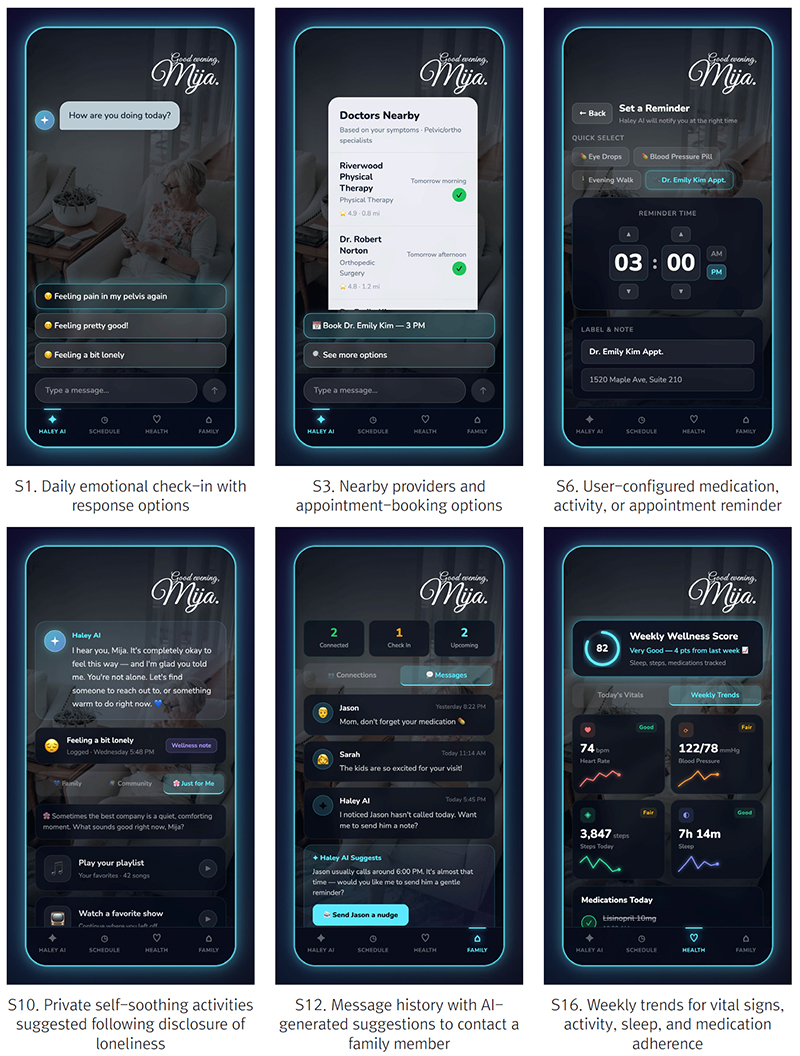
Representative Mrs. Mija Scenario Screens Used as Design Probes (See Appendix 3 for all 16 screens and Appendix 4 for the standardized interview protocol)
Scenario Probe Content and Design Tensions
Interviews lasted approximately 40–60 minutes, were conducted by video call, audio-recorded with consent, and transcribed for analysis. Participants described their parents’ health context, technology use, and caregiving involvement before reviewing the scenarios. Discussion addressed usefulness, trust, privacy, relational boundaries, governance, and family coordination. Interviews concluded with proposed revisions, safeguards, alternative functions, and conditions for recommending or rejecting the platform.
The interview transcripts were analyzed using Saldaña’s (2021) two-cycle coding approach. First-cycle analysis used descriptive, in vivo, process, and values codes to identify meanings related to caregiving roles, platform evaluation, anticipated usability, trust, privacy, dignity, control, and family coordination. During the second cycle, pattern coding consolidated the preliminary codes into higher-order categories and themes. The progression from first-cycle codes to pattern clusters and themes is documented in Figure 4 and Section 4.2.
Inter-coder agreement was assessed across multiple coding rounds using Cohen’s kappa (Cohen, 1960). The assessment used 30 segments randomly selected from the corpus of 16 interview transcripts. Table 5 defines the coefficient and notation, Table 6 presents the binary contingency structure used to calculate agreement, and Table 7 provides the Landis and Koch (1977) interpretation benchmarks. Codebook refinement and coder discussion occurred between rounds. Figure 3 reports the progression of kappa values, and the final code set reached substantial agreement, with mean κ = .75. Consistent with Warrens (2014), kappa was interpreted in relation to the coding design and observed agreement rather than a self-interpreting indicator.
Cohen’s Kappa Coefficient Formula and Notation
2 × 2 Contingency Matrix
Agreement Benchmarks (Landis & Koch, 1977)
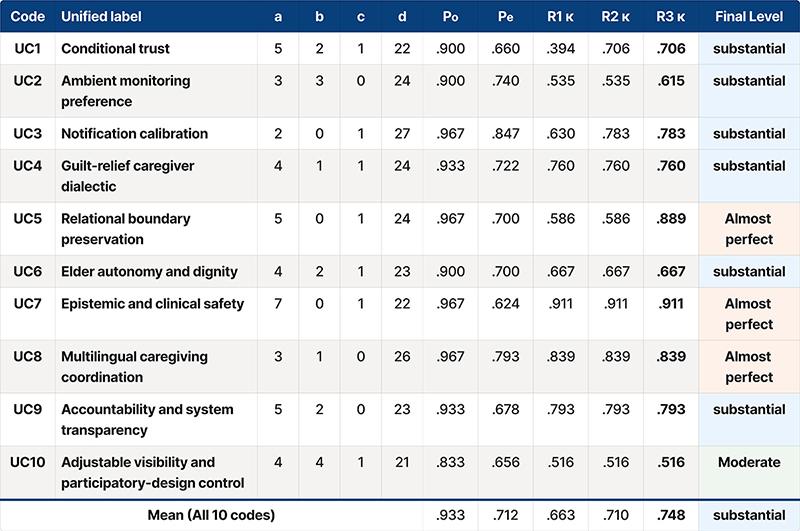
Inter-Coder Agreement Across Coding Rounds (Cohen, 1960; Landis & Koch, 1977)
3. 4. Integration
The quantitative and qualitative phases were integrated at the level of interpretation (Creswell & Plano Clark, 2018; Fetters et al., 2013). Integration focused on four quantitative patterns: the strong association between anticipated usability and perceived wellbeing; the statistically significant indirect effect involving eHealth literacy and anticipated usability; the persistence of the directional pattern after semantically proximate items were removed; and the selected similarities and differences between the two role groups. The nonsignificant moderation result and limited discriminant validity between anticipated usability and perceived wellbeing were also incorporated as constraints on interpretation. The qualitative findings were used to explain what participants placed within broad prospective judgments of platform usability and wellbeing, including expectations concerning family relationships, verification, consent, dignity, control, and intervention boundaries. The integrated interpretation is presented in Section 5.1.
4. Results
4. 1. Quantitative Findings
RQ1 examined the relationships among anticipated usability, eHealth literacy, and perceived wellbeing following exposure to the proposed invisible AI health platform. Analyses addressed measurement quality and discriminant validity, regression and indirect effects, semantic-overlap sensitivity, moderation, and role-based comparisons. Because the measurements were prospective self-reports collected at one time point, results are interpreted as associations rather than causal effects.
Internal consistency was high for anticipated usability (α = .953), perceived wellbeing (α = .966), and eHealth literacy (α = .950). KMO values exceeded .90, and Bartlett’s tests were significant (p < .001), supporting factor analysis. Table 8 reports the exploratory factor results. The very high alpha coefficients also suggested possible item redundancy and were therefore considered alongside tests of discriminant validity.
Factor Loadings, Eigenvalues, and Reliability by Construct
Discriminant Validity and CFA Model Comparison
Zero-order correlations were positive between anticipated usability and perceived wellbeing (r = .883), anticipated usability and eHealth literacy (r = .220), and eHealth literacy and perceived wellbeing (r = .161). The anticipated usability–perceived wellbeing correlation exceeded the .85 screening threshold. A two-factor CFA separating the constructs fit significantly better than a one-factor model, Δχ2(1) = 300.14, p < .001, but retained a high latent correlation (φ = .914) and inadequate RMSEA. Although AVE exceeded .50 for both constructs, neither square root of AVE exceeded the latent correlation. HTMT was .919, exceeding both the strict .85 and permissive .90 thresholds. Convergent validity was supported, but discriminant validity between anticipated usability and perceived wellbeing was not.
eHealth literacy was positively associated with anticipated usability (β = .220, p < .001, R2 = .048) and perceived wellbeing (β = .161, p = .002, R2 = .026). When both predictors were entered, anticipated usability was strongly associated with perceived wellbeing (β = .891, p < .001), while the direct coefficient for eHealth literacy was small and nonsignificant (β = −.034, p = .310). The model explained 78.1% of the variance in perceived wellbeing. Given the limited discriminant validity, the anticipated usability coefficient should not be interpreted as a distinct causal effect.
PROCESS Model 4 with 5,000 bootstrap samples produced a statistically significant unstandardized indirect effect of eHealth literacy on perceived wellbeing through anticipated usability (B = .2304, Boot SE = .0672, 95% CI [.098, .362]). The cross-sectional design does not establish temporal or causal mediation. Because the indirect effect exceeded the total effect and the direct coefficient changed sign, no conventional proportion mediated or full-mediation claim was made.
Sensitivity Analysis Excluding Semantically Proximate Items
Sensitivity analysis excluded UF2, WE2, and WA2. The standardized anticipated usability–perceived wellbeing coefficient decreased from .891 to .874, while the standardized indirect effect changed from .196, 95% bootstrap CI [.086, .307], to .193, 95% CI [.084, .303]. Model R2 decreased from .781 to .750. Thus, the positive association and indirect-effect estimate persisted after item removal, although the remaining measurement overlap continued to limit interpretation.
PROCESS Model 1 tested whether eHealth literacy moderated the association between anticipated usability and perceived wellbeing. As shown in Table 11, the interaction was not statistically significant (B = .044, β = .042, p = .090). The full moderation model explained 78.3% of the variance in perceived wellbeing, F(3, 371) = 445.60, p < .001. Variance inflation factors were below conventional thresholds, and the Durbin–Watson statistic was 1.617.
Moderation Analysis
The empirical basis for pooled analysis was evaluated using sequential multigroup CFA. Relative to the configural model, metric constraints produced a negligible change in fit (ΔCFI = −.001; ΔRMSEA = −.001), and scalar constraints produced similarly limited deterioration (ΔCFI = −.004; ΔRMSEA < .001). These changes satisfied conventional change-in-fit criteria. However, the configural model’s CFI and TLI were marginal (CFI = .888; TLI = .877), so the evidence for cross-group measurement equivalence was qualified rather than unequivocal.
Anticipated usability did not differ by age-operationalized group membership. The adult child group reported higher perceived wellbeing and lower eHealth literacy than the baby boomer group, although the perceived wellbeing difference was modest and nominally significant (p = .032). The combined construct profile differed across groups, Hotelling T2 = 27.57, F(3, 371) = 9.14, permutation p < .001.
The anticipated usability–perceived wellbeing path was strong in both groups and larger among baby boomers; the bootstrap confidence interval for the group difference narrowly excluded zero. Confidence intervals for group differences in the eHealth literacy–anticipated usability path, direct effect, and indirect effect included zero. Pooled analysis was therefore supported at the measurement level but did not imply complete structural or evaluative equivalence.
Across the pooled, sensitivity, and group-specific analyses, anticipated usability maintained a strong positive association with perceived wellbeing. However, their high shared variance and common prospective framing limit claims of construct distinctiveness and causal mediation. The quantitative findings are therefore carried forward as evidence of a consistent positive association and statistically significant indirect-effect estimate, with measurement overlap and role-based heterogeneity incorporated into the qualitative interpretation in Section 4.2.
Construct Comparisons, Measurement Invariance, and Group-Specific Paths by Age-Operationalized Group
4. 2. Qualitative Findings
RQ2 examined how adult children interpreted, evaluated, and redesigned the proposed invisible AI health platform in relation to their caregiving experiences. The scenario-development process and interview sequence are described in Section 3.3.2 and are not repeated as findings. Following Saldaña’s (2021) two-cycle coding approach, first-cycle descriptive, in vivo, process, and values codes were consolidated through pattern coding into four themes. Figure 4 documents the progression from code clusters to themes, while the full codebook in Appendix 1 reports code definitions, participant coverage, quotations, and pattern assignments. Code contributions were not necessarily exclusive because some relational and coordination codes informed more than one theme. Inter-coder assessment of the final code set indicated substantial agreement (mean κ = .75).
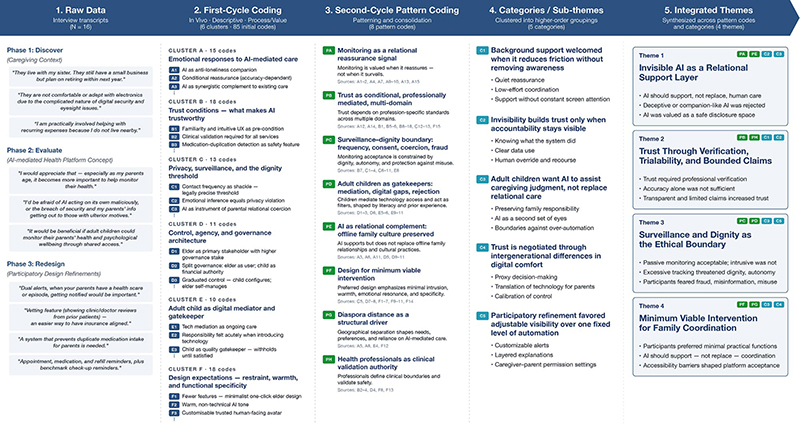
Two-Cycle Coding Progression Following Saldaña (2021) (See Appendix 1 for full first-cycle code inventory)
The first theme linked codes concerning conditional reassurance and relational ambivalence (A2, A3, A5–A15) with codes concerning preserved family communication and reciprocal care (D5–D11). The shared pattern was not simple enthusiasm for automation. Participants accepted invisible AI when it strengthened an existing relationship while remaining visibly subordinate to it. P8 likened the desired platform to “a child’s daily phone call—checking mood and health,” whereas P6 described the preferred arrangement as “not stopping my care—parallel use for better synergy.” These accounts framed AI as continuity infrastructure: useful because it kept family members informed without transferring the meaning of care to the system.
Responses varied with relationship quality, distance, and participants’ emotional stance toward caregiving. P5 anticipated a “strong sense of relational distance from my parents” if AI displaced direct contact, and P7 summarized the contingency as “Good relationship = reassurance. Poor relationship = burden.” A contrasting case came from P9, who reported “no feelings at all,” indicating that some participants evaluated the platform primarily through a professional or functional lens.
Other accounts complicated a purely instrumental interpretation. P10 valued the possibility of a private disclosure space for older adults, describing it as “good to share things you can’t openly tell your children—in detail. Comfortable.” Together, these cases showed that relational value depended on fit with a particular family arrangement rather than on AI presence alone.
The second theme connected clinical and epistemic safety codes (B2–B8, B16–B18) with codes concerning trialability, institutional assurance, and gradual trust formation (B9–B15). Across professional backgrounds, participants treated trust as established through evidence and constrained system behavior. P1 required that “all services must be clinically or safely verified,” while P12 and P13 preferred that the system acknowledge uncertainty: “Rather the AI say I don’t know than to give misinformation.”
P15 similarly wanted direct experience before family adoption: “Allow me to use it myself first—free trial before recommending.” These responses tied trust to verification, uncertainty disclosure, and opportunities for testing rather than generalized claims of AI capability.
Participants differed in the assurances they considered persuasive. P6 emphasized accumulation over time—“Trust should accumulate over time. Supplementary use is ideal”—whereas P16 used institutional reputation as a security proxy: “If it has blue-chip names like Google or Samsung, I’d trust the security.” By contrast, P11’s deployment experience supported a skeptical position: “The quality of generative AI is not yet at par for B2C health use.” Trust could therefore draw on personal testing, clinical endorsement, institutional reputation, or accumulated experience. Across these routes, participants emphasized that system claims, uncertainty, and escalation boundaries should remain inspectable.
The third theme drew on the objective-subjective information boundary (B7), privacy and monitoring codes (C1–C13), and governance codes assigning control and consent across generations (D1–D4). Participants distinguished factual health observation from interpretation of emotions or family relationships. P7 described subjective emotional inference as feeling “like a shackle,” while P2, P8, and P14 stated that “family agreement on what is shared must come first.” These responses located dignity not only in data security but in control over what the platform inferred, communicated, and made actionable.
The boundary was contested rather than unanimous. P16 acknowledged, “I’d want to monitor conversations, even though my parents may not like it,” exposing tension between caregiver reassurance and older adult autonomy. The same participant reported, “He thought the watch was bulky and stopped. He refuses to install CCTV,” illustrating how monitoring can be rejected when experienced as burdensome or intrusive. P4 warned that “overtrusting AI could mean missing the golden window in a real emergency,” while P11 feared AI “acting on its own maliciously.” Across these accounts, acceptable monitoring was described as observable, consented to, proportionate, and reversible rather than covert, coercive, or substitutive for human judgment.
The fourth theme integrated minimalist interaction, configurable social form, and functional-specialization codes (F1–F8, F11–F18) with reciprocal coordination codes (D5–D9). Participants repeatedly reduced the proposed platform from a broad AI companion to a limited set of dependable functions. P2, P3, P4, and P14 requested “fewer features—one-click health management.” P4, P7, P14, and P15 prioritized “reminders, medication alerts, and admin coordination,” while P1 identified “duplicate medication checking—a patient safety priority.” P11 placed AI below human authority: “If AI can connect to a human specialist for a second layer—that’s the right model.” These responses converged on the least intrusive intervention capable of reducing coordination failure.
Preferences concerning social interaction varied. P3 and P16 stated that “friend-like AI conversation feels uncomfortable—just give me the bio data,” favoring passive monitoring and exception-based alerts. In contrast, P10 imagined “a conversation partner that receives what elders won’t tell children,” and P6 proposed allowing older adults to choose a trusted face or voice. Participants therefore did not reject warmth or conversation categorically; they rejected compulsory anthropomorphism and unbounded social presence. Administrative coordination and clinically grounded safety functions formed the common functional core, while conversational features required choice, limited scope, and the ability to withdraw.
5. Discussion
5. 1. Integrated Interpretation of Findings
RQ3 asked what the integrated findings suggest about the acceptability of invisible AI health platforms in intergenerational care. The survey identified patterns in prospective platform evaluations, while the interviews showed how adult children interpreted specific functions, risks, and caregiving arrangements. The qualitative findings therefore illuminate the meanings surrounding the quantitative constructs but do not establish the statistical mechanism underlying their associations.
Anticipated usability remained strongly associated with perceived wellbeing in the full and reduced-item analyses. However, the high composite and latent correlations, failed discriminant-validity criteria, and common prospective framing indicate that respondents did not clearly distinguish expected system manageability from expected psychosocial benefit. The relationship is best interpreted as a broad positive evaluation of the proposed platform rather than evidence that usability independently produces wellbeing. Removing three semantically proximate items showed that the association was not attributable solely to those items, but it did not resolve the remaining measurement overlap.
The interviews clarified what adult children considered when evaluating the platform. Their judgments extended beyond interface simplicity and functional efficiency to whether the system supported existing relationships, provided verifiable information, preserved older-adult agency, and facilitated family coordination without excessive intervention. These considerations should not be treated as dimensions statistically recovered from the survey; they were generated through a separate qualitative analysis.
The eHealth literacy findings also require restraint. eHealth literacy was associated with anticipated usability and had a significant indirect effect estimate through anticipated usability, but its direct coefficient was nonsignificant when anticipated usability was included. The eHealth literacy × anticipated usability interaction was also nonsignificant. Qualitative emphasis on verification and uncertainty offers a plausible interpretive connection to eHealth literacy, but this connection was not directly tested.
Change-in-fit criteria provided qualified support for pooling the age-operationalized groups, although configural fit was marginal and selected mean and path differences remained. Because the dataset lacked a direct role variable, these patterns should be interpreted as comparisons between age-classified groups rather than verified parent-child differences.
Taken together, the findings suggest that the acceptability of background AI is conditional. Reduced attentional demand may be beneficial, but background operation becomes problematic when it limits the ability to assess accuracy, control information flows, preserve family roles, or interrupt inappropriate action. Conversely, visibility alone is insufficient: an understandable system may still be intrusive, disproportionate, or relationally misaligned. This tension provides the basis for reassuring invisibility.
5. 2. Theorizing Reassuring Invisibility
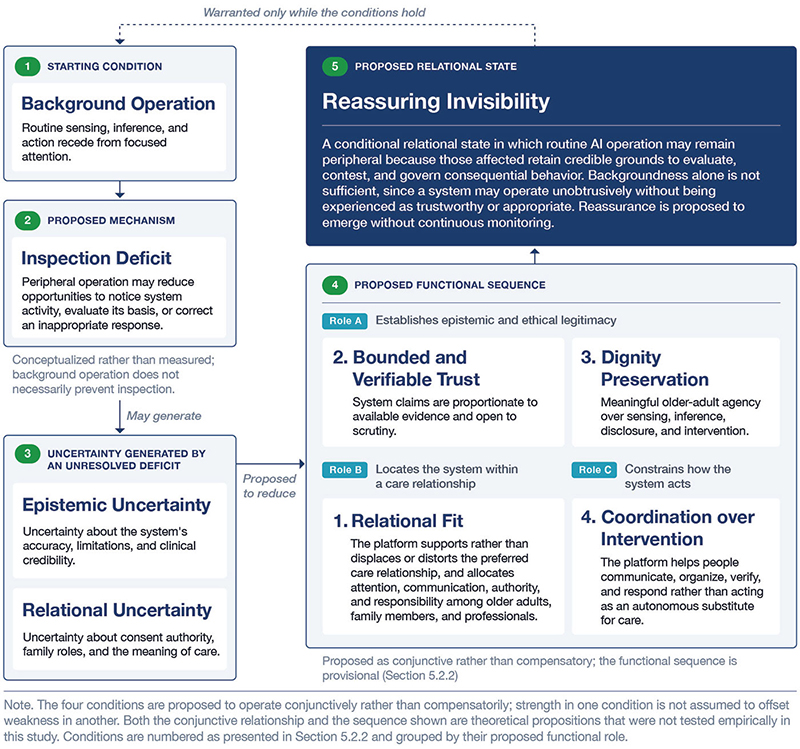
As illustrated in Figure 5, this study proposes reassuring invisibility as a relational state in which routine AI operation may remain peripheral because consequential behavior remains sufficiently evaluable, contestable, and governable. The concept distinguishes technical backgroundness from acceptable invisibility. A system may operate unobtrusively without being experienced as trustworthy or appropriate.
From Background Operation to Reassuring Invisibility
When sensing, inference, or action recedes from attention, users may have fewer opportunities to notice system activity, evaluate its basis, or correct an inappropriate response. The study conceptualizes this potential reduction as an inspection deficit. The deficit is not directly measured, nor does background operation necessarily prevent inspection. Notifications, logs, explanations, confirmations, and human escalation can return consequential activity to focused attention. The central issue is whether adequate routes exist from peripheral operation to inspection and control.
An unresolved inspection deficit may generate epistemic uncertainty about accuracy, limitations, and clinical credibility, as well as relational uncertainty about consent authority, family roles, and the meaning of care. Reassurance is proposed to emerge when four conditions reduce these uncertainties without requiring continuous monitoring of the system.
This formulation builds on calm technology, which already emphasizes movement between the center and periphery of attention. Reassuring invisibility adds an intergenerational governance question: who may bring system activity into focus, under what circumstances, and with what authority to inspect, contest, modify, or stop it?
Relational fit concerns whether the platform supports rather than displaces or distorts the preferred care relationship. The same function may reassure one family while creating guilt, pressure, or distance in another. Relational fit depends on how the system allocates attention, communication, responsibility, and authority among older adults, family members, and professionals.
Bounded and verifiable trust concerns whether system claims are proportionate to available evidence and open to scrutiny. Participants emphasized clinical verification, acknowledgment of uncertainty, trialability, accumulated experience, and access to human expertise. Trust depended on identifiable limits: what the platform knows, what it does not know, when it must defer, and how consequential recommendations can be checked.
Dignity preservation concerns meaningful older-adult agency over sensing, inference, disclosure, and intervention. Data security alone is insufficient if a platform infers emotions without consent, creates asymmetrical family access, or enables coercive monitoring. Dignity preservation therefore includes understandable consent, differentiated permissions, selective sharing, reversibility, auditability, and the ability to refuse certain functions.
Coordination over intervention concerns whether the platform primarily helps people communicate, organize, verify, and respond rather than acting as an autonomous substitute for care. Participants favored reminders, appointment support, medication checks, summarized information, and routes to human expertise over expansive AI companionship or independent decision-making. The condition prioritizes the least intrusive system action capable of addressing a concrete coordination need.
The study proposes that these conditions may operate conjunctively rather than as interchangeable benefits. Convenience cannot compensate for nonconsensual monitoring, and strong privacy protection cannot compensate for clinically unverifiable advice. However, their joint necessity and non-compensatory operation were not empirically tested. They remain theoretical propositions for future validation.
The conditions may also form a provisional functional sequence. Bounded and verifiable trust and dignity preservation establish epistemic and ethical legitimacy. Relational fit locates the system within a particular care relationship. Coordination over intervention constrains how that system acts. This sequence should remain provisional until tested across different technologies, relationships, and levels of clinical risk.
Reassuring invisibility extends rather than replaces existing traditions (Table 13). Calm technology addresses movement between peripheral and focused attention (Case, 2015; Weiser & Brown, 1996), while ambient intelligence emphasizes embedded sensing and context-aware responsiveness (Aarts & Wichert, 2009). Privacy-by-design provides proactive safeguards, privacy-preserving defaults, transparency, lifecycle protection, and user control (Cavoukian et al., 2010; Langheinrich, 2001).
Positioning Reassuring Invisibility in Relation to Adjacent Concepts and Design Qualities
Seamlessness and legibility are treated as cross-cutting design qualities rather than unified theoretical traditions. Seamlessness concerns continuity of interaction and the management of perceptible boundaries, whereas legibility concerns users’ ability to understand system behavior and its basis (Chalmers & Galani, 2004; Markus et al., 2021). Reassuring invisibility requires neither complete frictionlessness nor continuous visibility. Routine operation may remain unobtrusive, while explanation, confirmation, consent renewal, or human review introduces deliberate friction at consequential moments.
The proposed concept therefore asks an integrative question: under what conditions is it warranted for consequential AI activity to remain peripheral within a care relationship characterized by distributed responsibility?
Reassuring invisibility applies most directly to routine monitoring and coordination functions such as reminders, scheduling, health summaries, and exception-based notifications. It does not justify invisibility in autonomous diagnosis, unsupervised emergency intervention, involuntary surveillance, or other decisions requiring immediate professional accountability.
Family involvement is likewise not inherently reassuring. Relationships may be supportive, distant, coercive, abusive, or contested. Where family authority threatens an older adult’s interests, independent safeguards and professional oversight must take priority over caregiver convenience.
The qualitative variation also indicates that no single social form will be appropriate for all users. Some participants welcomed a conversational companion or customizable face and voice, while others preferred functional summaries and exception-based alerts. Socially expressive features should therefore be chosen, bounded, reversible, and subordinate to the user’s preferred relationships.
Future research can measure inspection deficit, the four conditions, perceived governability, and willingness to allow peripheral operation. Experiments can manipulate visibility, explanation, consent controls, relational framing, and intervention autonomy. Additive, interaction, threshold and necessary-condition models can then test whether weakness in one condition can be compensated for by strength in another. Longitudinal prototype studies should examine whether the conditions predict continued acceptance after errors, alerts, or changes in family responsibility. The concept would be weakened if peripheral operation remained equally acceptable without these conditions, if the conditions did not reduce perceived threat or increase governability, or if their effects proved entirely additive.
5. 3. Practical Implications for Invisible AI Health Platforms
Four practical implications follow from the findings. First, design differentiated access with ongoing consent. Older adults, family members, and professionals require coordinated but distinct views, graduated permissions, and clear sharing records. For example, the connection dashboard (S11), AI-nudge screen (S12), and incoming-call screen (S13) should allow older adults to authorize, preview, dismiss or reverse family access and communication. Consent should be revisited whenever data recipients, inference types, or escalation rules change.
Second, prioritize coordination over autonomous intervention. Platforms should begin with bounded functions such as appointment support (S2–S4), configurable reminders (S6), and routine tracking (S14). Symptom-related functions should disclose uncertainty, distinguish informational support from clinical advice, require confirmation for consequential actions, and provide access to qualified human review.
Third, make inferences and alerts inspectable. Health summaries and trend displays (S15–S16) should disclose data sources, update timing, missingness, uncertainty and alert thresholds. Mood, loneliness, and contact-pattern functions (S7–S13) require particularly explicit controls. Users should be able to disable sensitive inferences, understand why an alert was generated, correct errors, and determine who receives the information.
Fourth, make social presence optional and configurable. Conversational features should not be the default. Users should be able to select functional or conversational modes, adjust tone and frequency, modify or remove a face or voice, and withdraw from companion-like interaction without losing administrative or safety functions. This accommodates participants who welcomed an AI companion as well as those who preferred data summaries and exception-based alerts.
5. 4. Theoretical and Methodological Implications
The principal theoretical contribution is to connect attentional peripherality with relational and institutional accountability. Calm technology explains how information moves between peripheral and focused attention; reassuring invisibility specifies the conditions under which that movement may be warranted when authority and responsibility are distributed across older adults, family members, and professionals.
The study also refines the use of ambient intelligence in family care. Context awareness must include not only environmental and behavioral states but also family roles, consent arrangements, relationship quality and professional authority. For privacy-by-design, the findings emphasize that proactive protection and user control should extend to inferred emotional and relational information, differentiated family permissions, and intervention boundaries.
Methodologically, the study shows the value of combining prospective survey analysis with participatory design interviews and disconfirming cases. The quantitative phase identified a strong but poorly differentiated association, while the qualitative phase revealed heterogeneous meanings obscured by pooled scores. The theoretical contribution therefore rests less on the magnitude of the regression coefficient than on the qualitative conditions and the limits revealed through integration.
A clear distinction must be maintained between empirical themes and theoretical synthesis. Relational support, bounded trust, dignity, and limited intervention were generated from the qualitative analysis. Inspection deficit, the four-condition structure, and the proposed non-compensatory mechanism are theoretical developments produced through integration and require further testing.
5. 5. Limitations and Future Research
Three principal limitations constrain the findings. First, measurement overlap and the cross-sectional design limit interpretation. Anticipated usability and perceived wellbeing lacked discriminant validity, and removing three semantically proximate items did not resolve their overlap. The prospective, single-survey design may also have inflated associations and cannot establish temporal or causal mediation. Future studies should develop distinct functional and psychosocial measures, validate them in independent samples, and use longitudinal or experimental designs incorporating behavioral and functional data from prototype use.
Second, the samples and research setting limit generalizability. Quantitative groups were operationalized by age rather than verified caregiving roles, participants were not matched dyads, and configural fit was marginal. The qualitative phase included 16 adult children but no older adults and used illustrated scenarios during a single interview rather than a deployed platform. Future studies should recruit verified older adult and caregiver dyads, include diverse older adults and professionals, and examine functional prototypes through longitudinal field research.
Third, reassuring invisibility remains a context-bound theoretical proposal. The four conditions were not operationalized or tested as a measurement model, inter-coder agreement was assessed on 30 sampled segments, and cultural and linguistic variation was not modeled. Future research should test the conditions across levels of autonomy and clinical risk, compare additive and non-compensatory models, report broader coding reliability evidence, and examine whether the framework generalizes across caregiving cultures, privacy expectations, and family-authority structures.
6. Conclusion
Invisible AI health platforms do not become acceptable simply by receding from attention. Their value depends on whether unobtrusive operation supports everyday care without weakening the ability of older adults and family members to understand, question, or redirect consequential behavior. The findings suggest that acceptability is shaped not by invisibility alone, but by how the platform fits the care relationship, establishes bounded and verifiable trust, preserves dignity, and prioritizes coordination over autonomous intervention.
Reassuring invisibility names this conditional state. A system may be technically unobtrusive by operating outside continuous attention, but it becomes acceptably invisible only through the relationships in which it is used. Its background operation must remain compatible with caregiving roles, preserve older-adult agency, and provide credible ways to verify or challenge consequential actions. Reassuring invisibility is therefore not achieved merely by hiding interaction; it is negotiated through trust, consent, accountability, and the continuing possibility of human intervention.
The concept applies most directly to routine monitoring and coordination rather than autonomous diagnosis, unsupervised emergency action, or involuntary surveillance. Its four conditions and proposed relationships remain to be tested with deployed platforms, direct older-adult participation, verified family dyads, and culturally varied samples. Within these boundaries, reassuring invisibility offers a relational account of when AI may remain peripheral and when it must return to attention, explanation, and human judgment.
Acknowledgments
The first author thanks the study participants for their time and contributions, the second coder for participating in the qualitative coding review and inter-coder agreement assessment, and the doctoral supervisor for academic guidance and support.
Funding
This work was supported by 2026 Hongik University Innovation Support Program Fund.
Declaration of Conflicting Interests
The authors declare no potential conflicts of interest with respect to the research, authorship, or publication of this article.
Notes
Copyright : This is an Open Access article distributed under the terms of the Creative Commons Attribution Non-Commercial License (http://creativecommons.org/licenses/by-nc/3.0/), which permits unrestricted educational and non-commercial use, provided the original work is properly cited.
References
-
Aarts, E., & Wichert, R. (2009). Ambient intelligence. In H.-J. Bullinger (Ed.), Technology guide: Principles, applications, trends (pp. 244-249). Springer.
[https://doi.org/10.1007/978-3-540-88546-7_47]

-
Bhattacherjee, A. (2001). Understanding information systems continuance: An expectation-confirmation model. MIS Quarterly, 25(3), 351-370.
[https://doi.org/10.2307/3250921]
-
Bischof, A., & Jarke, J. (2021). Configuring the older adult: How age and ageing are re-configured in gerontechnology design. In A. Peine, B. L. Marshall, W. Martin, & L. Neven (Eds.), Socio-gerontechnology: Interdisciplinary critical studies of ageing and technology (pp. 197-212). Routledge.
[https://doi.org/10.4324/9780429278266-18]
-
Bødker, S. (2000). Scenarios in user-centred design: Setting the stage for reflection and action. Interacting with Computers, 13(1), 61-75.
[https://doi.org/10.1016/S0953-5438(00)00024-2]
-
Butler, J., & Kern, M. L. (2016). The PERMA-Profiler: A brief multidimensional measure of flourishing. International Journal of Wellbeing, 6(3), 1-48.
[https://doi.org/10.5502/ijw.v6i3.526]
-
Carroll, J. M. (2000). Making use: Scenario-based design of human-computer interactions. MIT Press.
[https://doi.org/10.7551/mitpress/4398.001.0001]
- Case, A. (2015). Calm technology: Principles and patterns for non-intrusive design. O'Reilly Media.
-
Cavoukian, A., Taylor, S., & Abrams, M. E. (2010). Privacy by Design: Essential for organizational accountability and strong business practices. Identity in the Information Society, 3(2), 405-413.
[https://doi.org/10.1007/s12394-010-0053-z]
-
Chalmers, M., & Galani, A. (2004). Seamful interweaving: Heterogeneity in the theory and design of interactive systems. In Proceedings of the 5th Conference on Designing Interactive Systems (pp. 243-252). ACM.
[https://doi.org/10.1145/1013115.1013149]
-
Charness, N., & Boot, W. R. (2009). Aging and information technology use: Potential and barriers. Current Directions in Psychological Science, 18(5), 253-258.
[https://doi.org/10.1111/j.1467-8721.2009.01647.x]
-
Chen, K., & Chan, A. H. S. (2014). Predictors of gerontechnology acceptance by older Hong Kong Chinese. Technovation, 34(2), 126-135.
[https://doi.org/10.1016/j.technovation.2013.09.010]
-
Cohen, J. (1960). A coefficient of agreement for nominal scales. Educational and Psychological Measurement, 20(1), 37-46.
[https://doi.org/10.1177/001316446002000104]
-
Crawford, K., & Calo, R. (2016). There is a blind spot in AI research. Nature, 538(7625), 311-313.
[https://doi.org/10.1038/538311a]
- Creswell, J. W., & Plano Clark, V. L. (2018). Designing and conducting mixed methods research (3rd ed.). Sage.
-
Fetters, M. D., Curry, L. A., & Creswell, J. W. (2013). Achieving integration in mixed methods designs: Principles and practices. Health Services Research, 48(6, Part 2), 2134-2156.
[https://doi.org/10.1111/1475-6773.12117]
-
Gaver, B., Dunne, T., & Pacenti, E. (1999). Design: Cultural probes. Interactions, 6(1), 21-29.
[https://doi.org/10.1145/291224.291235]
-
Halskov, K., & Hansen, N. B. (2015). The diversity of participatory design research practice at PDC 2002-2012. International Journal of Human-Computer Studies, 74, 81-92.
[https://doi.org/10.1016/j.ijhcs.2014.09.003]
- Hayes, A. F. (2022). Introduction to mediation, moderation, and conditional process analysis: A regression-based approach (3rd ed.). Guilford Press.
- International Organization for Standardization. (2018). ISO 9241-11:2018: Ergonomics of human-system interaction — Part 11: Usability: Definitions and concepts. https://www.iso.org/standard/63500.html.
-
Karimian, G., Petelos, E., & Evers, S. M. A. A. (2022). The ethical issues of the application of artificial intelligence in healthcare: A systematic scoping review. AI and Ethics, 2(4), 539-551.
[https://doi.org/10.1007/s43681-021-00131-7]
-
Landis, J. R., & Koch, G. G. (1977). The measurement of observer agreement for categorical data. Biometrics, 33(1), 159-174.
[https://doi.org/10.2307/2529310]
-
Langheinrich, M. (2001). Privacy by Design — Principles of privacy-aware ubiquitous systems. In G. D. Abowd, B. Brumitt, & S. Shafer (Eds.), Ubicomp 2001: Ubiquitous computing (Lecture Notes in Computer Science, Vol. 2201, pp. 273-291). Springer.
[https://doi.org/10.1007/3-540-45427-6_23]
-
Lee, S., & Koubek, R. J. (2010). Understanding user preferences based on usability and aesthetics before and after actual use. Interacting with Computers, 22(6), 530-543.
[https://doi.org/10.1016/j.intcom.2010.05.002]
-
Lindeman, D. A., Kim, K. K., Gladstone, C., & Apesoa-Varano, E. C. (2020). Technology and caregiving: Emerging interventions and directions for research. The Gerontologist, 60(Suppl. 1), S41-S49.
[https://doi.org/10.1093/geront/gnz178]
-
Lindsay, S., Jackson, D., Schofield, G., & Olivier, P. (2012). Engaging older people using participatory design. In Proceedings of the SIGCHI Conference on Human Factors in Computing Systems (pp. 1199-1208). Association for Computing Machinery.
[https://doi.org/10.1145/2207676.2208570]
-
Markus, A. F., Kors, J. A., & Rijnbeek, P. R. (2021). The role of explainability in creating trustworthy artificial intelligence for health care: A comprehensive survey of the terminology, design choices, and evaluation strategies. Journal of Biomedical Informatics, 113, Article 103655.
[https://doi.org/10.1016/j.jbi.2020.103655]
- Mattelmäki, T. (2006). Design probes. University of Art and Design Helsinki.
-
Mittelstadt, B. D., Allo, P., Taddeo, M., Wachter, S., & Floridi, L. (2016). The ethics of algorithms: Mapping the debate. Big Data & Society, 3(2), Article 2053951716679679.
[https://doi.org/10.1177/2053951716679679]
-
Norman, C. D., & Skinner, H. A. (2006). eHEALS: The eHealth Literacy Scale. Journal of Medical Internet Research, 8(4), Article e27.
[https://doi.org/10.2196/jmir.8.4.e27]
-
Peek, S. T. M., Wouters, E. J. M., van Hoof, J., Luijkx, K. G., Boeije, H. R., & Vrijhoef, H. J. M. (2014). Factors influencing acceptance of technology for aging in place: A systematic review. International Journal of Medical Informatics, 83(4), 235-248.
[https://doi.org/10.1016/j.ijmedinf.2014.01.004]
-
Quinn, C. C., Staub, S., Barr, E., & Gruber-Baldini, A. (2019). Mobile support for older adults and their caregivers: Dyad usability study. JMIR Aging, 2(1), Article e12276.
[https://doi.org/10.2196/12276]
-
Robinson, O. C. (2023). Probing in qualitative research interviews: Theory and practice. Qualitative Research in Psychology, 20(3), 382-397.
[https://doi.org/10.1080/14780887.2023.2238625]
-
Rocard, E., & Llena-Nozal, A. (2022). Supporting informal carers of older people: Policies to leave no carer behind (OECD Health Working Papers No. 140). OECD Publishing.
[https://doi.org/10.1787/0f0c0d52-en]
-
Ryff, C. D. (2014). Psychological well-being revisited: Advances in the science and practice of eudaimonia. Psychotherapy and Psychosomatics, 83(1), 10-28.
[https://doi.org/10.1159/000353263]
- Saldaña, J. (2021). The coding manual for qualitative researchers (4th ed.). Sage.
-
Sanders, E. B. N., & Stappers, P. J. (2008). Co-creation and the new landscapes of design. CoDesign, 4(1), 5–18.
[https://doi.org/10.1080/15710880701875068]
-
Sapci, A. H., & Sapci, H. A. (2019). Innovative assisted living tools, remote monitoring technologies, artificial intelligence-driven solutions, and robotic systems for aging societies: Systematic review. JMIR Aging, 2(2), Article e15429.
[https://doi.org/10.2196/15429]
- Seligman, M. E. P. (2011). Flourish: A visionary new understanding of happiness and well-being. Free Press.
-
Sixsmith, A., & Gutman, G. (Eds.). (2013). Technologies for active aging (International Perspectives on Aging, Vol. 9). Springer.
[https://doi.org/10.1007/978-1-4419-8348-0]
-
Steen, M. (2013). Co-design as a process of joint inquiry and imagination. Design Issues, 29(2), 16–28.
[https://doi.org/10.1162/DESI_a_00207]
-
Steptoe, A., Deaton, A., & Stone, A. A. (2015). Subjective wellbeing, health, and ageing. The Lancet, 385(9968), 640–648.
[https://doi.org/10.1016/S0140-6736(13)61489-0]
-
Timon, C. M., Heffernan, E., Kilcullen, S., Hopper, L., Lee, H., Gallagher, P., Smeaton, A. F., Moran, K., Hussey, P., & Murphy, C. (2024). Developing independent living support for older adults using Internet of Things and AI-based systems: Co-design study. JMIR Aging, 7, Article e54210.
[https://doi.org/10.2196/54210]
-
Vaportzis, E., Giatsi Clausen, M., & Gow, A. J. (2017). Older adults' perceptions of technology and barriers to interacting with tablet computers: A focus group study. Frontiers in Psychology, 8, Article 1687.
[https://doi.org/10.3389/fpsyg.2017.01687]
-
Venkatesh, V., & Bala, H. (2008). Technology acceptance model 3 and a research agenda on interventions. Decision Sciences, 39(2), 273–315.
[https://doi.org/10.1111/j.1540-5915.2008.00192.x]
-
Warrens, M. J. (2014). New interpretations of Cohen's kappa. Journal of Mathematics, 2014, Article 203907.
[https://doi.org/10.1155/2014/203907]
-
Weiser, M. (1991). The computer for the 21st century. Scientific American, 265(3), 94–104.
[https://doi.org/10.1038/scientificamerican0991-94]
- Weiser, M., & Brown, J. S. (1996). Designing calm technology. PowerGrid Journal, 1(1).
-
Wiles, J. L., Leibing, A., Guberman, N., Reeve, J., & Allen, R. E. S. (2012). The meaning of "aging in place" to older people. The Gerontologist, 52(3), 357–366.
[https://doi.org/10.1093/geront/gnr098]
-
Wilmink, G., Dupey, K., Alkire, S., Grote, J., Zobel, G., Fillit, H. M., & Movva, S. (2020). Artificial intelligence-powered digital health platform and wearable devices improve outcomes for older adults in assisted living communities: Pilot intervention study. JMIR Aging, 3(2), Article e19554.
[https://doi.org/10.2196/19554]
- World Health Organization. (2025, October 1). Ageing and health. https://www.who.int/news-room/fact-sheets/detail/ageing-and-health.
Appendix
Appendix 1 Full First-Cycle Codebook (85 Codes and Clusters A to F)
Appendix 2 Invisible AI Health Platform Features Refined Through Participatory
Appendix 3 Complete Scenario Probe Set
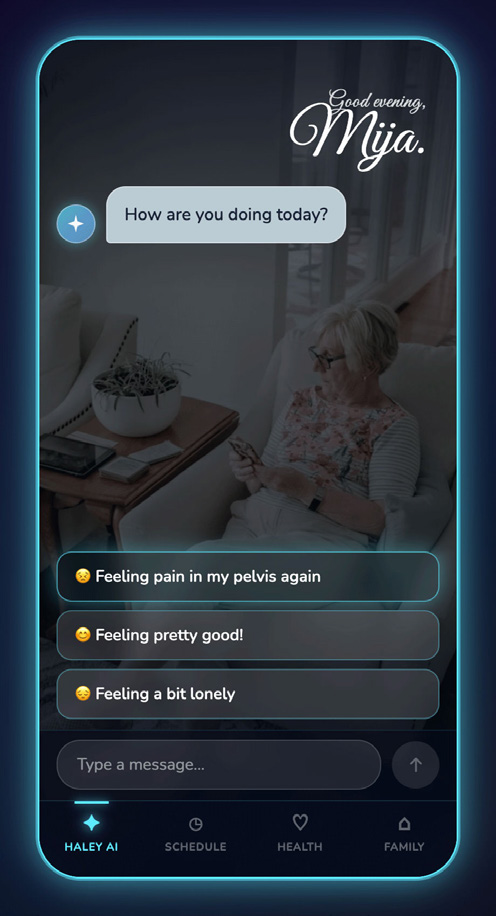
Daily emotional check-in with response options
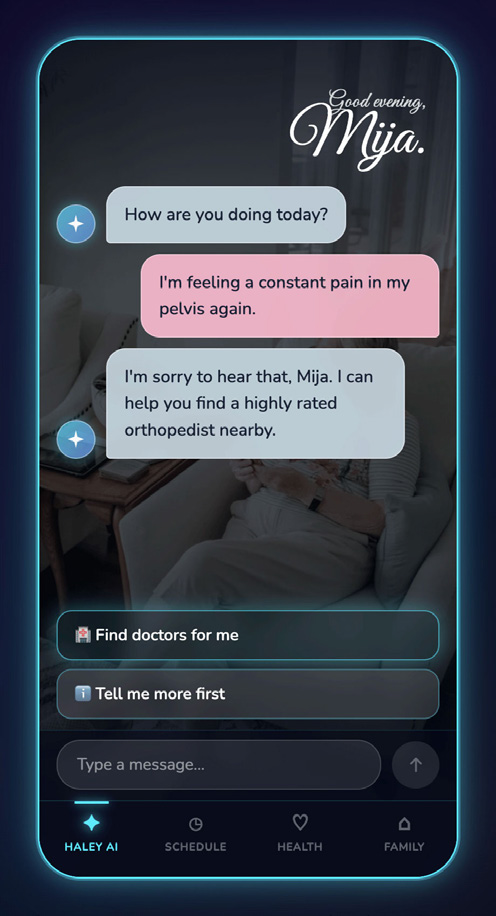
AI response to reported pelvic pain, with an offer to locate appropriate care
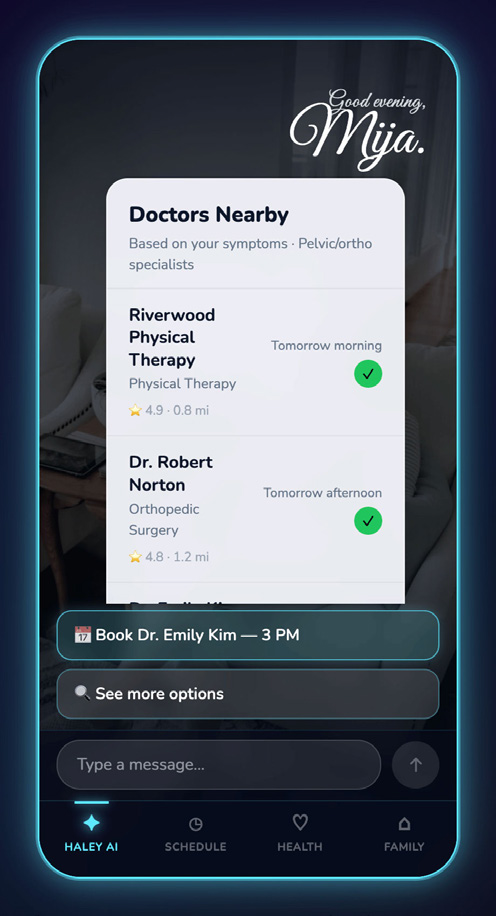
Presentation of nearby providers and appointment-booking options
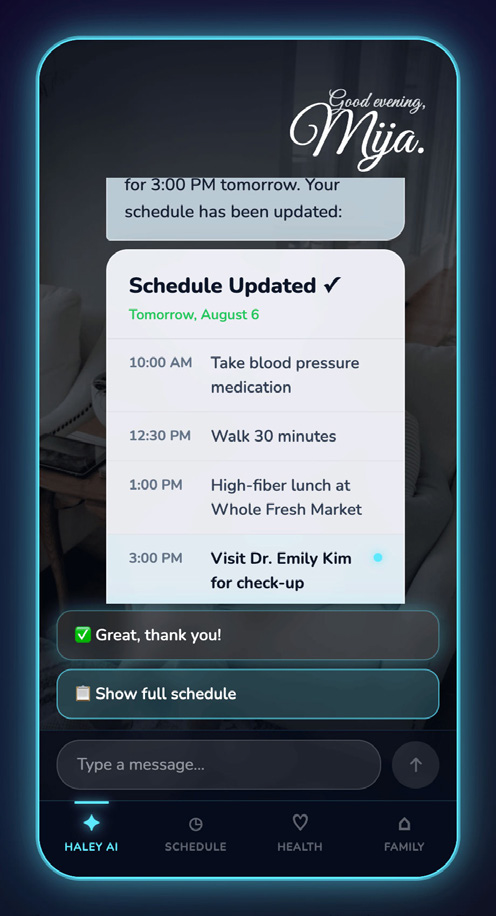
Automatic schedule update following appointment selection
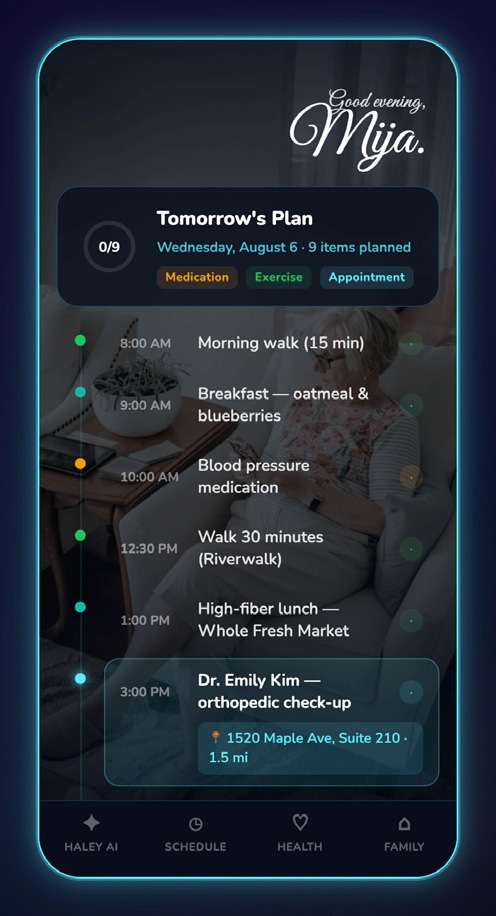
Integrated daily plan covering medication, activity, meals, and care
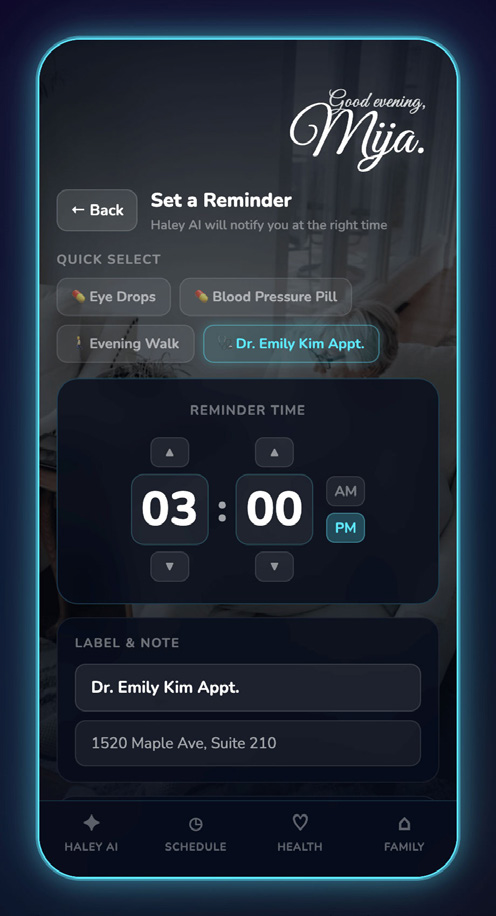
User-configured medication, activity, or appointment reminder
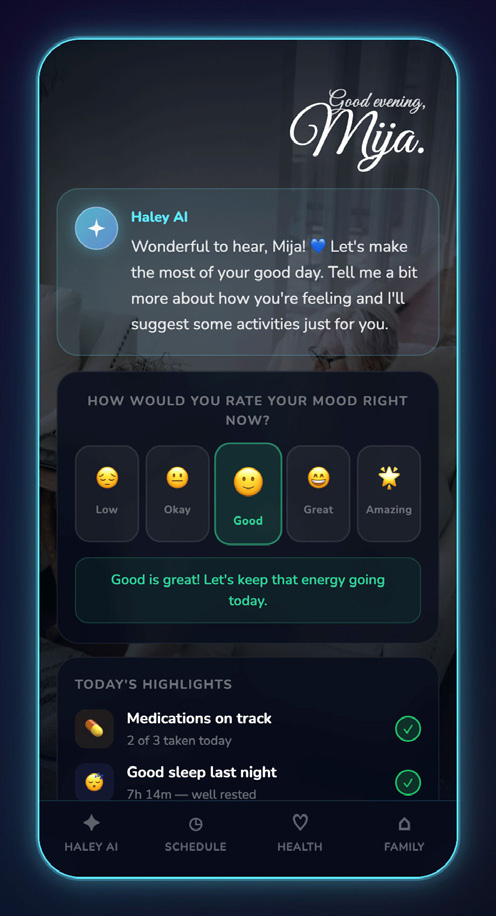
Mood rating followed by encouraging feedback and daily highlights
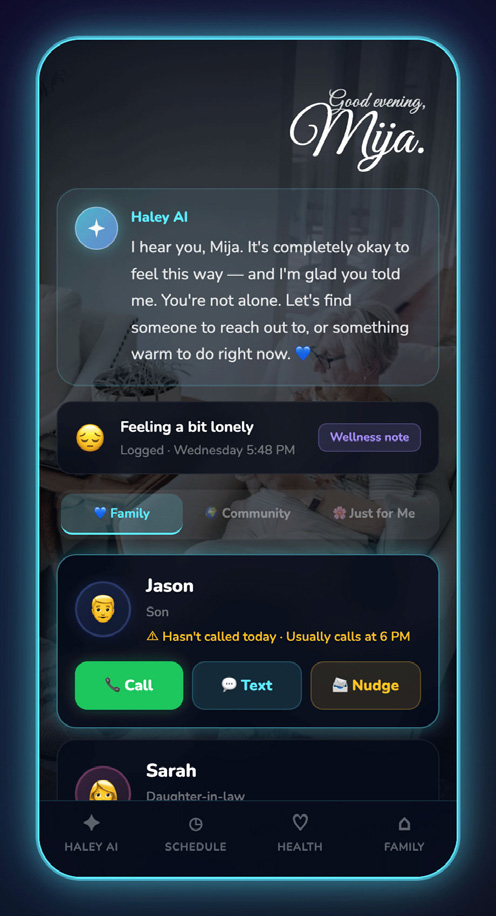
Response to loneliness linked to patterns of family contact
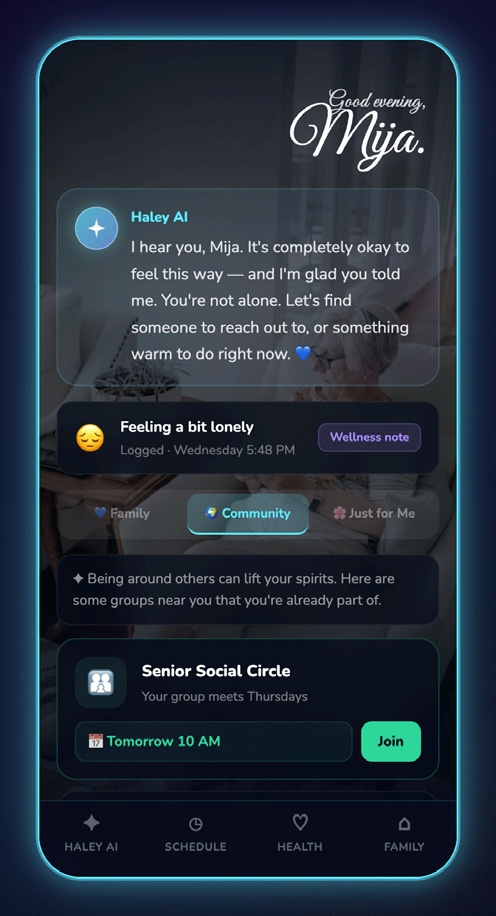
Community-activity suggestion following disclosure of loneliness
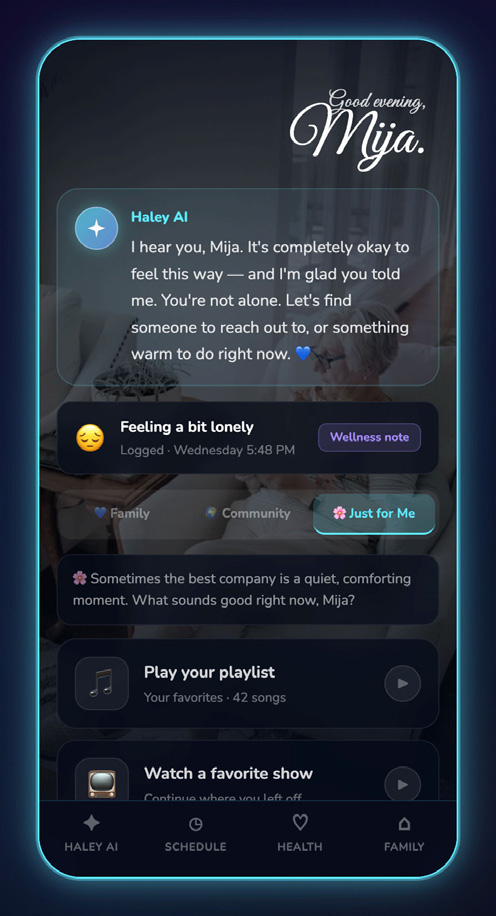
Private self-soothing activities suggested following disclosure of loneliness
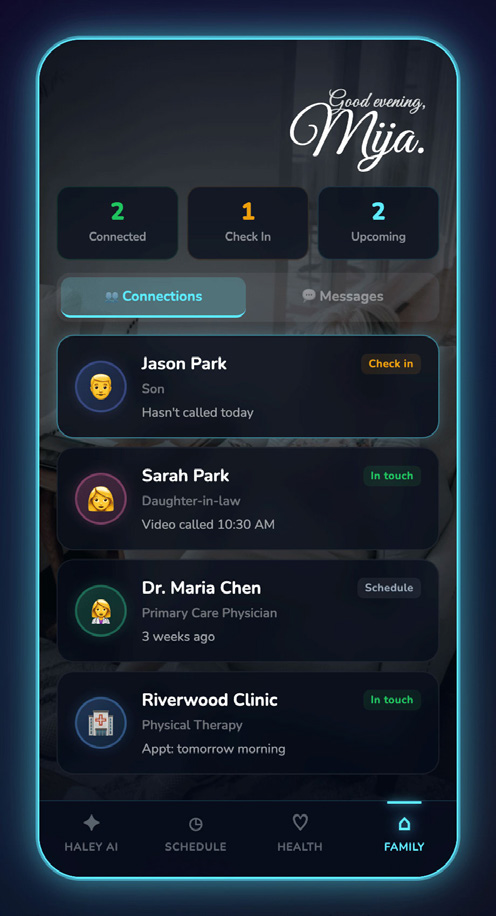
Dashboard connecting the older adult with family members and clinicians
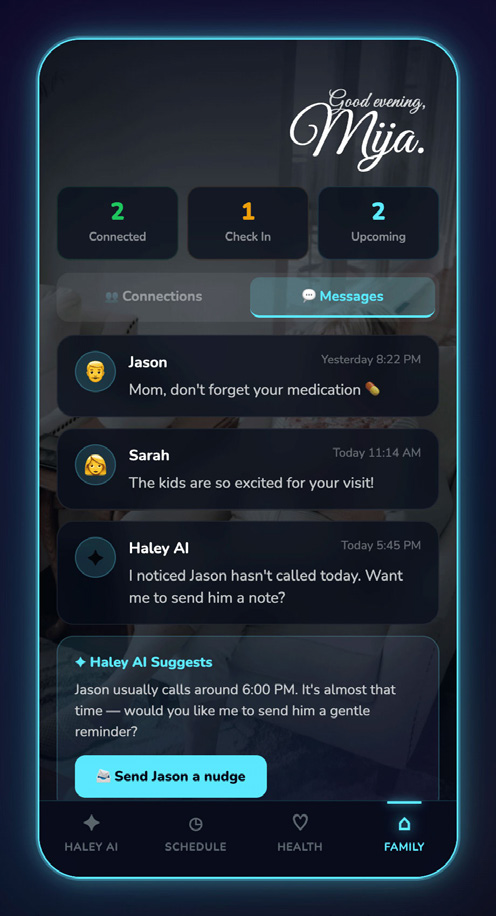
Message history accompanied by AI-generated suggestions to contact a family member
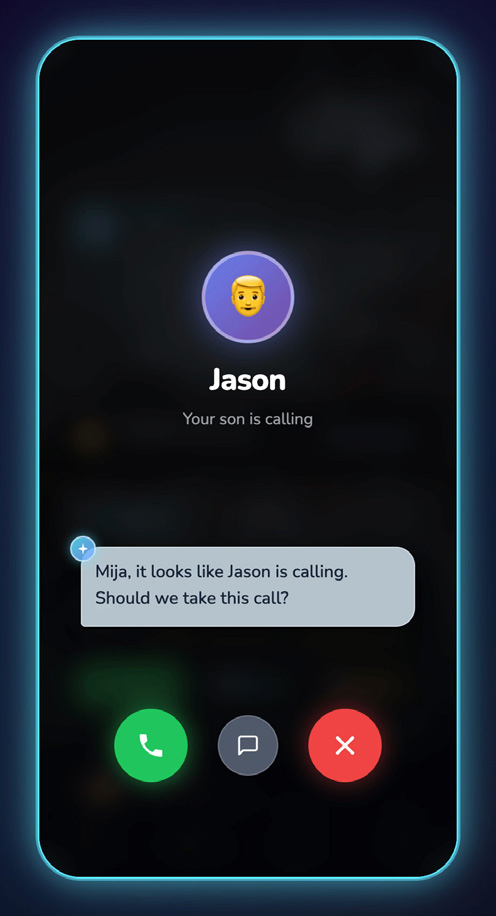
AI-mediated notification of an incoming call from an adult child
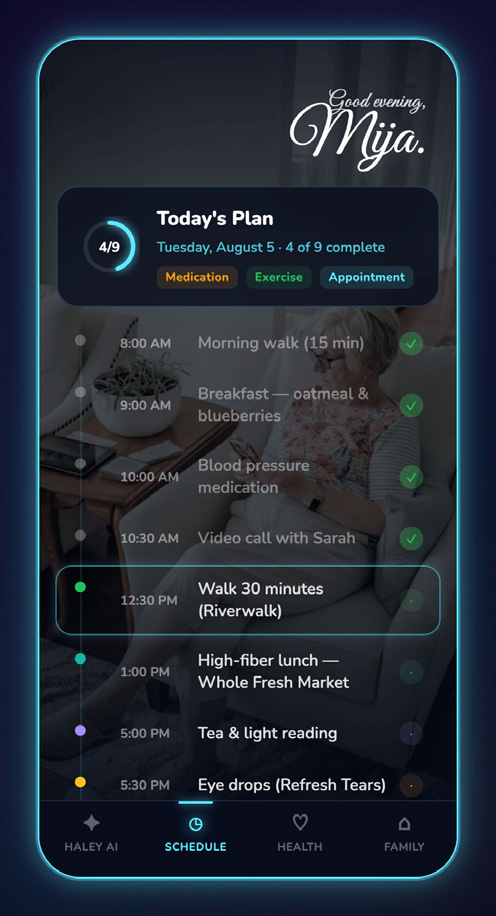
Progress display showing completed and upcoming daily activities
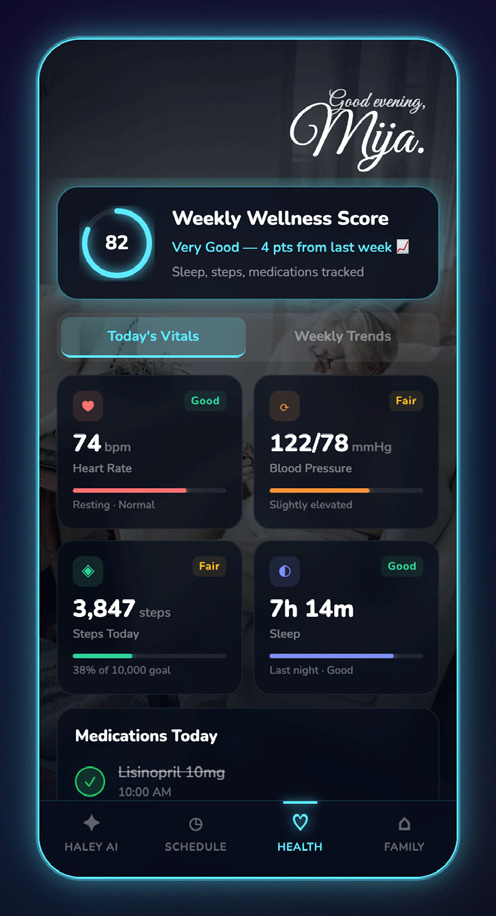
Wellness score accompanied by current health indicators
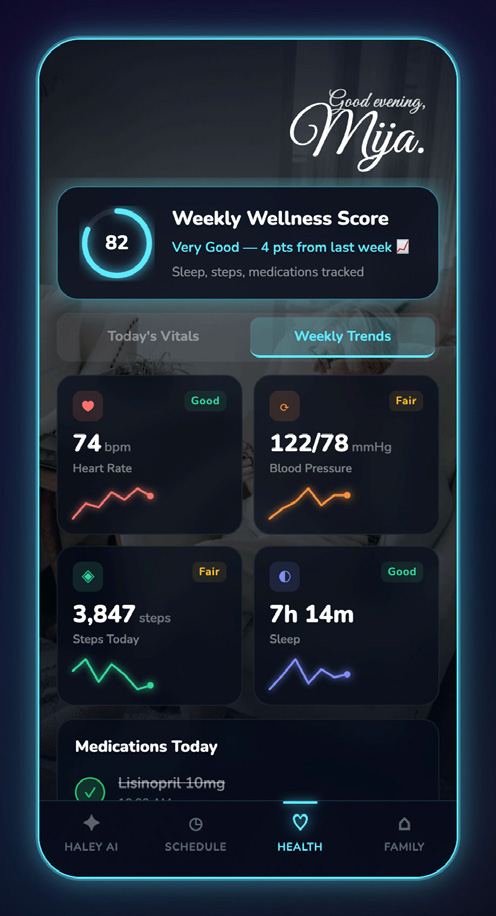
Weekly trends in vital signs, activity, sleep, and medication adherence