Designing a Non-Clinical Therapeutic Drawing Activity Model for University Students: A Qualitative Study of Therapeutic Experiences in Managing Anxiety
Abstract
Background The prevalence of anxiety among university students is rising, even though access to professional mental health services remains constrained due to stigma and limitations in service provision. Therefore, this research aims to explore non-clinical therapeutic art activities as an ethical, low-barrier form of support, focusing on drawing activities as a medium for visual expression, reflection, and meaning-making to help students manage anxious experiences.
Methods This study employed a qualitative and design-oriented approach based on the 4D strategy (Define–Design–Develop–Disseminate) to develop a prototype activity guideline. This prototype was tested with a purposive cohort of 10 fine arts and design students (5 male and 5 female) across 8 sessions (4 group, 4 independent) over approximately 8 weeks. The cohort size was set to support facilitated group practice and in-depth qualitative exploration rather than statistical representation of the wider university student population. Data were collected through reflections, interviews, and observation notes. Thematic coding was used for analysis, with interpretation guided by the seven functions of Art as Therapy. Images served as prompts for reflection and were presented as part of a vignette of the participant’s journey.
Results Observational results indicated high levels of emotional expression, social interaction, participation, reflection, focus, and a sense of accomplishment. Participants’ reflections and observations suggested a gradual shift from initial tension toward greater calm and engagement across sessions. The reflections showed a pattern in which the first session (B1) focused on rebalancing and appreciation. Self-understanding and hope became more prominent in the final group session (B4). During the independent phase (M1–M4), participants’ experiences became more contemplative, with rebalancing increasingly connected to self-understanding and appreciation.
Conclusions The prototype guideline for non-clinical therapeutic drawing activities was feasible for use in this higher education context. The findings suggest that the model supported therapeutic experiences through visual expression, reflection, and meaning-making, rather than demonstrating a definitive reduction in anxiety. The study also provides an initial, context-specific validation of the model, while further research is needed to examine its applicability across broader contexts and to strengthen evidence of its therapeutic value.
Keywords:
Anxiety, Design Psychology, Design Research, Drawing Activity, Meaning-making, Therapeutic Art1. Introduction
Recent years have seen an increase in mental health issues among students, leading to greater support needs at educational institutions. Studies indicate a rise in mental health problems and a growing demand for campus counseling services (Xiao et al., 2017; Sivertsen et al., 2025). Anxiety is particularly prevalent, with a meta-analysis revealing high rates driven by academic and psychosocial stressors (Chang et al., 2021; Liyanage et al., 2022). However, students face barriers in accessing professional support. Stigma and limited mental health resources hinder coping strategies and mentorship efforts, highlighting the necessity for more flexible, barrier-free, and ethical support methods.
This research presents non-clinical therapeutic art activities as complementary approaches to boost well-being, social bonds, and self-expression. These activities can be conducted without licensed therapists and are meant to supplement, not replace, clinical therapy.
Drawing activities were chosen as a means for visual expression and reflection, enabling participants to organize experiences, externalize emotions, and consider personal significance through visual language. This aligns with research indicating that visual forms, such as comics and other image-based methods, can facilitate reframing and self-reflection within art-based environments (Phang, 2024).
This research developed a prototype guideline for a therapeutic art activity model that uses drawing activities as a non-clinical approach in higher education to support students experiencing anxiety. The research questions include the following:
- a. How to design a model of non-clinical therapeutic art activities based on the practice of drawing activities to support students experiencing anxiety?
- b. How did students interpret therapeutic experiences during and after the activity, as reflected in written reflections and interviews?
2. Method
2. 1. Research method
This research employed a design-oriented qualitative method, as described by Price et al. (2017), to develop a model of non-clinical therapeutic art activities centered on drawing activities. The development process was structured using a 4D (Define–Design–Develop–Disseminate) framework, as described by Thiagarajan et al. (1974), Gall et al. (2003), and Walker & Bresler (1993). This method included (1) mapping needs and contexts, (2) designing and revising activity components with facilitation guidelines, (3) testing activities through 8 sessions (4 group, 4 independent), and (4) synthesizing results into a final model. Data were collected through participants’ written reflections, semi-structured interviews with 10 participants, and facilitator observation notes collected during the sessions. Participants were recruited as a purposive small qualitative cohort to support the implementation of the staged activity model in a manageable, facilitated setting. The cohort size was intentionally limited to enable close observation, written reflection, and interview-based inquiry across repeated sessions. The aim was not statistical generalization to the broader university student population, but context-specific exploration and prototype development. Further details on the research stages are outlined in Figure 1.
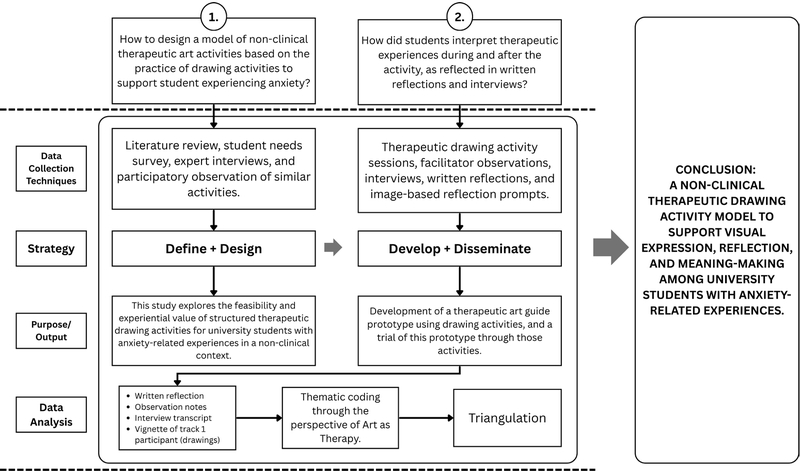
Research Stages
2. 2. Data analysis
The data for this study consisted of participants’ written reflections, interview transcripts, and facilitator observation notes, which were treated as multiple qualitative data sources for analysis (Miles et al., 2014). The unit of analysis was a sentence segment or paragraph that captured participants’ experiences, emotions, meanings, or perceived changes during and after the activity (Roller & Lavrakas, 2015). Images served as prompts for reflection and interviews and were presented in limited form as contextual examples within a single-participant vignette (Bergbom & Lepp, 2022). A formal visual analysis of the images is presented in a separate article.
The data were analyzed using thematic coding. First, all reflections and interviews were read multiple times to understand the context. Initial codes were then generated using language that closely reflected participants’ own expressions. Second, similar codes were grouped into broader themes of therapeutic experience. Third, these themes were examined through Art as Therapy (AAT) (de Botton & Armstrong, 2013) to connect participants’ experiences to its experiential functions. To strengthen the findings, reflections were compared with interview data and observational notes for triangulation. In addition to cross-participant analysis, a participant was selected as a vignette (trajectory) to illustrate the change in experience from the beginning to the end of the session. Vignettes were arranged chronologically, with reflection or interview excerpts. The vignette included four sessions: the first and last sessions as group sessions, and the first and last sessions as separate, independent sessions. They were accompanied by selected images to reinforce the story’s context.
3. Literature Review
3. 1. Non-Clinical Therapeutic Art
Non-clinical therapeutic art is art-based activities conducted outside clinical settings and not supervised by licensed therapists. This community-focused activity aims to enhance well-being, social bonds, and personal expression (de Jager et al., 2017; Gladstone & Stasiulis, 2019; Anderson et al., 2024). Examples include digital storytelling (community-developed audiovisual narratives adapted for research), arts programs reported to increase mental health and social ties (Anderson et al., 2024), and visual or comic stories used to reframe issues through storytelling and reflection (Phang, 2024). In contrast, clinical therapeutic art, or art therapy, is used in healthcare by trained therapists to target specific psychological, emotional, or physical issues. This art emphasizes non-verbal communication and includes structured sessions to achieve therapeutic goals (Odell-Miller et al., 2006; Karkou, 2012; Kopytin, 2015). The key differences between these approaches can be understood through three dimensions: setting (health vs. community/non-medical), intent (specific therapeutic goals as part of a treatment plan vs. well-being/engagement/expression without formal therapeutic goals), and facilitation (licensed therapist vs. community facilitator/educator/artist without formal therapy credentials) (Harter et al., 2023; Odell-Miller et al., 2006; Karkou, 2012; Kopytin, 2015).
de Botton and Armstrong (2013) argued that art can be therapeutic through seven functions: appreciation, hope, sorrow, memory, growth, self-understanding, and rebalancing. Appreciation focuses on valuing and strengthening a positive atmosphere, while hope offers a vision of happiness as a spark of optimism. Sorrow acknowledges grief, helping individuals feel less isolated in their suffering. Memory reports the importance of remembrance and preserves meaningful experiences. Growth improves empathetic learning through indirect experience. Self-understanding addresses gaps in emotional self-awareness, and rebalancing facilitates the harmonization of thoughts and emotions.
3. 2. Drawing Activities for Visual Expression, Reflection, and Meaning-Making in Therapeutic Practice
Drawing activities can function as a form of visual practice that enables the expression of internal experiences, such as thoughts, emotions, and personal meanings. In therapeutic contexts, drawing supports reflection by helping individuals externalize experiences through images and engage with them in a more accessible way. This is consistent with literature showing that drawing can support reflection, communication, and the exploration of lived experiences beyond the production of a visual product (Bergbom & Lepp, 2022).
In art therapy, creating visual forms involves cognitive, symbolic, and emotional processes and is often combined with verbal reflection to understand “unspoken” individual experiences (Harpaz, 2019). Images can also communicate fears, anxieties, and hopes while supporting communication and self-esteem (Massimo & Zarri, 2006). In this sense, drawing functions not only as an expression but also as a medium for exploring authentic life situations and reflecting on them more deeply (Bergbom & Lepp, 2022).
The literature also shows that image-based activities are not always straightforward. Decisions about what to draw may feel challenging and often require time, structure, or facilitation (Drew et al., 2010). In addition, drawing activities may involve symbolic and metaphorical forms of expression, especially when participants represent emotions, memories, or hopes indirectly. Such processes are valuable in therapeutic practice because they provide a non-verbal route for exploring meanings that may be difficult to express directly in words (Harpaz, 2019).
Therefore, the use of drawing activities in this research is understood not as ordinary image-making, but as a structured process that supports visual expression, reflection, and meaning-making. Based on this understanding, the research contributes not only to the use of drawing activities in therapeutic practice but also to the development of an activity model and prototype guideline. Through thematic prompts, reflective questions, and facilitation sequences, the model is designed to strengthen visual–verbal integration in a non-clinical educational context (Harpaz, 2019; Drew et al., 2010).
3. 3. Anxiety in College Students
Research indicates that anxiety levels among students are relatively high but vary across different contexts and regions. The prevalence of anxiety in students was reported to be 33.6% in research from Kosovo. Systematic reviews during the COVID-19 pandemic reported a global prevalence of 41%, and other meta-analyses showed an overall figure of 31% (Kamberi et al., 2019; Chang et al., 2021; Liyanage et al., 2022).
Several triggers and factors, such as academic pressure, fear of failure, psychosocial vulnerability, and pandemic-related disruption, are commonly associated with student anxiety. These factors are particularly relevant in higher education contexts, where students face academic demands, uncertainty about the future, changes in learning routines, and barriers to accessing formal support.
This literature identifies effective coping strategies, including mindfulness, yoga, peer support, biofeedback, and approaches that enhance emotional intelligence, a sense of belonging, and stress management (Moeller et al., 2020; Coiro et al., 2017; Rastogi et al., 2025). However, stigma and access barriers limit access to these services, suggesting a need for a more flexible, low-barrier, campus-based approach.
4. Results
4. 1. Identification of Student Anxiety Type (Define)
Based on literature and psychologist interviews, the Define stage distinguishes between: (1) anxiety disorders requiring clinical treatment and (2) non-clinical anxiety-related experiences associated with stress or specific situations. Students’ anxiety exhibits symptoms such as worry, restlessness, concentration difficulties, fatigue, muscle tension, sleep problems, and physical responses such as heart palpitations. This research focuses on the latter and on activity-based support, with referral recommended when greater severity or clinical needs are identified. Figure 2 summarizes the linkages between anxiety, coping strategies, and activities.
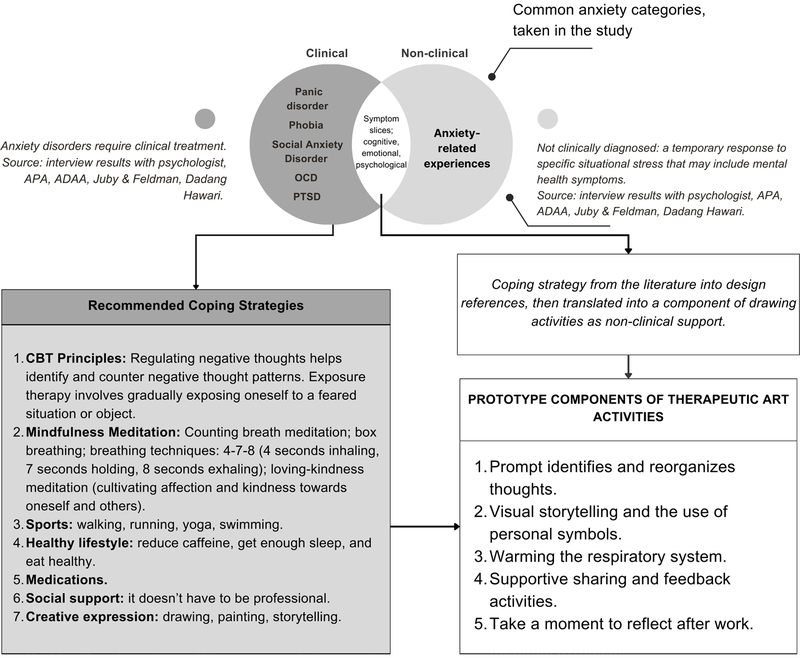
Diagram of the boundaries of the anxiety domain in research and goal focus.
This diagram defines the scope of research on non-clinical anxiety-related experiences within non-clinical support. This diagram is not intended as a clinical diagnostic tool nor a substitute for professional judgment.
The literature review showed that the main sources of student anxiety could be grouped into four clusters, namely academic stress (particularly during the final stage and when working on the final project), uncertainty about post-graduation transition (such as job competition, self-doubt in skills, and lack of experience), psychological vulnerability (including perfectionism, overthinking, and difficulties with self-regulation), and impacts from the pandemic/post-pandemic period (such as social isolation, changes in learning structures, and the shift from online to face-to-face learning). This mapping provides the foundation for designing activities that encourage expression and reflection. It also aims to incorporate coping strategies to support students in managing anxiety-related experiences.
4. 2. Prototypes of Guidelines for Therapeutic Art Activities Through Drawing Activities (Design)
During the Design stage, data were gathered to develop the prototype guideline as an experimental tool for therapeutic art activities through drawing. Four sources informed this process: (1) theoretical and literature references, (2) semi-structured expert interviews with two illustrators, one psychologist, and one counselor, (3) participatory observation of similar activities, and (4) the drafting of guidelines for group practice. These sources were used to shape the prototype, including theme selection, session structure, materials, and facilitation methods. The framework integrated Art as Therapy, symbolic-reflective expression, and anxiety-management strategies such as relaxation, CBT-based reframing, guided imagery, and social support, which were translated into warm-up techniques and theme sequences progressing from lighter to more emotionally intensive activities.
The expert interviews were used to assess the activity’s feasibility for students and to refine operational aspects, including techniques, tools, materials, and media. Participatory observation of similar activities further informed the formulation of design criteria by identifying practical risks, including limited space, disjointed themes, insufficient reflection, lengthy psychoeducation, the absence of a warm-up, inactive co-facilitators, and tool limitations. These findings were then used to revise the prototype before pilot testing. These results informed safer and more structured design guidelines for the participant experience.
Preparation of prototype guidelines includes establishing the session structure, materials, topics, and operational decisions, informed by research and observations. The concept comprises selecting traditional drawing methods, listing materials (e.g., pencils, pens, markers, paper), and outlining the class flow from warm-ups to main drawing activity and follow-up reflection. Limits are set at 10 participants, 2–3 hours per session, and 8 sessions, comprising 4 groups and 4 independent sessions, with a focus on therapeutic goals such as relaxation, guided imagery, CBT, and social support.
The prototype was tested in two pilot studies to assess the feasibility of the procedure and the acceptability of the instructions, after the prototype was reviewed as feasible (1 counselor, 1 psychologist, and 2 illustrators). Pilot test-1 examined participants’ responses to the warm-up and their understanding of the core practice instructions. Meanwhile, pilot test-2 assessed the continuity of the series of activities and the adequacy of the materials selected. The results of the trials form the basis for revision before the guidelines are applied to the main experiment.
Table 1 presents a design rationale flow that links the results from the Define stage to the decisions in the Design stage. This mapping was conducted to show how the causes of student anxiety identified in the Define subchapter were translated into design requirements aligned with relevant coping strategies and operationalized by developing specific topics or prompts in the activity guideline prototype.

Design Rationale for Prototype Design Decision of Therapeutic Art Activity Guidelines
Table 1 shows that the prototype was developed in response to the main sources of student anxiety identified in the Define stage. The implementation of these design decisions and the therapeutic experiences that emerged from them are presented in the Develop stage and subsequent results sections.
4. 3. Participant Therapeutic Experiences in Drawing Activities (Develop)
In the Develop Stage, the prototype of therapeutic art activity guidelines, compiled and revised during the Design Stage, was applied in a drawing activity experiment. These guidelines were used with 10 participants across 8 sessions (4 group and 4 independent sessions) over 8 weeks, maintaining a consistent structure. The joint session began with a class commitment, followed by a warm-up and main drawing practice, and concluded with a closing session. The session structure, materials, and sequence of therapeutic art activities are presented in Table 2.
Breakdown of Therapeutic Art Activities per Session
The details of each activity in each therapeutic art session serve as guidelines for the experiment.
The experiment included 10 students from the Faculty of Art and Design, equally split between 5 males and 5 females. Based on the preliminary needs analysis, this group was identified as a suitable participant pool, leading to their selection. Participants were recruited openly from the Faculty of Art and Design, resulting in a cohort of 10 students that was considered manageable for facilitated group practice and repeated qualitative observation. The group sessions took place over four consecutive weeks, with all participants attending from recruitment through the final session. Subsequently, the study continued with individual sessions for an additional four weeks.
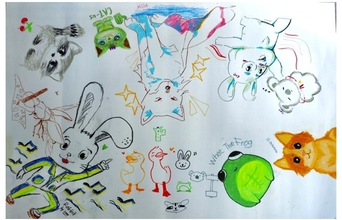
In B1, participants engaged in opening activities, warm-ups, drawing, reflection, sharing, and closing. During the session, participants appeared awkward, with paper divided between watercolor and drawing paper. After drawing, participants wrote reflections before joining the sharing and closing sessions. Participant interaction increased during the opening session in B2. More participants were willing to share the images they created, with five participants speaking during the sharing session. In B3, participants appeared more earnest and reflective than in the previous two sessions. In B4, the warm-up took place in the gazebo, with a collaborative drawing on A0 paper about the four-week experience. This was followed by a drawing activity on the theme “Time Machine,” and concluded with a letter to oneself and feedback on the board. In this session, interaction also developed through discussion of the images created during the warm-up.
Based on the observation checklist and participant feedback, the structured, repetitive creative process demonstrated development across all observed areas. Emotional expression became more visible from B2 onward, followed by stronger social interaction and more active participation. Participants also appeared more cognitively engaged, as reflected in their focus and a sense of accomplishment, as summarized in Figure 3. One notable pattern in the observational data was a gradual shift from initial tension toward greater calm, engagement, and emotional openness across sessions. This suggests that the activity involved more than temporary distraction, as participants’ experiences were shaped by the integration of emotional expression, social interaction, and reflection.
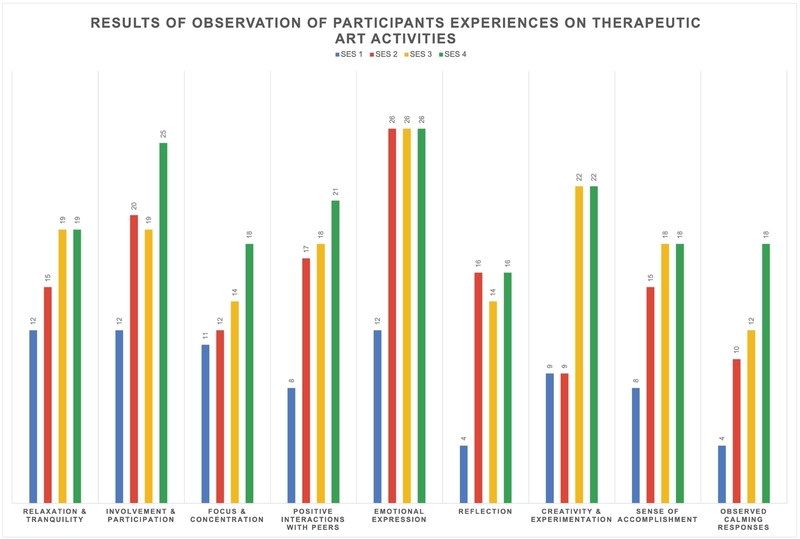
Diagram of the results of the observation checklist during the Group Therapeutic Art Activity
Participant feedback revealed an emotional progression throughout the sessions. In B1, participants experienced initial happiness and excitement alongside some anxiety. In B2, they appeared more relaxed and relieved. During B3, their reflections became deeper and showed a stronger sense of connection. In B4, participants expressed satisfaction, reflection, and a sense of closure. Overall, themes included calmness, engagement, focus, positive interactions, emotional expression, creativity, achievement, and a transition from nervousness to enjoyment.
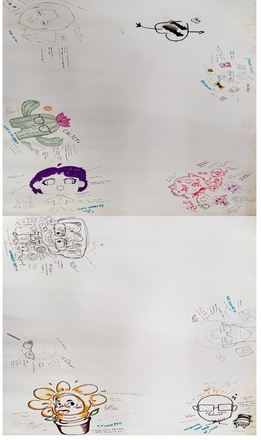
The observational results were also reflected in behavioral changes and visual expression across sessions. In B1, participants tended to be awkward, had minimal interaction, and produced small collaborative drawings placed at the edges of the paper. In later sessions, participants became more active. In B4, the collaborative work appeared larger, more colorful, and more confidently placed in the central area of the paper. These visual changes were interpreted, alongside observations and participant reflections, as suggesting a calmer emotional atmosphere and greater ease of expression.
Table 3 presents the visual changes in the collaborative work between the first and last group sessions. There was also growth in media exploration, progressing from basic tools to bolder media such as watercolor, which may reflect increased confidence and willingness to experiment. In terms of social dynamics, the closing session served as an important space for meaning-making. The connections among participants, the facilitator’s role as an emotional anchor, and support from the implementation team strengthened participants’ sense of security and emotional attachment throughout the process.
Visual Changes of Collaborative Images on Joint Therapeutic Art Practice First and Last Week
After the group sessions, the activity continued through independent sessions. The results showed that three participants who were initially unfamiliar with the prompts were able to continue working through them during the session. In addition, two participants used the self-paced prompts to express emotions during moments of panic related to lecture assignments, and the self-paced sessions proceeded smoothly.
In this research, participants’ written reflections were analyzed through thematic coding. The resulting themes were examined through the lens of Art as Therapy (de Botton & Armstrong, 2013) to connect experiences to therapeutic roles (e.g., appreciation, hope, sorrow, memory, growth, self-understanding, and rebalancing). Reflection readings were compared with brief interviews and observational notes (triangulation) to strengthen the results. According to the methodological design, images serve as prompts for reflection and interviews and are presented only as context in vignettes. A formal visual analysis of images is documented separately.
4.3.2.1. Lens Analysis: Coding Reflection with Art as Therapy
Participant written reflections were analyzed using Art as Therapy, which identified seven functions of aesthetic experience: remembering, hope, sorrow, rebalancing, self-understanding, growth, and appreciation (de Botton & Armstrong, 2013). The unit of analysis was a reflective sentence or phrase that expressed emotions, meanings, self-needs, or changes experienced after a drawing activity. The coding process was conducted in stages, namely (1) open coding to capture the theme of the experience in participant language, (2) grouping the theme into more stable categories, and (3) mapping the categories to the seven functions of Art as Therapy as an interpretive framework. The results are summarized in a codebook matrix (participants per session) that shows the dominant Art as Therapy function in each session, enabling cross-participant pattern recognition across cases and providing a basis for preparing narrative results and vignettes. The results of coding reflections using Art as Therapy are presented in Figure 4.
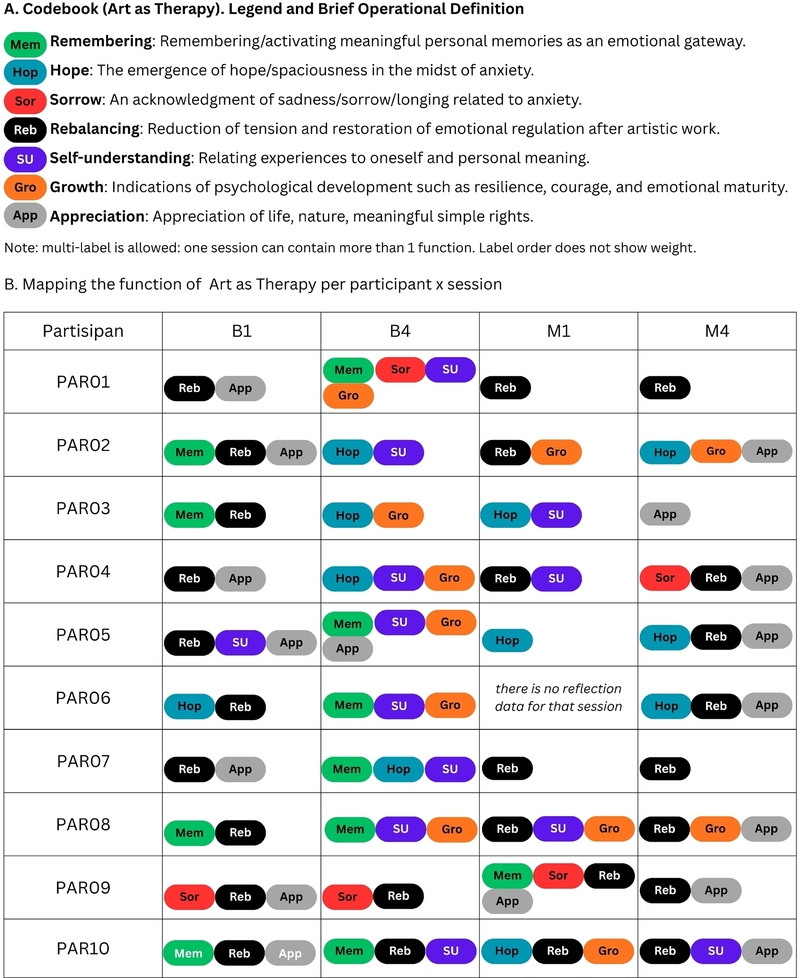
Art as Therapy Codebook and Function Mapping
Mapping the functions of Art as Therapy across reflection sessions shows a pattern. In B1, reflection centers on rebalancing and appreciation. At B4, self-understanding and personal growth become apparent and are frequently associated with a sense of hope. In the independent stage (M1–M4), experiences become more contemplative, with rebalancing remaining prominent, increasingly connected to self-understanding, and appreciation becoming calmer by the end of the session.
4.3.2.2 Vignette of the Trajectory of 1 Participant
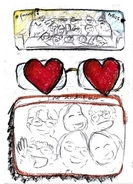
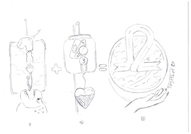
Table 4 shows the trajectory of one participant at the beginning and end of the joint and independent sessions. Across the visual works, the visual and reflective elements have changed.
Trajectory of drawings from 1 participant
In the following vignette, the participant’s experience trajectory indicates a shift in therapeutic function, as understood through Art as Therapy. In B1, reflecting on the “sofa” as a positive memory and feeling relaxed after drawing indicates memory functions (activating meaningful memories) and rebalancing (helping to calm and reorganize emotions). In B4, the phrases “fly wings slowly” and “hope to stay cheerful” show the development of hope. During the independent phase, M1’s reflections reflect a process of self-understanding and growth, marked by an awareness of the need to be happy and a drive to continue growing. In this section, drawing serves as a space for reflective reorganization of meaning. In M4, the reference to nature’s calming effects can be interpreted as an appreciation (enhancing a positive atmosphere) associated with rebalancing, as aesthetic and contemplative experiences help participants return to a more stable emotional state. This vignette illustrates a recurring pattern: calming recall, followed by hope, progressing toward self-understanding and personal growth, and culminating in appreciation.
The experience was evaluated two weeks later through semi-structured interviews, which revealed four key themes: (1) non-verbal emotional expression, (2) emotional regulation, (3) media preference, and (4) themes and re-reflection on the works. Figure 5 summarizes the themes that emerged from the post-activity interviews.
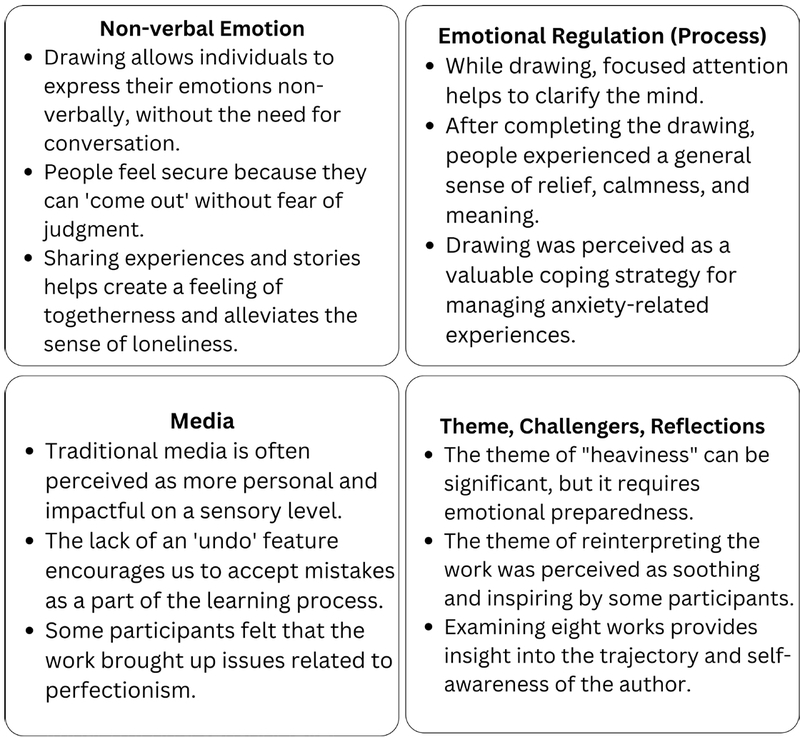
Themes That Emerge from the Results of Participant Interviews after Therapeutic Art Activities
The 2-week post-program evaluation is consistent with the Art as Therapy framework. The participants report that drawing serves as a safe, non-verbal emotional outlet through which “feelings can come out” without explanation. The experience of feeling “focusing–calming–relieved” during and after emphasizes the process of rebalancing. Meanwhile, reflection on perseverance, personal strengthening, and hope improves growth and optimism. Aspects of togetherness, such as listening and feeling “not alone,” increase therapeutic functioning through relationship support.
At the same time, the recurrence of panic and sadness in some reflections suggests that certain themes may evoke distress and therefore require buffering within activity structure. The preference for manual media, described as “honest, personal, and more relaxed,” underscores the importance of aesthetic experiences in enhancing appreciation and reducing perfectionism.
Based on this evaluation, the initial implications for the prototype iteration are as follows. First, the activity design should focus on ongoing rebalancing, ensuring that each session includes a pathway that promotes focus, calm, and relief from tension, and offers a brief version of the prompt that participants can use when feeling anxious outside the session. Second, media choices should be conceptualized as therapeutic strategies. Manual media may serve as the default due to sensory benefits and the capacity to support appreciation. However, flexibility should be maintained for participants who prefer digital tools, with emphasis placed on process rather than product to mitigate perfectionism. Third, themes evoking sorrow should be accompanied by process supports (e.g., pause options, brief grounding exercises, and debriefing) to ensure that reflective experiences contribute to self-understanding.
4. 4. Dissemination of Prototype Guidelines for Therapeutic Art Activity Models through Drawing Activities
The dissemination stage aims to produce the prototype design output for the model guidelines developed and evaluated in the previous stage, enabling understanding, communication, and replication in similar contexts. The dissemination in this article serves to solidify the V1 prototype by providing an overview diagram that summarizes the structure of the two-phase program, the sequence of core activities, the implementation prerequisites, and the trajectory of the targeted experience based on the Art as Therapy function. The prototype can be viewed as a series of sessions and procedural guidelines that explain the logic of the intervention design.
A visual overview of the prototype is shown in Figure 6 to help readers understand the components and flow. At the top, the diagram depicts the sequence of sessions during the joint activity (B1–B4) and the independent stage (M1–M4). The middle section summarizes the main activities of each session through drawings. In contrast, the bottom section outlines the implementation requirements, including environment and media, the social principles guiding facilitation, and the trajectory of targeted emotional experiences. This is based on Art as Therapy, progressing from initial emotional exploration and calming to transformation. Therefore, Figure 6 serves as a V1 prototype map for adaptation and deployment in similar settings and as a foundation for future evaluation.
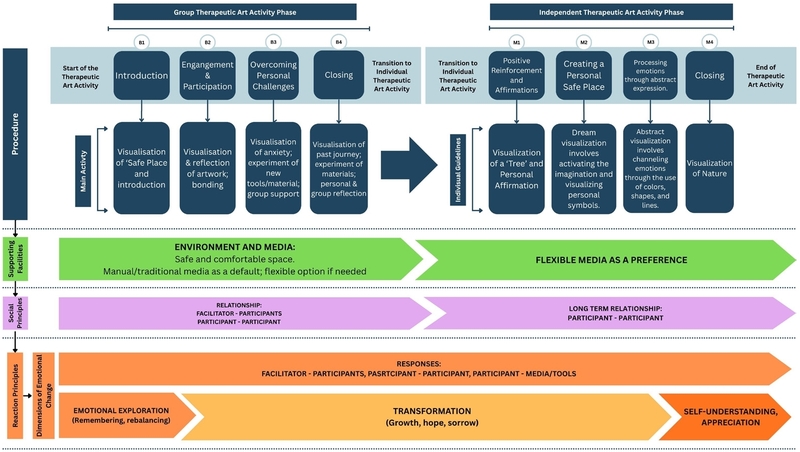
Therapeutic Art Model through Drawing Activity
5. Discussion
The results show that drawing activities, when implemented as a non-clinical therapeutic approach, can help university students manage anxiety-related experiences through visual expression, reflection, and meaning-making. The activity model established a structured environment for externalizing emotions, contemplating personal significance, and facilitating gradual therapeutic engagement. These results suggest that arts-based, non-clinical interventions may provide complementary support within higher education, especially for students facing educational stress and transitional challenges.
5. 1. Design Differentiators and Structural Value of the Activity Model
The results show that the model’s value is not found solely in the act of drawing, but in the intentional organization of drawing activities as a non-clinical, staged, and reflective support system for university students experiencing anxiety. In contrast to typical drawing or open-ended art workshops, this model includes a structured sequence of warm-up exercises, thematic prompts, guided reflection, and closure, providing direction while continuing opportunities for self-expression (Drew et al., 2010). Unlike clinical art therapy, the model is not intended as a therapist-led intervention but as an ethically bounded, non-clinical activity designed for educational settings. This distinction is consistent with the literature that differentiates clinical and non-clinical therapeutic arts by setting, purpose, and facilitation (Odell-Miller et al., 2006; Karkou, 2012; Kopytin, 2015; Harter et al., 2023). Furthermore, compared with broader non-clinical arts and well-being programs, this model is distinguished by its specific focus on university student anxiety, its development through the 4D framework, and its phased progression from group sessions to independent practice (de Jager et al., 2017; Gladstone & Stasiulis, 2019; Anderson et al., 2024).
This model goes beyond adopting existing therapeutic concepts by integrating multiple complementary foundations into a practical activity framework. The Art as Therapy approach contributed experiential functions such as rebalancing, self-awareness, hope, and growth, which informed the model’s interpretive orientation (de Botton & Armstrong, 2013). Concurrently, insights from art therapy and creative arts practices influenced the organization of themes, selection of materials, activity formats (both directive and non-directive), imagery prompts, group processes, and facilitation structures (Malchiodi, 2003; Gladding, 2021). Research on drawing as a reflective visual practice emphasizes that drawing serves not just to create images but also to externalize emotions, structure experiences, and build personal meaning (Harpaz, 2019; Bergbom & Lepp, 2022). Furthermore, research on student anxiety and coping indicates the need for structure, social support, affective regulation, and reflective coping resources in higher education (Coiro et al., 2017; Moeller et al., 2020; Halliburton et al., 2025; Rastogi et al., 2025). From a design methodology perspective, the model’s unique contribution is to unite these various foundations into a systematically organized prototype guideline for non-clinical application in higher education.
A central distinguishing feature of the model is its incorporation of visual expression and verbal reflection. Within the study, images functioned not only as final products but also as catalysts for reflection, reinterpretation, and emotional articulation. This integration allowed participants to externalize emotions through drawing and subsequently process them through written or spoken reflection, thus increasing the activity beyond aesthetic creation (Harpaz, 2019). This approach is consistent with research demonstrating that drawings can facilitate reflection, support communication, and enable participants to articulate feelings and emotions that are challenging to communicate verbally (Bergbom & Lepp, 2022). Consequently, the therapeutic experience emerged from both the creation of images and the structured interplay among drawing, reflection, and facilitation.
Another distinguishing characteristic of the model is its phased approach, which transitions participants from group to independent sessions. Unlike isolated or non-sequential activities, this design is intended to stimulate engagement incrementally. The group phase promotes social interaction, mutual support, and a sense of safety, whereas the independent phase provides opportunities for self-examination and self-directed participation. This phased structure indicates that the model features a deliberately ordered sequence that guides participants from supported involvement to greater autonomy and reflective engagement. The prototype guidelines reinforce this process by systematically organizing themes, prompts, and facilitation strategies within an integrated implementation framework. Collectively, these features demonstrate that the model’s main strength is its ability to systematically connect student anxiety contexts, therapeutic objectives, facilitation strategies, and implementation environments. The model’s value is found not only in the potential of drawing activities to foster therapeutic experiences, but also in the manner in which these experiences are scaffolded through a structured, staged, and context-sensitive non-clinical activity framework formulated for higher education.
5. 2. Therapeutic Experiences Across the Activity Process
Participants’ therapeutic experiences developed progressively throughout the activity sequence, rather than showing as immediate effects. Early reflections mostly centered on rebalancing and appreciation, whereas subsequent sessions increasingly emphasized self-understanding, hope, and growth. In the independent phase, experiences became more contemplative, with rebalancing remaining significant but increasingly associated with calm self-reflection and appreciation. This progression suggests that the model functioned as a methodical process for sustained engagement with anxiety-related experiences, rather than serving as a short-term diversion. This finding is consistent with the Art as Therapy perspective, which suggests that art functions as a calming, reflective, and supportive mechanism for self-growth (de Botton & Armstrong, 2013).
Participants reported that drawing activities provided a safe environment for expressing non-verbal emotions and challenging feelings. In this context, drawing functioned not only as image creation but also as a reflective process that enabled participants to externalize and better comprehend their emotions and thoughts. This observation aligns with research indicating that visual forms bridge affect and reflection, allowing drawings to facilitate communication and transmit complex experiences that are difficult to express verbally (Harpaz, 2019; Drew et al., 2010; Bergbom & Lepp, 2022). Thus, the therapeutic benefit is derived from both the act of drawing and the connection among drawing, reflection, and guided interpretation.
The progression of therapeutic experiences across sessions can be interpreted through the model’s structured and guided design. The sequence of warm-up exercises, thematic prompts, reflective writing, and session closure promoted gradual emotional involvement. The group phase fostered shared support, interaction, and a sense of safety, while the independent phase provided opportunities for personal, contemplative reflection. These outcomes suggest that the model enabled a transition from supported participation to individualized meaning-making, rather than treating all sessions as interchangeable.
Although the study involved only 10 participants, the significance of this group does not rest in statistical representativeness but in the consistent recurrence across reflections, interviews, and observation notes. These patterns elucidated participants’ understanding of the activity process and showed how the model’s staged structure facilitated therapeutic experiences in this context. Consequently, the primary significance of the findings is in showing how a structured, non-clinical drawing model can support visual expression, reflection, and meaning-making among university students experiencing anxiety.
5. 3. Contribution and Context-Specific Validity of the Model in Higher Education
The activity model delivers a practical form of non-clinical support within higher education environments. While it does not serve as a substitute for therapy, it provides a structured setting in which students can engage in drawing, reflection, and meaning-making under guidance in an educational context. This approach is consistent with non-clinical therapeutic art practices that value expression, social connection, and emotional wellness over formal treatment objectives (de Jager et al., 2017; Gladstone & Stasiulis, 2019; Anderson et al., 2024). This positioning is particularly relevant in higher education, where stigma, limited access to mental health services, and barriers to help-seeking frequently prevent students from obtaining formal support, even when experiencing significant anxiety-related challenges (Xiao et al., 2017; Withers et al., 2022; Sivertsen et al., 2025).
The model’s contribution is twofold: it increases accessibility and translates therapeutic principles into a practical educational format. In contrast to clinical art therapy, which typically occurs in formal therapeutic settings under the guidance of licensed professionals, this model is structured as a non-clinical, low-barrier activity framework. It can be adapted by educators, facilitators, or community practitioners, provided that ethical limits and referral procedures are strictly observed (Odell-Miller et al., 2006; Karkou, 2012; Kopytin, 2015; Harter et al., 2023). The model’s importance goes beyond offering students a drawing activity; it integrates drawing, reflection, facilitation, and staged participation into an integrated prototype for supportive use in higher education.
Within this study, validity should be regarded as limited and context-specific. The findings do not provide clinical evidence of the model’s effectiveness or confirm a definitive reduction in anxiety. Rather, the study delivers preliminary evidence of design and implementation validity: the model was developed through a needs analysis, informed by relevant theories and practical references, refined with expert input and pilot testing, and implemented in a staged sequence of activities. The experiential logic of this sequence was reflected in participants’ written reflections, interviews, and observation notes (Thiagarajan et al., 1974; Gall et al., 2003; Walker & Bresler, 1993). Thus, the model’s validity is grounded in the alignment among the identified student context, design rationale, structured prototype, and the therapeutic experiences observed during implementation.
The relationship between the findings from the ten participants and the prototype guideline is essential. Thematic prompts, reflective questions, and the staged progression from group to independent work functioned as core design elements that structured participants’ experiences into a flexible activity framework. Accordingly, the study’s contribution consists not in broad generalization or comparative advantage, but in the development of a contextually suitable model. Its structure, practicality, and interpretive clarity make it an important form of non-clinical support for university students managing anxiety.
5. 4. Limitations of the Study and Future Research
Although promising, the findings have limitations. The study used a small, purposively selected sample from a specific higher education context, focusing on qualitative results and prototype testing rather than broad statistical generalization. The evidence, based on participant reflections, interviews, and observation notes, should be seen as indicative of therapeutic experiences and perceived value, not definitive proof of anxiety reduction. This aligns with the study’s aim as a qualitative exploration rather than a validated clinical intervention.
The study provides initial, context-specific validation of the model, developed through needs analysis, design rationale, expert feedback, pilot revisions, and staged implementation within the 4D framework (Thiagarajan et al., 1974; Gall et al., 2003; Walker & Bresler, 1993). It was refined as a structured prototype before the main application.
It does not compare this model with alternatives or standard activities; thus, the results are preliminary. The model’s success depends on facilitator skill, group dynamics, and context, which affect therapeutic outcomes. Further research is needed to evaluate its effectiveness across diverse settings, identify key design elements, and adapt it for different student groups and educational environments.
6. Conclusion and Recommendation
This study created and assessed a non-clinical therapeutic art activity model focused on drawing to help university students cope with anxiety. The results show that the model facilitated therapeutic experiences through visual expression, reflection, and meaning-making within a structured sequence of prompts, facilitation, and staged participation. Throughout the activity process, participants’ experiences progressed from initial rebalancing and appreciation to greater self-understanding, hope, and growth. The study’s contribution goes beyond presenting the potential of drawing activities as supportive, non-clinical practices; it also delivers a structured prototype guideline for higher education contexts. The model translates therapeutic principles into thematic prompts, warm-up activities, reflective questions, and a staged sequence from group to independent sessions, presenting a practical format for educational support that remains distinct from therapist-led clinical interventions.
Simultaneously, the study should be interpreted as offering an initial, context-specific contribution rather than a comprehensive validation of the model’s effectiveness or superiority. Its value is in showing how drawing, reflection, and facilitation can be integrated into a coherent non-clinical support structure for university students experiencing anxiety. Additional research is advised to evaluate the model with expanded participant groups and across diverse educational contexts, to compare its implementation with alternative activity formats, and to identify the most transferable and essential design elements for therapeutic benefit.
Acknowledgments
This work was supported by the Indonesia Endowment Fund for Education (LPDP), Ministry of Finance of the Republic of Indonesia.
Current Address of the First Author: Visual Communication Design Study Program, Faculty of Art and Design, Universitas Sebelas Maret, Surakarta, Indonesia.
Notes
Copyright : This is an Open Access article distributed under the terms of the Creative Commons Attribution Non-Commercial License (http://creativecommons.org/licenses/by-nc/3.0/), which permits unrestricted educational and non-commercial use, provided the original work is properly cited.
References
-
Anderson, E., Dones, M., Cohen-Bearak, A., Barker, A., Hyde, J., & Bokhour, B. (2024). Promoting health and wellbeing through non-clinical arts programming: Multi-stakeholder perspectives from the Veterans Health Administration. American Journal of Health Promotion, 38(8), 1229-1237.
[https://doi.org/10.1177/08901171241261887]

-
Bergbom, I., & Lepp, M. (2022). Visual arts and drawings to communicate and explore authentic life situations, a data collection method in caring science: A hermeneutic perspective. Scandinavian Journal of Caring Sciences, 36(3), 625-634.
[https://doi.org/10.1111/scs.13040]
-
Chang, J.-J., Ji, Y., Li, Y.-H., Pan, H.-F., & Su, P.-Y. (2021). PPrevalence of anxiety symptom and depressive symptom among college students during COVID-19 pandemic: A meta-analysis. Journal of Affective Disorders, 292, 242-254.
[https://doi.org/10.1016/j.jad.2021.05.109]
-
Coiro, M. J., Bettis, A. H., & Compas, B. E. (2017). College students coping with interpersonal stress: Examining a control-based model of coping. Journal of American College Health, 65(3), 177-186.
[https://doi.org/10.1080/07448481.2016.1266641]
- de Botton, A., & Armstrong, J. (2013). Art as therapy. Phaidon Press.
-
de Jager, A., Fogarty, A., Tewson, A., Lenette, C., & Boydell, K. M. (2017). Digital storytelling in research: A systematic review. The Qualitative Report, 22(10), 2548-2582.
[https://doi.org/10.46743/2160-3715/2017.2970]
-
Drew, S. E., Duncan, R. E., & Sawyer, S. M. (2010). Visual storytelling: A beneficial but challenging method for health research with young people. Qualitative Health Research, 20(12), 1677-1688.
[https://doi.org/10.1177/1049732310377455]
- Gall, M. D., Gall, J. P., & Borg, W. R. (2003). Educational research: An introduction (7th ed.). Allyn and Bacon.
- Gladding, S. T. (2021). The creative arts in counseling (6th ed.). American Counseling Association.
-
Gladstone, B. M., & Stasiulis, E. (2019). Digital storytelling method. In P. Liamputtong (Ed.), Handbook of research methods in health social sciences (pp. 1303-1319). Springer.
[https://doi.org/10.1007/978-981-10-5251-4_11]
-
Halliburton, A. E., Hill, M. B., Hightower, J. M., Harrison, T. L., & LaFever, C. R. (2025). Mental health during COVID-19: College students' need for structure. Journal of American College Health, 73(4), 1418-1425.
[https://doi.org/10.1080/07448481.2023.2277195]
-
Harpaz, R. (2019). Storytelling as a visual narrative representation in art therapy. In M. Heitkemper-Yates & A. Penjak (Eds.), The practice of narrative: Storytelling in a global context (pp. 135-147). Brill.
[https://doi.org/10.1163/9781848883802_014]
-
Harter, L. M., Kaminski, C. W., Mitchell, P., Dlouhy, S., Semsel, T., & Bianco, J. A. (2023). "Putting therapy in my own hands": Cottage industry employment and the healing potential of collaborative making. Health Communication, 38(3), 631-635.
[https://doi.org/10.1080/10410236.2022.2037863]
-
Kamberi, M., Hoxha, F., Shala, M., Shahini, M., & Vehapi, S. (2019). Anxiety predictors among college students in Kosovo. International Journal of Adolescence and Youth, 24(1), 117-124.
[https://doi.org/10.1080/02673843.2018.1479277]
-
Karkou, V. (2012). Aspects of theory and practice in dance movement psychotherapy in the UK: Similarities and differences from music therapy. In R. MacDonald, G. Kreutz, & L. Mitchell (Eds.), Music, health, and well-being (pp. 214-229). Oxford University Press.
[https://doi.org/10.1093/acprof:oso/9780199586974.003.0016]
- Kopytin, A. (2015). Clinical and social aspects of systemic art therapy in the context of contemporary psychiatry. Dynamische Psychiatrie, 48(1-3), 124-151.
-
Liyanage, S., Saqib, K., Khan, A. F., Thobani, T. R., Tang, W.-C., Chiarot, C. B., Alshurman, B. A., & Butt, Z. A. (2022). Prevalence of anxiety in university students during the COVID-19 pandemic: A systematic review. International Journal of Environmental Research and Public Health, 19(1), Article 62.
[https://doi.org/10.3390/ijerph19010062]
- Malchiodi, C. A. (Ed.). (2003). Handbook of art therapy. The Guilford Press.
-
Massimo, L. M., & Zarri, D. A. (2006). In tribute to Luigi Castagnetta-Drawings: A narrative approach for children with cancer. Annals of the New York Academy of Sciences, 1089, xvi-xxiii.
[https://doi.org/10.1196/annals.1386.020]
- Miles, M. B., Huberman, A. M., & Saldaña, J. (2014). Qualitative data analysis: A methods sourcebook. Sage.
-
Moeller, R. W., Seehuus, M., & Peisch, V. (2020). Emotional intelligence, belongingness, and mental health in college students. Frontiers in Psychology, 11, Article 93.
[https://doi.org/10.3389/fpsyg.2020.00093]
-
Odell-Miller, H., Hughes, P., & Westacott, M. (2006). An investigation into the effectiveness of the arts therapies for adults with continuing mental health problems. Psychotherapy Research, 16(1), 122-139.
[https://doi.org/10.1080/10503300500268342]
-
Phang, C. (2024). Individual versus sequential: The potential of comic creation in art therapy. International Journal of Art Therapy: Inscape, 29(3), 154-164.
[https://doi.org/10.1080/17454832.2023.2261537]
- Price, P. C., Jhangiani, R., Chiang, I.-C. A., Leighton, D. C., & Cuttler, C. (2017). Research methods in psychology. Retrieved April 12, 2022, from https://opentext.wsu.edu/carriecuttler/chapter/qualitative-research/.
-
Rastogi, S., Gupta, S., Deepak, D., Mishra, B. N., Gore, R., & Singh, V. (2025). A systematic literature review on anxiety among undergraduate students: Causes and coping strategies. Annals of Neurosciences. Advance online publication.
[https://doi.org/10.1177/09727531251366078]
- Roller, M. R., & Lavrakas, P. J. (2015). Applied qualitative research design: A total quality framework approach. The Guilford Press.
-
Sivertsen, B., Skogen, J. C., Petrie, K. J., O'Connor, R. C., Knudsen, A. K. S., Kirkøen, B., Reneflot, A., Lønning, K.-J., & Hysing, M. (2025). Mental health and suicidal ideation from 2010 to 2023 among university students: National repeated cross-sectional analysis. The British Journal of Psychiatry, 1-9.
[https://doi.org/10.1192/bjp.2025.10435]
- Thiagarajan, S., Semmel, D. S., & Semmel, M. I. (1974). Instructional development for training teachers of exceptional children: A sourcebook. Leadership Training Institute/Special Education, University of Minnesota.
- Walker, D., & Bresler, L. (1993). Development research: Definitions, methods, and criteria. [Paper presentation]. AERA meeting, April 12-16, Atlanta.
-
Withers, M., Jahangir, T., Kubasova, K., & Ran, M.-S. (2022). Reducing stigma associated with mental health problems among university students in the Asia-Pacific: A video content analysis of student-driven proposals. International Journal of Social Psychiatry, 68(4), 827-835.
[https://doi.org/10.1177/00207640211007511]
-
Xiao, H., Carney, D. M., Youn, S. J., Janis, R. A., Castonguay, L. G., Hayes, J. A., & Locke, B. D. (2017). Are we in crisis? National trends in mental health and treatment in college counseling centers. Psychological Services, 14(4), 407-415.
[https://doi.org/10.1037/ser0000130]