
Affective Qualities in Virtual Fashion: Exploring Designer Perceptions of Core Design Elements and Emotional Resonance
Abstract
Background As the Metaverse matures, virtual fashion has become a key medium for digital self-expression and brand communication. While prior research has emphasized technical innovation and functionality, the affective dimensions of virtual fashion design— specifically how design elements such as color, shape, and texture evoke affective impressions—remain insufficiently theorized. This study addresses that gap by examining how Gen Z fashion design students, positioned as expert-informed evaluators, perceive and interpret affective qualities embedded in virtual fashion design. The aim is to identify how core design elements visually contribute to affective resonance, offering implications for concept development and emotional branding in immersive digital environments.
Methods A total of 75 virtual fashion design images were selected from five leading digital fashion brands—RTFKT, Republic, the Fabricant, Tribute, Dress X. Thirty Gen Z fashion design students assessed the affective qualities of these images using a curated list of 61 bipolar emotional adjectives. Participants were intentionally chosen for their design training, which supported analytical interpretation of how affective qualities are embedded in design elements. Expert reviews were integrated to validate vocabulary relevance and ensure consistency across affective evaluations
Results The findings revealed that virtual fashion designs most frequently conveyed affective qualities such as ‘dynamic’, ‘elegant’, ‘chic’, and ‘modern.’ Color and shape primarily influenced perceptions of ‘dynamic,’ ‘warm,’ and ‘gorgeous,’ while visual textures were associated to ‘cool,’ ‘casual,’ and ‘modern’ qualities. Tactile textures, meanwhile, were strongly aligned with ‘romantic’ and ‘elegant’ emotional responses. Notably, the interplay between color and texture was consistently associated with strong affective coherence, enhancing the overall perceptual impact.
Conclusions This study provides a clear account of how affective qualities are expressed and interpreted in virtual fashion design. By drawing on the evaluative insight of trained fashion design students, the research contributes expert-informed perspectives on how affective qualities can be considered during early concept development of virtual fashion design. These findings offer insights for both conceptual understanding and practical design considerations in developing affective design strategies within digital fashion contexts.
Keywords:
Affective Quality, Design Element, Emotional Design, Metaverse, Virtual Fashion Design1. Introduction
The intersection of digital technology and fashion has reshaped how fashion is conceptualized, created, and communicated within digital environments. Within this context, virtual fashion has emerged as a new domain of aesthetic experimentation and symbolic representation (Santos et al., 2020). As the Metaverse continues to evolve, virtual fashion is increasingly used by brands and designers alike to construct symbolic identities and engage in creative experimentation (Rodriguez Sanchez & Garcia-Badell, 2023). Central to this engagement are affective design qualities—such as elegance, dynamism, modernity, or playfulness—which are encoded through core design elements such as colors, shapes, and textures. These elements form the basis of the affective impression in virtual fashion, enabling designers to evoke responses such as aesthetic pleasure, emotional attachment, and personal identification (Khelladi et al., 2023; Norman, 2004). However, while affect plays a central role in user perception, prior research has predominantly focused on technical innovation or platform usability, leaving the affective and symbolic aspects of virtual fashion design relatively underexplored, as few empirical studies have systematically examined how visual elements elicit affective meaning (Choi, 2022; Xu, 2023).
Prior research has primarily focused on the functional and strategic aspects of virtual fashion, exploring its impact on consumer behavior or retail innovation (Choi, 2022; Kim & Kim, 2015; Santos et al., 2020). For instance, Xu (2023) examined the role of virtual fashion in influencing consumers’ purchase behaviors, emphasizing its capacity to enhance the shopping experience, while Chrimes and Boardman (2023) explored its role in fashion shows and brand engagement. While these studies provided valuable practical insights, they have largely overlooked how affective qualities are embedded and perceived through formative design elements, limiting theoretical understanding of design-level. Existing research tends to emphasize platform interactivity or technological novelty, rather than the symbolic and emotional roles of fundamental design elements. This presents a critical gap in both academic and applied discourse.
To address this gap, this study investigated how Gen Z fashion design students, positioned as expert-level evaluators, perceive the affective qualities of virtual fashion design. Their advanced visual literacy and disciplinary background enabled them to interpret how core design elements elicit affective meaning. Rather than exploring general user engagement, this research examined how these informed users recognize affective cues in virtual fashion. The goal of this research is not to generalize end-user responses, but to provide insights into how trained interpreters perceive and evaluate affective qualities embedded in virtual fashion designs. This approach is especially valuable during the early conceptual stages of virtual fashion design, where emotional intentions are translated into visual forms.
Using a mixed-method approach, the study analyzed 75 images selected from 3,121 virtual fashion designs of five leading digital fashion brands, assessed through 61 emotional adjective pairs. Thirty Gen Z design students rated each image’s affective qualities using a 5-point Likert scale, supported by expert review to validate consistency. In this study, we defined “affective qualities” as the formal visual characteristics of a design—such as color, shape, and texture—that are intentionally used to suggest emotional tone or symbolic meaning. “Emotional response,” in contrast, refers to the subjective interpretation evoked in the perceiver by these qualities. The findings offer a framework for understanding how core design elements shape affective impressions in virtual fashion, providing insights relevant to early concept development and visual communication within digital fashion education and practice.
2. Background
2. 1. Virtual fashion design
Virtual fashion has emerged as a significant design domain, reshaping how fashion is conceived, produced, and experienced in digital contexts (Santos et al., 2020). Beyond its technological novelty, virtual fashion enables new forms of creative expression and user interaction, particularly through visually immersive design features. High-profile collaborations between established fashion brands and innovative startups alike, such as Gucci’s AR-compatible Virtual 25 sneaker, released in 2021, and Burberry’s Roblox version of the Lola handbag in 2022, have demonstrated the digital medium’s potential to push aesthetic boundaries and reconfigure fashion consumption behaviors (Loureiro, 2023).
Within immersive environments such as the Metaverse, virtual fashion functions as a tool for identity formation and emotional communication. Avatars and digital garments become extensions of the self, allowing users to signal mood, style, and status (Kim & Sundar, 2012). Virtual fashion companies such as The Fabricant, RTFKT, and Dress X exemplify this potential by merging digital tailoring with affective storytelling. For example, The Fabricant enabled users to construct digital identities through dematerialized and personalized virtual garments, reflecting their creativity and aspirations. Similarly, RTFKT combined virtual fashion collectibles with gaming environments, offering interactive tools for creating unique digital personas. Dress X provided users with sustainable and versatile opportunities to experiment with virtual try-ons that align with their avatars (Hollensen et al., 2023). These platforms support diverse visual expression through digitally enhanced garments, allowing users to explore identity and style beyond physical constraints.
Despite this expressive potential, most research to date has prioritized consumer behavior, platform usability, or marketing strategy, leaving design-focused inquiries underexplored. For example, Venturini and Columbano (2023) studied consumer value perceptions in virtual fashion contexts, while Xu (2023) examined the motivation for purchasing virtual products to identify the value components of virtual clothing in the metaverse cultural field. Brand-oriented studies (e.g., Hollensen et al., 2023; Zaki et al., 2024) have emphasized immersive retail experiences and analyzed the digital marketing strategies of fashion brands on virtual reality platforms. However, few studies have systematically examined how specific design features of virtual design—such as color, shape, and texture—convey affective impressions or emotional meaning (e.g., Plass et al., 2019; Lim, 2023). They focused on stylistic trends rather than systematically examining how design attributes such as color, shape, and texture evoke affective meaning. To address this gap, the present study investigates how affective qualities are embedded in recent virtual fashion collections and perceived by design students with advanced visual literacy, offering expert-informed interpretation. These participants, trained in visual literacy and design analysis, provide insights into how core visual elements are interpreted in terms of affective tone and conceptual intent. By analyzing their perceptions, the study explores how affective meaning is constructed through formative design decisions in virtual fashion.
2. 2. Affective quality and emotional design
The affective quality in fashion design refers to how design elements such as color, shape, and texture convey sensory or symbolic cues that influence users’ perceptions and emotional responses. Beyond functionality or trend adherence, fashion’s value often lies in how garments make users feel—emotionally, socially, and sensorially. Core design elements such as color, shape, and texture serve as affective codes, transmitting symbolic and sensory cues that construct emotional meaning (Kodzoman et al., 2023; Rathod & Kolhatkar, 2014). This perspective draws on emotional design theory, which distinguishes between visceral aesthetics and deeper affective responses shaped by symbolic and experiential qualities (Norman, 2004).
In physical fashion, affective qualities are central to the construction of identity and the expressive value of garments. An and Lee (2015) proposed a semantic differential method using 25 bipolar emotional adjective pairs (e.g., ‘soft-hard,’ ‘complex-simple,’ ‘feminine-mannish,’ ‘modern-classic,’ ‘light-heavy,’ ‘warm-cool’) to measure consumers’ emotional perception of fashion products. Cho and Lee (2005) further identified emotional responses into stylistic themes such as ‘modern,’ ‘fun,’ ‘natural,’ ‘elegant,’ ‘classic,’ ‘ethnic,’ ‘wild,’ and ‘sporty’, illustrating how design variation elicits specific emotional resonance. More recent research has emphasized that affective preferences are shaped by generational and cultural contexts, particularly among Gen Z, whose aesthetic sensibilities are influenced by digital media and emotionally expressive design vocabularies (Jin & Choi, 2023).
In virtual fashion environments, affective quality becomes even more essential, as garments exist solely through their visual and symbolic presence. Affective qualities in this context are not mere aesthetic enhancements, but function as integral components of narrative construction, self-representation, and emotional engagement. Thus, digital fashion requires visual strategies that embed affective cues aligned with users’ aesthetic expectations and symbolic interpretations. On avatar-based platforms, garments function as identity markers, and enable users to express emotion, aspiration, and social belonging through visual design features (Choi, 2022). Here, design elements such as color, texture, and shape convey emotional meaning: color may evoke energy or calmness, texture can imply digital materiality, softness, or futurism; and shape may signal minimalism, exaggeration, or innovation. These elements collectively form an emotional and symbolic language that mediates how users perceive and connect with virtual garments.
The Metaverse, as a hybrid space for fashion, social interaction, and self-curation, amplifies the role of emotional design (Simonetti et al., 2025). Unlike traditional fashion, where affective engagement is shaped through multisensory interactions—touch, weight, fit, and material movement over time—virtual fashion is built entirely through visual simulation. In this context, affective quality is encoded through digitally rendered materials that often exceed physical constraints. Virtual garments can feature unreal surfaces—such as liquid metals, glowing textures, translucent patterns, or morphing structures—that visually communicate mood, identity, and fantasy (Casciani et al., 2022). These hyperreal visual materials function as expressive tools for conveying narrative moods or identity markers in the absence of physical cues.
Designing affective quality in virtual fashion thus requires a distinct approach: one that strategically composes color, shape, and especially material representation to evoke psychological connection in digitally immersive environments. Given this shift, fashion designers must develop an advanced understanding of how emotional meaning is encoded and interpreted through core design attributes—particularly in virtual contexts. This interpretive skill is critical not only for creating emotionally resonant garments but also for supporting new frameworks for digital fashion education and design analysis focused on affective expression.
3. Methodology
The study aimed to investigate how core design elements—specifically shape, color, and texture (visual and tactile)—convey affective qualities in virtual fashion. This study analysed virtual fashion collection designs created by leading digital fashion brands, aiming to extract affective design patterns embedded in the visual presentation. The primary goal was to explore how expert-informed interpretations can reveal affective qualities relevant to early-stage virtual fashion design decisions.
To ensure an interpretive depth aligned with design expertise, participants were not general users but Gen Z fashion design students with academic training in virtual fashion. Their advanced visual literacy and disciplinary background enabled them to identify and evaluate the affective qualities embedded in virtual fashion designs. While not representative of general consumer behavior, their responses were positioned as expert-level readings that offer insights into how affective qualities may be interpreted by individuals with training in fashion design. To improve reliability and reduce bias, expert reviews were integrated throughout the study design. The methodology followed four sequential steps: 1) constructing a dataset of virtual fashion images and relevant emotional vocabulary, 2) constructing a list of emotional vocabulary pairs through expert review, 3) conducting evaluation with fashion design students, and 4) analyzing affective patterns to understand how core design elements contribute to affective qualities in virtual fashion design.
3. 1. Dataset construction
A dataset was constructed using design collection released by five leading virtual fashion brands—RTFKT, Republiqe, the Fabricant, Tribute, Dress X—between January 2021 and June 2023. This period reflects accelerated developments in digital fashion aesthetics and identity-driven expression amid the expansion of the Metaverse (Lim, 2023; Michelle & Sabrina, 2024). The collection selected for this study also reflected an ongoing evolution toward immersive, emotionally expressive, and platform-native design practices. A total of 3,121 design images were collected from publicly accessible sources including official brand websites (e.g., dressx.com, republiqe.co, rtfkt.com, thefabricant.com, tribute-brand.com), social media platforms (e.g., instgram.com), and online press releases (e.g., bbc.com, dezeen.com, fashionnetwork.com, forbes.com, hypebeast.com, medium.com, vogue.com, and wwd.com). All materials were used in accordance with platform terms of service and intellectual property guidelines.
The final selection process prioritized images that best represented both each brand’s distinct characteristics and seasonal themes, reflecting their visual richness in shape, color, and texture elements. To ensure the selected images strongly represented affective qualities through visual elements, three virtual fashion experts, each with over three years of experience, reviewed the full dataset. Images were evaluated based on how clearly they presented variations in color, shape, and texture, independent of brand popularity or platform appeal. Inter-rater agreement among experts was verified using Fleiss’ kappa coefficients, with an average score of 0.76, indicating substantial reliability (Kraemer, 1980). A total of 75 images were selected, representing a balanced cross-section of brand identity, seasonal variety, and stylistic variation.
3. 2. Development of emotional vocabulary list
To evaluate affective responses to virtual garments, a tailored list of emotional adjectives was developed. This began with a review of prior research on emotional design in fashion (An & Park, 2020; Jang, 2020; Kim & Park, 2008; Morelius, 2018; Rathod & Kolhatkar, 2014) and studies on virtual aesthetics (Lee, 2005; Liu et al., 2022; Won, 2023). Emotional associations in virtual fashion were linked to four main design attributes: shape, color, visual texture, and tactile texture. An initial pool of 8,031 emotional terms was compiled from a broad review of brand articles, online reviews, user-generated comments, and social media content. This list was refined through Kobayashi’s (1991) image scale and Lee and Kim’s (2016) framework. To establish semantic coherence, Multi-Dimensional Scaling (MDS) was applied to generate pairs of emotional adjectives, ensuring conceptual alignment. Reliability was ensured through the test-retest method (Aldridge et al., 2017), excluding terms with inconsistency at the p < 0.05 level. Pairs with a Cronbach’s alpha exceeding 0.9 were retained to ensure high internal consistency. The Analytic Hierarchy Process (Vaidya & Kumar, 2006) was then applied to prioritize categories, resulting in a final list of 61 bipolar adjective pairs selected for evaluation, shown in Figure 1.
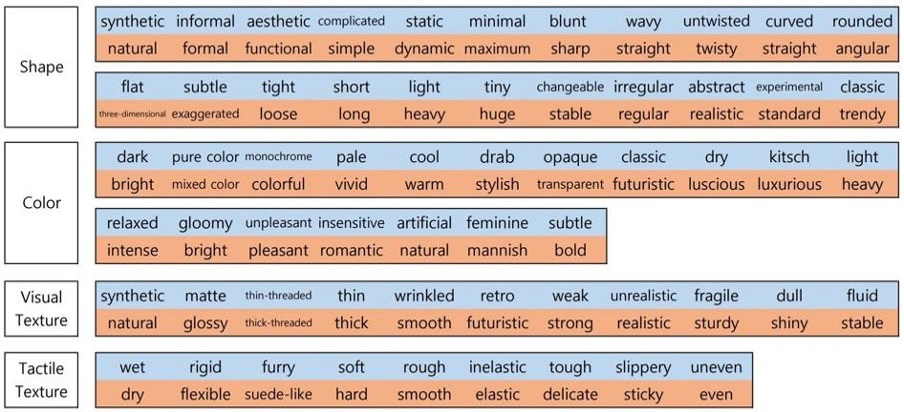
Emotional adjectives list of evaluating virtual fashion designs
3. 3. Participant Evaluation and Affective Mapping
A group of 30 Gen Z fashion design students participated in the evaluation. Each had academic training in digital fashion tools and formative design practices. Participants assessed the 75 selected virtual fashion images using the 61 adjective pairs on a 5-point Likert scale questionnaire. Their role was to identify affective qualities conveyed by core design elements, based on their interpretive capacity as trained observers. Responses were interpreted as expert-informed perspectives, providing insights into the affective qualities perceived in design attributes. The evaluation took place between October and December 2023, allowing for detailed individual feedback.
The responses were analyzed quantitatively to identify the most strongly associated emotional adjective pairs. Data were visualized using an affective mapping model derived from Kobayashi (1990) and Horiguchi and Iwamatsu (2018), as shown in Figure 2. The axes ranged from “warm” to “cool” on the X-axis and “hard” to “soft” on the Y-axis, and the size of each plotted circle represented the frequency and salience of affective quality terms. This visualization provided a structured representation of affective patterns across design elements.
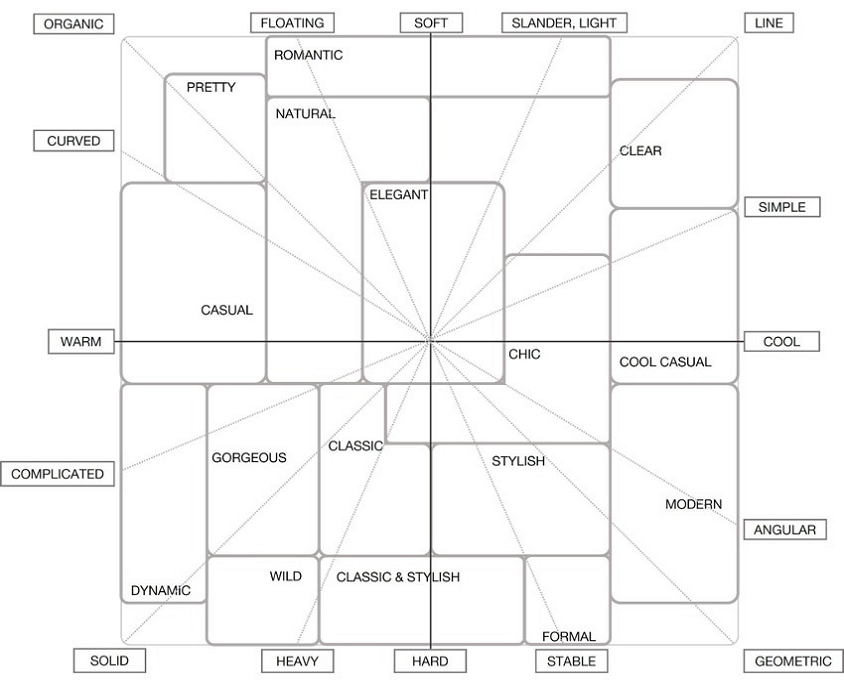
Developed image scale for affective quality assessment
To explore variation in affective expression, affective responses were also examined by brand and seasonal collection, revealing varied affective expressions across brand and seasonal contexts. To validate findings, an additional expert review was conducted with professionals in fashion design education and industry professionals. Their feedback confirmed the descriptive accuracy and relevance of the affective vocabulary and helped interpret the results in relation to current digital fashion design.
4. Result
The analysis revealed significant findings regarding the affective qualities embedded in virtual fashion design by examining how core design elements—shape, color, visual texture and tactile texture—contribute to emotional resonance. The results are presented in three parts: 1) the overall affective prominence of each design element, 2) key adjective pairs by each element, 2) affective consistency across, and 3) brand-specific variations.
The internal consistency of participant responses was confirmed with a Cronbach’s alpha of 0.799, indicating strong reliability. Minimal variation across individual responses further ensured the objectivity of the aggregated data.
4. 1. Affective prominence of design elements
Among the 61 emotional adjective pairs evaluated, 17 pairs (27.9%) emerged as highly impactful, each selected by over 70% of participants and showing a minimum 40% difference from their antonyms. In contrast, 24 pairs (39.3%) demonstrated low affective significance, appearing in less than 60% of responses and showing minimal contrast (less than 20%) between the paired terms. These findings are visualized in Figure 3.
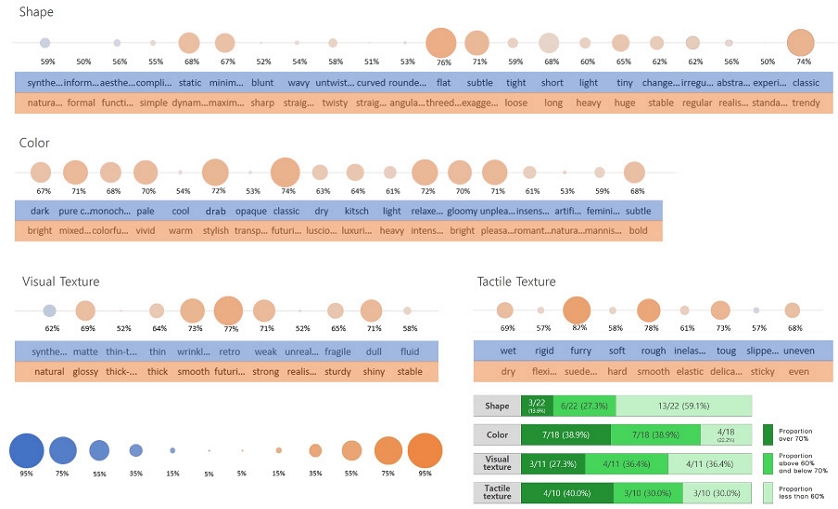
Distribution of emotional vocabulary across design elements
When broken down by design elements, shape showed the least contribution to emotional resonance, with only 3 out of 22 adjective pairs (13.6%) showing strong affective impact, while 59.1% (13 out of 22 pairs) were categorized as low-impact. In the case of color, 7 out of 18 pairs (38.9%) were rated as highly influential, and only 22.2% (4 out of 18 pairs) were considered low-impact. Visual texture exhibited strong emotional relevance for 4 out of 11 pairs (36.4%), while 27.3% were seen as having limited effect. Tactile texture showed a similar pattern, with 3 out of 10 pairs (30.0%) emerging as prominent and 40% identified as low-impact. These results suggest that affective resonance in virtual fashion design is influenced most significantly by color and texture, while shape contributes less prominently to the affective qualities perceived by expert evaluators.
4. 2. Key emotional adjectives by design elements
Shape
Shape influenced affective perception primarily through a limited number of impactful descriptors. Notably, key adjectives including ‘three-dimensional’ (76.3%), 2), ‘trendy’ (73.5%), and ‘exaggerated’ (71.4%) stood out as highly resonant, clearly contrasting their antonyms: ‘flat,’ ‘classic,’ and ‘subtle.’ In contrast, adjective pairs such as ‘standard’ (50.2%) vs. ‘experimental’ (48.8%), 2) ‘informal’ (50.4%) vs. ‘formal’ (49.6%), and 3) ‘curved’ (51.4%) vs. ‘straight’ (48.6%) showed minimal differences in selection rates, indicating low affective relevance, as depicted in Figure 4. As illustrated in Figure 5, the most influential shape descriptors clustered within ‘dynamic’ and ‘wild’ emotional zones, while ‘trendy’ also reinforced the ‘chic’ affective area. This suggests that shape, although less influential overall, contributes most strongly when associated with expressive or unconventional stylistic cues—such as oversized silhouettes, asymmetrical contours, or volumetric layering—that deviate from conventional garment structures and visually amplify individuality and aesthetic boldness in virtual fashion contexts.
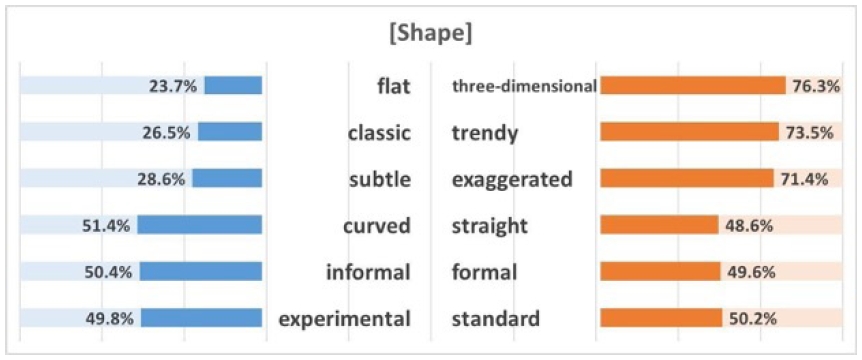
Distribution of shape-related emotional adjectives
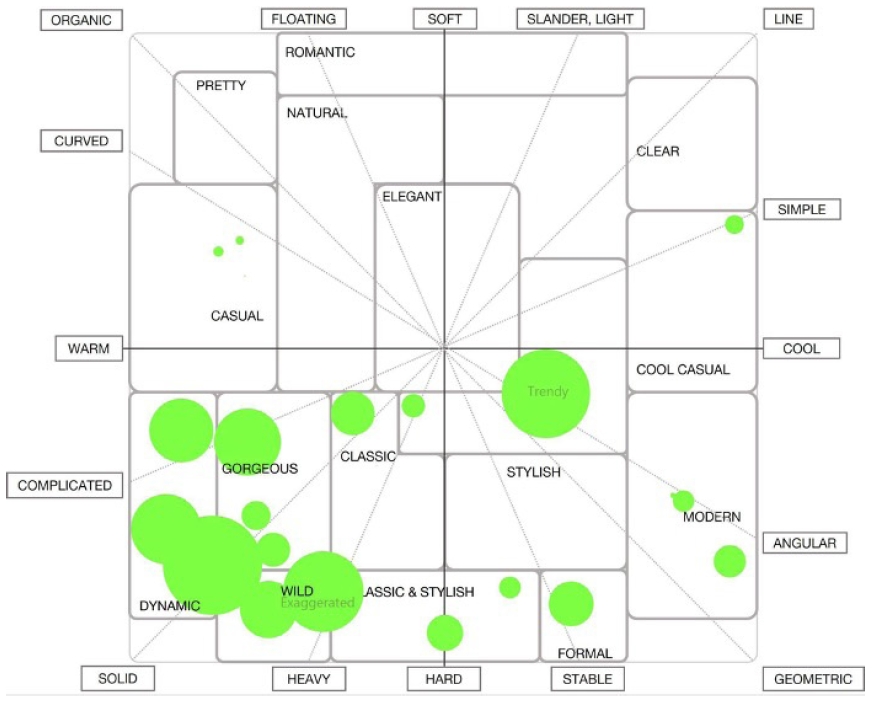
Image scale representing affective quality of shape
Color
Color emerged as the most influential design elements in shaping affective quality. High impact adjectives such as ‘futuristic’ (74.5%), ‘stylish’ (72.2%), and ‘intense’ (71.6%) were mapped closely to the ‘modern’ and ‘dynamic’ emotional zones, as illustrated in Figure 6. As visualized in Figure 7, adjectives such as ‘intense,’ ‘vivid,’ and ‘colorful’ reinforced perceptions of casual expressiveness, strongly aligning with ‘dynamic’ and ‘casual’ emotional zone, while ‘futuristic’ anchored more contemporary and forward-looking impressions in the ‘modern’ emotional zone. In contrast, adjective pairs such as ‘artificial–nature’ and ‘warm–cool’ contributed minimally to the overall affective quality of virtual fashion design, showing limited differentiation and lower selection frequencies.
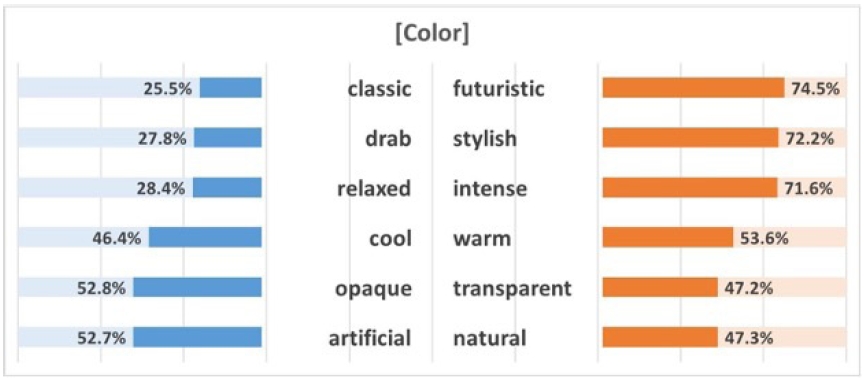
Distribution of color-related emotional adjectives
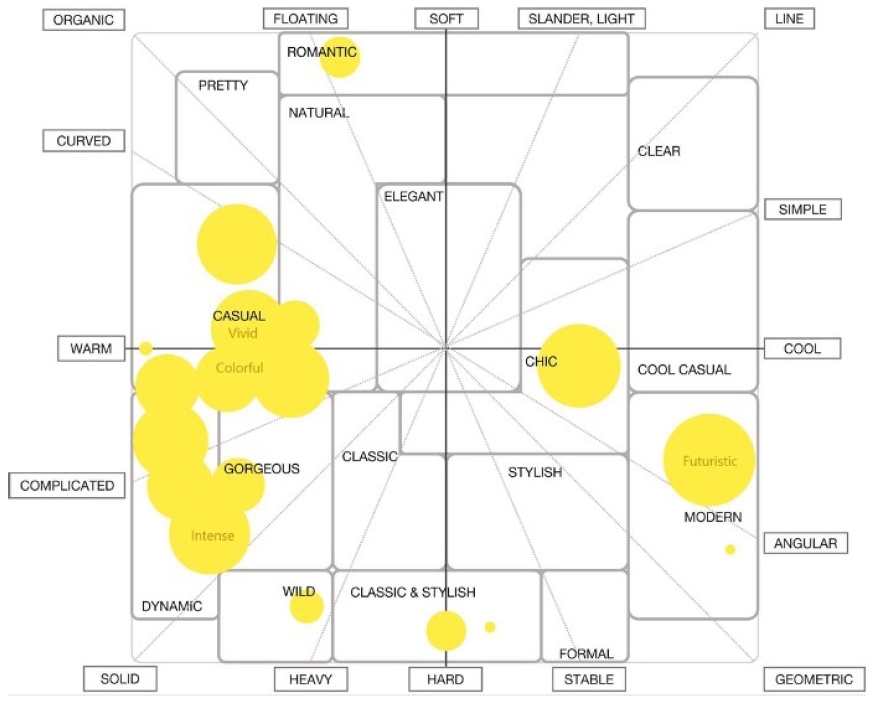
Image scale representing affective quality of color
These findings suggest that while vividness and stylistic boldness in color play a central role in generating emotional resonance, more subtle chromatic attributes like naturalness and temperature exert comparatively less influence in virtual fashion contexts.
Visual Texture
Visual texture contributed significantly to affective perception, particularly through adjectives such as ‘futuristic’ (76.9%), ‘smooth’ (73.3%), and ‘strong’ (70.7%), which clustered in the ‘modern’ and ‘stylish’ emotional zones (Figure 8). In contrast, adjective pairs such as ‘thick-threaded–thin-threaded,’ ‘unrealistic–realistic,’ and ‘stable–fluid’ showed minimal affective impact, indicating limited relevance in shaping affective impressions.
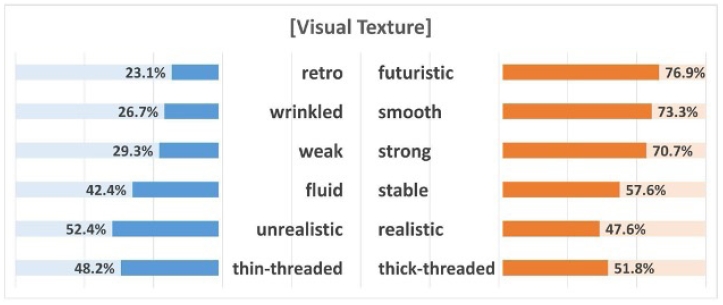
Distribution of visual texture-related emotional adjectives
As illustrated in Figure 9, adjectives such as ‘futuristic’ and ‘strong’ reinforced a sense of bold, contemporary styling, dominating the ‘modern’ and ‘stylish’ emotional zones, while ‘smooth’ and ‘shiny’ enhanced perceptions of affective qualities associated with ‘elegant’ and ‘gorgeous’. These findings underscore the refined aesthetic potential of visual textures and their ability to evoke emotionally resonant qualities in virtual fashion design.
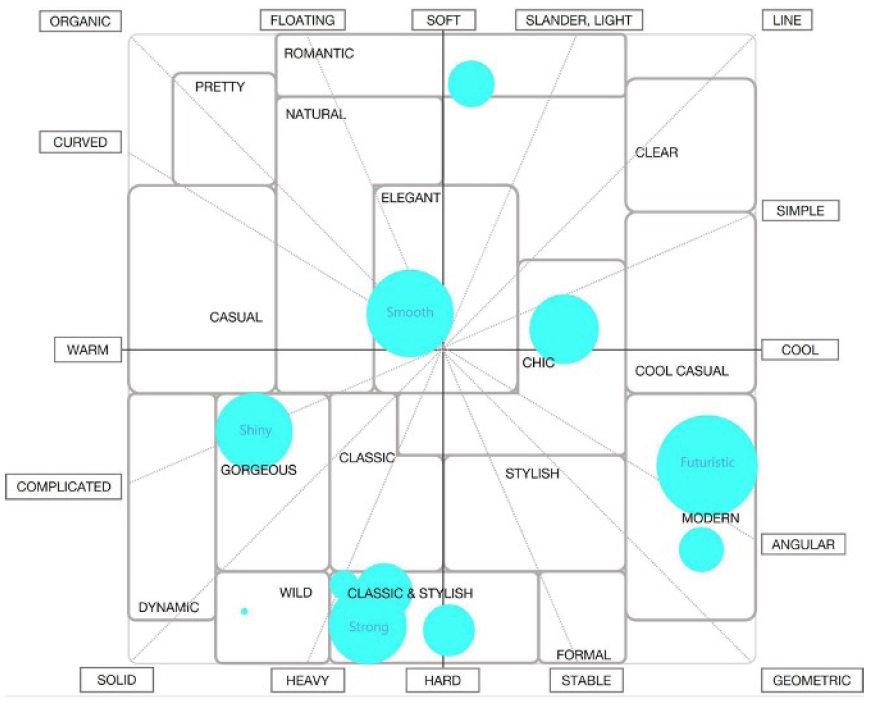
Image scale representing affective quality of visual texture
Tactile Texture
Tactile qualities such as ‘natural,’ ‘elegant,’ and ‘romantic’ demonstrated strong affective impact, primarily driven by adjectives like ‘suede-like’ (82.3%), ‘smooth’ (77.5%), and ‘delicate’ (72.8%). These descriptors were consistently associated with soft, refined, and emotionally evocative characteristics. In contrast, adjective pairs such as ‘slippery’ (57.0%) and ‘sticky’ (43.0%) showed limited distinction, indicating a limited contribution in shaping emotional perception (Figure 10).
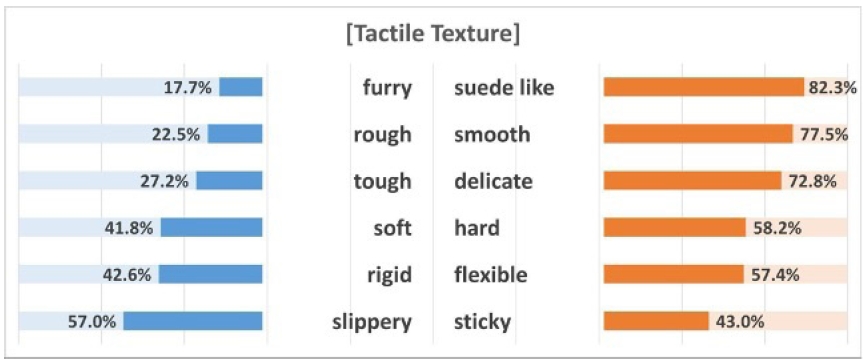
Distribution of visual texture-related emotional adjectives
As shown in Figure 11, the most influential tactile adjectives formed tight clusters within the emotional zones of ‘natural,’ ‘elegant,’ and ‘romantic’, emphasizing the significant role of tactile impressions in deepening affective engagement with virtual garments. These results highlight how digitally simulated materiality—despite the absence of physical touch—elicits emotional depth and support affective communication in virtual fashion design.
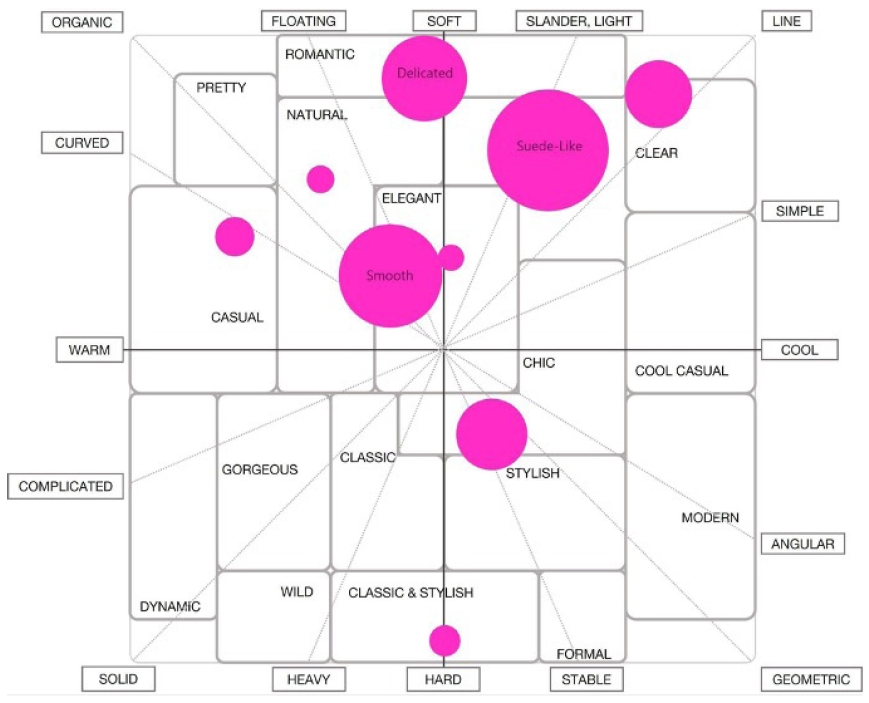
Image scale representing affective quality of tactile texture
As summarized in Figure 12, the cross-comparison of design elements revealed distinct patterns in how shape, color, visual and tactile textures contribute to affective qualities in virtual fashion design. Each element exhibited varying degrees of influence across different emotional zones, with certain attributes emerging as more prominent in specific affective contexts. Notably, strong affective concentrations were identified in areas such as ‘dynamic,’ ‘gorgeous’ and ‘wild,’ as well as ‘elegant,’ ‘chic,’ ‘stylish,’ and ‘modern’. Among these, color and shape were the primary contributors to ‘dynamic,’ ‘warm,’ and ‘gorgeous’ qualities, while shape and visual texture were more influential in expressing ‘cool,’ ‘casual,’ and ‘modern’ emotions. Tactile texture played a key role in shaping perceptions of ‘romantic’, ‘elegant’, and ‘chic’ qualities—often in combination with shape.
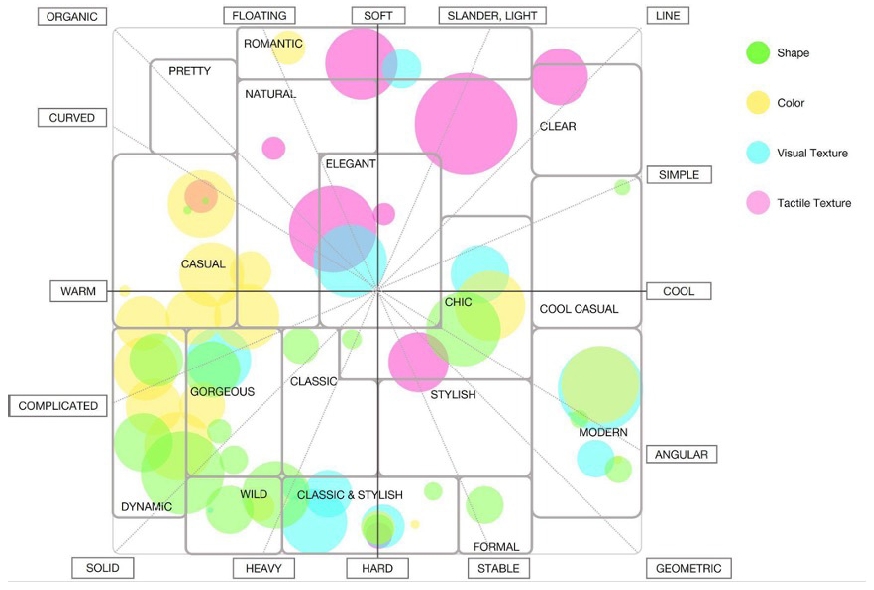
Image scale representing affective qualities of overall virtual fashion design elements
In contrast, affective categories such as ‘pretty’ and ‘formal’ showed limited representation, suggesting that these emotional impressions are either less reliant on the core design elements examined or underrepresented in the design strategies of leading virtual fashion brands. The relatively low frequency in the ‘formal’ emotional zone, for instance, implies that more complex or massy structured features beyond shape, color, or texture, such as silhouette construction or conceptual styling, might play a more crucial role here. Emotional zones like ‘romantic’ and ‘clear’ also exhibited sparse data points, often supported only by tactile or color-based cues and lacking significant input from other design components.
Overall, the overlap between color and texture elements emerged as particularly impactful, reinforcing their combined potential for evoking strong emotional responses. These findings suggest that designers can strategically manipulate color-texture synergies to enhance emotional depth and resonance in virtual fashion designs that meet diverse consumer needs and preferences in the Metaverse fashion market. In addition, identifying emotional zones with minimal representation may offer opportunities for innovation, inviting further exploration into how underutilized affective qualities can be incorporated to diversify and expand the emotional language of virtual fashion design.
4. 3. Affective consistency across collection season
Emotional responses to core design elements showed minimal variation across seasonal collections. Key emotional adjectives such as ‘three-dimensional’ (76%) in shape, ‘futuristic’ (74%) in color, ‘futuristic’ (77%) in visual texture, and ‘suede-like’ (82%) in tactile texture consistently ranked among the most frequently selected terms across all sampled seasons. This consistency suggests that emotional responses linked to these design elements remains stable over time, regardless of seasonal thematic shifts.
A deeper analysis of emotional vocabulary distribution revealed no significant variation in the ranking of either dominant or marginal descriptors. Standard deviation analysis further confirmed this stability, showing only minor fluctuations across design elements: 0.042 for shape, 0.036 for color, 0.051 for visual texture, and 0.026 for tactile texture, with a mean deviation of 0.039. These results indicate that users’ affective interpretations of virtual fashion design elements are not strongly influenced by temporal variation, as illustrated in Figure 13.
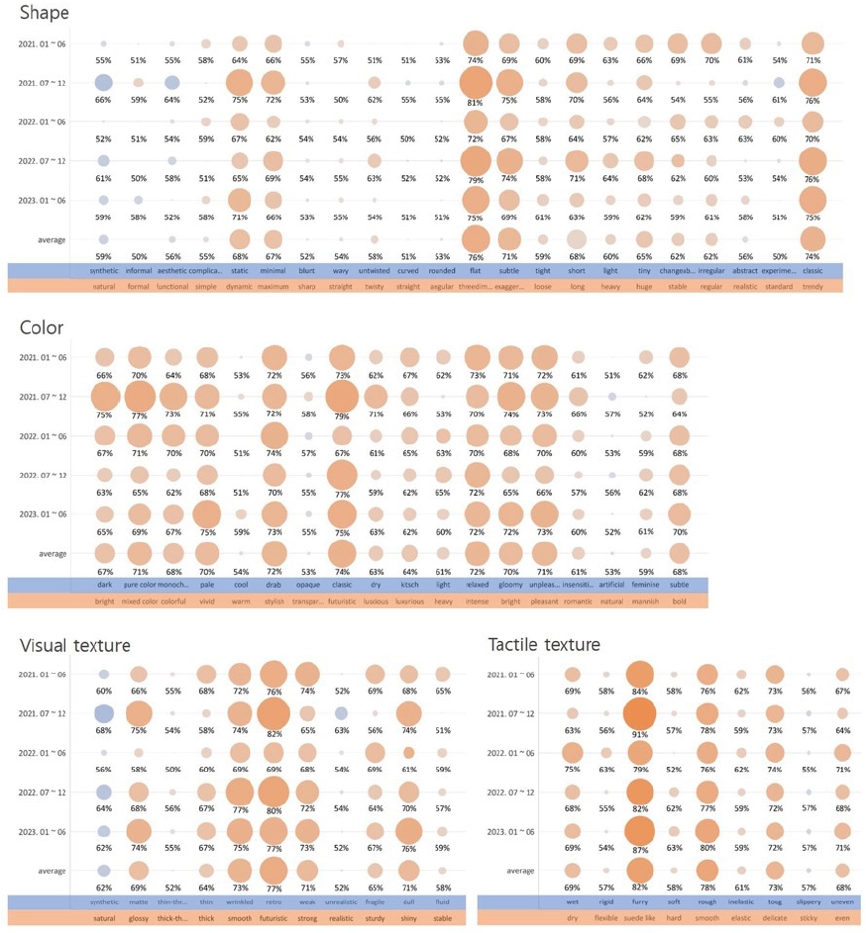
Distribution of emotional vocabulary across collection seasons
In summary, affective qualities embedded in virtual fashion design appear relatively resistant to seasonal influence. This finding implies that emotional design in virtual fashion does not necessarily follow the cyclical shifts common in traditional fashion collections. As such, designers might prioritize consistent emotional narratives over trend-driven seasonal adjustments, enabling clearer identity building and brand communication in the virtual environment.
4. 4. Brand-specific affective strategies
Distinct affective profiles emerged among the five virtual fashion brands, highlighting their unique affective design strategies and stylistic directions, as illustrated in Figure 14. RTFKT was characterized by a futuristic and modern aesthetic, frequently using descriptors such as ‘futuristic’ colors, ‘trendy’ shapes, and ‘smooth’ tactile texture (see Figure 15). Republiqe favored a minimalist emotional aesthetic, prioritizing ‘bright’ color and simplicity in shape and visual texture (see Figure 16). The Fabricant displayed a more experimental approach, associated with ‘mixed’ color palettes, ‘three-dimensional’ forms, and ‘futuristic’ visual texture, reflecting its avant-garde positioning. Tribute, by contrast, consistently employed luxurious and romantic tactile cues like ‘suede-like’ finishes, which enhanced affective quality zones such as ‘elegant’ and ‘romantic’ (see Figure 17). DressX positioned itself between accessibility and style, combining ‘stylish’ colors with ‘stable’ shapes and both ‘futuristic’ visual and tactile textures.
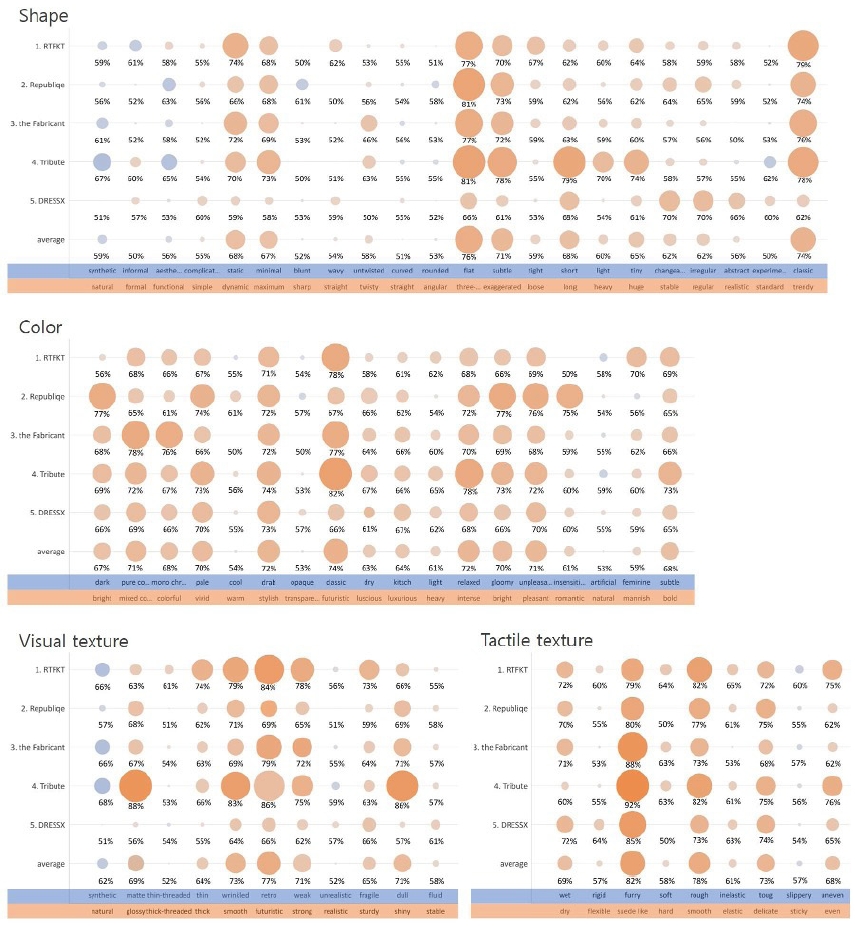
Distribution of emotional vocabulary across brands
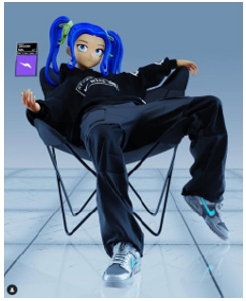
RTFKT’s Clones & .SWOOSH. Adapted from RTFKT (2023). Instagram.https://www.instagram.com/p/CoYB2HYK9yC/
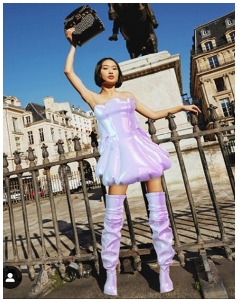
Republiqe’s COLLAB with monnierfreres. Adapted from Republiqe (2021). Instagram.https://www.instagram.com/p/CWGNlEmlXa2/
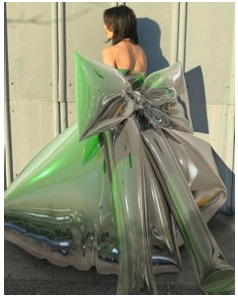
Tribute’s contactless&cyber BALA dress. Adapted from tribute_brand (2021). Instagram.https://www.instagram.com/p/CKRK3dbgS65/
Although similar emotional adjectives, such as ‘futuristic’ and ‘elegant’, appeared across multiple brands, their proportional weight and prominence varied significantly. For instance, the color adjective ‘romantic’ appeared in 75% of responses for Republique, compared to only 50% for RTFKT. Similarly, ‘glossy’ visual texture was dominant for Tribute (88%) but appeared in only 56% of DressX responses. These differences suggest brand-specific emotional vocabularies that reflect distinct design philosophies and identity strategies.
Statistical analysis supported this differentiation, standard deviations of 0.063 (shape), 0.051 (color), 0.072 (visual texture), and 0.048 (tactile texture), averaging 0.059—notably higher than seasonal fluctuations. These findings underscore that affective expression in virtual fashion is more strongly shaped by brand identity than by temporal seasonality. Expert evaluation by five professors in digital fashion design yielded an average score of 4.21/5 on a Likert scale, with a Cronbach’s alpha of 0.98, confirming the reliability of these interpretations.
5. Discussion
5. 1. Affective qualities in virtual fashion design: insights into emotional design patterns
This study examined how core design elements—shape, color, visual texture, and tactile texture—relate to the affective qualities of contemporary virtual fashion collections, as interpreted by expert-level fashion design students. Analysis of 75 images showed that these elements were frequently associated with the affective descriptors participants applied most often. Terms such as “dynamic,” “elegant,” “chic,” and “modern” predominated across collections, with their frequencies closely linked to the interplay of color and texture.
Shape and color were associated most frequently with the qualities “dynamic,” “warm,” and “gorgeous,” with adjectives like “vivid,” “futuristic,” and “bold” standing out. Visual textures shaped perceptions of “modern” and “casual”, while tactile textures aligned closely with “romantic” and “elegant,” especially through adjectives like “delicate” and “smooth”. One recurring pattern in the analysis was the interaction of color and texture in enhancing affective impressions. For instance, vibrant colors paired with smooth textures reinforced qualities such as elegance and sophistication, creating a coherent emotional tone within the design. This is consistent with previous findings from Rathod and Kolhatkar’s (2014) on cumulative effects of layered design elements in strengthening affective engagement.
Brand-level comparison revealed different affective emphases: RTFKT images were coded mainly as “futuristic” and “dynamic” through bold colors and angular forms, while Tribute images clustered around the “romantic” and “elegant” zones through dominant use of luxurious textures and warm color palettes. These differences suggest that deliberately composed affective cues may contribute to perceived brand identity and symbolic resonance, aligning with the role of affective quality in consumer-brand relationships (Kodzoman et al., 2023).
The study relied on design-trained students in fashion design to interpret emotional cues embedded in virtual fashion design. This expert-informed perspective provided interpretations of how affective qualities were embedded in the design, offering not generalized consumer perceptions, but design-sensitive readings grounded in disciplinary knowledge. These interpretations contribute to a deeper understanding of affective design strategies in virtual fashion design practice.
5. 2. Implications for practice and education
This study’s findings contribute not only to design research but also to advancing digital fashion education. By identifying how specific design elements shape affective impressions, it offers a clearer basis for integrating emotional design principles into early concept work. Combinations of color and texture emerged as key drivers of recognizable affective impressions, offering practical insights to brands seeking stronger differentiation and user engagement in digital environments. As affective engagement becomes a critical differentiator in the Metaverse fashion economy (Lee & Park, 2021), the deliberate use of emotional cues thus functions both an aesthetic approach and as a branding tool to build enduring consumer relationships, consistent with the findings by Feng and Zhao (2024) and Ryu and Ryu (2021).
From a pedagogical perspective, the results underscore the need to balance 3D tool instruction with attention to how visual choices affect emotional perception. While many programs emphasize the technical use of 3D fashion CAD tools, fewer integrate emotional design theory into the virtual fashion design process. This creates a gap between technical execution and design intent. By incorporating affective design knowledge, such as how shape, color, and texture communicate emotional cues, educators can equip students with a more integrated understanding of virtual garment creation.
The use of trained fashion design students in this study—rather than general users—illustrates how expert perception can contribute to both design ideation and education. These expert-level participants demonstrated how affective qualities are read and interpreted within a design framework, reinforcing their value in the conceptualization phase. Integrating similar evaluative methods into studio education could enhance students’ critical design thinking, enabling them to intentionally develop emotionally resonant visual narratives. These educational implications support the development of emotionally literate designers capable of navigating both the creative and communicative dimensions of virtual fashion design.
5. 3. Limitation and directions for future work
While the use of expert-level participants provided valuable and specific insights, it also presents limitations. The findings reflect a design-oriented perspective that, while useful for understanding how affective design attributes function, may not fully capture the emotional responses of the general consumer population. The use of a relatively narrow demographic—fashion design students with formal training—limits the broad applicability of the results.
To address this constraint, future research should incorporate comparative analyses between expert evaluators and broader user populations, considering variables such as age, cultural background, and familiarity with digital platforms. This would facilitate a more comprehensive understanding of how emotional responses to virtual fashion design vary across diverse user segments.
Building on the current study, future work should aim to establish a more structured framework for evaluating emotional design in virtual fashion. This effort would benefit from cross-disciplinary collaboration, drawing on methodologies from fashion design, cognitive psychology, and human-computer interaction (Cheng & Liu, 2012). In particular, the application of machine learning-based affective analysis and advanced data visualization, as suggested from expert reviewers of this study, holds promise for mapping large-scale emotional response patterns with greater precision and objectivity.
Additionally, future studies should explore cultural variation in emotional design perception, recognizing that affective preferences are shaped by sociocultural norms, visual aesthetics, and fashion traditions. Comparative analyses across different cultural contexts could yield further insights into how emotional design strategies can be either localized or standardized for global digital fashion applications. Finally, further research should investigate how emotional design frameworks can be integrated directly into the actual concept development process in both educational and commercial settings. Of particular interest is the potential of integrating practice-based prototyping, avatar-mediated emotional visualization, or AI-supported co-design processes into design pedagogy and professional workflows. Such investigations would help bridge the gap between theory and implementation, enabling fashion designers to translate emotion-driven aesthetics into emotionally resonant digital fashions from the earliest stages of concept development.
6. Conclusion
This study identified how core design element, specifically shape, color, visual texture and tactile texture, contribute to the dominant affective qualities of contemporary virtual fashion design, with the goal of enhancing both theoretical understanding and design practice in this emerging field. The findings demonstrated that color and visual texture, particularly in their combined effect, are the most influential in shaping dominant affective qualities of recent virtual fashion design, such as “dynamic,” “elegant” and “modern.” These insights emphasize the role of emotional design in virtual fashion and highlight the need for an in-depth exploration into how design elements function interactively to produce emotionally resonant outcomes.
By focusing on the interpretations of expert-level participants with disciplinary knowledge in fashion design, the study provides a design-informed framework for evaluating emotional resonance in virtual fashion design. Rather than generalizing user behavior, this research foregrounds how trained evaluators perceive and decode affective cues, offering valuable insights into the strategic use of design elements in concept development. Such insights are particularly relevant for guiding emotion-led design practices in digital fashion, where traditional materiality is replaced by visual representation and symbolic communication.
The study contributes to the expanding discourse on emotional design in digital contexts by laying the groundwork for a more systematic element-based evaluation model. This model not only supports academic inquiry into affective quality but also offers practical strategies for virtual fashion designers and educators. As the industry continues to evolve within the Metaverse and other immersive platforms, the integration of emotional design principles will be key to fostering emotionally engaging, identity-expressive, and culturally meaningful digital fashion experiences. Future research should build upon this foundation by developing cross-disciplinary evaluation tools, incorporating broader demographic perspectives, and integrating emotion-driven design strategies into both educational curricula and commercial design workflows. In doing so, virtual fashion can advance as a user-aware, emotionally intelligent medium, capable of delivering rich aesthetic experiences that resonate within digitally mediated environments.
Acknowledgments
This study was supported by the National Research Foundation of Korea (NRF) grant funded by the Korea government (MISIT) (No. RS-2022-00166083) and the Yonsei University Research Fund of 2023-22-0084.
Notes
Copyright : This is an Open Access article distributed under the terms of the Creative Commons Attribution Non-Commercial License (http://creativecommons.org/licenses/by-nc/3.0/), which permits unrestricted educational and non-commercial use, provided the original work is properly cited.
References
-
Aldridge, V. K., Dovey, T. M., & Wade, A. (2017). Assessing test-retest reliability of psychological measures: Persistent methodological problems. European Psychologist 22(4), 207-218.
[https://doi.org/10.1027/1016-9040/a000298]

-
An, H., & Lee, I. (2015). A conceptual framework for Asian women's emotional needs in fashion design. International Journal of Fashion Design, Technology and Education 8(3), 206-213.
[https://doi.org/10.1080/17543266.2015.1053421]
-
An, H., & Park, M. (2020). Approaching fashion design trend applications using text mining and semantic network analysis. Fashion and Textiles, 7, 1-15.
[https://doi.org/10.1186/s40691-020-00221-w]
-
Casciani, D., Chkanikova, O., & Pal, R. (2022). Exploring the nature of digital transformation in the fashion industry: opportunities for supply chains, business models, and sustainability-oriented innovations. Sustainability: Science, Practice and Policy, 18(1), 773-795.
[https://doi.org/10.1080/15487733.2022.2125640]
- Cheng, J., & Liu, G. (2012). Research progress of affect detection in interdisciplinary perspective. Computer Science 39(5), 19-24.
-
Cho, H. S., & Lee, J. (2005). Development of a macroscopic model on recent fashion trends on the basis of consumer emotion. International Journal of Consumer Studies, 29(1), 17-33.
[https://doi.org/10.1111/j.1470-6431.2005.00370.x]
-
Choi, K. H. (2022). 3D dynamic fashion design development using digital technology and its potential in online platforms. Fashion and Textiles, 9, 1-28.
[https://doi.org/10.1186/s40691-021-00286-1]
-
Chrimes, C., & Boardman, R. (2023). The Opportunities & Challenges of the Metaverse for Fashion Brands. In: Brandstrup, B., Dana, L.-P., & Ryding, D., Vignali, G., & Caratù, M. (Eds.), The Garment Economy (pp. 389-410), Cham: Springer.
[https://doi.org/10.1007/978-3-031-33302-6_20]
-
Feng, Y., & Zhao, L. (2024). Emotional design for pro-environmental life: Visual appeal and user interactivity influence sustainable consumption intention with moderating effect of positive emotion. Heliyon, 10(19). E38521.
[https://doi.org/10.1016/j.heliyon.2024.e38521]
-
Hollensen, S., Kotler, P., & Opresnik, M. O. (2023). Metaverse - the new marketing universe. Journal of Business Strategy, 44(3), 119-125.
[https://doi.org/10.1108/JBS-01-2022-0014]
-
Horiguchi, S., & Iwamatsu, K. (2018), From Munsell color system to a new color psychology system. Color Research & Application, 43(6), 827-839.
[https://doi.org/10.1002/col.22286]
-
Jang, H. J. (2020). A study on color sensibility model of online game images. The Korean Society of Illustration Research, 21(6), 171-181.
[https://doi.org/10.37379/JKSIR.2020.64.16]
-
Jin, M., & Choi, S. Y. (2023). Chinese Gen Z's emotional dimensions for fashion design during the pandemic. International Journal of Fashion Design, Technology and Education, 16(1), 119-129.
[https://doi.org/10.1080/17543266.2022.2126897]
-
Khelladi, I., Lejealle, C., Rezaee Vessal, S., Castellano, S., & Graziano, D. (2023). Why do people buy virtual clothes?. Journal of Consumer Behaviour, 23(3), 1389-1405.
[https://doi.org/10.1002/cb.2270]
-
Kim, H. J., & Kim, Y. S. (2015). Virtuality in digital fashion images. Journal of the Korean Society of Clothing and Textiles, 39(2), 233-246.
[https://doi.org/10.5850/JKSCT.2015.39.2.233]
- Kim, S. J., & Park, K. S. (2008). A study on analysis of the physical properties of domestic and foreign sensitive worsted fabrics: subjective hand assessments, comparison between 1st and 2nd experiment. Science of Emotion and Sensibility, 11(1), 113-122.
-
Kim, Y., & Sundar, S. S. (2012). Visualizing ideal self vs. actual self through avatars: Impact on preventive health outcomes. Computers in Human Behavior, 28(4), 1356-1364.
[https://doi.org/10.1016/j.chb.2012.02.021]
- Kobayashi, S. (1991). Color image scale. Tokyo: Kodansha international.
-
Kodzoman, D., Čuden, A. P., & Cok, V. (2023). Emotions and fashion: how garments induce feelings to the sensory system. Industria Textila, 74(3), 346-355.
[https://doi.org/10.35530/IT.074.03.202253]
-
Kraemer, H. C. (1980). Extension of the kappa coefficient. Biometrics, 36(2), 207-216.
[https://doi.org/10.2307/2529972]
-
Lee, S. H. (2005). Formative arts research of the virtual reality that is presented in movie game. Journal of Asia Pacific Design Forum, 1, 103-112.
[https://doi.org/10.1007/BF03026778]
- Lee, J. M., & Kim, H. Y. (2016). Study on sensibility to visual tactility of modern fashion materials. Bulletin of Korean Society of Basic Design & Art, 17(5), 447-460.
- Lee, J., & Park, J. (2021). The Influence of Emotional Engineering Factors in Product Design on Brand Preference and Loyalty-Focusing on Smartphones. Journal of the Korea Institute of Information and Communication Engineering, 25(3), 412-418.
-
Lim, H. (2023). A study on the perception of metaverse fashion using big data analysis. Fashion & Textile Research Journal, 25(1), 72-81.
[https://doi.org/10.5805/SFTI.2023.25.1.72]
-
Liu, K., Zhou, S., Zhu, C., & Lü, Z. (2022). Virtual simulation of Yue Opera costumes and fashion design based on Yue Opera elements. Fashion and Textiles, 9, 1-21.
[https://doi.org/10.1186/s40691-022-00300-0]
-
Loureiro, S. M. C. (2023). Artificial intelligence and extended reality in luxury fashion retail: analysis and reflection. In V. Geroimenko (Ed.), Augmented reality and artificial intelligence: the fusion of advanced technologies (pp.323-348). Cham: Springer.
[https://doi.org/10.1007/978-3-031-27166-3_18]
-
Michelle, G., & Sabrina, B. (2024). The Metaverse: Digital innovation in the fashion industry-A systematic literature review. In: Braccini, A.M., Pallud, J., Pennarola, F. (eds) Technologies for Digital Transformation. ItAIS2022. Lecture Notes in Information Systems and Organisation, vol 64. Springer, Cham.
[https://doi.org/10.1007/978-3-031-51210-1_18]
- Morelius, A. (2018). The use of adjectives in contemporary fashion magazines: A gender-based study. University of Gävle. Retrieved from http://http://hig.diva-portal.org/smash/record.jsf?pid=diva2%3A1186468&dswid=-8288.
- Norman, D. A. (2004). Emotional design: Why we love (or hate) everyday things. Basic Books.
-
Plass, J. L., Homer, B. D., MacNamara, A., Ober, T. M., Rose, M. C., Pawar, S., Hovey, C. M., & Olsen, A. (2019). Emotional design for digital games for learning: The affective quality of expression, color, shape, and dimensionality of game characters. Semantic Scholar. Corpus ID: 216655743.
[https://doi.org/10.1016/j.learninstruc.2019.01.005]
-
Rathod, A., & Kolhatkar, A. (2014). Analysis of physical characteristics of bamboo fabrics, International Journal of Research in Engineering and Technology, 3(8), 21-25.
[https://doi.org/10.15623/ijret.2014.0308004]
-
Rodriguez Sanchez, M., & Garcia-Badell, G. (2023). Dressing the metaverse. The Digital strategies of fashion brands in the virtual universe. In: Broega, A. C., Cunha, J., Carvalho, H., Provid ência, B. (eds.), Advances in Fashion and Design Research. CIMODE 2022 (pp. 357-366). Springer, Cham.
[https://doi.org/10.1007/978-3-031-16773-7_33]
-
Ryu, S., & Ryu, S. (2021). Feeling excited and fluent: how consumers respond to the visual appeals of products in an online shopping environment. Behaviour & Information Technology, 40(11), 1219-1233.
[https://doi.org/10.1080/0144929X.2021.1942989]
-
Santos, L. R., Montagna, G., & Neto, M. J. P. (2020). The virtualization of the fashion product. In G. Di Bucchianico, C. S. Shin, S. Shim, S. Fukuda, G. Montagna & C. Carvalho (Eds.), Proceedings of the AHFE 2020 virtual conferences on design for inclusion, affective and pleasurable design, interdisciplinary practice in industrial design, kansei engineering, and human factors for apparel and textile engineering (pp.820-830), Cham: Springer.
[https://doi.org/10.1007/978-3-030-51194-4_106]
-
Simonetti, A., Bigne, E., & Navas, L. F. R. (2025). Consumer brand choice in the metaverse: Exploring personal and social factors. Technological Forecasting and Social Change, 213, 124033.
[https://doi.org/10.1016/j.techfore.2025.124033]
-
Vaidya, O. S., & Kumar, S. (2006). Analytic hierarchy process: an overview of applications, European Journal of Operational Research, 169(1), 1-29.
[https://doi.org/10.1016/j.ejor.2004.04.028]
-
Venturini, A., & Columbano, M. (2023). 'Fashioning' the metaverse: A qualitative study on consumers' value and perceptions of digital fashion in virtual worlds. Journal of Global Fashion Marketing, 15(1), 6-22.
[https://doi.org/10.1080/20932685.2023.2234918]
-
Won, J. S. (2023). Influence of formative principles of virtual influencer on the ads, brand, and product attitude: Mediating effect of likeability. Journal of Digital Contents Society, 24(8), 1675-1685.
[https://doi.org/10.9728/dcs.2023.24.8.1675]
-
Xu, S. (2023). The consumer behavior analysis of virtual clothes. Telematics and Informatics Reports, 10, 100047.
[https://doi.org/10.1016/j.teler.2023.100047]
-
Zaki, Y., Wu, MS., Hamdan, A., Thomas, J. (2024). Fashion brands in the Metaverse: Redefining digital marketing and branding landscapes. In: Hamdan, A., Harraf, A. (eds) Business Development via AI and Digitalization. Studies in Systems, Decision and Control, vol 538. Springer, Cham.
[https://doi.org/10.1007/978-3-031-62102-4_19]