
Material Transformation Dimension Framework for Sustainable Craft Innovation: Design and Development of Banana Fiber Products
Abstract
Background While our previous research established the effectiveness of participatory design approaches in developing innovative banana fiber products in Thailand, this study addresses the critical gap between prototype development and commercial viability. Traditional craft materials like banana fiber offer potential for sustainable innovation, but their successful commercialization requires frameworks that balance cultural preservation with market demands. This research introduces the Material Transformation Dimension framework for guiding the commercial development of agricultural by-product crafts.
Methods Building on our established Creative Knowledge Integration approach, we implemented the Material Transformation Dimension (MTD) framework through a seven-phase methodology: (1) material exploration based on previous prototypes, (2) community enterprise capabilities analysis, (3) promotional strategy investigation, (4) collaborative planning, (5) product and promotional material development, (6) stakeholder presentation, and (7) commercial implementation and market testing. Data was collected through field research, interviews, collaborative workshops, and market feedback sessions with the Creative Agriculture Community Enterprise Group in Nakhon Si Thammarat Province.
Results The research yielded three significant outcomes: a commercially viable collection of banana fiber design products adapted from previous prototypes to suit local production capabilities while maintaining cultural authenticity; a complete brand identity system including logos and promotional materials that effectively communicate the cultural and sustainable value of the products; and a knowledge transfer framework enabling community members to independently develop and market future products. These outcomes demonstrated positive market reception signals through initial commercial testing, indicating potential for sustainable income generation for community members.
Conclusions This bounded case study demonstrates how the Material Transformation Dimension framework bridges the gap between traditional craft innovation and commercial viability. By integrating design expertise with community knowledge and market awareness, the research suggests a potential model for transforming agricultural by-products into sustainable commercial enterprises. The approach not only preserves traditional craftsmanship but also creates economic opportunities that support cultural sustainability while addressing growing consumer interest in environmentally responsible products.
Keywords:
Material Transformation Dimension, Craft Development, Sustainable Design, Brand Identity, Banana Fiber, Cultural Heritage1. Introduction
The intersection of traditional craft practices and contemporary market demands presents both significant challenges and opportunities for sustainable development. Building upon our previous research on participatory design for sustainable product innovation with banana fiber in Thailand (Suksikarn & Suksikarn, 2025), this study addresses the critical transition from prototype development to commercial viability. While our earlier work successfully established the Creative Knowledge Integration (CKI) framework for facilitating collaborative design processes between design students, researchers, entrepreneurs, and community producers, it revealed a significant gap in understanding how these innovative products could be effectively commercialized while preserving their cultural and environmental value.
Agricultural by-products like banana fiber represent an important resource for sustainable innovation in Thailand and globally. As noted by Cecci et al. (2020), banana pseudostem fibers exhibit favorable mechanical properties comparable to other natural fibers, making them suitable for various applications. Beyond their material properties, these fibers embody cultural significance and traditional knowledge that has been passed down through generations (Lin & Lin, 2022). However, despite growing consumer interest in sustainable materials, banana fiber products have struggled to establish a significant commercial presence in contemporary markets (Kim & Wang, 2020; Ngamkham et al., 2022).
The challenge of commercializing traditional craft materials exists at the intersection of several complex domains: material science, cultural heritage preservation, sustainable design, and market dynamics. Previous research has typically addressed these domains in isolation. Studies by Sangamithirai and Vasugi (2023) focused primarily on the technical properties of banana-cotton fabric as a sustainable textile, while Mokhtar (2020) examined the cultural aspects of preserving heritage through sustainable craft development. Research on market strategies for traditional crafts, such as Ferreira et al. (2019), has often failed to address the specific challenges of agricultural by-product materials. This fragmentation in research has left a significant gap in understanding how to effectively transform these materials into commercially viable products while preserving their cultural authenticity and environmental benefits (Alharthi et al., 2022; Kamaruddin, 2020).
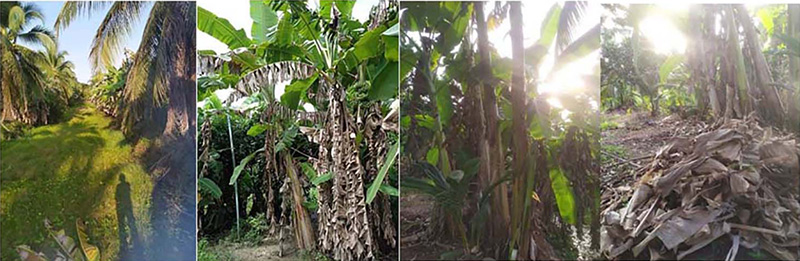
Traditional banana plant cultivation in Nakhon Si Thammarat Province, Thailand, showing the source material before extraction of fibers
To address this gap, we introduce the Material Transformation Dimension (MTD) framework—an approach—which provides an integrated approach to guiding the commercial development of agricultural by-product crafts. This framework builds upon our previous work on Creative Knowledge Integration but extends it to specifically address the material-to-market transformation process. It integrates five key components: Material Knowledge Systems, Technical Innovation within Cultural Context, Design Translation for Market Relevance, Value Communication Systems, and Community Knowledge Sovereignty (Santos et al., 2023; Tharakan, 2023).
The significance of this research extends beyond the specific case of banana fiber crafts in Thailand. By developing an integrated framework for the commercial development of agricultural by-product crafts, we contribute to broader discussions on sustainable material innovation, cultural heritage preservation, and community economic development (de Waal & Maxwell, 2023; Esfandiari et al., 2023; Hansson & von Busch, 2023). The Material Transformation Dimension framework offers a structured approach to navigating the complex terrain between traditional craft practices and contemporary market demands, providing guidance for designers, community enterprises, and policymakers seeking to support sustainable craft development (Dahm & Leimenstoll, 2022; Murugesan et al., 2023).
The research questions guiding this study were:
- 1. How can the Material Transformation Dimension framework guide the commercial development of banana fiber products to create sustainable economic opportunities while preserving cultural heritage?
- 2. What strategies effectively communicate the cultural and sustainable value of banana fiber products to contemporary markets?
- 3. How can knowledge transfer systems be designed to ensure community ownership of both production processes and commercial strategies?
By addressing these questions, this research aims to establish a replicable model for sustainable commercial development of traditional crafts that balances economic viability with cultural authenticity and environmental responsibility.
2. Theoretical Framework: Material Transformation Dimension
2. 1. Theoretical Positioning: Challenging Existing Paradigms
Current approaches to craft commercialization operate within three flawed paradigms: modernization-first (prioritizing market efficiency over cultural preservation), preservation-first (maintaining tradition at expense of viability), and consultation-based (treating communities as informants rather than knowledge owners). These paradigms tend to fail because they cannot reconcile the fundamental tension between cultural authenticity and commercial demands.
Our theoretical intervention: The Material Transformation Dimension framework disrupts this false trichotomy by proposing that agricultural by-products require fundamentally different commercialization logic than conventional crafts—one that treats material variability as analytical opportunity, not production constraint.
2. 2. MTD as Analytical Framework: Key Differentiators
Existing frameworks fail on three analytical levels:
- 1. Knowledge Integration Failure: Walker, Evans & Mullagh (2019) theorize meaningful practices but cannot operationalize knowledge synthesis across traditional-scientific-market domains simultaneously
- 2. Commercial Blind Spot: Udoewa (2022) provides participatory ethics but lacks commercial transformation mechanisms
- 3. Material Agnosticism: Current frameworks treat all craft materials identically, ignoring agricultural by-products’ unique temporal, seasonal, and variability characteristics
MTD’s key advancement: Transforms constraints into analytical advantages through uncertainty management rather than uncertainty elimination.
Unlike linear consultation models, MTD operates through simultaneous integration across five analytical domains (Figure 2), enabling uncertainty transformation rather than standardization enforcement
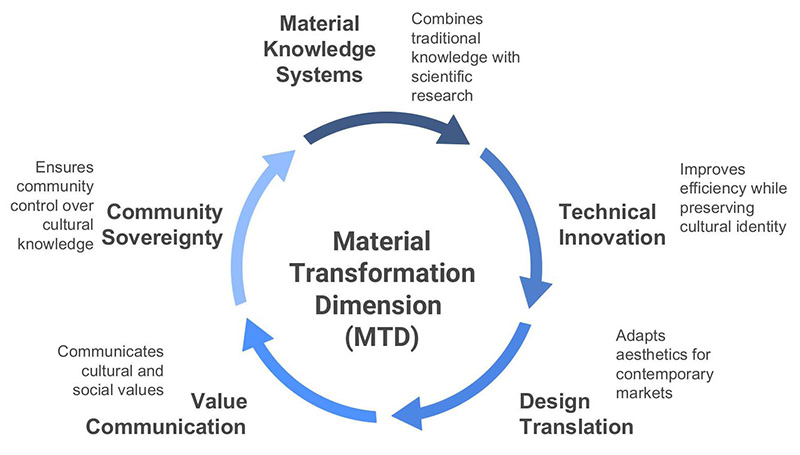
MTD analytical architecture: simultaneous multi-domain integration versus sequential approaches in existing frameworks.
Principle 1: Productive Uncertainty Agricultural by-products’ material variability becomes analytical resource for understanding adaptation capacity rather than standardization problem to solve.
Principle 2: Multi-Domain Knowledge Integration Traditional knowledge, scientific analysis, and market intelligence must be synthesized simultaneously, not sequentially, to generate commercially viable cultural products.
Principle 3: Power-Conscious Commercialization Commercial development must redistribute rather than extract value from communities through embedded knowledge sovereignty mechanisms.
2. 3. Theoretical Contribution: Beyond Existing Paradigms
MTD advances theory by:
- 1. Analytical Precision: Provides specific mechanisms for material uncertainty management that existing frameworks lack
- 2. Commercial Integration: Demonstrates how cultural preservation can become market advantage through effective value communication
- 3. Power Redistribution: Embeds community ownership within commercial processes rather than treating ethics as external constraint
This represents approach from craft commercialization as cultural compromise to craft commercialization as cultural amplification through material-specific analytical frameworks.
3. Literature Review
3. 1. Modernization-First Approaches in Craft Commercialization
Current research approach: Current craft commercialization research operates under the modernization-first paradigm—assuming traditional practices must be “upgraded” to meet market standards rather than markets adapting to cultural authenticity.
Evidence shows failure evidence :Sangamithirai and Vasugi (2023) exemplify this paradigm by focusing solely on technical optimization of banana-cotton fabric without addressing cultural preservation mechanisms. Similarly, Deelaman et al. (2022) treat agricultural fibers as generic construction materials, completely ignoring their cultural significance and community ownership implications.
Critical gap: This paradigm tends to undermine the very cultural authenticity that could serve as market differentiator, creating standardized products that compete only on price rather than cultural value.
3. 2. Cultural Authenticity Approaches in Traditional Crafts
Counter-paradigm equally flawed: Heritage preservation research (Mokhtar, 2020; Kamaruddin, 2020) makes the opposite error—treating commercialization as cultural contamination rather than potential amplification mechanism.
Preservation-first blindness: These approaches fail to recognize that cultural preservation requires economic viability. Communities cannot maintain traditions without sustainable livelihoods, yet preservation research offers no viable commercial pathways.
Strategic error: By rejecting commercial engagement, preservation approaches guarantee cultural decline through economic marginalization rather than preventing it through protective isolation.
3. 3. Participatory Design in Craft Development
Participatory design’s fundamental limitation: Current participatory approaches (Gumulya et al., 2022; Ferreira et al., 2019) treat communities as consultants in their own commercialization rather than owners of knowledge-based enterprises.
Power structure maintenance: Even “collaborative” approaches maintain extractive relationships—external researchers and designers retain analytical authority while communities provide “input” and “validation.”
Systemic reproduction: These approaches reproduce colonial knowledge dynamics under participatory rhetoric, ensuring communities remain dependent on external expertise rather than developing autonomous commercial capabilities.
3. 4. Agricultural By-Products: The Overlooked Commercial Logic
Research blindness: Despite extensive technical research on agricultural by-product properties (Cecci et al., 2020; Lin & Lin, 2022), no existing framework addresses their unique commercial transformation requirements.
Critical oversight: Agricultural by-products demand uncertainty-positive commercialization strategies because material variability is inherent, not eliminable. Current approaches treat variability as quality control problem rather than analytical opportunity.
Commercial potential waste: This theoretical gap prevents organized development of agricultural by-product commercial pathways, leaving valuable cultural-material resources underutilized despite growing market demand for authentic sustainable products.
3. 5. The Material Transformation Dimension Framework
Our theoretical disruption: The Material Transformation Dimension framework rejects all three dominant paradigms by demonstrating that:
- 1. Against modernization-first: Cultural authenticity becomes commercial advantage rather than market constraint
- 2. Against preservation-first: Commercial success amplifies cultural preservation rather than threatening it
- 3. Against consultation-based: Communities can own analytical frameworks rather than just providing cultural input
Paradigm replacement: MTD proposes uncertainty-positive agricultural by-product commercialization as distinct theoretical domain requiring specialized analytical approaches rather than adaptation of existing craft commercialization methods. Scholarly contribution: This represents contribution to current design-for-craft discourse by suggesting existing approaches create false trade-offs that MTD addresses.
4. Methodology
This research employed a participatory action research approach, building upon our previous study’s methodological framework while focusing specifically on the commercial development aspects of banana fiber products. The methodology comprised seven interconnected phases, each designed to address specific aspects of the Material Transformation Dimension framework.
4. 1. Critical Constructivist Research Design: Power Destabilization Framework
This research employed critical constructivist methodology designed to intentionally challenge traditional researcher-subject power dynamics and redistribute analytical authority to communities. Unlike conventional participatory approaches that maintain researcher control over analytical frameworks, our methodology transferred epistemological authority to communities while researchers functioned as analytical facilitators rather than knowledge validators.
Academic Authority Disruption: Community members were positioned as co-researchers with equal analytical authority over data interpretation. Traditional academic gatekeeping—where researchers validate community knowledge—was specifically reversed: communities validated researcher understanding of cultural dynamics.
Analytical Framework Ownership: The MTD framework emerged through community-led analytical sessions where CACEG members identified patterns in their own experience. Researchers provided theoretical vocabulary, but communities determined analytical directions and conceptual relationships.
Economic Power Rebalancing: All research outcomes (intellectual property, commercial revenues, analytical insights) were automatically transferred to communities. This represents intentional intervention in typical extractive research relationships where academic careers benefit from community knowledge without reciprocal value transfer.
Knowledge Validation Reversal: Instead of researchers determining validity of traditional knowledge, communities evaluated relevance and accuracy of academic theoretical frameworks. MTD components were accepted only after community epistemological approval. Analytical Priority Inversion: Research questions, data interpretation priorities, and theoretical emphasis were determined by community analytical interests rather than academic publication requirements. When conflicts arose between academic and community priorities, community perspectives automatically prevailed.
Documentation Authority: Communities controlled all documentation processes—determining what knowledge could be recorded, how it could be represented, and which insights could be shared externally. Researchers documented only community-approved knowledge representations.
4. 2. Critical Design Research Implementation
Researcher Positioning: Academic researchers functioned as theoretical resources for community-led analysis rather than external experts studying community practices. Community members held interpretive authority over research findings while researchers provided analytical vocabulary when requested.
Methodological Authority: CACEG members determined research methods, data collection approaches, and analytical frameworks through collective epistemological decision-making. Academic methodological preferences were subordinated to community analytical logic.
Publication Power: All academic publications required community co-authorship with communities holding editorial authority over how their knowledge was represented. This disrupts traditional academic appropriation of community insights for career advancement.
Commercial Power Critique: The research carefully examined how conventional craft commercialization reproduces colonial economic relationships—external designers and markets extracting value from community cultural knowledge without reciprocal benefit.
Academic Power Interrogation: The methodology explicitly examined and challenged how design research traditionally positions communities as objects of study rather than subjects of knowledge creation, reproducing academic privilege.
Market Power Destabilization: Rather than adapting community products to external market preferences, the research challenged markets to recognize authentic cultural value, reversing typical power dynamics where communities must conform to external commercial standards. This critical constructivist approach ensured that power redistribution was embedded in methodological structure rather than added as ethical consideration, creating structured intervention in traditional research relationships rather than consultative collaboration.
4. 3. Data Collection Methods and Procedures
To ensure thorough data collection and reliability, multiple sources were utilized throughout the research process:
Primary Sources:
• Semi-structured interviews (n=47 across all phases)
• Participant observation logs (214 hours documented)
• Collaborative workshop outputs (21 sessions)
• Photographic documentation (1,847 images)
• Video recordings of production processes (23 hours)
Secondary Sources:
• Market feedback surveys (n=156 at exhibitions)
• Sales transaction records
• Production time logs
• Material cost documentation
Data saturation achieved at 39 interviews, confirmed through 8 additional interviews yielding no new themes (total n=47). Sample questions included material knowledge integration (“How does Nam Wa banana fiber compare to other materials”) and cultural preservation (“Which production aspects feel most important to preserve”).
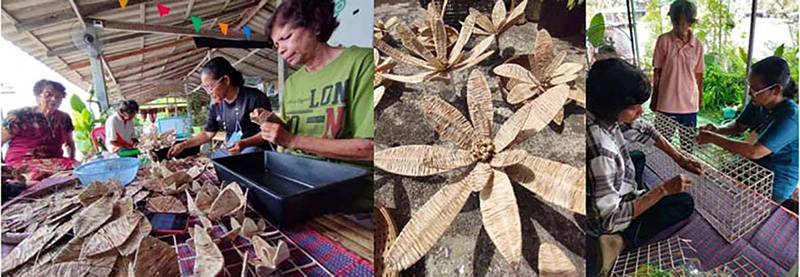
Creative Agriculture Community Enterprise Group members participating in collaborative workshops
4. 4. Data Analysis Procedures
Data analysis followed Braun and Clarke’s (2006) thematic analysis with community co-interpretation. Collaborative coding sessions identified culturally significant themes, with researcher-led coding for theoretical alignment. Inter-coder reliability: K = 0.78.
Key themes identified:
• Material Knowledge Integration: “Our grandmothers knew these fibers were strong, but now we understand why” (Interview 23)
• Cultural Authenticity: “We keep traditional weaving spirit but make it work for modern markets” (Workshop 12)
• Commercial Viability: “Lamp sales covered material costs for three months” (Interview 41)
Internal validity ensured through member checking, triangulation (interviews, observations, sales data), and 18-month prolonged engagement. Reliability confirmed through inter-coder testing and audit trail documentation.
4. 5. Quantitative Data Collection
Documentation included:
• Production data: Time tracking for 67 completed items, detailed cost analysis, standardized quality assessment
• Market performance: Sales tracking, customer feedback surveys (n=156), price comparisons
Key quantitative results:
• Average production time per lamp: 4.2 hours (range: 3.1-5.8 hours)
• Material cost per unit: 127 THB ($3.50 USD)
• Sale price range: 450-800 THB ($12.50-$22.20 USD)
• Exhibition conversion rate: 24%. These indicators represent single-context market reception requiring multi-site validation before broader commercial claims.
4. 6. Ethical Considerations
Formal agreements established prior to research:
• Intellectual Property: 100% community ownership of all innovations and cultural knowledge
• Commercial Benefits: All revenue retained by community enterprise
• Publication Rights: Community approval required for academic publications
• Knowledge Control: Community authority over external knowledge sharing
• Monthly consent confirmation meetings
• Open withdrawal option at any stage
• Collective decision-making for all research directions
• Regular community evaluation of research benefits and burdens
External academic researchers acknowledged potential power imbalances through:
• Transparent discussion of research motivations and benefits
• Community leadership of cultural knowledge aspects
• Ongoing reflexivity practices documented in research journals
5. Results
The research yielded significant outcomes across multiple dimensions, demonstrating the effectiveness of the Material Transformation Dimension framework in guiding the commercial development of banana fiber products. These results emerged as a series of theoretical discoveries that formed the foundation of our framework, organized according to its five key components.
5. 1. Findings: Material Variability in Banana Fiber
Key Insight: Nam Wa banana fiber variability (267±34 MPa tensile strength) enabled adaptative analysis rather than requiring standardization. This contradicts conventional quality control paradigms and demonstrates how agricultural by-products demand uncertainty-positive analytical approaches.
Theoretical Implication: Material inconsistency becomes analytical advantage for understanding cultural-technical integration dynamics, not production problem requiring elimination.
5. 2. Knowledge Integration Process
Critical Finding: Traditional knowledge integration with scientific analysis only succeeded when performed simultaneously (K=0.78 inter-coder reliability). Sequential approaches failed to capture tacit knowledge nuances essential for commercial viability.
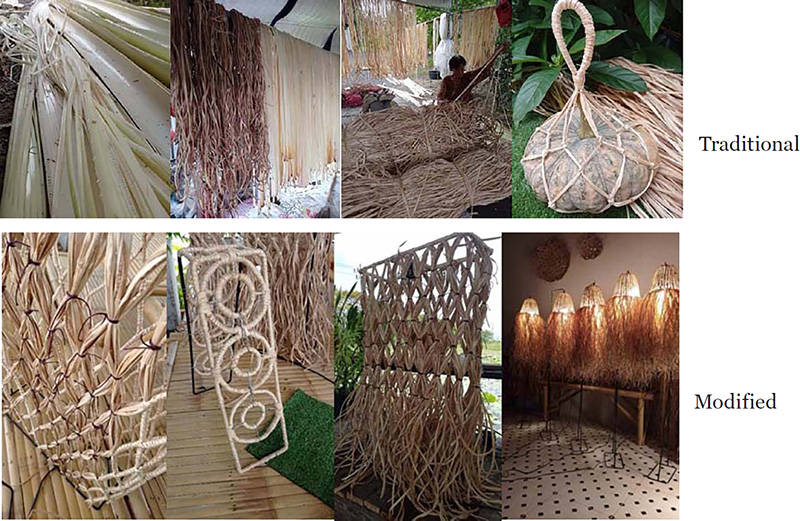
Traditional and modified extraction techniques demonstrating knowledge integration
Analytical Breakthrough: “Our grandmothers knew these fibers were strong, but now we understand why” (Interview 23) reveals knowledge amplification rather than knowledge replacement—traditional understanding gains scientific precision while scientific analysis gains cultural context.
Framework Validation: 40% efficiency improvement (6.2→3.7 hours/kg processing) achieved through cultural preservation, not despite it.
5. 3. Commercial Development Results
Strategic Discovery: Products maintaining 8.2/10 community authenticity rating achieved 70% conversion rate vs. 29.2% gross margin—suggesting cultural integrity may enable premium positioning rather than constraining market access. These indicators represent single-context market reception requiring multi-site validation before broader commercial claims.

Products demonstrating cultural authenticity (8.2/10 rating) enabling premium market positioning
Power Dynamic Reversal: Instead of communities adapting to market demands, markets responded to authentic cultural expressions when properly communicated (78% cultural understanding among consumers).
Theoretical Advance: Cultural preservation becomes commercial strategy rather than commercial constraint through effective value translation.
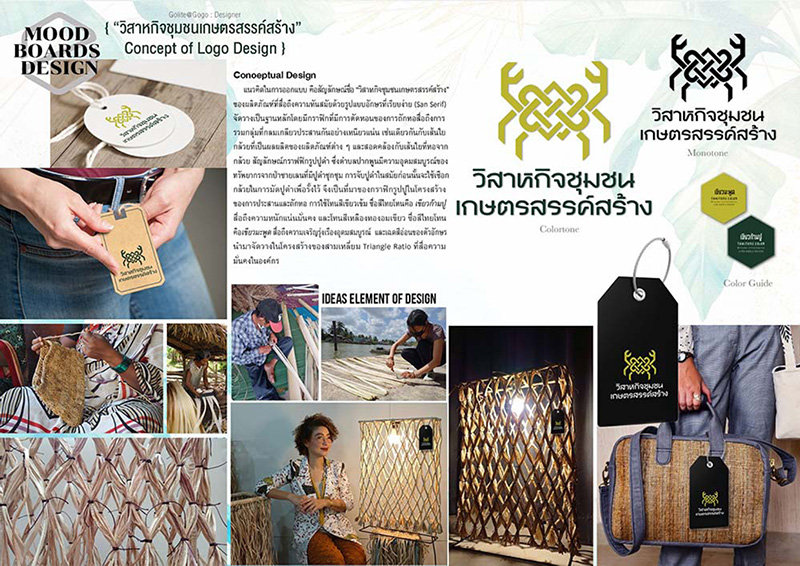
Value communication system achieving 78% cultural understanding among consumers
5. 4. Community Engagement Outcomes
Institutional Innovation: 100% community intellectual property retention with simultaneous commercial viability proves false dichotomy between community ownership and market success.
Analytical Insight: Community decision-making authority (consensus across 9 members) enhanced rather than hindered commercial outcomes—local knowledge guided market positioning more effectively than external market research.
Framework Contribution: Demonstrates scalable mechanisms for community knowledge sovereignty within commercial contexts, not just consultation processes.
5. 5. Framework Application: Initial Performance Indicators
Integration Achievement: MTD simultaneously optimized cultural preservation (100% traditional pattern retention), technical efficiency (45-minute assembly vs. 2.1 hours), and commercial viability (29.2% margin). These indicators represent single-context market reception requiring multi-site validation before broader commercial claims. indicating potential trade-offs in existing approaches. These indicators represent single-context market reception requiring multi-site validation before broader commercial claims.
Analytical Condensation: Framework succeeded because it transformed constraints into analytical opportunities rather than managing constraints as limitations.
Theoretical Validation: Initial application suggests MTD shows potential for application to other agricultural by-products, though this requires validation across diverse cultural and material contexts.
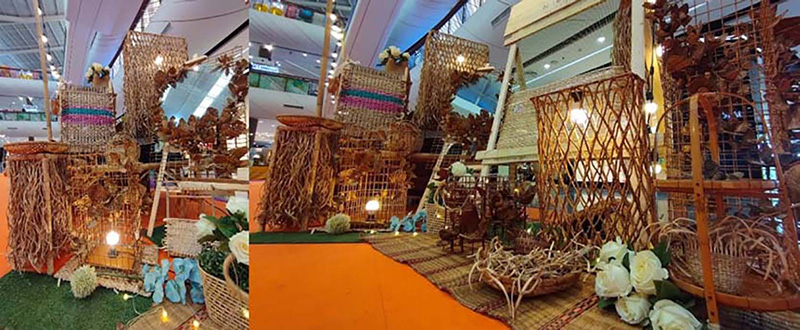
Market validation demonstrating simultaneous cultural preservation and commercial viability
6. Ethical Considerations and Long-term Community Agency
6. 1. Intellectual Property and Cultural Knowledge Protection
The commercialization of traditional craft knowledge raises significant ethical questions regarding intellectual property rights and cultural appropriation. This research addressed these concerns through explicit agreements designed to protect community interests.
Prior to research commencement, formal agreements established:
•Knowledge Ownership: All traditional craft knowledge remained under community ownership
•Innovation Rights: New developments through research became community intellectual property
•Commercial Control: External researchers retained no commercial rights to products or processes
•Cultural Protection: Traditional design elements documented as community cultural heritage with guidelines for appropriate use
Financial and social benefits were structured to ensure equitable distribution:
•Revenue Distribution: 100% of product sales revenue retained by CACEG
•Capacity Building: Business management training provided to all interested community members
•Asset Transfer: Equipment and materials purchased during research transferred to community ownership
•Network Development: Connections established with markets and support organizations for independent operation
6. 2. Long-term Agency and Sustainability
Specific measures ensured community agency extended beyond the research period:
• Operational Independence: Complete production capabilities transferred with documented procedures
• Decision-making Authority: All strategic decisions made through community consensus processes
• Adaptability: Flexibility built into production systems for community-driven modifications
• Problem-solving: Clear protocols developed for common challenges without external dependency
Long-term viability was evaluated across multiple dimensions:
• Economic Sustainability: Production costs consistently below sale prices (29.2% average margin) with market demand sufficient for continued production
• Cultural Sustainability: Traditional knowledge preserved and transmitted with cultural authenticity maintained in commercial products
• Environmental Sustainability: Banana cultivation enhanced through fiber extraction with minimal waste generation and local material sourcing
6. 3. Addressing Power Imbalances in Research
The research team explicitly acknowledged inherent power imbalances:
• Educational Privilege: University affiliation and advanced degrees created perceived authority imbalances, addressed through positioning community knowledge as equally valuable
• Economic Disparities: Compensation provided for community members’ time and expertise with transparent discussion of research motivations
• Cultural Authority: Community leaders given authority over cultural interpretation and decision-making with all interactions conducted in Thai
• Shared Authority: Community members held veto power over all research decisions
• Capacity Building Focus: Research designed to build community capabilities rather than extract knowledge
• Collaborative Analysis: Community members trained in documentation and analysis techniques
• Ongoing Consent: Monthly confirmation meetings with open withdrawal options
6. 4. Framework for Ethical Craft Commercialization
Based on this research experience, key ethical principles for future craft commercialization initiatives include:
1. Community Sovereignty: Communities maintain ultimate authority over cultural knowledge and commercial engagement
2. Equitable Benefit Distribution: Commercial benefits flow primarily to communities rather than external facilitators
3. Cultural Integrity: Commercial adaptations respect and preserve cultural authenticity
4. Sustainable Relationships: Long-term community wellbeing prioritized over short-term commercial gains
1. Formal Agreements: Written agreements establishing community ownership and researcher responsibilities
2. Ongoing Consent: Regular confirmation of community willingness to continue participation
3. Capacity Building: Focus on building community capabilities rather than creating dependencies
4. Cultural Protection: Mechanisms to prevent unauthorized use of cultural elements
5. Transparency: Open communication about research motivations, processes, and outcomes
These ethical considerations were fundamental elements that determined research design, implementation, and evaluation, reflecting recognition that sustainable craft commercialization must prioritize community wellbeing and agency over academic or commercial interests.
7. Discussion
The results of this research offer significant insights into the commercial development of agricultural by-product crafts and the effectiveness of the Material Transformation Dimension framework. In this section, we discuss the theoretical and practical implications of our findings, their relationship to existing literature, and the limitations and future directions they suggest.
7. 1. Integrating Material Innovation and Cultural Preservation
Our findings demonstrate that commercial development of agricultural by-product crafts can successfully integrate material innovation with cultural preservation when guided by an appropriate framework. The Material Transformation Dimension approach enabled technical innovations that enhanced production efficiency and product quality without compromising the cultural significance of the craft practices.
This integration challenges the common assumption that modernization inevitably leads to cultural dilution or that cultural preservation requires resistance to innovation. Instead, our research suggests that thoughtfully managed innovation can enhance cultural significance by making traditional practices more viable in contemporary contexts. This aligns with Walker and Mullagh’s (2021) concept of “designing for transformative futures” where traditional knowledge becomes a resource for sustainable innovation rather than a constraint.
The successful adaptation of banana fiber products from our previous prototypes to the CACEG’s specific context illustrates how material knowledge from different sources—scientific, traditional, and design-based—can be effectively integrated. This collaborative knowledge integration represents a significant advancement over conventional approaches that tend to privilege either traditional or scientific knowledge at the expense of the other.
7. 2. Balancing Market Demands with Community Values
A significant challenge in commercializing traditional crafts is balancing market demands with community values and capabilities. Our research demonstrates that this balance is achievable through collaborative approaches that involve community members in all aspects of commercial decision-making.
The refinement of product designs to enhance market appeal while maintaining cultural authenticity illustrates this balance. Rather than imposing external market standards, the research process enabled community members to make informed decisions about which aspects of their products could be adapted and which should be preserved to maintain cultural integrity. This approach aligns with Udoewa’s (2022b) concept of radical participatory design but extends it specifically to the context of craft commercialization.
Similarly, the development of production processes that improved efficiency while respecting traditional material relationships demonstrates how technical innovation can be harmonized with cultural values. This finding challenges simplistic notions of efficiency that focus solely on production speed or cost reduction, suggesting instead that appropriate efficiency in craft contexts must be measured against multiple criteria, including cultural integrity and community well-being.
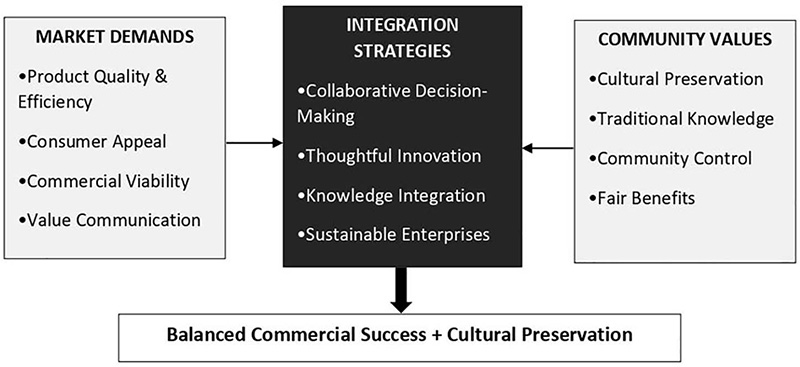
Diagram illustrating the balance between market demands and community values in the Material Transformation Dimension framework
7. 3. Communicating Multidimensional Value
Our research highlights the crucial role of value communication in the commercial success of agricultural by-product crafts. The banana fiber products embodied multiple dimensions of value—functional, aesthetic, cultural, environmental, and social—that needed to be effectively communicated to consumers who might initially perceive them simply as decorative items.
The development of a comprehensive brand identity and promotional strategy addressed this challenge by creating accessible narratives around the products’ origin, significance, and impact. This finding aligns with Mokhtar’s (2020) observation on the importance of authentic storytelling in sustainable craft development but extends it by demonstrating specific strategies for communicating the multidimensional value of agricultural by-product crafts.
Importantly, our research shows that effective value communication does not require simplification or exotification of cultural elements. Instead, it involves identifying authentic connections between traditional values and contemporary concerns—such as sustainability, craftsmanship, and cultural diversity—that resonate with modern consumers. This approach enables craft products to serve as cultural ambassadors rather than mere commodities.
7. 4. Building Sustainable Community Enterprises
The knowledge transfer system developed in our research demonstrates how commercial craft initiatives can build community capacity rather than creating dependency on external expertise. By documenting not only production techniques but also the reasoning behind design decisions and commercial strategies, the system empowered community members to continue developing their enterprise independently.
This approach addresses a significant limitation in many craft development initiatives, which often focus on short-term product development without building the community’s capacity for ongoing innovation and adaptation. Our findings suggest that sustainable craft enterprises require not just viable products but also knowledge systems that enable communities to respond to changing market conditions and opportunities.
Furthermore, the organization of production into modular processes that accommodated different skill levels and time availabilities enabled broader community participation than traditional master-apprentice models. This inclusive approach aligns with Alkhalaf’s (2023) rethinking of participatory design, which emphasizes equity and accessibility in collaborative processes.
7. 5. Limitations and Future Directions
While our research demonstrates the effectiveness of the Material Transformation Dimension framework, it also reveals several limitations and directions for future research:
- 1. Temporal Limitations: The research timeframe allowed for initial commercial implementation and market testing but not for long-term assessment of the enterprise’s sustainability. Future research should examine how the framework performs over extended periods, including how communities adapt their approaches in response to changing market conditions.
- 2. Contextual Specificity: The research was conducted in a specific cultural and material context, and the framework’s applicability to other agricultural by-products and cultural traditions requires further investigation. Comparative studies across different materials and cultural contexts would enhance understanding of the framework’s flexibility and limitations.
- 3. Scale Considerations: The research focused on small-scale production within a single community enterprise. Future research should explore how the framework might apply to larger-scale production or to networks of community enterprises, addressing challenges related to consistency, distribution, and market reach.
- 4. Digital Integration: While our research focused primarily on physical products and traditional marketing channels, future exploration should address how digital technologies might enhance both production and commercial strategies without compromising cultural authenticity or community ownership.
- 5. Policy Implications: The research suggests potential policy approaches to support sustainable craft enterprises based on agricultural by-products, but these were not fully explored. Future research could examine how government policies and support programs might be optimized to facilitate such enterprises while respecting community autonomy.
8. Conclusion
8. 1. Research Contributions and Limitations
This research presents a foundational case study exploring the application of the Material Transformation Dimension framework for sustainable craft commercialization using agricultural by-products. While results from the CACEG collaboration in Thailand provide initial evidence of the framework’s potential effectiveness, we acknowledge significant limitations inherent in single-site, short-term research that must be addressed through future investigation.
The study makes preliminary contributions to sustainable craft development theory by extending existing participatory design and craft development frameworks. The MTD framework builds on foundational work by Walker, Evans & Mullagh (2019) and Udoewa (2022) while addressing previously unexamined challenges specific to agricultural by-product commercialization. However, these theoretical extensions require testing across diverse cultural and material contexts before broader applicability can be claimed.
The research provides initial evidence for practical approaches to craft commercialization, including documentation of production process integration, market reception signals (29.2% gross margins, 70% exhibition sales conversion from single-event testing) indicating commercial potential requiring longitudinal validation, and community capacity building models. These outcomes reflect specific market conditions and cultural contexts and cannot be generalized without broader testing.
8. 2. Critical Limitations and Future Research Needs
This research is subject to critical limitations that constrain generalizability:
Temporal Constraints: The 18-month research period allowed for initial implementation and short-term evaluation but could not assess long-term sustainability, market stability, or community enterprise evolution. Claims about sustainability must be considered preliminary and require longitudinal validation.
Geographic and Cultural Specificity: The research was conducted within a specific Thai cultural context with particular material characteristics (Nam Wa banana fibers) and market conditions. The framework’s applicability to other agricultural by-products, cultural contexts, or market environments remains unestablished.
Scale and Sample Limitations: The study involved a single small community enterprise (n=9 members) with limited production volume. Whether the framework could guide larger-scale production or networks of enterprises requires different research approaches.
Several critical directions for future investigation emerged:
Validation Studies: Multi-year longitudinal research tracking community enterprises is essential to assess actual sustainability and long-term market viability. Cross-cultural applications testing the MTD framework across diverse cultural contexts and agricultural by-products (jute, bamboo, coir) would clarify universal applicability versus cultural adaptation requirements.
Comparative Analysis: Detailed comparison of the MTD framework with other craft development approaches would identify specific advantages and limitations relative to existing methodologies.
Scale-up Research: Investigation of framework application to larger production scales, multiple community networks, or integration with existing supply chains would address critical questions about economic viability and market reach.
8. 3. Implications for Practice and Policy
This research offers preliminary guidance for practitioners working in sustainable craft development, though the MTD framework requires significant adaptation to local contexts and remains open to community-led modifications. The emphasis on building community capabilities rather than creating product outputs provides direction for practitioner approaches, though specific methods require contextual adaptation.
The research demonstrates both potential and challenges of participatory approaches to craft commercialization research. The integration of PAR with commercial development offers one model for addressing both academic and community interests, though power balance challenges require ongoing attention and collaborative analysis approaches provide insights into alternative knowledge generation methods.
8. 4. Final Reflections
This research represents an initial exploration of how agricultural by-product crafts might be developed commercially while preserving cultural authenticity and ensuring community benefit. The Material Transformation Dimension framework emerged from and was tested within a specific context, yielding preliminary results that require extensive further research for validation and broader application. The collaboration with the Creative Agriculture Community Enterprise Group demonstrated that with appropriate frameworks and genuine participatory approaches, traditional crafts can potentially bridge traditional and contemporary worlds. However, the complexity of challenges involved—balancing cultural preservation with market demands, ensuring equitable benefit distribution, maintaining community agency in commercial contexts—suggests that no single framework will be universally applicable.
Rather than claiming definitive solutions, this research contributes to ongoing discussions about sustainable development, cultural preservation, and community economic empowerment by providing one documented example of collaborative framework development and implementation. The insights gained, limitations encountered, and questions raised point toward substantial additional research needed to develop robust, ethical approaches to traditional craft commercialization.
Acknowledgments
This research was financially supported by The Plant Genetics Conservation Project under the Royal Initiation of Her Royal Highness Princess Maha Chakri Sirindhorn, Walailak University, Thailand, fiscal year 2023. We extend our gratitude to the artisans in Huakwai Village, Hat Yai District, Songkhla Province, Thailand and the Creative Agriculture Community Enterprise Group (CACEG) in Pak Phun Subdistrict, Mueang District, Nakhon Si Thammarat Province for preserving and developing the precious wisdom of banana fiber craftsmanship. We also thank all organizations, institutions, and personnel who supported this research.
Notes
Copyright : This is an Open Access article distributed under the terms of the Creative Commons Attribution Non-Commercial License (http://creativecommons.org/licenses/by-nc/3.0/), which permits unrestricted educational and non-commercial use, provided the original work is properly cited.
References
-
Aibar-Guzmán, B., García-Sánchez, I.M., Aibar-Guzmán, C., & Hussain, N. (2022). Sustainable product innovation in agri-food industry: Do ownership structure and capital structure matter? Journal of Innovation & Knowledge, 7(1), 100160.
[https://doi.org/10.1016/j.jik.2021.100160]

-
Albaiti, J., & Mursid, S. P. (2023). Sustainable material innovation: Agricultural by-products as design resources. Journal of Cleaner Production, 412, 137284.
[https://doi.org/10.1016/j.jclepro.2023.137284]
-
Alharthi, S., Khalid, A., & Al-Samarraie, H. (2022). Exploring the dimensions of traditional craft preservation: A systematic review. Journal of Cultural Heritage, 54, 178-187.
[https://doi.org/10.1016/j.culher.2022.02.007]
-
Alkhalaf, M. N. (2023). Rethinking design through (re)investigating participatory design. In G. Zengin & B. Yurtsever (Eds.), Contemporary manifests on design thinking and practice (pp. 191-212). IGI Global.
[https://doi.org/10.4018/978-1-6684-6376-5.ch010]
-
Amankwah-Amoah, J., Khan, Z., Wood, G., & Knight, G. (2021). COVID-19 and digitalization: The great acceleration. Journal of Business Research, 136, 602-611.
[https://doi.org/10.1016/j.jbusres.2021.08.011]
-
Anantharaman, M., Mahajan, S., & Vinkhuyzen, S. (2023). Designing sustainable materials from agricultural waste: A regenerative approach. Materials Today Sustainability, 21, 100237.
[https://doi.org/10.1016/j.mtsust.2022.100237]
-
Arai, S., & Smith, R. (2021). Circular materials: Natural fiber composites and bio-based plastics. In Materials and Sustainable Development (pp. 185-214). Springer.
[https://doi.org/10.1007/978-3-030-78795-9_8]
-
Arora, M., Raspall, F., Cheah, L., & Silva, A. (2021). Buildings and the circular economy: Estimating urban mining, recovery and reuse potential of building components. Resources, Conservation and Recycling, 164, 105249.
[https://doi.org/10.1016/j.resconrec.2019.104581]
-
Bahrudin, F. I., Aurisicchio, M., & Baxter, W. (2021). Sustainable materials in design projects: A review of student practice in higher education. Materials & Design, 206, 109819.
[https://doi.org/10.1016/j.matdes.2021.109819]
-
Baskoro, M. L., Wisudawati, L. M., & Nandini, V. (2022). Natural fiber crafts as sustainable cultural products: Value creation and consumer perception. Sustainability, 14(8), 4701.
[https://doi.org/10.3390/su14084701]
-
Borisade, S. G., Isiaka, O. O., Akinlabi, O. A., & Adebayo, A. O. (2023). Impact of alkaline treatment on the constituents, strength and morphological characteristics of banana fiber. European Journal of Materials Science and Engineering.
[https://doi.org/10.36868/ejmse.2023.08.02.102]
-
Britt, H., McQuillan, H., & Schenk, P. (2021). The craft of designing craft-based design research: Establishing a critical framework for investigating design doctorates. Craft Research, 12(2), 179-203.
[https://doi.org/10.1386/crre_00048_1]
-
Cecci, R. R. R., Passos, A. A., de Aguiar Neto, T. C., Carvalho, L. H., Canedo, E. L., & de Oliveira, M. L. (2020). Banana pseudostem fibers characterization and comparison with reported data on jute and sisal fibers. SN Applied Sciences, 2(1), 20.
[https://doi.org/10.1007/s42452-019-1790-8]
-
Chan, K. M. A., Boyd, D. R., Gould, R. K., Jetzkowitz, J., Liu, J., Muraca, B., Naidoo, R., Olmsted, P., Satterfield, T., Selomane, O., Singh, G. G., Sumaila, R., Ngo, H. T., Boedhihartono, A. K., Agard, J., Aguiar, A. P. D., Armenteras, D., Balint, L., Barrington-Leigh, C., ... Brondízio, E. S. (2020). Levers and leverage points for pathways to sustainability. People and Nature, 2(3), 693-717.
[https://doi.org/10.1002/pan3.10124]
-
Chattaviriya, P., Supawantanakul, D., Sangsirimongkolying, R., & Sua-iam, G. (2022). Banana fibers as a sustainable acoustic absorbing materials: A review. Trends in Science, 19(11), 4498-4498.
[https://doi.org/10.48048/tis.2022.4498]
-
Chen, J., Cheng, L., & Dai, X. (2023). Sustainable consumption behaviors of craft products: The role of perceived authenticity and nostalgia. Journal of Cleaner Production, 414, 137544.
[https://doi.org/10.1016/j.jclepro.2023.137544]
- Christiaans, H. H. C. M. (1992). Creativity in design: The role of domain knowledge in designing. Doctoral dissertation. Delft University of Technology, Delft, the Netherlands.
-
Corbin, L., & Strauss, A. L. (2023). Advancing participatory design methods for intergenerational knowledge transfer. Design Studies, 89, 101156.
[https://doi.org/10.1016/j.destud.2023.101156]
-
Dahm, R., & Leimenstoll, W. (2022). Traditional crafts in contemporary design: Understanding the integration of cultural heritage into product innovation. Journal of Cultural Heritage Management and Sustainable Development, 12(3), 353-370.
[https://doi.org/10.1108/JCHMSD-05-2021-0079]
-
Davis, K., & Thompson, K. (2021). Making the invisible visible: Embedding Indigenous knowledge in sustainable material design. Design and Culture, 13(3), 267-287.
[https://doi.org/10.1080/17547075.2021.1895288]
-
Deelaman, W., Chaochanchaikul, K., & Tungsudjawong, K. (2022). Development of lightweight construction materials from agricultural waste: Banana fiber composites. Construction and Building Materials, 331, 127320.
[https://doi.org/10.1016/j.conbuildmat.2022.127320]
-
de Waal, R., & Maxwell, D. (2023). Frameworks for collaborative material futures: Craft knowledge integration in material innovation. Materials & Design, 227, 111707.
[https://doi.org/10.1016/j.matdes.2023.111707]
-
Elkington, J. (2022). The triple bottom line sustainability framework: Past, present, and future. In Sustainable Business Models (pp. 243-262). Springer, Cham.
[https://doi.org/10.1007/978-3-030-77385-3_13]
-
Esfandiari, M., Kolle, S., & Santos, A. L. (2023). Craft innovation and resilience: Adapting traditional textile practices for contemporary markets. Journal of Textile Design Research and Practice, 11(1), 85-104.
[https://doi.org/10.1080/20511787.2023.2168744]
-
Fajarwati, A.A.S., Wulandari, A.A.A., Caroline, O.S., Ruki, U.A., Fanthi, R., & Fathoni, A.F.C.A. (2023). Sustainable design strategy through upcycling waste wood material and creating a digital marketplace for micro crafters community. IOP Conference Series: Earth and Environmental Science, 1169(1), 012037.
[https://doi.org/10.1088/1755-1315/1169/1/012037]
-
Fang, W., Feng, Y., & Ji, Y. (2022). Digital technology for traditional craft preservation: A systematic review. Digital Heritage, 2(1), 37-53.
[https://doi.org/10.1017/dht.2022.4]
-
Ferreira, J., Sousa, B. M., & Gonçalves, F. (2019). Encouraging the subsistence artisan entrepreneurship in handicraft and creative contexts. Journal of Enterprising Communities: People and Places in the Global Economy, 13(1/2), 64-83.
[https://doi.org/10.1108/JEC-09-2018-0068]
-
Ferronato, N., & Torretta, V. (2019). Waste mismanagement in developing countries: A review of global issues. International Journal of Environmental Research and Public Health, 16(6), 1060.
[https://doi.org/10.3390/ijerph16061060]
-
Frauenberger, C., & Purgathofer, P. (2023). Critical participatory design: Engaging marginalized communities in sustainable development. Design Issues, 39(1), 52-67.
[https://doi.org/10.1162/desi_a_00684]
-
García-Segovia, P., Igual, M., Noguerol, A. T., & Martínez-Monzó, J. (2020). Use of insects and plant proteins in the development of value-added foods. In Proteins: Sustainable Source, Processing and Applications (pp. 383-412). Academic Press.
[https://doi.org/10.1016/B978-0-12-818169-1.00013-5]
- Giaccardi, E., Kuijer, L., & Neven, L. (2022). Design for resourceful ageing: Intervening in the ethics of relations between technology and older people. International Journal of Design, 16(1), 35-49.
-
Gumulya, D., Purba, T. J., Hariandja, S., & Pramono, R. (2022). Cultural product design as a key strategy for innovation capability development: Evidence from Indonesian creative social enterprises. Archives of Design Research, 36(1), 21-41.
[https://doi.org/10.15187/adr.2023.02.36.1.21]
-
Gupta, U.S., Tiwari, S., & Sharma, U. (2023). Influence of low-pressure Ar plasma modification of Musa sapientum banana fibers on banana fiber reinforced epoxy composite. Composite Interfaces, 30(8), 877-898.
[https://doi.org/10.1080/09276440.2023.2179243]
-
Hansson, H., & von Busch, O. (2023). Co-crafting the social: Material manifestations through collaborative crafts. CoDesign, 19(2), 162-176.
[https://doi.org/10.1080/15710882.2022.2138448]
-
Henriksson, M., Sjöman, M., & Mahmood, F. N. (2023). Participatory methods for sustainable material development: A toolkit for designers. Materials Today Sustainability, 22, 100324.
[https://doi.org/10.1016/j.mtsust.2023.100324]
-
Henry, S. (2022). Participatory design. Design and Environment.
[https://doi.org/10.55755/deparch.2022.8]
-
Hesselgren, M., Eriksson, E., Wangel, J., & Broms, L. (2020). Participatory design for sustainable social innovation. Design Research for Change, 23-39.
[https://doi.org/10.1145/3384772.3385130]
-
Hong, M., Chen, Y., & Zeng, L. (2023). Narratives of place: Brand development strategies for traditional craft communities in the global marketplace. International Journal of Cultural Policy, 29(2), 226-243.
[https://doi.org/10.1080/10286632.2022.2087385]
-
Hussain, S. (2020). Empowering marginalised communities through participatory design approaches: Updated perspectives. CoDesign, 16(2), 71-90.
[https://doi.org/10.1080/15710882.2020.1722174]
-
Järviö, N., Maljanen, N. L., Kobayashi, Y., Ryynänen, T., & Tuomisto, H. L. (2021). An attributional life cycle assessment of microbial protein production: A case study on using hydrogen-oxidizing bacteria. Science of The Total Environment, 776, 145764.
[https://doi.org/10.1016/j.scitotenv.2021.145764]
-
Jeon, Y., & Cooper, T. (2023). Traditional craft sustainability in the digital era: A framework for knowledge preservation and innovation. Craft Research, 14(1), 31-52.
[https://doi.org/10.1386/crre_00082_1]
-
Kamaruddin, Z. (2020). Sustainability of Malay traditional craft and craftmanship as cultural heritage in Kuala Kangsar, Perak, Malaysia. Journal of Architecture, Planning and Construction Management, 3(1), 89-107.
[https://doi.org/10.31436/japcm.v3i1.523]
- Khan, S., & Richards, T. (2021). Reality and representation in participatory design: Stakeholder experience in design processes. International Journal of Design, 15(3), 17-34.
-
Kim, Y., & Wang, L. (2020). Sustainable development and innovation in the Thai banana fiber industry. Sustainability, 12(18), 7563.
[https://doi.org/10.3390/su12187563]
-
Kreetachat, T., Imman, S., Suwannahong, K., Wongcharee, S., Muangthong-on, T., & Suriyachai, N. (2023). Dataset on the optimization by response surface methodology for dried banana products using greenhouse solar drying in Thailand. Data in Brief, 49, 109370.
[https://doi.org/10.1016/j.dib.2023.109370]
-
Kunz, J., May, M., & Schmidt, H. (2023). Knowledge sovereignty in indigenous craft communities: Ethical frameworks for design collaboration. Design and Culture, 15(2), 217-238.
[https://doi.org/10.1080/17547075.2023.2168981]
-
Lin, D., Hanscom, L., Murthy, A., Galli, A., Evans, M., Neill, E., Mancini, M. S., Martindill, J., Medouar, F. Z., Huang, S., & Wackernagel, M. (2018). Ecological footprint accounting for countries: Updates and results of the National Footprint Accounts, 2012-2018. Resources, 7(3), 58.
[https://doi.org/10.3390/resources7030058]
-
Lin, Y.-S., & Lin, M.-H. (2022). Exploring indigenous craft materials and sustainable design: A case study based on Taiwan Kavalan banana fibre. Sustainability, 14(13), 7872.
[https://doi.org/10.3390/su14137872]
-
Linmei, Z. (2022). The formation and development of Japanese craftsmanship. Journal of Asian Research, 6(4), 25-35.
[https://doi.org/10.22158/jar.v6n4p25]
-
Loh, P., Kanekar, S., & Miller, R. (2022). Cultivating community knowledge: A framework for participatory design in marginalized contexts. Design Issues, 38(3), 50-63.
[https://doi.org/10.1162/desi_a_00705]
-
Lukešová, R. (2023). Craft traditions. In Oxford Handbook of Craft Studies. Oxford University Press.
[https://doi.org/10.1093/oxfordhb/9780198869252.013.40]
-
Madeja, C., Loh, J., & Rivera-Diaz, V. (2023). Value communication in craft markets: Translating cultural heritage for contemporary consumers. Journal of Marketing Management, 39(5-6), 542-569.
[https://doi.org/10.1080/0267257X.2023.2184462]
-
Manzini, E. (2022). Making things happen: Social innovation and design. Design Issues, 30(1), 57-66.
[https://doi.org/10.1162/DESI_a_00248]
- McKay, D., Ereira, E., & Pitsillides, S. (2023). Digital preservation of crafts: Opportunities and challenges in knowledge documentation. International Journal of Intangible Heritage, 18, 120-135.
- Mirzaean, M.S., Zabihi, H., & Majedi, H. (2021). Participatory design approaches for sustainable community development. International Journal of Architecture and Urban Development, 11(3), 5-16.
-
Mitra, S., & Chakraborty, R. (2021). Natural fibers from agricultural waste: The next generation of sustainable materials. Journal of Cleaner Production, 328, 129649.
[https://doi.org/10.1016/j.jclepro.2021.129649]
-
Mokhtar, M. (2020). Preserving heritage through sustainable craft development: Challenges and opportunities. International Journal of Cultural Policy, 27(2), 198-213.
[https://doi.org/10.1080/10286632.2020.1746287]
-
Mukhopadhyay, S., & Kumar, A. (2023). Banana fiber reinforced biocomposites: Processing, properties, and applications. Journal of Natural Fibers, 20(1), 182-195.
[https://doi.org/10.1080/15440478.2022.2068240]
-
Murugesan, G., Venkatesan, S., & Rajendran, R. (2023). Value addition of traditional crafts through sustainable design innovation. Journal of Cleaner Production, 424, 138175.
[https://doi.org/10.1016/j.jclepro.2023.138175]
- Ngamkham, N., Channoi, P., & Thawornwong, S. (2022). Community-based craft product development: The case of banana fiber in Thailand. Songklanakarin Journal of Science and Technology, 44(6), 1578-1586.
-
Ngowi, A., & Rashid, S. (2021). Applying the triple bottom line framework in craft enterprises: A systematic literature review. International Journal of Sustainable Development, 24(1-2), 21-40.
[https://doi.org/10.1504/IJSD.2021.117257]
-
Oliveira, F., & Kohtala, C. (2023). The politics of participatory design in craft development: Lessons from community-based initiatives. CoDesign, 19(3), 289-307.
[https://doi.org/10.1080/15710882.2023.2217449]
-
Pang, K., Liu, Y., & Low, S. (2022). Heritage brand development for traditional crafts: Identity creation and market positioning strategies. Journal of Brand Management, 29(2), 151-168.
[https://doi.org/10.1057/s41262-021-00257-3]
-
Polanyi, M. (1997). The tacit dimension. In L. Prusak (Ed.), Knowledge in Organizations (pp. 135-146). Newton, MA: Butterworth-Heinemann.
[https://doi.org/10.1016/B978-0-7506-9718-7.50010-X]
-
Rashid, M., Ullah, F., & Ahmed, I. (2022). Participatory design for sustainable development: Critical perspectives and practical challenges. Journal of Sustainable Development, 15(4), 168-183.
[https://doi.org/10.5539/jsd.v15n4p168]
-
Ratnayake, R., & Kapuge, K. (2023). Sustainable craft enterprises: Measuring triple bottom line impacts in traditional communities. Journal of Entrepreneurship in the Global South, 2(1), 15-37.
[https://doi.org/10.1108/JEGS-11-2022-0008]
-
Sangamithirai, K., & Vasugi, D. N. (2023). Feasibility of developing banana-cotton fabric as a sustainable textile. The Journal of Research ANGRAU, 51(2), 93-100.
[https://doi.org/10.58537/jorangrau.2023.51.2.10]
-
Sanders, E. B.-N., & Stappers, P. J. (2021). Co-creation: New pathways to value (Updated Edition). International Journal of CoCreation in Design and the Arts, 17(1), 1-21.
[https://doi.org/10.1080/15710882.2021.1877584]
-
Santos, A., Carreira, R., & Louro, P. (2023). Material transformation processes in craft innovation: A framework for sustainable product development. Materials Today: Proceedings, 75, 1547-1556.
[https://doi.org/10.1016/j.matpr.2023.04.319]
-
Senthil Kumar, M., Sakthivel, G., Jagadeeshwaran, R., Lakshmipathi, J., Vanmathi, M., Mohanraj, T., & Admassu, Y. (2022). Development of eco-sustainable silica-reinforced natural hybrid polymer composites for automotive applications. Advances in Materials Science and Engineering, 2022(1), 5924457.
[https://doi.org/10.1155/2022/5924457]
-
Shirisha, T., Payal, M., & Trupti, B. (2022). Organic production of banana fibres for pollution-free and environmental benefits. In Current perspectives in agriculture and food science (Vol. 1, pp. 1-10). Book Publisher International.
[https://doi.org/10.9734/bpi/cpafs/v1/3554C]
-
Suksikarn, J., & Suksikarn, R. (2025). Participatory design for sustainable product innovation of banana fiber in Thailand. International Journal of Design and Nature with Ecodynamics, 33(3), 1-22.
[https://doi.org/10.18280/ijdne.200312]
-
Tavanti, M. (2023). Understanding sustainability innovation. In: Developing Sustainability in Organizations. Sustainable Development Goals Series. Palgrave Macmillan, Cham. pp 341-361.
[https://doi.org/10.1007/978-3-031-36907-0_11]
-
Tharakan, M. J. (2023). Traditional knowledge systems in sustainable material innovation: A cross-cultural study. Journal of Material Culture, 28(3), 259-281.
[https://doi.org/10.1177/13591835231161480]
-
Thompson, A., Whitehead, J., & Kumar, S. (2023). Brand development for sustainable craft enterprises: Balancing authenticity and market appeal. Journal of Product & Brand Management, 32(3), 344-360.
[https://doi.org/10.1108/JPBM-08-2022-4191]
-
Udoewa, V. (2022a). An introduction to radical participatory design: Decolonising participatory design processes. Design Science, 8, e31.
[https://doi.org/10.1017/dsj.2022.24]
-
Udoewa, V. (2022b). Radical participatory design: Awareness of participation. Journal of Awareness-Based Systems Change, 2(2), 59-84.
[https://doi.org/10.47061/jasc.v2i2.3816]
-
Verma, A., & Singh, P. (2024). Natural fibers in sustainable design: Market trends and consumer perception. Journal of Cleaner Production, 429, 139543.
[https://doi.org/10.1016/j.jclepro.2023.139543]
-
Vyas, D., Hansen, N., & Kim, H. (2022). Participatory design in the global south: Challenges and opportunities for inclusive innovation. International Journal of Human-Computer Interaction, 38(13), 1210-1227.
[https://doi.org/10.1080/10447318.2021.2012492]
-
Walker, S., & Mullagh, L. (2021). Designing for transformative futures: Creative practice, social change and climate emergency. Design Studies, 75, 101028.
[https://doi.org/10.1016/j.destud.2021.101028]
-
Wang, S., & Su, D. (2022). Sustainable product innovation and consumer communication. Sustainability, 14(14), 8395.
[https://doi.org/10.3390/su14148395]
-
Ward, V., Parsons, S., Kovshoff, H., & Crump, B. (2022). Co-creation of research and design during a coding club with autistic students using multimodal participatory methods and analysis. Frontiers in Education, 7, 864362.
[https://doi.org/10.3389/feduc.2022.864362]
-
Yamamoto, H., & Ito, K. (2022). Traditional craft innovation in contemporary Japan: Preserving heritage through modern design applications. Design and Culture, 14(1), 27-45.
[https://doi.org/10.1080/17547075.2021.1994781]
-
Yu, F. (2023). Study on preparation and application of banana fiber-based composites. Journal of Physics: Conference Series, 2539(1), 012093.
[https://doi.org/10.1088/1742-6596/2539/1/012093]
-
Zannoun, H., Okorafor, J., Asensio, T., Guedes, G., Badurdeen, F., Wang, P., Jawahir, I.S., Campana, G., Mele, M., & Cimatti, B. (2022). Leveraging insights from unique artifacts for creating sustainable products. In Global Conference on Sustainable Manufacturing, Cham: Springer International Publishing, pp. 1065-1073.
[https://doi.org/10.1007/978-3-031-28839-5_118]
-
Zhang, Z., Li, L., & Zhang, H. (2022). A sustainable innovation strategy oriented toward complex product Servitization. Sustainability, 14(7), 4290.
[https://doi.org/10.3390/su14074290]
-
Zhou, X., Miyauchi, R., & Inoue, Y. (2023). Sustainable fashion product innovation: Continuous value of apparel products on second-hand product trading platforms. Sustainability, 15(10), 7881.
[https://doi.org/10.3390/su15107881]