
Enhancing Sensory-Friendly Inclusive Fashion Design Education: A Toolkit-Based Approach
초록
Background Fashion design has increasingly been criticized for its limited consideration of diversity and inclusivity, particularly regarding sensory needs (Abdel & Mohammed, 2015; Hallgrímsson, 2018). Sensory-Friendly Inclusive Fashion Design (SFIFD) has emerged as a methodological response, aiming to integrate sensory problem awareness, sensory integration, and sensory experience into the design process (Lee & Kim, 2020). Prior studies highlight that maintaining conceptual consistency throughout the design process is essential for achieving inclusive outcomes (Brown & Wyatt, 2010). Furthermore, toolkits have been shown to facilitate collaborative practices, to expand designers’ perspectives, and to enhance individual competencies, thereby improving the overall quality of inclusive design (Sanders & Stappers, 2014; Kim, 2021). Building on this foundation, the present study situates SFIFD within educational practice and examines how structured tools can support systematic implementation and foster more diverse and inclusive design approaches.
Methods This study aims to develop an SFIFD education prototype and an assistive toolkit through four stages: prototype and toolkit development, experimental application, analysis, and extraction of educational insights. Based on the inclusive fashion design model (Lee et al., 2024) and the 3C3R framework (Hung, 2006), two prototypes were created: one using a design spectrum toolkit and the other a conventional target-setting method. The toolkit, informed by Microsoft’s Inclusive Design Toolkit and Cambridge’s digital personas, incorporated physical, sensory, social, emotional, and environmental diversity. Experiments involved 20 senior-level students (10 U.S., 10 South Korea) divided into teams, guided by instructors and teaching assistants. Participants designed fashion items for users with diverse sensory needs, completed PIE (Problem, Intervention, Evaluation) self-checklists, and were evaluated through interviews and thematic analysis. Data were analyzed using the 3C3R framework and four-phase thematic analysis (Vaismoradi et al., 2016) to identify key educational insights.
Results The results showed significant differences between the two SFIFD prototypes. Type 1 (toolkit-based) consistently scored higher in addressing sensory problems, sensory integration, and sensory-friendly experiences, while Type 2 (conventional) was slightly stronger in considering users’ sensory issues. Participants evaluated the toolkit as useful for concept development, user needs reflection, and practical design outcomes. Thematic analysis revealed advantages such as diverse perspectives, detailed problem-solving, and enhanced collaboration, alongside challenges in researching medical aspects, integrating aesthetics, and specifying sensory contexts. Both prototypes highlighted the importance of balancing functional and aesthetic elements in SFIFD education.
Conclusions This study confirms the effectiveness of the SFIFD toolkit in guiding multi-perspective analysis, ensuring conceptual consistency, and supporting research, idea generation, and teamwork. The SFIFD process offers a valuable design experience, with the toolkit enhancing understanding of principles and application. Future research should expand participants, team diversity, and toolkit scope to advance SFIFD education and to foster broader adoption of inclusive design in fashion.
Keywords:
Sensory-friendly Design, Inclusive Design, Sensory-friendly Inclusive Fashion Design Education, Sensor-friendly Inclusive Fashion Design Process, Design Toolkit1. Introduction
1. 1. Purpose and significance of this study
Recently, the importance of diversity and user-centered design has been increasingly emphasized. The scope of diversity extends beyond physical, racial, and cultural differences to include variations in cognitive and sensory development. Even in the absence of diagnoses such as ADHD or autism, approximately 20% of the population experiences sensory sensitivity in everyday life (Jagiellowicz et al., 2016; Panagiotidi et al., 2020), and such sensitivity can be easily triggered by minor stimuli (Aron et al., 2012). However, in the field of fashion, discussions of diversity have primarily focused on physical, racial, and cultural issues, while sensory-related concerns have rarely been addressed as part of the diversity discourse (Kim & Lee, 2024). Therefore, there is a need to expand the scope of diversity in fashion design and to explore sensory-friendly design approaches that take consumers sensory sensitivity into account.
In particular, within inclusive fashion design education—which has primarily addressed consumers’ physical diversity, such as disability and aging—sensory sensitivity has received little attention (Kim & Lee, 2024). Accordingly, this study aims to design an educational prototype that integrates sensory-friendly design into inclusive fashion design education. In addition, it proposes an assistive design toolkit that guides students through a structured and reflective design process to explore the potential of sensory-friendly inclusive fashion design education. The toolkit is pedagogically necessary because sensory-inclusive design involves complex and often invisible user experiences that novice designers struggle to conceptualize independently. By providing structured guidance, the toolkit helps prevent students from relying solely on intuition or ad hoc interpretations when addressing sensory needs, which can otherwise lead to inconsistent application and limited reflective depth.
By externalizing key sensory considerations and user contexts, the toolkit functions as a cognitive and reflective scaffold, enabling students to systematically research user needs, generate ideas, and maintain conceptual consistency across design stages.
The significance of this study lies in its integration of inclusive fashion design principles (Lee et al., 2024) with experiential and empathy-based learning (Bohemia & Harman, 2022; Hummels & Frens, 2009) and structured reflection models such as the 3C3R framework (Hung, 2006). Through this synthesis, the study translates abstract theories into a practice-oriented educational framework applicable to studio-based fashion education.
This study seeks to answer three research questions: (1) How does the prototype guide students through the SFIFD process? (2) What is the impact of the toolkit on research, idea generation, and conceptual consistency? (3) How do students perceive the advantages and challenges of using the toolkit? By addressing these questions, this research contributes to fashion design education in several ways. For students, it provides a structured pathway to engage with sensory-inclusive design beyond intuition or ad hoc consideration. For educators, it offers a replicable instructional model and toolkit that support reflective and inclusive learning outcomes. For the broader field, it demonstrates how sensory-friendly inclusive design principles can be operationalized in educational settings, thereby preparing future designers to create fashion solutions that are more inclusive, accessible, and responsive to diverse sensory experiences.
1. 2. Structure and method of this study
This study was conducted in four stages: (1) development of the SFIFD educational prototypes and assistive toolkit; (2) experimental application of the prototypes in a fashion design studio setting; (3) analysis of learning outcomes through self-evaluation and interviews; and (4) derivation of pedagogical implications for SFIFD instruction.
The educational prototypes were structured by synthesizing the Inclusive Fashion Design Model (Lee et al., 2024) with the 3C3R problem-design framework (Hung, 2006), enabling a balance between design action and reflective learning. This integration provided a conceptual backbone that connects problem identification, contextual research, creative reasoning, and reflective evaluation within an iterative design process—an aspect often fragmented in conventional fashion education.
Two instructional models were developed for comparison:
- • Type 1: a toolkit-based SFIFD model incorporating a design spectrum toolkit that explicitly guides sensory-inclusive design
- • Type 2: a conventional target-setting model commonly used in fashion design.
The toolkit design was informed by precedents such as Microsoft’s Inclusive Design Toolkit (2019) and Cambridge University’s Personas for Digital Exclusion (2018) but was adapted to the fashion context to address sensory, emotional, social, and environmental dimensions relevant to garment design and user experience.
A total of twenty senior-level fashion design students participated in the study, forming ten teams that were randomly assigned to either Type 1 or Type 2. Each team completed SFIFD design tasks focusing on users with diverse sensory needs, conducted PIE self-assessments, and participated in semi-structured interviews. Data were analyzed using a mixed-method approach, combining quantitative analysis of self-evaluation scores with qualitative thematic analysis following Vaismoradi et al. (2016). This methodological structure enabled a systematic examination of why and how a toolkit-based approach is pedagogically necessary, revealing its role not only as a design aid but also as a learning scaffold that supports sensory awareness, reflective reasoning, and inclusive design competence in fashion education.
2. Theoretical background
2. 1. Inclusive Design Education and Pedagogical Needs
Inclusive design education aims to cultivate accessibility, equity, and empathy within the design process by encouraging designers to consider the full range of human diversity (Clarkson et al., 2013; Pullin, 2009). In fashion design education, this perspective has been linked to socially responsible creativity and user-centered thinking, emphasizing the designer’s role in addressing diverse physical and social needs (Gwilt, 2014). More recent scholarship extends inclusive design beyond physical accessibility, highlighting the importance of cognitive, emotional, and sensory dimensions in design education (Dong & Siu, 2018; Hegarty et al., 2020). Despite this theoretical expansion, prior studies indicate that inclusive design principles are often addressed at a conceptual or ethical level within fashion curricula, rather than embedded as structured design methodologies (Laitala & Klepp, 2018; Reddy, 2021). Students are typically encouraged to “consider inclusivity,” yet they receive limited guidance on how to systematically translate inclusive values into concrete design decisions or sustain them throughout iterative design stages. This gap points to a pedagogical need for explicit instructional frameworks and tools that support inclusive reasoning as an integral part of the design process rather than an abstract objective.
From an educational perspective, inclusive design theory therefore requires operational mechanisms that help learners engage with complexity, reflect on user diversity, and maintain conceptual coherence. Recent calls in design education emphasize the role of scaffolding, empathy-driven learning, and participatory approaches to support novice designers in navigating multifaceted user contexts (Bohemia & Harman, 2022). Within this context, a toolkit-based framework can function as a pedagogical bridge, translating inclusive design theory into actionable learning activities and guiding students’ reasoning across research, ideation, and reflection stages.
2. 2. Sensory Awareness and Diversity in Fashion Design
Sensory awareness has gained increasing attention in design research as a critical component of user-centered and inclusive practice. Multisensory design studies emphasize that user experience emerges from the interaction of visual, tactile, proprioceptive, and emotional cues, rather than from aesthetics alone (Spence & Gallace, 2011). In fashion design, where garments are worn directly on the body, sensory experience is particularly salient, shaping perceptions of comfort, usability, and emotional well-being.
Sensory-friendly inclusive design specifically addresses variations in sensory processing, including hypersensitivity and hyposensitivity, by seeking to reduce sensory overload and provide flexible, adaptive design solutions (Abdel & Mohammed, 2015; Lee et al., 2025). Research highlights that factors such as textile texture, garment pressure, mobility, and emotional comfort are essential considerations for users with sensory processing differences, including individuals on the autism spectrum or those with heightened tactile sensitivity (Pullin, 2009). Accordingly, sensory inclusion has been reframed not as an optional enhancement but as a core dimension of accessibility and user satisfaction in fashion design (Dong et al., 2012).
However, a pedagogical gap remains between theoretical recognition of sensory diversity and its practical integration into fashion design education. While students often acknowledge sensory inclusion as an important ethical or social goal, they frequently lack structured methods and tools to analyze sensory needs, prioritize them during ideation, and reflect on their impact across design stages (Park & Jeong, 2023). As sensory experience in fashion simultaneously influences aesthetic judgment and bodily comfort, the absence of systematic guidance limits students’ ability to engage with sensory-inclusive design in a consistent and reflective manner (Hegarty et al., 2020; Jeong & Kim, 2023).
Within this context, sensory awareness serves as a critical link between inclusive design theory and educational practice. A toolkit-based approach can support this linkage by externalizing sensory considerations, enabling students to articulate sensory challenges, compare design alternatives, and integrate sensory awareness into their overall design logic. Thus, sensory-friendly inclusive design provides the conceptual foundation upon which the proposed educational framework and toolkit are constructed.
2. 3. Sensory Integration
Designing for sensory-friendly experiences involves understanding how multiple sensory inputs are integrated and how this integration shapes perception, emotion, and behavior. Sensory integration refers to the neurological process through which external stimuli are received by the sensory organs and organized to support perception, emotional response, and adaptive action (Ayres, 1972; Ayres, 1991; Ashdown et al., 1995). This process encompasses eight sensory modalities—vision, audition, olfaction, gustation, tactile perception, vestibular function, proprioception, and interoception—through which individuals interact with their environment. Difficulties in sensory integration have been associated not only with clinical populations but also with broader experiences of discomfort, stress, and reduced participation in everyday contexts, underscoring the relevance of sensory integration beyond therapeutic settings (Roley, 2019).
Recent fashion-related research has begun to translate sensory integration principles into garment-level design considerations, demonstrating their direct relevance to fashion. Studies on sensory-friendly clothing for individuals on the autism spectrum report that managing tactile input—through seam placement, fabric hand, pressure, and labeling—can significantly improve comfort, confidence, and participation (Lawson et al., 2022; Kyriacou et al., 2023; Knight et al., 2025). In parallel, adaptive and commercial fashion brands have operationalized these insights into scalable design features such as ultra-soft materials, flattened seams, tag less labels, and controlled compression, illustrating how sensory integration concepts can be embedded in fashion products in practice.
While these studies establish the design relevance of sensory integration, their implications for fashion design education have received comparatively limited attention. In educational settings, sensory integration is often referenced implicitly—as part of user comfort or material selection—rather than addressed as a systematic design parameter that students can analyze, prioritize, and reflect upon throughout the design process. Consequently, students may recognize sensory considerations as important yet lack structured methods to connect sensory theory with design decision-making in studio practice.
Multisensory research in product and environmental design further suggests that intentional coordination of sensory cues—such as material tactility, temperature, sound, and color—can shape user experience, well-being, and behavior in predictable ways (Venkata, 2025; Mao, 2025). However, without pedagogical frameworks that explicitly translate these principles into fashion-specific learning activities, such insights remain indirectly applied in fashion education. This highlights the need for educational approaches that bridge sensory integration theory and fashion design practice. Within this context, sensory integration provides a theoretical foundation for developing toolkit-based educational frameworks in fashion design. By externalizing sensory variables and linking them to garment features, user scenarios, and reflective evaluation, a toolkit can support students in applying sensory integration principles in a structured and repeatable manner. Thus, sensory integration is not only a clinical or product-level concept but also a pedagogically actionable framework that enables fashion design education to systematically address sensory diversity and support sensory-friendly inclusive design.
2. 4. Development of a conceptual framework for sensory-friendly inclusive design
Sensory-friendly inclusive design seeks to develop products and services that actively engage with users’ sensory systems, embrace human diversity, and ensure equitable accessibility and inclusivity. A sensory-friendly experience enables the creation of environments that accommodate individuals with sensory processing challenges, thereby allowing them to engage in activities that might otherwise be overwhelming or inaccessible. Accordingly, it is critical to examine both the methods of achieving sensory-friendly experiences in design and the specific design strategies that enhance their quality.
This study investigates the relationship between sensory-friendly design and emotional experience, grounded in the embodiment of sensory integration and behavioral response processes as identified in prior research. It explores how design elements stimulate diverse sensory modalities and contribute to enriched experiences through emotional connections of the body (Lee et al., 2025). The proposed Sensory-Friendly Inclusive Fashion Design (SFIFD) model builds upon the Inclusive Fashion Design Model (Lee et al., 2024) and integrates the 3C3R problem-design framework (Hung, 2006) to provide a structured yet flexible pedagogical approach. By balancing analytical reasoning with creative exploration, this model helps students engage with sensory and emotional dimensions of user experience throughout the design process.
For sensory-friendly inclusive design, it is essential to consider the core dimensions of sensory-friendly experience and the principal design strategies of the sensory-friendly inclusive design process in an integrated and multidimensional manner. Thus, sensory-friendly inclusive design requires attention to three key areas: (1) analysis of bodily sensory problems, (2) examination of external stimuli for sensory integration, and (3) fostering sensory-friendly experiences through emotional responses. Based on these considerations, this study identifies and synthesizes strategic factors critical to sensory-friendly inclusive design, as illustrated in Figure 1.
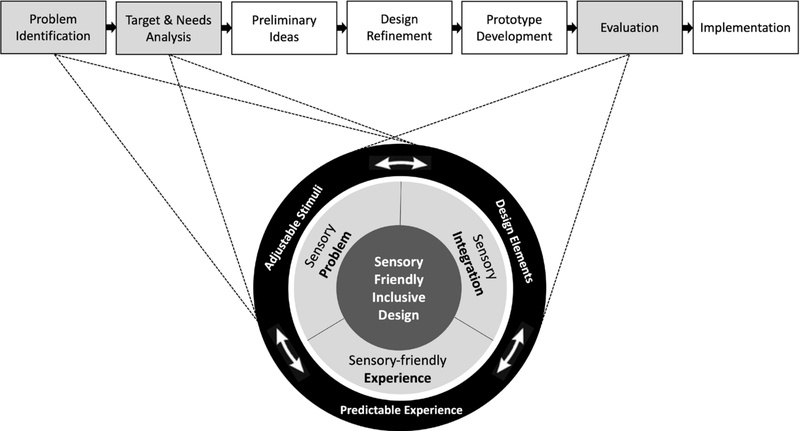
Framework of sensory-friendly inclusive design process
2. 5. Sensor-friendly inclusive fashion design (SFIFD) process and Educational Frameworks
Developing sensory literacy—the ability to perceive and interpret multisensory user feedback—is increasingly recognized as a vital educational goal in design (Meyer & Land, 2022). Integrating sensory considerations into design education not only enhances students’ empathy but also expands their creative capacity to envision fashion as an experiential, inclusive interface between the body and environment.
Integrating sensory dimensions into design thinking enhances students’ ability to interpret emotional and physical user responses, fostering empathetic creativity (Norman, 2013). Educationally, sensory-based design prompts reflection on diverse perceptual modes, encouraging students to consider how texture, color, sound, and motion affect user experience (Lacey et al., 2019).
Incorporating reference tools such as Microsoft’s Inclusive Design Toolkit (2019) and Cambridge’s Personas for Digital Exclusion (Cambridge Engineering Design Centre, 2020), the SFIFD framework guides students in identifying and addressing diverse sensory and environmental challenges. These tools encourage empathy, iterative reflection, and co-creation—skills essential for inclusive fashion practice.
Ultimately, SFIFD education seeks to foster designers who can translate empathy into design outcomes, interpret sensory feedback as creative data, and develop inclusive, emotionally resonant fashion concepts. By integrating structured design reasoning with sensory exploration, this approach positions fashion design education at the intersection of human-centered innovation, empathic creativity, and social inclusion.
Existing frameworks such as the 3C3R problem-based learning model (Hung, 2006) and inclusive design toolkits (Microsoft, 2019) provide scaffolds for structured, empathy-oriented education. The SFIFD prototype proposed in this study builds upon these frameworks by integrating sensory awareness and inclusive principles into a guided, iterative learning model. This approach addresses identified educational gaps, offering a replicable and adaptable model for fashion programs seeking to cultivate sensory-friendly and inclusive design competence (Lee et al., 2024; Clarkson et al., 2013). It situates fashion education within broader discourses of universal design and social inclusion, aligning pedagogical practice with the evolving landscape of design ethics and accessibility.
In contrast to the fashion design process (Waller et al., 2015), the inclusive fashion design process consists of a series of fundamental tasks that enhances comprehension of user requirements and highlights the importance of evaluation in the inclusive design process. Lee et al. (2023) presented a modified inclusive fashion design process considers numerous physical, social, environmental, situational, and psychological characteristics of users throughout the design ideation stage. In comparison to the fashion design process, the inclusive fashion design process contains a cycle of core activities that allows them to better understand consumer demands and highlights the importance of evaluation in the inclusive design process. The inclusive fashion design method emphasized needs study and evaluation at the early design phase.
In addition, it is important for the SFIFD process to consider aspects of the sensory integration process and basic design methods based on SIT theory to realize a sensory-friendly experience (Lee et al., 2025). Previous research has shown that PIE (Sensory Problem, Sensory Integration, and Sensory Experience) factors are a high consideration for sensory-friendly inclusive design. Therefore, the three essential elements for realizing a sensory-friendly experience—bodily sensations, stimulus elements, and emotional connection—have been identified as the main factors to be considered in SFIFD. Essential considerations for SFIFD can be defined as sensory problems, sensory integration, and sensory-friendly experiences. Figure 2 shows a framework that proposes a guideline for SFIFD considering the structure of sensory-friendly experience and the linkage structure of design elements. It summarizes the specific considerations for each stage as a SFIFD process based on a comprehensive understanding of sensory integration theory, design factor analysis, and sensory-friendly experience.
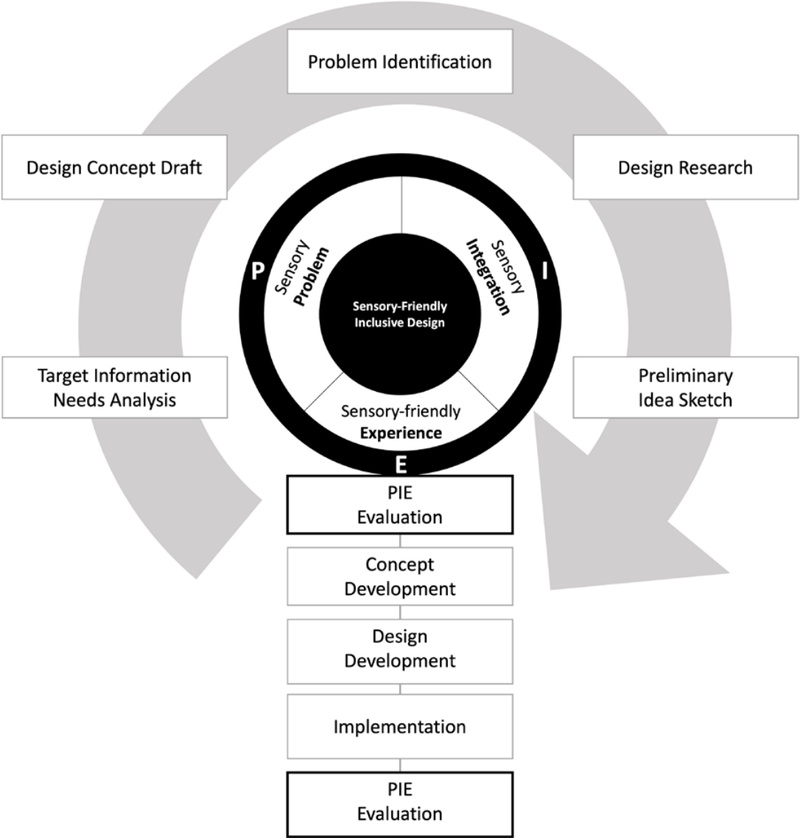
SFIFD Process for SFIFD education
3. Methods
3. 1. Research process
The purpose of this study was to develop the education prototype of SFIFD and an assistive research toolkit. The entire process of this study consisted of four steps (Figure 3); developing education prototypes and a toolkit, experiments of SFIFD education prototypes, analysis on the SFIFD education prototypes, and deducing educational insights on SFIFD education.
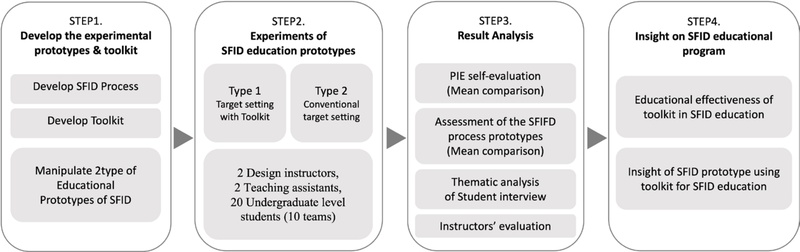
Research process
3. 2. Developing the SFIFD education prototype
This study has adopted the frame of inclusive fashion design process and model from the precedent study (Lee et al., 2024) to organize the SFIFD education prototype into seven steps. The SFIFD education prototype was considered the balance of core components (researching, reasoning, and reflecting) and processing components of 3C3R model (Hung, 2006). Therefore, the first session consisted of researching-reasoning flow both ways and researching-reflecting flow both ways. The second session was mainly focused on the reasoning-reflecting flow both ways. Afterward, the SFIFD education prototype was manipulated into two types: one offered a design spectrum toolkit, while the other used conventional target setting method. Table 1 shows the structures of each SFIFD education prototype.

The structures of each education prototype
3. 3. Developing a toolkit
This study considered the persona spectrum with a multi-perspective not to limit the SFIFD education in a functional approach in fashion. Therefore, this study developed the items of physical, sensuous, social, emotional, environmental diversity, sensory of persona spectrum.
The toolkit for SFIFD education consisted of two parts: the SFIFD spectrum toolkit card and the overview of the SFIFD set. The toolkit focused on body sensory aspects, principles of design, and target of sensory friendly experience. The overview of design set addressed body sensory problems, uncomfortable situations, cognitive sensory disturbance factors and constraints on activities, and desired elements, applicable design principles and elements.
To further justify the development process, the structure of the SFIFD education prototype was grounded in prior inclusive fashion design research. The seven-phase format applied in this study was adapted from Lee et al. (2024), whose cyclic inclusive fashion design process integrates user analysis, sensory issue identification, and iterative refinement. Building on this foundation, the present study extended the model by embedding persona-spectrum perspectives and aligning each toolkit component with the P–I–E domains, thereby ensuring theoretical coherence and systematic linkage between sensory analysis and design ideation. This grounding provides a clear rationale for how toolkit items were derived and how each stage was operationalized within the SFIFD educational context.
During the writing a Target of Position & Type of Sensory-friendly Experience participants could make the details of users’ needs like a real and establish more segmented design concept. The Design Ideation & Sketch section also supported the participants promptly to write an idea note to concrete the fashion design. Figure 4 shows the SFIFD spectrum toolkit card and the overview of the SFIFD set of this study.
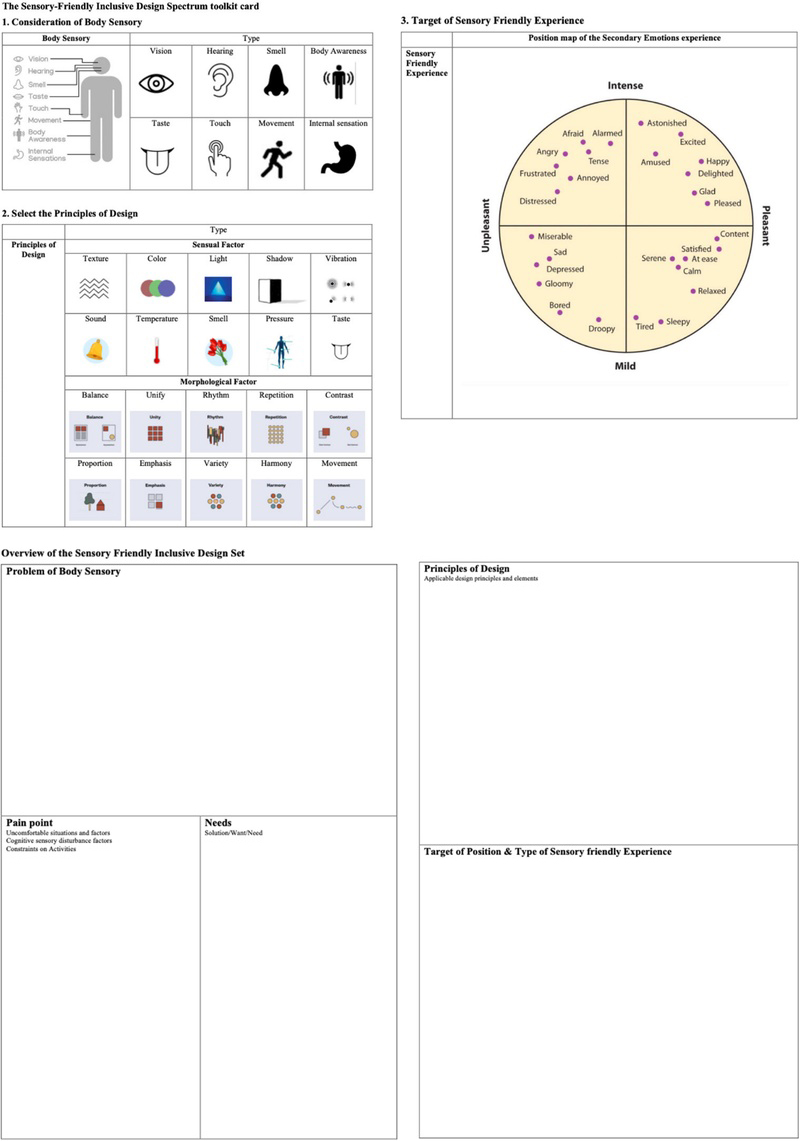
The SFIFD Spectrum Toolkit card & The Overview of Design Set
3. 4. Experiments of the SFIFD education prototype
After developing two types of SFIFD education prototypes and the SFIFD Spectrum Toolkit, the main experiments were conducted with the support of two design instructors and two teaching assistants. A total of 20 senior-level fashion design students participated in the study, comprising 10 students from Korea and 10 from the United States. Participants were organized into 10 teams, and each team was further divided into two sub-groups: one employing the SFIFD Spectrum Toolkit (Type 1) and the other using a conventional target-setting method (Type 2). All teams were assigned the same design task: to develop fashion items for users experiencing diverse body-related sensory challenges.
The inclusion of students from two different national and educational contexts was a deliberate methodological choice aimed at examining the contextual applicability and transferability of the SFIFD toolkit, rather than conducting a comparative cultural analysis. Culture was therefore conceptualized as a contextual condition under which the toolkit was tested, not as an independent analytical variable. This design choice aligns with exploratory design research approaches that prioritize evaluating whether a pedagogical tool can function across different instructional settings before undertaking culturally grounded comparative analyses.
Importantly, this study does not claim that two-country sampling represents global learner diversity, nor does it assume that cultural differences are neutralized through task parity alone. While prior research suggests that cultural background can influence design cognition, empathy construction, and problem-framing strategies, the present study did not seek to theorize or measure these effects directly. Given the limited sample size and the absence of culturally specific analytic instruments, cultural differences were intentionally excluded from outcome analysis. Accordingly, the findings should be interpreted as contextually bounded insights, demonstrating that the SFIFD toolkit can be applied in two distinct educational environments, rather than as evidence of broad generalizability.
To minimize instructor influence, a standardized instructional protocol was implemented across all experimental conditions. All participants received identical introductory briefings on SFIFD principles, uniform task descriptions, equal time allocations, and the same instructional and design materials. Instructors and teaching assistants were restricted to non-directive monitoring roles and were prohibited from providing design feedback, conceptual suggestions, or evaluative comments during the experiment.
To strengthen the methodological validity of this control, instructor neutrality was not assumed solely based on protocol design. Instead, systematic verification measures were employed. During the experiment, instructors and teaching assistants maintained observation logs, documenting any interactions with student teams and explicitly recording whether these interactions involved procedural clarification or content-related guidance. In addition, post-experiment instructor self-reports were collected to reflect on adherence to the non-intervention policy. Review of these records confirmed that instructor involvement was limited to procedural clarification only, thereby supporting the claim that instructional influence was effectively restricted.
Prior to the design task, all participants attended a short introductory presentation introducing the principles of SFIFD and the characteristics of users with diverse sensory needs. During the design process, participants completed a PIE-based self-checklist derived from precedent studies (Lamb & Kallal, 1992; Miller et al., 2007; Stokes & Black, 2012; Parth, 2019; Lee, 2022; Lee et al., 2023). The checklist was designed to support reflective assessment of how sensory-friendly principles were addressed throughout the design process and to enable systematic comparison between the two prototype conditions. Each item was rated on a five-point scale—5 (definitely considered), 3 (partially considered), and 1 (not considered)—to assess the degree to which sensory considerations were integrated and how consistently the PIE perspective was maintained (Table 2). All experimental sessions and subsequent interviews were video recorded to support qualitative analysis.
Participant’s PIE checklist
In this study, the original PIE framework—rooted in early research on functional, expressive, and aesthetic needs (Lamb & Kallal, 1992) and later expanded through sensory-integration-based design studies—was reinterpreted and operationalized as a structured self-evaluation tool. The framework was reorganized into three evaluative domains: Sensory Problem (P), Sensory Integration (I), and Sensory-Friendly Experience (E). This restructuring extended PIE beyond its descriptive use by enabling it to function as both a formative reflection tool for students and an analytic metric for evaluating problem-solving performance.
To ensure content validity, the PIE checklist underwent an expert review process involving three specialists in inclusive and sensory-focused fashion design. Experts were selected based on clearly defined criteria: more than five years of professional experience, an academic and research-oriented background, and demonstrated expertise in inclusive or sensory-related design. The review employed an open-ended qualitative feedback format, allowing experts to assess theoretical alignment, pedagogical relevance, and clarity of evaluative items. Items receiving unanimous agreement were retained, while minor wording revisions were made to enhance precision. Although formal statistical measures of inter-expert reliability were not applied due to the qualitative nature of the review, credibility was strengthened through independent reviews, explicit decision rules, and convergence of expert judgments.
By combining controlled instructor intervention, a clearly articulated cultural sampling rationale, and validated evaluation tools, this study positions its methodology as an exploratory, context-sensitive investigation of the SFIFD education prototype. Cultural diversity is acknowledged as a meaningful contextual factor yet deliberately excluded from comparative analysis at this stage. The results therefore demonstrate the applicability of the SFIFD toolkit across two distinct educational contexts, rather than claims of universal generalization. This methodological framing provides a transparent foundation for interpreting the findings and for guiding future research that may incorporate broader cultural samples or culturally grounded analytic frameworks.
3. 5. Analysis methods
Twenty participants were recruited to examine problem-solving performance across two conditions, Type1 and Type2. A within-subject design was employed, allowing each participant to complete both conditions for direct comparison and control of individual variability.
Performance was assessed across multiple items, with emphasis on the “Solved the sensory problem” dimension, using a 5-point Likert scale. After the experimental tasks, evaluations were collected from both instructors and students. Instructor feedback was obtained via semi-structured interviews and analyzed through the 3C3R model (Hung, 2006), which considers content, context, and connection. Student interviews underwent thematic analysis, starting with in-vivo coding and followed by structured coding aligned with relevant questions and topics.
Quantitative and qualitative analyses were conducted concurrently.
- • Quantitative Analysis: Pearson’s correlation coefficients examined the relationship between Type1 and Type2 scores, and paired sample t-tests evaluated mean differences, with significance set at p < 0.05. Descriptive statistics were reported to contextualize observed trends.
- • Qualitative Analysis: Instructor evaluations were categorized according to the 3C3R model, and student interview transcripts were thematically analyzed to identify patterns related to sensory problem-solving and design considerations. Evaluations combined student self-assessment and expert assessment by experimental designers, based on three domains:
1. Recognition and consideration of sensory issues within the design process – assessing the extent to which participants effectively identified, acknowledged, and addressed sensory-related challenges throughout the design development stages.
2. Understanding and application of sensory integration strategies for problem-solving – evaluating the participants’ depth of knowledge regarding sensory integration methods and their capacity to incorporate these strategies in resolving sensory-related issues.
3. Consideration of sensory-friendly user experiences – determining the degree to which the design outcomes were informed by principles aimed at fostering inclusive, comfortable, and accessible sensory experiences.
Detailed indicators for each domain are presented in Table 3.
The fractured structure of codes
4. Results
4. 1. Correlation Analysis
A Pearson product–moment correlation was conducted to examine the relationship between Type 1 and Type 2 evaluations on the Participant’s PIE checklist. The analysis revealed a weak positive correlation between the two types, r = .29, suggesting that although some alignment exists between the groups, their evaluation scores do not strongly converge.
A paired-samples t-test was conducted to compare mean scores between Type 1 and Type 2 participants. The results indicated that there was no statistically significant difference, t(11) = 1.86, p = .089. However, descriptive analyses revealed that Type 1 consistently rated items more favorably than Type 2. The largest observed difference occurred for the item “Solved the sensory problem” (Type 1: M = 4.7; Type 2: M = 3.8), highlighting a stronger perceived effectiveness of Type 1 in addressing sensory challenges.
Although no statistically significant differences were identified between Type 1 and Type 2, the descriptive findings suggest meaningful tendencies that warrant consideration. Type 1 participants consistently provided slightly higher ratings than Type 2, particularly in aspects related to problem-solving and experiential quality. This trend implies that Type 1 participants may place greater emphasis on the effectiveness of sensory problem resolution, while Type 2 participants appear to prioritize recognition of problems and perceptions of physical security. The weak positive correlation between the two groups (r = .29) further suggests that evaluative perspectives may be shaped by distinct cognitive frameworks.
Integrating the quantitative results into the discussion offers additional interpretive clarity. The lack of statistical significance (p = .089) indicates that differences cannot be generalized with high inferential confidence; however, the direction and consistency of the descriptive means point toward emerging practical effects that may have been obscured by the limited sample size. Likewise, the modest correlation coefficient implies partial but not substantive alignment, reinforcing the idea that each group emphasized different dimensions of sensory design. These quantitative indicators therefore enrich the interpretation by highlighting both the limitations of the current dataset and the potential significance of the observed trends, suggesting that broader samples are necessary to determine whether these tendencies represent systematic differences or sampling variability. Future research should employ larger and more diverse samples and mixed-method designs to gain deeper insight into the underlying reasons behind these evaluative distinctions.
4. 2. Thematic analysis of participants’ interviews on SFIFD process
For a thematic analysis on SFIFD process on the learners’ perspectives, transcription was conducted after the interviews to derive In-vivo-codes. To make the structural codes, the full transcriptions of interview were segmented related to the given questions and related topics. As a result, 434 fractured structural codes were derived from the transcription. The In-vivo-codes were derived by summarizing sentences that focused on important phrases or keywords in the interview data which were organized. For example, the transcription on the design direction using the needs’ analysis on people with a variety of skin problems was summarized as ‘Design direction for comfortable wear considering a situation of itching and peeling skin caused by dry skin problems.’ After that, core context of In-vivo-codes was deducted as ‘Connecting sensory problem features and Resolution of the sensory problem to sensory-friendly experience.’ As a result, 434 In-vivo-codes were summarized, and three categories (Design process, Advantage and Challenge of SFIFD education prototype) were deducted from the fractured structural codes. Three experienced coders cross-checked the codes and themes as unanimity. In the second phase, 434 in-vivo codes were grouped into three categories: Design process categories (112), Advantage of SFIFD education prototype categories (65) and Challenge of SFIFD education prototype categories (48). Each category was defined as two themes: process/ task related theme and planning/ method related theme. In the third and fourth phases, the themes were interpreted regarding the SFIFD prototype.
Through this process, themes were indexed for each category. The themes of Design process were indexed into process related three themes (research, concept and ideation) and planning related two themes (methods and context). The themes of Advantage were also indexed into two themes (task related theme and method related theme). The task related theme of Advantage category was subdivided into research, concept, design outputs, process and team communication. And the method related theme of Advantage category was also subdivided into toolkit. The themes of task related Challenge were research, concept, design outputs and process. Furthermore, method related themes of Challenge were toolkit. Table 3 shows the fractured structures of codes. Then, Interpretation of themes were extracted and a developing the story line was compiled. The analysis was conducted using the thematic analysis method, which involved deriving In-vivo-codes from the interview content, deriving categories, deriving themes, and relating themes to established knowledge.
4. 3. Thematic analysis results on Design process
This study has categorized the insights based on the SFIFD design process and the SFIFD education prototype into three groups: Design process, Challenge, and Advantage, as depicted in Table 5.
Comparison correlation analysis between Type 1 and Type 2
Summary of Statistical Analyses
Regarding the SFIFD process, students expressed difficulties in conducting web-based research for specific targets and researching information about specialized medical problems or solutions to sensory problems. They had difficulty connecting to more specific situations related to sensory problems. In addition, there was an evaluation that it was difficult to consider morphological and aesthetic aspects in the process of concretizing the design and to realize harmony.
The use of the toolkit was evaluated as helpful for students as it provided diverse perspectives essential for sensory friendly design and experience and design target specification and served as a learning tool to grasp the SFIFD concept by guiding research directions and factors to consider. In addition, it was evaluated as a guide for students to identify target setting and multifaceted considerations.
On the positive side, the SFIFD process allowed students to expand their targets beyond the initial scope. The research and concept generation stages were closely intertwined, enabling students to incorporate diverse perspectives into their concept development. The SFIFD process, coupled with the toolkit, facilitated detailed consideration and analysis of sensory intervention and sensory integration as well as solutions in the target’s sensory problems.
However, there was a need for additional guidance on investigating the morphological and aesthetic aspects during the research process. To enhance the effectiveness of the toolkit in the SFIFD process, it is recommended to provide supplementary materials and specific examples and explanations of the morphological aspects and sensory-friendly experience. There was also a suggestion to add the process of mind mapping to solve the difficulty of specifying more specific situations linked to body sensory problems.
Insights from SFIFD education prototypes were derived by analyzing Advantages and Challenges (Table 6). Type 1 students, using the toolkit, faced fewer difficulties during concept and target setting, and emphasized more user research and sensory-friendly experience. Type 2 students, following conventional methods, encountered difficulties in researching the target and problem-solving, and highlighted the need for more descriptions and examples to understand the concept of sensory-friendly inclusive design. Balancing functional problem-solving with aesthetics was proved challenging in both of prototypes. Students also struggled to address both functional and aesthetic aspects in their design concepts, hindering the generation and adjustment of design details during the process. Team collaboration in the SFIFD process was positively evaluated for analyzing target characteristics, requirements, problem-solving, and idea generation. Students suggested providing more explanation about PIE evaluation factors before the task to achieve a balanced design. The insights on the toolkit of Type 1 were deemed essential for maintaining the design concept throughout the process and facilitating effective team communication.
Thematic analysis process and each phase’s outputs
Insights from the Design process themes
Insights from education prototypes
5. Discussion
5. 1. Development of a SFIFD process for fashion design education
This study aimed to set targets and design concepts with a more expansive perspective on inclusive design by providing body sensory information and position map for sensory-friendly experience during the design ideation stage. The findings revealed that providing information on the body sensory type and features impacted the targeting the user and considering sensory problems. The participants agreed that the SFIFD process prototypes met the purpose of sensory-friendly fashion design process by taking sensory problems and solving the sensory problem into account in the early stages. In addition, the participants agreed that the SFIFD process prototypes could be available in design education for systematic SFIFD practice and instruction. These findings can be interpreted through the lens of the PIE model (Problem–Integration–Experience), which emphasizes iterative reflection between sensory problem identification, multisensory integration, and the creation of positive experiential outcomes. The iterative PIE checking observed in the Type 1 group aligns with sensory integration theory, which posits that meaningful sensory experiences emerge from the coordinated processing of multiple sensory inputs (Ayres, 1972). By repeatedly revisiting PIE elements, participants were able to synthesize functional, tactile, and aesthetic information, supporting both the cognitive and affective dimensions of the design process. Furthermore, after broadening the scope of thinking, checking, and reflecting on the PIE factors would be effective ways to overcome difficulties in the design process. The evaluation of the toolkit (Type 1) and the target setting method (Type 2) revealed that Type 1 facilitated the generation of expanded ideas by considering users’ sensory problems and effectively segmenting design needs and elements. The toolkit proved helpful in assessing subject coverage and expanding the content and scope of the persona, leading to a better understanding of sensory-friendly inclusive design and guiding the design planning direction.
The integration of the 3C3R model (Content, Context, Connection / Research, Reasoning, Reflection) also explains how the SFIFD process enhanced learning outcomes. Students engaged in context-based reasoning and reflection, bridging theoretical knowledge with user-centered design decisions. This theoretical grounding clarifies how the process improved students’ problem-solving fluency and conceptual balance between sensory empathy and design feasibility.
Quantitatively, the weak positive correlation (r = .29) and non-significant t-test results (p = .089) suggest that while differences between Type 1 and Type 2 were not statistically significant, the descriptive trends point toward distinct cognitive emphases: Type 1 favoring integrative problem-solving and Type 2 emphasizing recognition of sensory problems and physical security. These patterns reflect differentiated cognitive pathways predicted by the PIE model — namely, that integration-oriented design processes foster deeper sensory reasoning than recognition-focused approaches.
As a result, the SFIFD process has two features. First, Iterative checking of sensory problem, integration, and experience elements during ideation ensures a more inclusive and sensory-conscious design concept. Second, the continuous evaluation of the design process from PIE factors maintains conceptual coherence and inclusivity. In educational practice, these features enable students to adopt broader and balanced perspectives on diverse user needs, consistent with experiential learning theory.
5. 2. Importance of toolkit in SFIFD education
This study developed and validated a toolkit to support novice designers’ understanding of the SFIFD concept and enhance the sensory-integration process. The toolkit was proven effective in guiding target analysis, facilitating ideation, and supporting multi-perspective consideration of user needs. From a theoretical standpoint, the toolkit operates as a scaffolding device within the 3C3R framework, enabling structured reasoning and reflective learning. By mapping sensory problems through the PIE sequence, students internalized the logic of sensory integration—transforming fragmented observations into cohesive design insights. Furthermore, the process resonates with constructivist learning theory, where knowledge construction occurs through iterative interaction and reflection rather than linear instruction.
The iterative PIE checking method particularly reflects principles of cognitive structuring theory, as designers organized complex sensory data into hierarchical visual frameworks. Incorporating mind mapping within the toolkit would strengthen this structuring mechanism, promoting more explicit cognitive linkages between sensory problems, user needs, and design decisions. Mind mapping thus functions not merely as a brainstorming tool but as a visual reasoning aid grounded in cognitive organization theory (Novak, 1990).
Furthermore, toolkit could encourage detailed and specific consideration and analysis of the sensory issues and their resolutions, as well as the target’s sensory-friendly experience. Additionally, the toolkit contributed to a better understanding of SFIFD principles and acted as a supplementary tool to maintain consistency in SFIFD concepts and promote team communication. Consequently, incorporating the toolkit into SFIFD education can help novice fashion designers explore relevant factors, establish clear SFIFD directions, and effectively address design challenges.
However, there was a need for additional guidance on investigating the morphological and aesthetic aspects during the process. Participants also suggested the addition of a mind-mapping step to support the difficulty of specifying situations linked to body sensory problems. This enhancement should be theoretically grounded in cognitive structuring theory, which posits that visual organization tools help learners externalize, categorize, and hierarchically structure complex information. When applied in SFIFD education, mind mapping can serve as a design-thinking scaffold that enables students to connect sensory issues with design principles, visualize multidimensional user needs, and reason through iterative solution pathways. Framing mind mapping as a cognitively supported mechanism clarifies its instructional purpose and reinforces its function within the overall SFIFD process. Importantly, improvements to the toolkit should be grounded in sensory design theory, which highlights the necessity of integrating visual, tactile, and proprioceptive modalities to form coherent multisensory experiences. Enhancing the toolkit with theoretically informed elements—such as principles of multisensory mapping, tactile–visual alignment, or embodied perception—would strengthen both its pedagogical validity and its ability to support designers in systematically addressing sensory needs. Supplementary materials, case examples, and aesthetic guidance are not only pedagogical supports but also mechanisms for reinforcing multisensory coherence within the design process. Despite its promising results, this study acknowledges several limitations, including a small, culturally specific sample that restricts generalizability and the need for larger datasets to verify statistical stability. Future research should involve cross-cultural validation, longitudinal educational applications, and controlled comparisons between toolkit-enhanced and non-toolkit conditions to clarify causal effects.
6. Conclusion
The study’s findings demonstrated that the toolkit enabled students to investigate explicit SFIFD guidelines and conduct multi-perspective analyses of diverse user needs. It was evaluated as an effective tool for fostering sensory-friendly design experiences, improving comprehension of SFIFD principles, and supporting consistency throughout the design process. Educators and students agreed that the toolkit facilitated idea generation, exploration of sensory factors, and collaborative engagement.
However, several limitations should be acknowledged. The participant group was relatively small and culturally specific, involving only Korean and U.S. students, which constrains the generalizability of the findings. Cultural differences in design training or interpretation of sensory problems may have influenced the results, and the study did not fully analyze these potential variations. Therefore, caution is needed when applying the findings to broader populations or educational contexts. Future studies should expand the participant pool, diversify team compositions, and examine cross-cultural differences more systematically to refine the SFIFD model and strengthen its applicability across design education and industry settings.
The results of this study are significant in that they introduce educational models and methodologies that can promote the dissemination of SFIFD education and contribute to advancing diversity in fashion design practice and pedagogy.
Notes
Copyright : This is an Open Access article distributed under the terms of the Creative Commons Attribution Non-Commercial License (http://creativecommons.org/licenses/by-nc/3.0/), which permits unrestricted educational and non-commercial use, provided the original work is properly cited.
References
-
Amic, G. H., & Michael G. (2012). Emotion Design, Emotional Design, Emotionalize Design: A Review on Their Relationships from a New Perspective. The Design Journal, 15(1), 9-32.
[https://doi.org/10.2752/175630612X13192035508462]

-
Aron, E. N., Aron, A., & Jagiellowicz, J. (2012). Sensory processing sensitivity: A review in the light of the evolution of biological responsivity. Personality and Social Psychology Review, 16(3), 262-282.
[https://doi.org/10.1177/1088868311434213]
-
Ashdown, S. P., & Delong, M. (1995). Perception testing of apparel ease variation. Applied Ergonomics, 26(1), 47-54.
[https://doi.org/10.1016/0003-6870(95)95750-T]
- Ayres, A. J. (1991). Sensory Integration and the Child. Los Angeles. CA: Western Psychological Services.
- Cambridge Engineering Design Centre. (2020). Inclusive Design Toolkit (3rd ed.). University of Cambridge.
-
Cassim, J., Coleman, R., Clarkson, J., & Dong, H. (2016). Why inclusive design? In Design for inclusivity (pp. 11-22). Routledge.
[https://doi.org/10.4324/9781315576626]
- Clarkson, J., Coleman, R., Dong, H., & Cassim, J. (2015). Design for Inclusion: A Practical Guide. Cambridge University Press.
- Clarkson, J., Coleman, R., Hosking, I., & Waller, S. (2011). Inclusive Design Toolkit (online). Available at: https://www-edc.eng.cam.ac.uk/files/idtoolkit.pdf. (accessed 10 June 2023).
- Dong, H., Clarkson, J., Coleman, R., & Cassim, J. (2012). Design for inclusivity: A practical guide to accessible, innovative and user-centred design. Gower Publishing.
-
Hung, W. (2006). The 3C3R model: A conceptual framework for designing problems in PBL. Interdisciplinary Journal of Problem-Based Learning, 1(1), 55-77.
[https://doi.org/10.7771/1541-5015.1006]
-
Jagiellowicz, J., Aron, A., & Aron, E. N. (2016). Relationship between the temperament trait of sensory processing sensitivity and emotional reactivity. Social Behavior and Personality: an international journal, 44(2), 185-199.
[https://doi.org/10.2224/sbp.2016.44.2.185]
-
Keates, S., & Clarkson, P. J. (2003). Countering Design Exclusion: An Introduction to Inclusive Design. Springer.
[https://doi.org/10.1007/978-1-4471-0013-3]
- Kim, J., & Lee, J. H. (2024). Inclusive fashion design; Design for all. KSI Co. Ltd.; Paju.
-
Lamb, J. M., & Kallal, M. J. (1992) A Conceptual Framework for Apparel Design. Clothing and Textiles Research Journal, 10(2), 42-47.
[https://doi.org/10.1177/0887302X9201000207]
-
Lee, J. H., Lee, E., Lee, C. H., Huh, J., & Kim, J. (2023) Cyclic inclusive fashion design process based on an FEA model for inclusive fashion education. International Journal of Fashion Design, Technology and Education, 17(1), 1-12.
[https://doi.org/10.1080/17543266.2023.2218400]
-
Lee, J. H., Lee, E., Lee, C. H., Huh, J., & Kim, J. (2024). Persona/scenario (P/S) toolkit enhancing inclusive fashion design education. Fashion and Textiles, 11(1), 5.
[https://doi.org/10.1186/s40691-024-00373-z]
-
Lee, J. H., Hwang, C., Huh, J., & Kim, J. (2025). Development of sensory-friendly inclusive design based on sensory integration theory. The Design Journal, 28(3), 413-431.
[https://doi.org/10.1080/14606925.2025.2461927]
- Lee, J., Park, S., & Jeong, E. (2024). Developing an inclusive fashion design model for education. Journal of Fashion Design Research, 18(2), 55-67.
- Meyer, E., & Land, R. (2022). Threshold Concepts and Transformative Learning in Design Education. Routledge.
- Microsoft Corporation. (2019). Inclusive Design Toolkit: Designing for Accessibility and Diversity. Microsoft Design.
- Microsoft Inclusive Design (online). Available at: https://www.microsoft.com/design/inclusive/ (accessed 26 June 2023).
-
Miller, Lucy, J., Anzalone, Marie E., Lane, Shelly, J., Cermak, Sharon, A., & Osten, Elizabeth, T. (2007). Concept Evolution in Sensory Integration: A Proposed Nosology for Diagnosis. The American Journal of Occupational Therapy; Bethesda, 61(2), 135-40.
[https://doi.org/10.5014/ajot.61.2.135]
-
Panagiotidi, M., Overton, P. G., & Stafford, T. (2020). The relationship between sensory processing sensitivity and attention deficit hyperactivity disorder traits: A spectrum approach. Psychiatry Research, 293, 113477.
[https://doi.org/10.1016/j.psychres.2020.113477]
- Park, S., & Jeong, E. (2023). Inclusive design approaches in fashion education: Integrating user diversity and sensory awareness. Fashion and Textiles, 10(1), 45-59.
- Parth, G. (2019) How multi-sensory design can help you create memorable experiences, Medium. https://uxdesign.cc/multi-sensory-design-can-help-you-create-memorable-designs-95dfc0f58da5.
- Pullin, G. (2009). Design Meets Disability. MIT Press.
-
Sanders, E. B.-N., & Stappers, P. J. (2014). Co-creation and the new landscapes of design. CoDesign, 10(1), 5-19.
[https://doi.org/10.1080/15710882.2014.888183]
-
Stokes, B., & Black, C. (2012) Application of the functional, expressive and aesthetic consumer needs model: Assessing the clothing needs of adolescent girls with disabilities. International Journal of Fashion Design, Technology and Education, 5(3), 179-186.
[https://doi.org/10.1080/17543266.2012.700735]
- University of Cambridge Inclusive Design Toolkit. Available at: http://www.inclusivedesigntoolkit.com/digitalpersonas/ (accessed 26 June 2023).
-
Vaismoradi, M., Jones, J., Turunen, H., & Snelgrove, S. (2016) Theme development in qualitative content analysis and thematic analysis. Journal of Nursing Education and Practice, 6(5), 100-110. https://core.ac.uk/download/pdf/225904998.pdf.
[https://doi.org/10.5430/jnep.v6n5p100]
-
Vaismoradi, M., Turunen, H., & Bondas, T. (2016). Content analysis and thematic analysis: Implications for conducting qualitative descriptive studies. Nursing & Health Sciences, 15(3), 398-405.
[https://doi.org/10.1111/nhs.12048]