Optimization of the Design Material Production Relationship in Porcelain Tableware
Abstract
Background Ceramic and porcelain tableware are industrially produced items in the food industry where functionality, aesthetics, and technical performance are evaluated together. For porcelain to be suitable for intensive restaurant use, it must be durable and meet technical standards. Therefore, design, material, and production should be considered. This study focuses on optimizing the relationship between material, production, and industrial design in porcelain tableware. The study examines design and manufacturing processes, common defects, preventive design principles, and testing methods, while exploring the interaction between design and technical performance. The study hypothesizes that integrating technical analysis into the design process improves the overall quality of porcelain tableware.
Methods To support the development of more functional porcelain plate designs, technical and experimental analyses were conducted. A pilot study was carried out with a restaurant chain to evaluate plates from various brands for their mechanical, physical, and visual suitability for large-scale use. Porcelain products were tested in accordance with relevant standards to assess their chemical, physical, mechanical, and visual properties. Visual inspections included checks for size consistency, flatness, and weight. Physical tests assessed microwave and thermal shock resistance, water absorption, autoclave durability, and light transmittance. Mechanical properties were evaluated using Charpy impact and Mohs hardness tests. Additionally, X-ray diffraction (XRD) and X-ray fluorescence (XRF) analyses were employed to characterize the structural and elemental composition of the porcelain samples. XRD was used to identify the crystalline phases and assess the degree of crystallinity, while XRF provided quantitative data on the elemental makeup of the material. These complementary techniques enabled a comprehensive understanding of the material’s mineralogical and chemical properties, which are critical for evaluating production quality and performance characteristics.
Results Both tableware brands met standards for size, weight, cleanliness, and visual quality. They showed no damage in microwave and autoclave tests, and water absorption remained below 0.5%. Thermal shock resistance was effective up to 150°C. Both exhibited typical porcelain semi-transparency and a Mohs hardness of 5–6. The Y brand had 12% higher impact resistance and, based on XRD results, contained zircon and corundum in addition to quartz and mullite thus enhancing durability, scratch, and thermal shock resistance. Overall, Y brand demonstrated superior material performance.
Conclusions The results underline the importance of design and production decisions in high-wear commercial environments. This research is original in the holistic evaluation of technical and visual qualities, the multi-stage approach, and the contribution to improving design strategies for porcelain tableware. In conclusion the study highlights the importance of integrating experimental methods into the design process to improve the durability and functionality of porcelain tableware. By following the outlined design principles, standards, and testing methods, manufacturers can produce higher quality and more reliable products. Optimizing design, material, and production processes together enhances performance and provides long-term benefits. The study offers a valuable reference for improving porcelain tableware in terms of quality, strength, and production efficiency.
Keywords:
Porcelain Tableware, Industrial Design, Production, Material, Optimization1. Introduction
This study aims to optimize the performance and overall quality of porcelain tableware by addressing its technical properties and industrial design in an integrated manner. It argues that aesthetic or formal design alone is insufficient to meet the demands of intensive use, particularly in commercial settings such as restaurants and cafeterias. Technical attributes such as durability, impermeability, microwave and thermal shock resistance are equally critical in determining the product’s success and longevity. Therefore, a balanced evaluation of both design and material performance is essential in the development of functional, durable, and high-quality porcelain tableware.
The central hypothesis of the research is that integrating technical analyses into the design process will significantly improve the quality, usability, and life span of porcelain products. A well-designed form alone cannot ensure user satisfaction unless accompanied by technical adequacy; hence, technical data should inform and support design decisions.
In line with this hypothesis, the study has several core objectives:
- • To highlight the importance of aligning porcelain tableware design with its intended use, user profile, and technical requirements,
- • To emphasize the prioritization of technical criteria—such as strength and resistance—over purely aesthetic considerations in high-demand environments,
- • To identify the key technical features required in porcelain tableware, such as durability, impermeability, and thermal and chemical resistance,
- • To explore the mutual interaction between industrial design and technical performance,
- • To demonstrate that industrial design can enhance technical properties, and vice versa.
Accordingly, the following research questions are addressed:
- • How can the industrial design of porcelain tableware be improved and optimized?
- • How can product performance under real-life conditions be enhanced?
- • How can the expected technical and functional properties be ensured during design and production?
- • What factors should guide purchasing decisions for porcelain tableware in commercial settings?
- • What contributes to the long-term durability and usability of such products?
To explore these questions, the study investigates how the integration of material properties, production methods, and design decisions can enhance the performance and durability of porcelain tableware. Emphasis is placed on common production defects, preventive design principles, and appropriate testing methods to ensure both technical and aesthetic quality. The relationship between design features—such as shape, size, and usability—and technical performance is at the core of this investigation.
A pilot study was conducted to evaluate selected porcelain products under simulated commercial use, including exposure to impact, thermal shock, chemicals, and oils. Porcelain items from two different brands—including serving plates, dinner plates, salad plates, and bowls—were tested. Various visual, chemical, and mechanical analyses were carried out. These included measurements of dimensional consistency, flatness, and weight, along with resistance to microwave heating, autoclaving, thermal shock, and water absorption. Mechanical performance was assessed through Charpy impact and Mohs hardness testing, and internal structural analysis was performed using X-ray diffraction (XRD) and X-ray fluorescence (XRF) techniques.
1. 1. Importance and Original Contribution of the Research
Previous studies on porcelain tableware have generally focused on specific technical properties. As shown in Table 1 the topics of previous studies on porcelain tableware are generally limited in scope. Most have focused on specific technical parameters such as mechanical strength, water absorption rate, or translucency. Some have also examined chemical resistance or color changes caused by contact with various beverages. Additionally, a number of studies have addressed surface or body defects in porcelain products. However, these existing studies do not consider the subject from the perspective of industrial design. However, no holistic study has been found in the existing literature in which these technical properties are evaluated in the context of industrial design.

Summary of Literature on Porcelain Tableware
This study is distinguished by a holistic approach that addresses the optimization of porcelain tableware in both technical and design dimensions. While the literature usually focuses on one or two technical features, in this article, a large number of technical features (mechanical strength, thermal durability, thermal shock resistance, water absorption rate, light transmittance, etc.) are evaluated together and these features are associated with industrial design principles.
The study highlights that analyzing the visual and technical features of porcelain tableware aids decision-making, particularly in corporate purchasing. However, to maintain a narrow scope, detailed evaluation is reserved for a separate study.
In these aspects, the study offers an original and multidimensional approach that integrates technical and design parameters for the optimization of porcelain tableware. In addition, effective criteria for the industrial design of tableware are determined and listed systematically. Similarly, the technical features of porcelain products and the areas affected by these features are also defined and compiled in detail.
The pilot study conducted during the research process clearly reveals the interaction between technical features and industrial design and in this sense contributes to an integrative perspective that is missing in the literature.
2. Industrial Design and Porcelain Tableware
Industrial design integrates aesthetics, functionality, ergonomics, and marketability to meet consumer needs through mass production (Erzincan et al., 2021). It supports economic growth by balancing visual appeal with usability and enhancing marketing strategies (Şık, 2020, p. 32). The Industrial Revolution spurred mass production and innovation, driving the creation of functional and modern products to meet evolving societal needs (Karabacak & Dilmaç, 2021, p. 32). Today, industrial design is shaped by market demands and technical expertise, aiming for innovative, cost-effective, and manufacturable solutions. Research and testing help control costs and align designs with consumer expectations (Erzincan et al., 2021).
The design process generally involves problem identification, research, ideation, prototyping, and implementation to ensure successful outcomes (Fesligil, 2007, p. 15). Porcelain tableware, a prominent category in industrial design, merges function with aesthetics and reflects cultural heritage. Forms like plates, bowls, and teapots have evolved for both domestic and commercial use, increasing market value (Gençtürk & Türkel, 2023; Baruah, 2021). Porcelain is valued for its durability, hygiene, and appearance. Its impact and chemical resistance, microwave safety, and smooth surface make it ideal for both home and restaurant settings.
2. 1. Technical Properties of Porcelain Material
Porcelain tableware originated from early ceramic traditions in China and Japan around 19,000 years ago, later spreading to Anatolia and Mesopotamia with advancements like stamping, engraving, and the potter’s wheel (Gibbs, 2013; Cooper, 2002; Gençtürk & Türkel, 2023; Kocaispir, 2020; Yoleri, 2023). Proto-porcelain developed during China’s Shang dynasty, reaching Europe via Marco Polo in the 13th century (Min Yina, 2011; Gençtürk & Türkel, 2023). European production began in Meissen in 1708 and expanded in the 18th century (Cox, 1944; Coutts, 2001; Impey, 1984; Cooper, 2002). Visual features like color and form remain central to design today (Parlak, 2021).
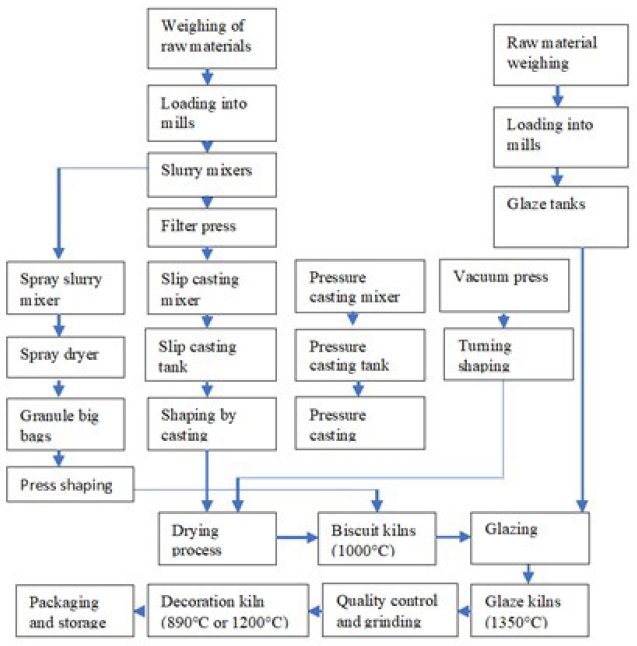
Porcelain is a durable, translucent ceramic made by firing refined clay, kaolin, feldspar, and quartz at 1,200–1,400°C. Hard porcelain, fired at 1,350–1,400°C, is fully vitrified, strong, and hygienic, containing roughly equal parts kaolin, quartz, and feldspar (Arcasoy, 1983). Soft porcelain, fired at lower temperatures (1,250–1,270°C) like Bone China, is more translucent with a creamier tone but less strong and hard (Üretim Teknikleri, 2019).
Table 1 shows porcelain production methods, which vary by product type and quantity: isostatic pressing for economical plates, casting for bowls and jugs, and plastic shaping for mugs (Özen, 2015). Hard porcelain (1,350–1,400°C) is made of 50% kaolin, 25% quartz, 25% feldspar; it is white, translucent, fully vitrified, highly durable—suitable for technical and food containers (Arcasoy, 1983).
Soft porcelain (1,250–1,270°C), such as Bone China, has more translucency and a creamier tone but lower strength and hardness (Üretim Teknikleri, 2019).
The production methods of porcelain items are shown in Table 2. Production methods differ by product type and quantity: isostatic pressing is used for economical plates, casting for soup bowls and jugs, and plastic shaping for mugs and cups (Özen, 2015).
Porcelain production (Özen, 2015, p. 9)
2. 2. Porcelain Tableware: From Design to Distribution
The design process of porcelain tableware is a multifaceted one, encompassing both artistic and industrial stages. Below is an overview of the general design process of porcelain tableware, followed by material selection and production planning stages (Table 3).
Porcelain Tableware Process Overview
2. 3. Technical Requirements and Defects in Porcelain Tableware
Porcelain tableware combines function, durability, and aesthetics in dining culture. It supports food safety, heat retention, and user comfort. Good design accounts for form, ergonomics, and usage context. Technically, it should resist impact, thermal shock, and chemicals, with low water absorption and a smooth, semi-translucent surface.
Ensuring defect-free porcelain tableware requires careful control of design and production. A common issue is shape deformation (Özkan, 2019, p. 35), which may result from several factors:
Raw Materials: Must be high-purity, clean, and finely ground (<45 μ), selected according to product type and production method (Özen, 2025, p. 1).
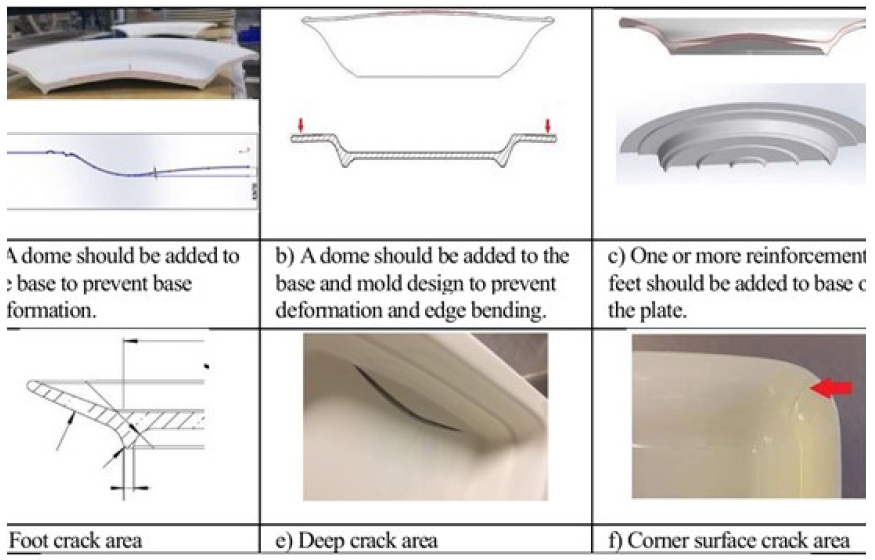
Defects in porcelain tableware (Özkan, 2019)
Mold Design & Demolding: Mold design must prevent deformation, allow easy release, and include touch-up allowances. Isostatic pressing can cause bending.
Mold Geometry: Sharp or reverse angles should be avoided for smooth demolding (Özkan & Acartürk, 2019).
Pre-Stress Application: Cylindrical and flat items are intentionally bulged during modeling to prevent collapse during drying and firing.
Bulge size depends on model dimensions, clay type, and firing temperature (Kundul, 2013). To avoid deformation in porcelain tableware, both product and mold must be designed in line with material and production constraints (Figure 2).
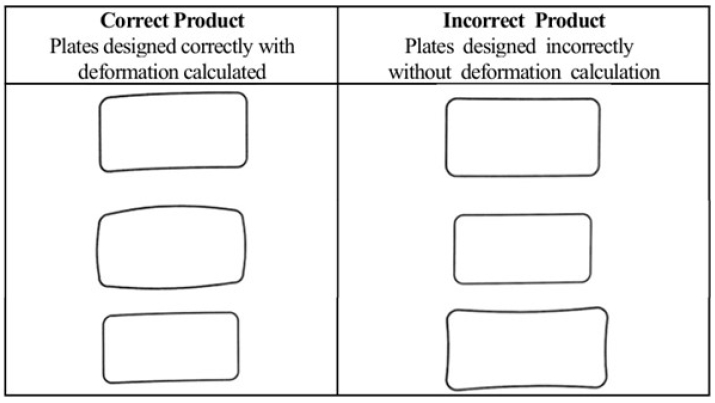
Surface deformation in plates (Kundul, 2013, p. 133)
Reinforcement Foot for Models: Wide-based models should include support feet based on form—oval plates use flat feet, round ones circular, and large plates may need multiple feet.
Raw materials greatly affect porcelain deformation: Ideal firing temperature is 1220–1350 °C for a white, translucent finish. Plastic clay lowers translucency, bentonite improves plasticity, and quartz size influences vitrification. Materials should be clean and finely ground (<45 μ) (Fraser, 2010; Özen, 2025). Table 4 lists the materials used.
Raw materials in porcelain products (Özer, 2009, p. 8)
Surface and Foot Cracks: Cracks often result from thin sections, uneven thickness, poor drying, or improper touch-up. These can be minimized through adequate thickness, uniform surfaces, and controlled drying.
Production Method Weaknesses: Each forming method has limitations. Isostatic pressing requires precise mold design; casting demands careful model shaping(Özkan, 2019).
Production Conditions: Deformation can result from uneven pressure, moisture imbalance, or improper demolding. Cracks in deep forms often stem from poor compression.
Weaknesses of the Casting Process: In casting, issues like fast drying or thin walls also lead to defects Vardar, 2018; Özkan, 2019).
Design Factors: Porcelain tableware should be designed to be resistant to deformation and suitable for mass production, taking into account the material and production conditions (Ural, Akyurtlaklı Acartük, 2017, p. 326).
Designers must know material behavior and production methods to avoid deformation and waste. Effective design meets technical needs like mold shape, material thickness, and easy demolding.
3. Technical Examination of Porcelain Tableware
This study analyzes commercial porcelain plates, emphasizing technical specifications for better performance, appearance, and durability.
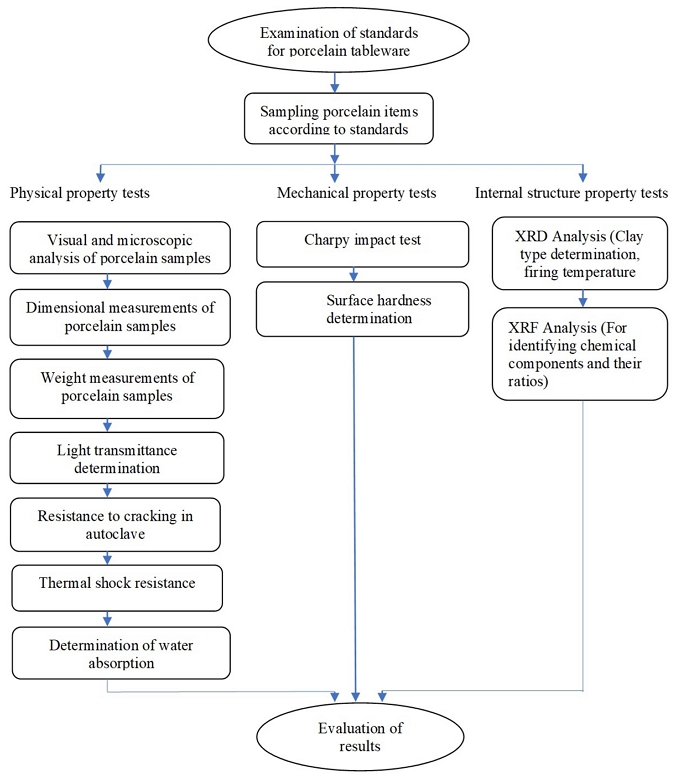
Two brands were evaluated through visual, physical, mechanical, and structural tests, in accordance with relevant standards (e.g., TS 10850, TS EN 1217, TS EN 1184, TS 4422 ISO 6486-2, and TS EN 101). The process is outlined in Table 5 and detailed in the following sections (Günal Ertaş, D., Tuncel, Y., & Acun Özgünler, S., 2020).
Porcelain Tableware Technical Inspection Flowchart
3. 1. Physical Properties Determination
Porcelain plates were evaluated for visual quality, light transmittance, thermal shock, microwave resistance, water absorption, and autoclave crack resistance.
Samples from two brands were selected per TS 10850, based on batch size and number sent to the lab.
Following TS 10850, 24 plates from six models (X and Y brands) were inspected for defects such as glaze gaps, rough edges, cracks, size deviations, and surface flaws. Plate models are shown in Figure 3; inspection results are provided in Tables 6,7,8,9.
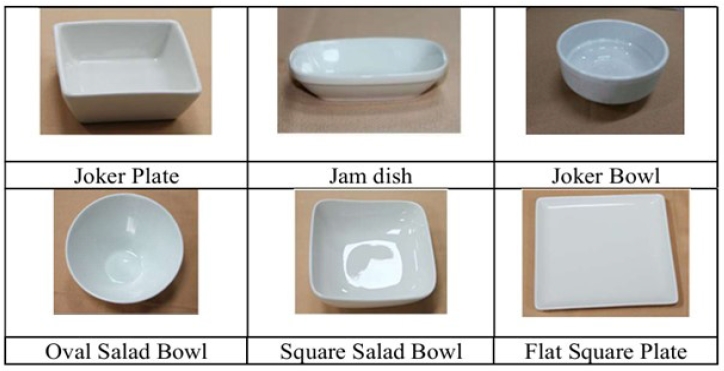
Examined porcelain plate models
Visual and Physical Properties of X Brand Plates
Dimensions and weights of porcelain plates (X brand)
Visual and physical properties of Y brand plates
Dimensions and weights of porcelain plates (Y brand)
Brand X (X1–X12) and Brand Y (Y1–Y12) samples showed no dimensional or weight deviations beyond Class 1 limits. Visual and physical inspections revealed no defects or non-conformities. All samples met the required quality standards (Tables 4, 6, 8) (Günal Ertaş, D., Tuncel, Y., & Acun Özgünler, S. (2020).
Samples were subjected to microwave testing at 900 W power for 2, 7, and 15 minutes according to the TS 10850 standard. Microwave tests at 900 W for 2, 7, and 15 minutes showed no visible damage (breakage, cracks, or deformations) in X and Y brand plates, confirming their microwave safety. (Table 10).
Microwave test (X and Y brand)
According to TS 10850 (Art. 2.3.8), six samples (three per brand) were tested at 500 kPa for 2 hours. No glaze, color, or structural deterioration was observed in either brand (Table 11).
Crack resistance in autoclave test
Three plate samples from each brand were tested according to TS 10850. In this method, samples are broken, glazed surfaces are scraped, and pieces are dried at 105°C for 3 hours to remove moisture. Initial weights (W1) are recorded, then samples are boiled for 2 hours and left in hot water for 20 hours. After cooling, final weights (W2) are measured. Water absorption is calculated as:
The results showed 0.05% absorption for Brand X and 0.02% for Brand Y, both well below the 0.5% limit specified by the standard (Table 12).
Water absorption values of porcelain plates
Five samples per brand underwent three heating-cooling cycles from 120°C to 150°C. No cracks or structural damage occurred, confirming compliance with TS 10850 (Table 13).
Results of the thermal shock test
Light transmittance was evaluated according to TS EN 1184 by placing a 1 cm² opaque object beneath the plate. Both brands exhibited semi-transparency, confirming their light-permeable porcelain structure (Figure 4, Table 14).
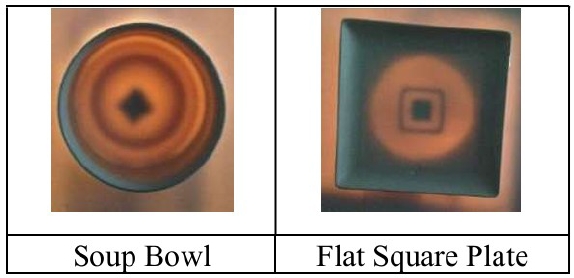
The appearance of light transmission in plates
Light transmittance test of porcelain plates
3. 2. Mechanical Properties Determination
The mechanical properties of porcelain plates are important for their durability under heavy commercial use conditions. Mechanical performance was evaluated through Charpy impact and surface hardness tests.
The MOHS hardness levels of porcelain material samples were determined using the “MOHS Mineral Hardness Scale” (Table 15).
MOHS Hardness levels of porcelain samples
The energy absorption capacity of the plates under impact was determined using the Charpy impact test. Charpy tests on three samples per brand showed that Y brand plates absorbed 12% more impact energy than X brand (Table 16).
Charpy impact test of porcelain plates
3. 3. Determination of Internal Structure Properties
XRD and XRF analyses were conducted to examine the internal structure of the porcelain. XRD identified mineral phases, while XRF determined Pb and Cd levels to assess compliance with ISO 6486-2:1999 and TS EN 101 standards.
XRD analysis of porcelain samples was conducted with a “Bruker D8” device, revealing the mineral types and proportions (Figures 5 and 6).
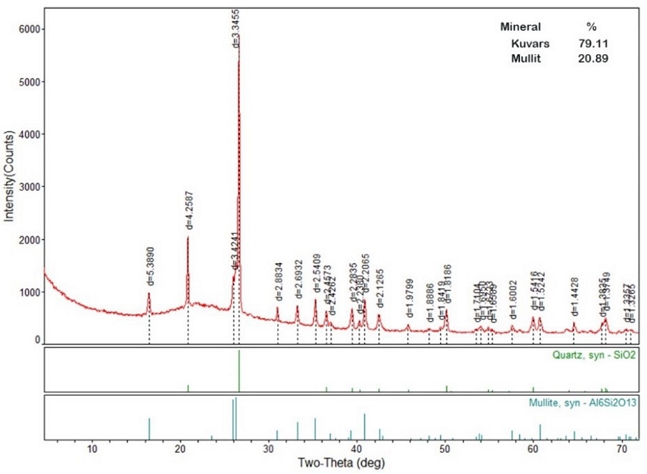
X brand porcelain material sample XRD diffractogram and mineral content percentages
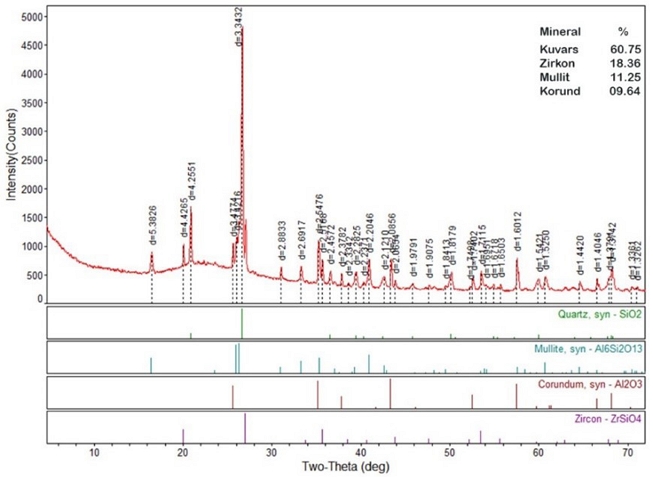
Y Brand Porcelain Material Sample XRD Diffractogram and Mineral Content Percentages
The tables below (Table 18) display the major and minor oxides, trace elements (including Pb and Cd), and loss on ignition (%LOI) ratios.
X and Y brand porcelain material sample XRF analysis
Laboratory tests were conducted on porcelain plates from two brands, following TS 10850, TS EN 1217, TS EN 1184, TS 4422, ISO 6486-2, and TS EN 101 standards. The results of the technical analyses can be summarized as follows.
*Visual inspection confirmed both brands met size, weight, and cleanliness standards, important for aesthetics and functionality.
*Microwave and autoclave tests showed no damage to either brand, indicating strong durability.
*Water absorption was below the 0.5% limit for both brands, ensuring structural integrity.
*Thermal shock tests confirmed both brands withstood 150°C, supporting heat resistance.
*Light transmittance tests showed both brands were semi-transparent, characteristic of high-quality porcelain.
*Charpy impact tests showed Y brand had 12% higher energy absorption, highlighting superior durability.
*Both brands had a Mohs hardness of 5–6, similar to steel, ensuring scratch resistance.
*XRD analysis revealed Y brand’s additional minerals (zircon and corundum), improving durability over X brand.
*XRF analysis showed both brands met safety standards for lead and cadmium, confirming health compliance.
In summary, both brands meet or exceed standards for durability, functionality, and safety, with Y brand having superior mineralogical properties.
4. Interaction Between Industrial Design and Technical Characteristics of Porcelain Tableware
In porcelain tableware production, material properties and industrial design are closely linked. The design’s structural and aesthetic qualities depend on the material’s physical, thermal, and mechanical behavior. This study’s technical analyses support design improvements by identifying how key material parameters affect form, thickness, and surface treatments, as well as processing and functional constraints.
Visual and Physical Defects in Relation to Design: Defects like burrs, specks, cracks, foot adhesion, and mold issues often result from poor raw materials, improper glazing, or firing conditions. Specks and pinholes come from unclean materials or inadequate casting, while burrs and edge defects are tied to faulty finishing or glaze application.
To reduce mold-related defects, molds must accommodate shrinkage, be smooth and clean, and enable easy demolding. Forms should avoid undercuts and favor rounded shapes and wide angles. Foot cracks are linked to thermal shock, thin designs, or inadequate support. Proper sizing and foot placement are essential.
Design can prevent many of these flaws by accounting for shrinkage, ensuring even wall thickness, avoiding sharp edges, and reinforcing large forms with additional feet. Slight curvatures can also reduce warping or shape deviation.
Relationship Between Size, Weight, and Design: Porcelain plate measurements confirmed compliance with standards. Design must consider shrinkage during production to ensure proper dimensions. Excessively thin walls reduce strength, while too much thickness leads to stress, drying issues, and increased weight.
Microwave Durability and Design: Microwave resistance is influenced by material content and design. Metallic decorations prevent microwave use. Plate shape and thickness affect heat distribution—flat, wide designs perform better than thick or deep ones. Edge and base design also impact thermal behavior.
Autoclave and Thermal Shock Resistance in Design: Resistance to high temperature and pressure is affected by both material and design. Uniform thickness, rounded forms, and smooth transitions reduce stress. Sharp angles and abrupt changes weaken structure. Design should support durability under thermal and mechanical strain.
Relationship Between Water Absorption and Industrial Design: Water absorption in porcelain depends mainly on material composition, firing, and glazing quality. While industrial design has a limited direct effect, design elements like surface texture and shape can influence how long moisture remains on the product. Minimizing textured surfaces, sharp curves, and fluid-retaining angles can help reduce water absorption. Along with technical adjustments, design refinements can support overall impermeability.
Relationship Between Light Transmittance and Industrial Design: The translucency of porcelain depends on material composition, firing conditions, particle size, density, porosity, crystal structure, glass phase ratio, surface roughness, glazing, and cooling rate. Sintering affects porosity and crystallinity, which in turn influence translucency; excessive sintering can reduce it (Kingery et al., 1976). Finer raw material particles like kaolin, feldspar, and quartz improve homogeneity and light transmission (Reed, 1995). Higher density and lower porosity enhance light scattering (Rahaman, 2007), while a greater glass phase ratio increases translucency (Chiang et al., 1997). Smooth, glazed surfaces reduce reflection and scattering (Norton, 1974), and post-firing cooling affects opacity through crystallization (Barsoum, 2002). Design contributes by favoring thin, non-porous, smooth forms without dense textures or added elements, which support both translucency and distinctive aesthetics.
Relationship Between Internal Structure Properties and Industrial Design: Porcelain’s material composition affects strength, translucency, and resistance to heat and pressure. Although industrial design does not change these properties directly, it can support insufficient materials. Rounded, thickened forms that avoid sharp corners or narrow angles help reduce stress and increase durability.
4. 1. Design Optimization Via Technical Analysis
Porcelain tableware can feature traditional, anonymous, or original designs, provided technical requirements are met through material, production, or design strategies. Aesthetic and functional features must align with intended use and user context. For instance, plates designed for household use may not withstand the rigorous conditions of restaurants. Thin walls or sharp edges may compromise durability.
In such cases, design revisions can improve performance—such as rounding corners (Figure 7a), adjusting hole spacing (Figure 7b), or widening structural areas (Figure 7c). Similarly, complex forms with indentations and protrusions (Figure 7d) may hinder stacking or cleaning, while sharp-cornered square plates (Figure 7e,7f) are impractical for fast-paced environments due to storage or dishwasher constraints. Designers must evaluate environmental and functional needs, ensuring form supports durability, usability, and ease of production.
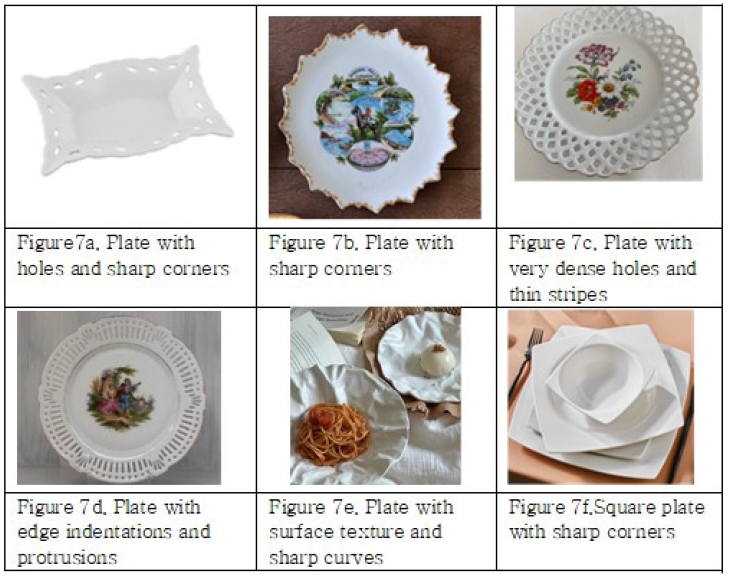
Inappropriate Designs for Commercial Use
Technical analyses play a crucial role in identifying weaknesses in porcelain tableware, guiding improvements in both design and production. By examining product performance under stress—such as heat, impact, and liquid exposure—designs can be refined to ensure better functionality and durability.
Enhancing Functional and Original Designs: Analyses help test unconventional forms, complex surfaces, or unique sizes. This enables the development of innovative, yet functional, porcelain products. Even original designs must meet essential requirements such as structural strength, proper thickness, and ergonomic usability.
Improving Durability and Usability: Porcelain products that resist heat, microwave exposure, impact, and scratches are more likely to remain in use longer and perform well under intensive conditions. Lightweight yet strong materials and designs increase user satisfaction and reduce replacement costs.
Building Brand Trust: Technically reliable products enhance brand credibility and user confidence. Long-lasting, well-performing tableware positively impacts institutional purchasing decisions, especially in commercial environments such as restaurants.
Guiding Redesign When Necessary: In this study, plates from two brands met key technical criteria and did not require redesign.
However, when negative analysis results are encountered, improvements to form, material composition, or production conditions become necessary.
Key Design Criteria: Design must consider multiple factors to ensure performance, usability, and production efficiency. Table 19 outlines the design-oriented criteria that must be considered during the conceptual and developmental phases of porcelain tableware.
Design Criteria in Porcelain Tableware
4. 2. Aesthetic Originality and Design Freedom in Porcelain Tableware
Beyond functionality, porcelain design offers wide scope for creativity. Forms inspired by nature, geometry, or cultural heritage—combined with diverse colors, artistic glazes, and surface treatments—can enrich aesthetic value (Figure 8a–8f). Porcelain’s formability supports unique and innovative outcomes, especially when guided by technical awareness.
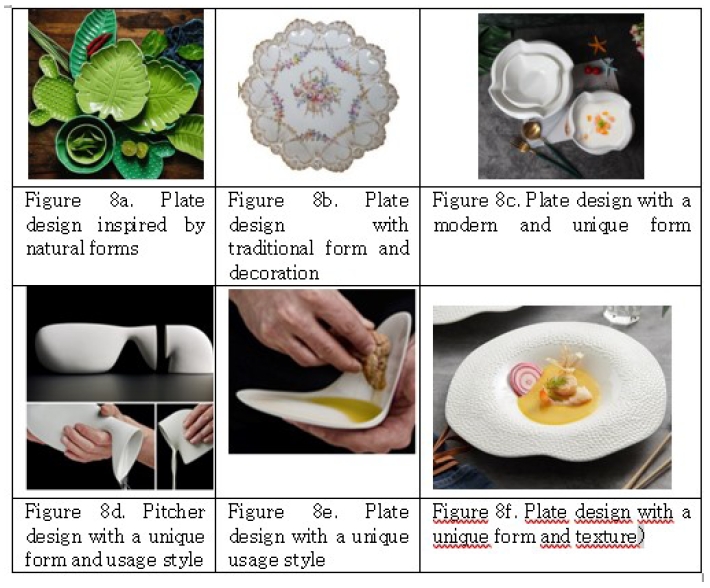
Innovative porcelain plate designs
However, even original designs must respect core porcelain principles: suitable draft angles, uniform thickness, reinforced edges, and adequate foot ring structures. These ensure structural integrity and production feasibility. Creative forms must be tested and refined to meet both visual and technical standards.
Industrial designers should actively engage with the production process to balance creative vision and technical reality. Through such collaboration, technically sound and visually compelling products can be developed for varied contexts—from homes to institutional use.
4. 3. Procurement and Decision-Making
The article highlights that material, mold design, casting, and production conditions contribute to defects and deformation. Technical analyses help detect weak areas in design, allowing targeted improvements. These analyses also inform purchasing decisions—especially for institutions like cafeterias, dormitories, and hotels—by comparing technical performance between brands. Products meeting the criteria are prioritized in procurement, ensuring more effective design, production, and supply processes.
5. Conclusion
This study analyzes the characteristics of porcelain tableware under controlled laboratory conditions simulating real restaurant use. The tests confirm the plates’ resistance to impact, thermal shock, chemicals, oils, and high temperatures.
The research underscores the importance of integrating both visual and technical aspects into the industrial design of porcelain tableware. It recommends using experimental methods to improve product design, selection, and durability. Technical analyses can add value and extend product lifespan.
As a pilot study, it assesses the suitability of porcelain tableware for bulk purchasing, supporting the hypothesis and providing a basis for future research. Similar evaluations may apply to other porcelain products. Table 20 presents key technical features and their functional impacts.
Properties of porcelain tableware and affected areas
Design and production processes should align with standards and literature, avoiding form or manufacturing defects while ensuring functionality and durability. The analyses presented offer guidance for improving performance and resilience. Prototyping and testing play key roles in refining the final product.
Porcelain’s applications extend beyond tableware into decorative, kitchen, and technological fields. The experimental approaches discussed provide a framework for designing high-performance products. Further studies on stress, impact, and wear resistance are encouraged.
This research explores design, production, common defects, preventive measures, and test methods for porcelain tableware. Two different brands were evaluated against standards, combining theoretical and technical perspectives. The analyses support quality assurance without increasing cost or production time.
Following the outlined design and testing principles enables the development of more reliable tableware. Measuring quality through standardized tests ensures consistency.
Optimizing design, material, and production together enhances both quality and performance, offering benefits on individual and industry-wide levels. The findings also inform other porcelain applications—such as medical, decorative, and electronic products. By identifying key design and testing criteria, this study provides a solid reference for improving porcelain tableware production.
Future research could address environmentally friendly materials, energy efficiency, and ergonomic innovations. New forms may enhance the user experience and functionality. Modern production techniques—like 3D printing and robot-assisted forming—can modernize traditional porcelain. Exploring new material compositions can strengthen mechanical properties. The study’s insights are also relevant for other industrial fields where porcelain is used.
Notes
Copyright : This is an Open Access article distributed under the terms of the Creative Commons Attribution Non-Commercial License (http://creativecommons.org/licenses/by-nc/3.0/), which permits unrestricted educational and non-commercial use, provided the original work is properly cited.
References
- Baruah, D. (2021, January 29). Different types of tableware and glassware. Holiday Home Times. https://www.holidayhometimes.com/types-tableware-glassware212119/.
- Bohner, G., & Fuchs, A. (2015). Ceramic tableware design. Design and Materials Journal, 12(3), 101-115.
- Cooper, E. (2002). 10,000 years of pottery (4th ed.). The British Museum Press.
- Coutts, H. (2001). The art of ceramics: European ceramic design, 1500-1830 (1st ed.). Yale University Press.
- Cox, W. E. (1944). The book of pottery and porcelain (Vol. 2). Crown Publishers.
- Dodd, D., & Murfin, S. (2008). Ceramic design course: Principles, practice, and techniques. Thames & Hudson.
- Erzincan, A., Yıldız, N., Parlak, D., Günay, E., Evren, B., & Mercin, L. (2021). Utilization of biomimicry and biomorphism in industrial design porcelain tableware products. SDÜ Art-E: Journal of Fine Arts Faculty, Süleyman Demirel University, 11(28), 21-28.
- Fesligil, A. Ö. (2007). A method for evaluating products (Master's thesis, Istanbul Technical University, Graduate School of Science, Engineering and Technology).
- Fraser, H. (2010). Ceramic faults and their remedies (Z. M. Özkan, Trans.). Karakalem Publishing House.
-
Gençtürk, S., & Türkel, E. (2023). Historical development and contemporary aesthetic trends of ceramic tableware. International Journal of Social Sciences, 7(3), 460-82.
[https://doi.org/10.30830/tobider.sayi.15.26]

-
Gibbs, K. (2013). Late Neolithic pottery and ambiguous symbols in the Southern Levant. Paléorient, 39(2), 69-84.
[https://doi.org/10.3406/paleo.2013.5521]
- Günal Ertaş, D., Tuncel, Y., & Acun Özgünler, S. (2020). Technical report on porcelain tableware analysis (Report No: Mİ-2020-13). Istanbul Technical University, Faculty of Architecture, Building Materials Laboratory.
-
Impey, O. (1984). Japanese export art of the Edo period and its influence on European art. Modern Asian Studies, 18(4), 685-697. https://www.jstor.org/stable/312344.
[https://doi.org/10.1017/S0026749X00016383]
- İncedayı, B. (2004). Ceramic art and technology. Ministry of National Education Publications.
- Karabacak, P., & Dilmaç, S. (2021). The role of design in the context of mass production in industry after the year 1851 and the Industrial Revolution. Journal of Art and Design Research, 32.
-
Kocaispir, A., & [U. P.] (2020). Traces of a multi-component culture extending from Northern Mesopotamia to Central Asia: The Halaf culture. Journal of Atatürk University Institute of Turkic Studies, (67), 411-440.
[https://doi.org/10.14222/Turkiyat4381]
- Önder, A. M. (2019). Form formations in ceramic art and examples from works of contemporary Turkish ceramic artists. Konya Art Journal, 2, 53-65.
- Özer, A. T. (2009, October). The effect of wollastonite use on the body in soft porcelain (Master's thesis), Eskişehir Üniversitesi.
- Özkan, G. (2019). Deformations encountered in porcelain tableware production and proposed solutions (Master's thesis, Sakarya University, Institute of Social Sciences).
- Özkan, G., & Acartürk, B. (2019). Production of porcelain tableware, deformations and recommendations for removal. Journal of Current Researches on Social Sciences (JoCReSS), 9(1). http://www.stracademy.org/jocress.
-
Parlak, D., & Şekerci, H. (2021). Industrial applications of Phrygian period kitchenware forms in the type of table ceramics. Medeniyet Art Journal, 7(2), 322-339.
[https://doi.org/10.46641/medeniyetsanat.1008164]
- Porland. (2019, January 21). Production techniques. https://www.porland.com/uretim-teknikleri/.
- Rosenthal GmbH. (n.d.). Design philosophy and tableware collections. https://www.rosenthal.de/en/.
- Tunalı, S. (2011). New approaches and techniques in ceramic design. Journal of Faculty of Art and Design, Gazi University, 7(2), 35-42.
- Tunusluoğlu Tahran, Ö., Pasinlioğlu, H., & Yılmaz, M. (2019). Physical and experimental distinction of porcelain and ceramic tableware, kitchenware, toilet, and other household items. Customs and Trade Journal. https://www.academia.edu/113213625/Porselen_ve_Seramik_Sofra_Mutfak_Tuvalet_ve_Diğer_Ev_Eşyalarının_Fiziksel_ve_Deneysel_Ayrımı.
- Ulrich, K. T., & Eppinger, S. D. (2016). Product design and development (6th ed.). McGraw-Hill Education.
- Ural, M., & Akyurtlaklı Acartürk, B. (2017). Deformations encountered in vitreous china production and factors causing deformation. Journal of Current Researches on Social Sciences, 7(1).
-
Yin M., Rehren T., Zheng J., (2011, September). The earliest high-fired glazed ceramics in China: The composition of the proto-porcelain from Zhejiang during the Shang and Zhou periods (c. 1700-221 BC). Journal of Archaeological Science, 38(9), 1-50.
[https://doi.org/10.1016/j.jas.2011.04.014]
-
Yoleri, H. (2023). The origin of ceramic techniques. Yedi: Journal of Art, Design and Science, 57-70.
[https://doi.org/10.17484/yedi.1095330]