
Bridging Social Learning with Technology: The Use of a Social Robot in Preschool Development
Abstract
Background The integration of social robots in early childhood education is increasingly being explored to support social and emotional development in preschoolers. This study investigates the potential of social robots in facilitating play and conversation activities among preschoolers with varying levels of sociability. The objective is to evaluate the effectiveness of social robots for preschoolers with varying levels of sociability and to assess the satisfaction of both children and their parents with these interventions.
Methods The study involved 50 preschoolers, aged 4–6 years, classified into high, middle, and low sociability groups based on the Social Communication Questionnaire (SCQ). Children interacted with a social robot, Pibo, for 30 minutes over four days. The interaction data were collected and analyzed. Pediatric psychiatrists and a child development center teacher conducted expert evaluations and parents provided feedback on their children’s experience. Key areas of assessment included the naturalness of interactions, emotional expression, and sociability-related differences in engagement.
Results The findings revealed that while most participants perceived the robot as a friendly, engaging companion, challenges remained in recognizing and reciprocating emotions. The analysis indicated no significant differences in satisfaction among children and their parents across sociability groups. Experts highlighted that social robots could be more beneficial for children with low sociability, as they may feel more comfortable interacting with the robot than humans. However, limitations were noted in the robot’s ability to sustain two-way communication and to provide tailored developmental support.
Conclusions The study underscores the potential of social robots in early childhood settings, particularly for children who struggle with social interactions. Nevertheless, for broader developmental benefits, improvements are needed in the robot’s emotional recognition capabilities and adaptability to individual children’s needs. The research contributes to understanding human-robot interactions in early childhood education and emphasizes the importance of designing more personalized and emotionally responsive robotic systems.
Keywords:
Social Robot, Sociability, Preschooler, Human-Robot Interaction, Early Childhood Education, Play and Conversation Scenarios1. Introduction
Childhood is a crucial period for developing the ability to adhere to social norms and values, adapt to cultural expectations, and actively navigate future societies. Social deficits during this time can lead to ongoing social challenges and have long-term impacts throughout life, making it essential to utilize various educational tools to promote social skills. Acquiring sociability requires children to engage in ample social interactions with parents, siblings, and peers. However, opportunities for direct social activities are gradually diminishing due to changes in family structures and societal environments.
The weakening of social bonds, particularly exacerbated by the COVID-19 pandemic, has further reduced face-to-face interactions, resulting in increased mental health issues among children, such as anxiety, despair, and aggression (Colizzi et al., 2020; Duan et al., 2020; Yeasmin et al., 2020). Consequently, children require timely and appropriate interventions, and in this regard, social robots have emerged as a promising tool for fostering social and emotional development, especially as children have become increasingly accustomed to digital interactions following the pandemic. Beginning in August 2021, the Seoul Metropolitan Government launched a pilot project to introduce social robots in daycare centers to support the language and emotional development of preschoolers who have experienced limited social engagement due to COVID-19. Previous studies highlight the positive impact of social robots on children’s social and emotional development (Diehl et al., 2012; Freitas et al., 2017; Rakhymbayeva et al., 2021). This study aims to evaluate the effectiveness of social robots for preschoolers with varying levels of sociability-high, middle, and low-and to assess the satisfaction of both children and their parents with these interventions.
This study includes several key phases. It begins with a comprehensive literature review on the social development of preschoolers, the role of play and conversation in fostering social skills, and previous studies on the use of social robots for children, both with and without autism spectrum disorder (ASD). The empirical component of the study involves the creation and validation of play and conversation scenarios for the social robot, Pibo, followed by a four-day experiment involving 50 families of preschoolers aged 4-6 years with different sociability levels. Two pediatric psychologists and a child development center teacher provide qualitative evaluations of the intervention’s effectiveness and recommend areas for improvement, while quantitative data on the satisfaction levels of children and their parents in each sociability group are also collected and analyzed.
2. Literature Review
2. 1. Social Development of Preschoolers
Sociability refers to positive social behaviors that facilitate the formation and maintenance of relationships with others. Social development in children encompasses their self-perception, behavior, and interactions with others (Shala, 2013) and is crucial because it has a lifelong impact (Pettit, Dodge, & Brown, 1988). Children who lack social skills often face difficulties forming positive relationships with peers and experience emotions such as anger, frustration, and loneliness (Crockenberg, Jackson, & Langrock, 1996). Delays in social and emotional development in early childhood can lead to subsequent behavioral problems (Bornstein, Hahn, & Haynes, 2010), poorer academic outcomes in adolescence (Washbrook, Propper, & Sayal, 2013), and long-term effects on mental health, educational and employment opportunities (Jones, Greenberg, & Crowley, 2015), as well as physical health and vocational success in adulthood (Moffitt et al., 2011). Therefore, implementing effective interventions to support social and emotional development in early childhood is crucial (Tamblyn et al., 2023).
Autism spectrum disorder (ASD) is a neurodevelopmental disorder characterized by significant challenges in social interaction and communication, as well as restricted and repetitive patterns of behavior (APA, 2013). The severity and presentation of symptoms vary widely, but common signs include difficulties with expressing and understanding emotions, reluctance to engage in reciprocal play, limited eye contact and joint attention, challenges in communication and language use, and heightened sensitivity to physical contact (Scassellati, Admoni, & Mataric, 2012). Although there is no cure for ASD, behavioral interventions can enhance the quality of life and promote greater independence. Early intervention is especially critical for improving long-term outcomes, as many individuals with ASD require substantial support throughout their lives (Volkmar et al., 2004).
2. 2. Play and Conversation as a Means of Social Development
Children learn social behaviors and norms through interactions with parents, siblings, and peers (Emde, 1998). Play serves as a primary medium for children to express their thoughts and feelings, with its influence on social development becoming particularly significant around the age of three (Parten, 1932; Rahele, 2013). At this stage, children undergo rapid development in emotional recognition, understanding, and expression (Kostelnik et al., 2018). Through play, children acquire knowledge, skills, and attitudes (Olsen & Sumsion, 2000) and develop social competencies by experiencing the dynamics of rule-following and empathy (Ghafouri & Wien, 2005). Peer play, in particular, provides a vital context for children to learn and demonstrate social competencies with their peers (Stepien, Gallagher, & Workman, 1993). The repeated social interactions during peer play, which may involve both prosocial behaviors and conflicts, play a crucial role in shaping children’s social development (Fisher, 1992; Ladd, Price, & Hart, 1990). Through exposure to the ideas, emotions, and feedback of peers during play, children learn to move beyond egocentric thinking, develop perspective-taking skills, and establish a foundation for conflict resolution and cooperative learning (Guralnick, 1993).
Early childhood, particularly from birth to age six, is a critical period for language acquisition and social and emotional development. Language development encompasses mastering vocabulary, sentence structure, and the subtleties of communication through observation and imitation. In addition to linguistic skills, children must learn to comprehend and express emotions, form interpersonal connections, and regulate their emotions. Early proficiency in language and social skills sets the stage for effective future social interactions, emotional regulation, and communication abilities (Xu et al., 2024). Language development is a fundamental skill for all children and is essential for everyday social participation, as well as for academic success (Visser-Bochane et al., 2020). Conversation is a key activity for gaining knowledge and understanding others (Harris, 1996). Engaging in conversations stimulates reflective thinking and cognitive growth (Fosnot, 2005) and fosters a sense of connection by enabling individuals to share experiences and harmonize their understanding with others (Skidmore & Murakami, 2012).
2. 3. Children and social robots
Children often perceive social robots as peers (Kim et al., 2018) or psychological objects (Melson et al., 2009). Social robots act as a medium that immerses children in play, allowing them to engage in proactive and creative play experiences (Kim & Tscholl, 2021; An & Nam, 2023). Numerous studies have highlighted the positive impact of social robots on children’s social and emotional development (Freitas et al., 2017; Rakhymbayeva et al., 2021; Nature Machine Intelligence, 2023).
Social robots, in particular, have proven effective in engaging children with ASD by presenting simplified and predictable social stimuli, which capture their attention and sustain their interest (Choi, 2015). The predictability of social robots provides psychological comfort and stability for children with ASD, making these robots a valuable tool for therapeutic interventions (Dautenhahn & Billard, 2002). Since individuals with ASD are often sensitive to novel stimuli and struggle with sustained attention and engagement, social robots used in autism therapy must carefully balance goal-oriented interactions with a nonthreatening yet engaging approach (Scassellati, Admoni, & Mataric, 2012).
Research supports the effectiveness of social robots in enhancing social behaviors in children with ASD. Vanderborght et al. (2012) conducted a one-month experiment involving a social robot and 12 children with ASD, observing significant improvements in the children’s social behaviors and communication skills. Kim et al. (2013) compared interactions among children with ASD when they played with adults, tablets, and social robots, finding that the children were most interactive when engaging with social robots. Additionally, Pop et al. (2013) demonstrated that using a social robot to present stories, as opposed to a computer display, was more effective in fostering independence in expressing social skills among 20 children with ASD. Bae (2013) investigated the impact of a play intervention program using a social robot and found that children with ASD exhibited increased prosocial behaviors, such as calling the robot’s name and engaging in active exploration, which in turn facilitated greater social interaction with their peers. Overall, social robots have been shown to be effective mediums for enhancing social behaviors and promoting social interactions in children with ASD.
3. Research Questions
Previous studies have indicated that social robots are beneficial for children’s social and emotional development. However, most of these studies have been limited to single-session experiments with small participant groups in laboratory settings, often focusing exclusively on either typically developing children or children with ASD. This study seeks to explore the potential of social robots for enhancing the social development of preschoolers by conducting a four-day experiment in the homes of 50 children with varying levels of sociability.
Given that social development is a prolonged process, direct evaluation after just four days of activities is challenging. To address this, experts will qualitatively analyze interaction data to assess the potential of social robots as a tool for fostering social development in preschoolers with varying levels of sociability.
Research Question 1
Can social robots be effectively used to support the social development of preschoolers?
Furthermore, does their effectiveness vary based on children’s sociability differences?
Additionally, for social robots to be a viable tool for social development, both children and their parents must find the activities engaging and satisfactory. If satisfaction levels are low, it would be challenging to maintain long-term engagement and achieve meaningful developmental outcomes. Previous research has shown that children with ASD often experience a strong sense of psychological comfort when interacting with social robots. This study will quantitatively examine how variations in children’s sociability influence the satisfaction levels of both children and parents with social robot activities.
Research Question 2
Do the satisfaction levels of children and parents with social robot activities differ based on the sociability of the children?
4. Method
4. 1. Scenario development of play and conversation
Play and conversation scenarios were developed for Pibo, a humanoid robot equipped with expressive eyes and a display on its upper body, capable of interacting through gestures, eye movements, sounds, and visual displays.
The play scenarios were designed based on the principles of psychomotricity, a concept that emphasizes holistic development through physical activity and self-expression via play (Kiphard, 1989). The core principle of psychomotricity is to foster a positive self-concept through bodily movements and to enhance communication skills through self-expression (Zimmer, 1998). In Korea, psychomotricity has been adopted by the Ministry of Health and Welfare for developmental support services and by the Ministry of Education for therapeutic and special education programs for preschoolers with disabilities (Lee & Han, 2015). A total of 50 play scenarios were developed, categorized into four key developmental areas for preschoolers: communication and verbal expression, sociability and emotion, cognition and perception/thinking, and motor skills. The structure of each play scenario involved Pibo explaining the required materials and instructions for the play activity. Children would then engage in the activity following Pibo’s guidance, and upon completion, they would discuss the experience with Pibo. If the children expressed a desire to continue, Pibo introduced a new activity; otherwise, the session concluded.
Additionally, 70 conversation scenarios were created to develop social skills, categorized into four themes: role-playing, fairy tales, problem-solving, and social skills. The role-playing scenarios allowed children to express their thoughts and emotions by pretending to be imaginary characters, favorite animals, or people in their lives. The fairy tale conversations provided an opportunity for children to reflect on and empathize with the thoughts and emotions of characters in a story. Problem-solving conversations encouraged children to generate their own solutions to everyday challenges. Social skills conversations used visual image cards to teach public and social etiquette in various scenarios. During these conversations, children’s responses to Pibo’s questions were classified as positive, neutral, negative, or non-responsive, with Pibo providing appropriate feedback based on the nature of each response.
4. 2. Verification of scenarios
In-depth interviews were conducted with two pediatric psychiatrists and a pediatrician experienced in clinical trials involving social robots, from December 22, 2020, to January 7, 2021. The experts were asked to review a video showcasing a total of eight scenarios, with one scenario from each of the four play categories and one from each of the four conversation categories. The play scenarios included “putting animals into the hula hoop” for communication and verbal expression, “I am the king” for sociability and emotion, “the toilet paper road” for cognition and perception/thinking, and “dancing ghost” for motor skills. The conversation scenarios included “a magical being” for role-playing, “the mosquito and the lion” for fairy tales, “I end up using bad words” for problem-solving, and “taking turns in order” for social skills. After viewing the video, the experts participated in an in-depth interview that focused on two main aspects: the appropriateness of the scenarios for supporting the social development of preschoolers and the communication suitability of the social robot. The expert profiles are provided in Table 1, while the in-depth interview questionnaire is presented in Table 2. The video used for scenario verification is shown in Figure 1.

Expert profiles
In-depth interview questionnaire
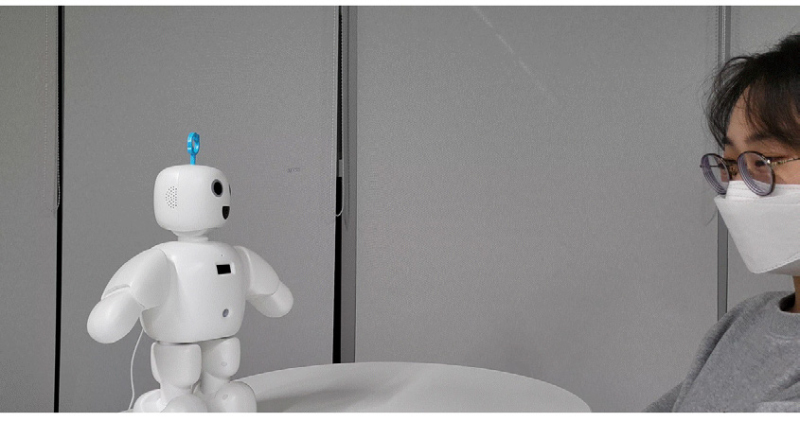
Simulation video of play and conversation scenarios
The experts concluded that the play and conversation scenarios were suitable for preschoolers and would contribute positively to their social development. They emphasized that as social development relies on interaction, it is essential for the robot to recognize children’s emotions and encourage them to understand the emotions of others by asking about the robot’s feelings. Regarding play scenarios, they suggested incorporating high-tone praise to boost children’s concentration and maintain their interest, while also ensuring that the robot’s voice tone varies according to the content of the conversation. For conversation scenarios, the experts recommended creating situations where children could express their emotions, advising the use of simple questions like “who?”, “what?”, and “how?” rather than more complex questions such as “why?”. Additionally, since preschoolers often respond with “I don’t know,” they suggested ensuring that appropriate feedback is given in these cases. To enhance the engagement of children with ASD, the experts recommended incorporating unexpected interactions to maintain their interest, such as having the robot react to specific actions or make intentional mistakes.
Five preschoolers aged 4–6 years were observed performing two play and two conversation scenarios on May 8, 2022. The observations were conducted using revised scenarios that reflected the experts’ advice. The observations aimed to verify whether the participants engaged in the play and conversation with Pibo as intended and to identify any issues that emerge during the process.The observations were based on the items outlined in Table 3, and the actual setup is depicted in Figure 2.
Observation items
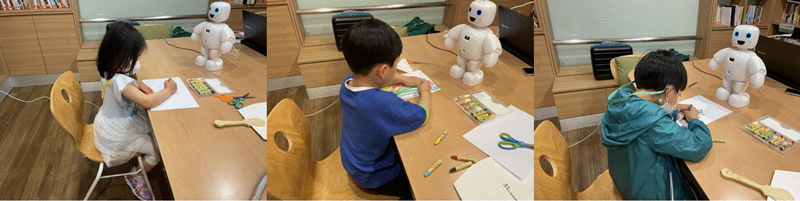
Observation setup
The observational study revealed that most of the children understood Pibo’s explanations and completed the activities as intended. However, younger children sometimes struggled with understanding the explanations due to the speed or unnatural tone of Pibo’s speech. They required additional support and encouragement when performing challenging activities. The children provided appropriate responses during the conversation scenarios. Active children were particularly eager to initiate conversations with Pibo and expressed their feelings in detail. They interacted with Pibo while maintaining eye contact, and, with few exceptions, avoided touching the robot. The children were fascinated by the changing colors of Pibo’s eyes and the images displayed on its screen. However, some children noticed that Pibo did not always appear to be looking directly at them during interactions.
4. 3. Examples of play and conversation scenarios
All 50 play scenarios and 70 conversation scenarios were revised by incorporating expert advice and observational findings to develop the final versions. The final versions of the play scenario example “dancing ghost” and the conversation scenario example “a magical being” are shown in Tables 4 and 5, respectively.
Play scenario example “dancing ghost”
Conversation scenario example “a magical being”
4. 4. Experiment
The experiment was conducted from July 20 to October 24, 2023, involving 50 households with preschoolers aged 4–6 years and their parents. This study received approval from the Institutional Review Board (IRB). Prior to the experiment, parents completed the Social Communication Questionnaire (SCQ) to assess their children’s sociability. The SCQ is a tool in which parents respond to 40 items to evaluate the communication skills and social functioning of children who may have ASD. According to the SCQ, a score of less than 10 points corresponds to typically developing children. A score between 10 and less than 15 points indicates a child who may require observation for potential ASD, while a score of 15 points or higher suggests a high likelihood of ASD. Based on their responses, the children were categorized into three groups: high sociability (0 to less than 10 points), middle sociability (10 to less than 15 points), and low sociability (15 points or more) (Berument et al., 1999).
The test was conducted in the children’s playroom or living room, both familiar and comfortable spaces for them. The parents participated in and observed all the activities alongside their children and the social robot. Parents were provided with instructions on how to install and operate Pibo, as well as guidelines for the activities, and monitored the daily progress of the experiment. To enhance the children’s engagement with the social robot, a video introducing Pibo’s appearance and functions was shown to the children before the experiment, in line with previous research suggesting that such exposure fosters a stronger personal connection (Chung, 2023). After watching the introduction video shown in Figure 3, the children engaged in 30-minute daily play and conversation sessions with Pibo over a four-day period, with all conversations between the children and Pibo recorded as text data. To support the child in interacting naturally with Pibo, no cameras were installed for video recording. Instead, Pibo recognized all conversations through voice and converted them into text. The text data were later used for analyzing the interactions between the child and the robot.

Introduction video of Pibo
Following each session, Pibo solicited feedback from the children regarding their satisfaction with the activities, which was quantified on a 5-point scale (5 for positive responses, 3 for neutral, and 1 for negative). After the completion of all four days, parents were asked to rate their satisfaction with the activities using a 5-point Likert scale and were encouraged to provide open-ended feedback on their child’s activities with Pibo. The experimental setup is depicted in Figure 4.
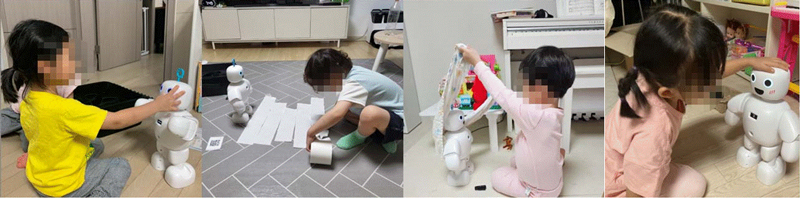
Experimental setup
4. 5. Data analysis
An expert evaluation of the text data between the children and Pibo was conducted from November 24 to December 3, 2023. Data preprocessing, including disfluency removal, was performed on the recorded conversation data in Pibo. The preprocessed text data from all the conversations over a four-day period between the 50 children and Pibo were delivered to the experts, and their responses to the evaluation questions were collected in writing, with additional inquiries clarified through oral communication. The experts who participated in this evaluation included the same pediatric psychiatrists who had been involved in the scenario validation, as well as a teacher specializing in children with low sociability at a psychomotricity-based child development center. The expert profiles are provided in Table 6, and the expert evaluation survey, which focused on developmental support and differences among groups, is outlined in Table 7.
Expert profiles
Questionnaire for expert evaluation
The satisfaction levels of both the children and parents with the robot activities were analyzed using an ANOVA test with SPSS Statistics 27. The interview data on the parents’ satisfaction with the experiment were analyzed using thematic analysis. First, the interview transcripts were created, and recurring concepts were open-coded through repeated examination. Subsequently, similar codes were grouped to derive key themes. After that, patterns were analyzed by including quantitative information on how frequently specific themes appeared.
5. Results
50 preschoolers who participated in the experiment were classified into three groups based on their sociability: high sociability, middle sociability, and low sociability, according to the results of their responses. Out of a maximum score of 40, the lowest score among the children who participated in the experiment was 0, and the highest score was 23. The profiles of the participants are listed in Table 8.
Participant profiles
5. 1. Research Question 1
The experts noted that the preschoolers participating in the experiment seemed to perceive the robot as a friendly, novel object. However, they emphasized that for the robot to be experienced as a representation of a human, it is crucial for the robot to recognize and communicate emotions, which remains challenging at present. The experts noted that while the children found the robot engaging, the robot’s inability to facilitate two-way communication limited its capacity to be perceived as human-like.
“It seems that children feel comfortable talking to the robot as if it were a friend.” (E1)
“Considering the developmental stage of the children, the interaction appears natural. It’s clear that young children view the robot as a novel object. However, for the robot to be experienced as a representation of a specific person or real object, it must be able to recognize and communicate emotions, which is difficult to achieve.” (E2)
The experts also noted that while children expressed their feelings appropriately, they do so by projecting emotions onto the robot, a process similar to how they use dolls, toys, or pictures for emotional development. Positive emotional development occurs when the robot both recognizes and co-regulates the children’s feelings, but since this process is not yet naturally integrated into the robot’s capabilities, there are limitations to its developmental support role.
“The questions are not overly difficult and do not require the children to express deep emotions. Given the children’s ages, they seem to be expressing their feelings appropriately.” (E1)
“Children often learn and develop their emotions by projecting them onto inanimate objects. The anonymity of the robot—its lack of verbal responses—plays a key role in this process. If children were to perceive the robot as a realistic object and express their emotions to it, the absence of a natural response from the robot could actually hinder their emotional development.” (E2)
“Children with low sociability, who tend to be shy or have difficulty expressing themselves to people, seem more confident when talking to the robot. While it may be difficult to engage in deep conversations, the robot appears to facilitate the expression of their thoughts and feelings.” (E3)
The experts agreed that evaluating a child’s social and emotional development solely based on conversations with the robot, using the current scenarios, was inadequate. The experts said that the questions were not sufficiently tailored to the different sociability levels of the children, making it difficult to distinguish between the social development of children with high or low sociability. They also cautioned that children’s responses should be interpreted in the context of their individual conditions and situations, as relying solely on robotic interactions for development assessment is problematic. It was recommended that a child’s development be evaluated based on their interactions with other people rather than with the robot.
“These questions are not distinct enough to differentiate children with high or low sociability. While qualitative judgments may be possible when the child’s response differs from that of a highly sociable child, making a quantitative judgment based on the current questions seems difficult.” (E1)
“Judging a child’s emotional state based solely on the conversation with a robot is challenging. For instance, a child who says, ‘If I were a tiger, I would kill him,’ could be expressing aggression or imagination, depending on context. Evaluating this response without considering the child’s emotional state or the situation would be inadequate.” (E2)
The experts agreed that social robots would likely be more beneficial for children with low sociability than for those with high or middle sociability. Children with low sociability, who tend to avoid close human interactions, may feel more comfortable engaging with social robots and may be more inclined to interact with them. In contrast, children with high sociability, who expect richer, more dynamic interactions, might experience a decline in engagement with social robots.
“I think this social robot will be more helpful to children with low sociability. It might be useful to create scenarios that can support the social development of these children.” (E1)
“Children with high sociability, who have developed healthy relationships, may experience a decline in their interactions with the social robot, as they tend to expect more interactive exchanges. On the other hand, children who have difficulties with emotional expression or who are avoidant may find the robot more engaging.” (E2)
“Children with low sociability might find it easier to interact with robots because emotions are not transferred in the same way they are in human interactions. Robots provide a safe space for children to express emotions, which could ultimately help improve their ability to communicate with people.” (E3)
The experts recommended improvements in three key areas for enhancing the role of social robots in preschooler’s social development. First, the robot’s content should be tailored to the child’s level of social development. For children with low sociability, simple questions would suffice, while more in-depth questions would be appropriate for children with high sociability. Second, the content should be child-driven, as preschoolers tend to engage in egocentric thinking. Scenarios where the child leads and the robot responds would encourage longer and more engaging interactions. Third, the robot should be used as a medium to promote interaction with other people, with a focus on encouraging children to interact with adults, as this would be beneficial for all children, regardless of sociability level.
“For children in the high sociability group, more open-ended questions that allow them to express their thoughts in greater depth should be included.” (E1)
“Children aged 5-6 typically engage in egocentric thinking and symbolic play. If the robot leads the interaction, children may engage initially but may struggle to maintain long-term interaction. Scenarios where the child leads the play, and the robot responds, would be more effective.” (E2)
“If the robot is used to encourage interactions with adults around the child, rather than just solitary interactions with the robot, it would be beneficial for all children, regardless of their sociability level.” (E2)
5. 2. Research Question 2
The difference in children’s satisfaction based on variations in sociability was analyzed. No significant differences were found in satisfaction levels among children with high sociability (M = 4.10, SD = 0.66), children with middle sociability (M = 3.85, SD = 0.52), and children with low sociability (M = 3.93, SD = 0.78). Similarly, no significant differences were observed in the satisfaction levels of parents of children with high sociability (M = 3.33, SD = 0.81), parents of children with middle sociability (M = 3.46, SD = 0.50), and parents of children with low sociability (M = 3.79, SD = 1.50). The results of the ANOVA analyses are presented in Tables 8, 9, and 10.
Average and standard deviation of groups of children
Test of homogeneity of variances of children’s satisfaction and parents’ satisfaction
Anova of children’s satisfaction and parents’ satisfaction
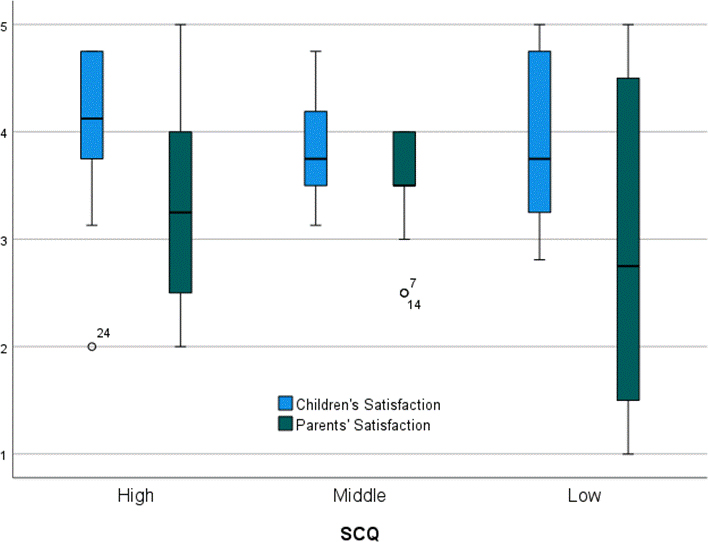
Satisfaction of children with high, middle and low sociability and their parents
Parents’ opinions on the four-day activity exhibited both commonalities and differences based on the sociability level of their children. Common opinions among parents included the following:
First, 19 parents (38%) out of 50 appreciated the diversity of the play activities, noting that the level of play was appropriate for their child’s age.
“I think the content and structure of the play were very rich.”
“The level of play was appropriate for the child’s age, and the play method was interesting and easy for the child to participate in.”
Second, 13 parents (26%) out of 50 appreciated responding to the child’s answers, empathizing, or offering praise as effective ways to encourage participation.
“I was impressed by the part where the robot listened to the child’s thoughts, responded, and empathized with him. It was like a conversation between friends.”
“I liked that the robot said it was okay when the child answered that he didn’t know.”
Third, 5 parents (10%) out of 50 found that calling the child’s name helped foster a sense of intimacy between the child and the robot.
“Calling the name was the best. The child said it felt like a real friend was calling him.”
“It was good that the child’s name was continuously called during the activities.”
Fourth, 30 parents (60%) out of 50 evaluated the interaction between the child and the robot negatively, citing that it was not always smooth. Among them, 20 parents (67%) expressed dissatisfaction with the robot’s interaction due to technical issues, such as voice recognition and response speed, while 13 parents (43%) were dissatisfied with the robot’s inability to provide more natural and flexible responses to the children’s reactions.
“It is not satisfying that the interaction was not smooth. The child’s voice is not recognized properly, or the response is too slow.”
“The conversation was not smooth because only fixed answers were given.”
15 parents of children with high sociability (58%) out of 26 expressed the opinion that the playtime should have been longer and that more specific, detailed responses to the child’s answers should have been provided.
“The play activities were more diverse than expected, which was good, but the time was too short.”
“It was unfortunate that there were no detailed responses to the child’s answers, but rather stereotyped responses.”
8 parents of children with middle sociability (57%) out of 14 suggested that a more tailored, flexible approach would have been beneficial, rather than a standardized one-size-fits-all structure.
“The child became more familiar after adjusting, so the child participated in the activity better on the last day than the first day.”
“It feels like one-sided progress, which is disappointing.”
Lastly, 3 parents of children with low sociability (30%) out of 10 observed that children felt more comfortable interacting with the robot than with humans and suggested that the robot program should be adapted to the child’s developmental level.
“My child seemed interested in answering the robot and responded more actively than he did to me.”
“I was satisfied because it provided the situation and conversation that the child needed.”
“I was surprised that the child told the robot a detailed story about school that he had never told me.”
“It was difficult for my child, who could not answer right away, to follow along. It seems that a program suitable for the child’s level needs to be developed.”
6. Discussion
This study explored the interactions between preschoolers aged 4–6 years and a social robot, focusing on evaluating its effectiveness in supporting children’s social and emotional development, as well as the satisfaction of both children and their parents with social robot activities. The experiment involved a diverse sample of children with varying levels of sociability, and expert evaluations provided insights into the effectiveness and limitations of using social robots for social and emotional development in early childhood contexts.
The findings from the expert feedback revealed several key insights. First, while children generally perceived the social robot as a friendly and engaging entity, as observed in previous studies (Melson et al., 2009; Kim et al., 2018), the robot’s current limitations in two-way communication hindered the full potential of human-like interactions. Experts noted that while the children felt comfortable interacting with the robot and expressed their feelings in a seemingly appropriate manner, the robot’s inability to recognize and co-regulate emotions limited its support for deeper social and emotional development. Children benefit from feedback that is reciprocal and nuanced, as it encourages emotional co-regulation, which is a crucial component of social learning.
The study found no significant differences in satisfaction levels among children with high, medium, or low sociability, though parents noted various challenges and benefits. Children with low sociability, who often struggle with human interactions, appeared to benefit more from engaging with the robot. They were observed to express themselves more confidently and actively when interacting with the robot compared to their interactions with people. These parental responses aligned with experts’ opinions that the social robot was more effective for children with lower sociability. Conversely, children with high sociability seemed to expect more complex and meaningful exchanges, which the robot could not fully provide, leading to some dissatisfaction among these children and their parents. This suggests that, as observed in previous studies, social robots may be particularly effective in engaging children who are shy or socially avoidant but may require more advanced features to sustain the interest of highly sociable children (Dautenhahn & Billard, 2002; Scassellati, Admoni, & Mataric, 2012). Parental feedback further highlighted both the strengths and limitations of the activities. Parents appreciated features such as personalized interactions, age-appropriate play content, and the robot’s ability to listen, empathize, and offer encouragement. However, they also pointed out the need for smoother and more spontaneous interactions.
This study provides essential insights that must be considered when developing social robots for social and emotional development in early childhood contexts. These include the need for scenario differentiation based on a child’s level of sociability, child-led interaction models, the integration of social robots as tools to enhance interactions between children and others, active empathy toward children’s speech and behavior, and personalized interactions. These insights underscore the importance of tailoring social robot interventions to meet individual developmental needs and fostering connections beyond the robot itself.
7. Conclusion
This study highlights both the promise and the limitations of using social robots to support the social and emotional development of preschoolers. While the robot’s design and functionality facilitate engagement and emotional expression, particularly for children with lower sociability, the absence of sophisticated emotional recognition and adaptive communication features limits the depth of these interactions. The study underscores the need for continuous improvement in robot capabilities, such as emotion recognition and contextually appropriate responses, to better support children’s developmental needs.
This study holds both academic and practical significance in the fields of early childhood development and human-robot interaction. Academically, it contributes to the growing body of research exploring how social robots can serve as tools for children’s social and emotional learning. It provides empirical evidence on how preschoolers interact with robots differently based on their sociability levels and highlights the complexities involved in creating engaging, human-like experiences. Practically, this study has important implications for early childhood education and therapy. Social robots could serve as valuable tools for educators and therapists, helping to create engaging and inclusive learning environments. For children with developmental challenges or social anxiety, social robots can provide non-judgmental and consistent interaction experiences. The study also underscores the importance of personalized interactions, such as tone of speech, terms of address, and voice, to enhance engagement between social robots and children. Additionally, it highlights the need for responses that foster encouragement and empathy, which may sometimes be lacking in human interactions. These findings offer practical insights for social robot designers and developers working on robots for children.
Despite its contributions, this study has several limitations that must be acknowledged. First, the study’s sample size, consisting of 50 preschoolers, while meaningful, may not be sufficient to generalize the findings broadly. Future studies with larger samples could offer deeper insights into the effectiveness and adaptability of social robots. Second, the relatively short duration of the experiment may limit the ability to observe long-term effects and changes in children’s social and emotional development. A longer-term study would be necessary to better understand how sustained interaction with a social robot influences children’s developmental outcomes over time. Third, the reliance on expert and parental feedback, while valuable, introduces a level of subjectivity in evaluating the effectiveness of the robotmediated activities. Objective measures of children’s social and emotional development, such as behavioral observations or standardized assessments, were limited in this study. Future research could incorporate more comprehensive assessment tools to provide a more objective evaluation of the robot’s impact.
Future research should explore ways to enhance the robot’s interactive features, create more tailored content based on individual sociability profiles, and investigate the long-term impact of robot-mediated activities on social and emotional development. Additionally, integrating social robots as mediators to promote human interaction, rather than as standalone engagement tools, could maximize their developmental benefits. Overall, while social robots hold significant potential in early childhood education, thoughtful design and continuous refinement are essential to optimize their role in fostering social and emotional growth.
Acknowledgments
This work was supported by the Industrial Fundamental Technology Development Program (20023495, Development of behaviororiented HRI AI technology for long-term interaction between service robots and users) funded By the Ministry of Trade, Industry and Energy (MOTIE, Korea).
Notes
Copyright : This is an Open Access article distributed under the terms of the Creative Commons Attribution Non-Commercial License (http://creativecommons.org/licenses/by-nc/3.0/), which permits unrestricted educational and non-commercial use, provided the original work is properly cited.
References
-
American Psychiatric Association (APA). (2013). Diagnostic and Statistical Manual of Mental Disorders (DSM-V). Washington DC.: American Psychiatric Publishing.
[https://doi.org/10.1176/appi.books.9780890425596]

- An, J. S., & Nam, K. W. (2023). The Experience and Meaning of Robot Play in Young Children linked to Picture Books. The Journal of the Convergence on Culture Technology, 9(5), 311-317.
- Annual Meeting of the Australian Association for Research in Education in Institute of Early Childhood Macquarie University; Sydney, Australia.
- Bae, M. J. (2013). A Study on the Effects of a Robot-Based Play Intervention Program on the Play Behaviors of Young Children with Autism Spectrum Disorder (Doctoral dissertation). Available from Daegu University Library.
-
Berument, S. K., Rutter, M., Lord, C., Pickles, A., & Bailey, A. (1999). Autism screening questionnaire: diagnostic validity. British Journal of Psychiatry, 175, 444-451.
[https://doi.org/10.1192/bjp.175.5.444]
-
Bornstein, M. H., Hahn C., & Haynes, O. M. (2010). Social competence, externalizing, and internalizing behavioral adjustment from early childhood through early adolescence: developmental cascades. Dev Psychopathol, 22(4), 717-735.
[https://doi.org/10.1017/S0954579410000416]
- Choi, E. Y. (2015). Literature Review of Robots Used for the Rehabilitation of Children with Autistic Spectrum Disorder. Journal of rehabilitation welfare engineering & assistive technology, 9(4), 265-273.
-
Chung, J. H. (2023, Aug. 28-31). Rapport Formation between Children and a Social Robot through the Identity of a Social Robot. Proceedings of the 32nd IEEE International Conference on Robot and Human Interactive Communication (RO-MAN); Busan, Korea.
[https://doi.org/10.1109/RO-MAN57019.2023.10309511]
-
Colizzi, M., Sironi, E., Antonini, F., Ciceri, M. L., Bovo, C., & Zoccante, L. (2020). Psychosocial and behavioral impact of COVID-19 in autism spectrum disorder: an online parent survey. Brain Sci. 10(6), 341.
[https://doi.org/10.3390/brainsci10060341]
-
Crockenberg, S., Jackson, S., & Langrock, A. M. (1996). Autonomy and goal attainment: Parenting, gender, and children's social competence. New Directions for Child and Adolescent Development, 1996(73), 41-55.
[https://doi.org/10.1002/cd.23219967305]
- Keates, S., Langdon, P., Clarkson, P. J., & Robinson, P. (Eds.). (2013). Universal access and assistive technology. Proceedings of the Cambridge workshop on UA and AT'02. Springer Science & Business Media.
-
Diehl, J. J., Schmitt, L. M., Villano, C. R., & Crowell, C. R. (2012). The clinical use of robots for individuals with autism spectrum disorders: a critical review. Research in Autism Spectrum Disorders, 6(1), 249-262.
[https://doi.org/10.1016/j.rasd.2011.05.006]
-
Dijkstra-de Neijs, L., Tisseur, C., Kluwen, L. A., van Berckelaer-Onnes, I. A., Swabb, H., & Ester, W. A. (2023). Effectivity of Play-Based Interventions in Children with Autism Spectrum Disorder and Their Parents: A Systematic Review. Journal of Autism and Developmental Disorders, 53, 1588-1617.
[https://doi.org/10.1007/s10803-021-05357-2]
-
Duan, L., Shao, X., Wang, Y., Huang, Y., Miao, J., Yang, X., & Zhu, G. (2020). An investigation of mental health status of children and adolescents in china during the outbreak of COVID-19. Journal of affective disorders, 275, 112-118.
[https://doi.org/10.1016/j.jad.2020.06.029]
-
Emde, R. N. (1998). Early emotional development: new modes of thinking for research and intervention. Pediatrics, 102(5), 1236-43.
[https://doi.org/10.1542/peds.102.SE1.1236]
- Fisher, E. P. (1992). The impact of play on development: A meta-analysis. Play & Culture, 5(2), 159-181.
- Fosnot, C. T. (2005). Constructivism: Theory, Perspectives, and Practice. New York: Teachers College Press.
-
Freitas, H., Costa, P., Silva, V., Silva Pereira, A., Soares, F., & Esteves, J. S. (2017). Using a humanoid robot as the promoter of the interaction with children in the context of educational games. International Journal of Mechatronics and Applied Mechanics, (1), 282-288.
[https://doi.org/10.17683/ijomam.issue1.45]
-
Ghafouri, F., & Wien, C. A. (2005). 'Give us a privacy': Play and social literacy in young children. Journal of Research in Childhood Education, 19(4), 279-291.
[https://doi.org/10.1080/02568540509595071]
-
Guralnick, M. J. (1993). Developmentally appropriate practice in the assessment and intervention of children's peer relations. Topics in Early Childhood Special Education, 13(3), 344-371.
[https://doi.org/10.1177/027112149301300310]
-
Harris, P. L. (1996). Desires, beliefs and language. In: Carruthers, P., Smith, P. K. Theories of theories of mind. Cambridge: Cambridge University Press, 200-220.
[https://doi.org/10.1177/027112149301300310]
-
Jones, D. E., Greenberg, M., & Crowley, M. (2015). Early social-emotional functioning and public health: The relationship between kindergarten social competence and future wellness. American journal of public health, 105(11), 2283-2290.
[https://doi.org/10.2105/AJPH.2015.302630]
-
Kim, E. S., Berkovits, L. D., Bernier E. P., Leyzberg, D., Shic, F., Paul, R., & Scassellati, B. (2013). Social Robots as Embedded Reinforcers of Social Behavior in Children with Autism. Journal of Autism and Developmental Disord, 43, 1038-1049.
[https://doi.org/10.1007/s10803-012-1645-2]
- Kim, Y., Marx, S., Ngoc H. P., & Nguyen, T. (2018, July) Designing technology as a cultural broker for young children: Challenges and opportunities. In: Kay, J., Luckin, R. Proceedings of the 13th International Conference of the Learning Sciences (ICLS). London, UK: International Society of the Learning Sciences, 88-95.
-
Kim, Y., & Tscholl, M. (2021). Young children's embodied interactions with a social robot. Educational Technology Research and Development, 69, 2059-2081. doi.:10.1007/s11423-021-09978-3.
[https://doi.org/10.1007/s11423-021-09978-3]
- Kiphard, E. J. (1989). Psychomotorik in Praxis und Theorie. Gütersloh: Flöttmann.
- Kostelnik, M., Soderman, A., Whiren, A., & Rupiper, M. L. (2018). Guiding Children's Social Development and Learning: Theory and Skills. Boston: Cengage Learning.
- Ladd, G. W., Price, J. M., & Hart, C. H. (1990). Preschoolers' behavioral orientations and patterns of peer contact: Predictive of peer status? In S. R. Asher & J. D. Coie (Eds.), Peer rejection in childhood, Cambridge University Press, 90, 115.
- Lee, H. J., & Han, M. K. (2015). The effects of 12 weeks psychomotorik program on problem behaviors of students with autism spectrum disorders. Journal of mental retardation, 17(1), 389-410.
-
Melson, G. F., Kahn, P. H., Beck, A., Friedman, B. Roberts, T., Garrett, E., & Gill, B. T. (2009). Children's behavior toward and understanding of robotic and living dogs. Journal of Applied Developmental Psychology, 30(2), 92-102.
[https://doi.org/10.1016/j.appdev.2008.10.011]
- Ministry of Education, Ministry of Health and Welfare. (2019). Revised Nuri-Curriculum. Seoul: MOE & MOHW.
-
Moffitt, T. E., Arseneault, L., Belsky, D., Dickson, N., Hancox, R. J., Harrington, H., ... & Caspi, A. (2011). A gradient of childhood self-control predicts health, wealth, and public safety. Proceedings of the national Academy of Sciences, 108(7), 2693-2698.
[https://doi.org/10.1073/pnas.1010076108]
-
Nature Machine Intelligence (2023). What's the next word in large language models? Nat. Mach. Intell., 5, 331-332.
[https://doi.org/10.1038/s42256-023-00655-z]
- Olsen, A. E., & Sumsion, J. (2000, Dec. 4-7). Early Childhood Teacher Practices Regarding the Use of Dramatic Play in K-2 Classrooms.
-
Parten, M. B. (1932). Social participation among pre-school children. The Journal of Abnormal and Social Psychology, 27(3), 243-269.
[https://doi.org/10.1037/h0074524]
-
Pettit, G. S., Dodge, K. A., & Brown, M. M. (1988). Early family experience, social problem solving patterns, and children's social competence. Child Development, 59(1), 107-120.
[https://doi.org/10.2307/1130393]
-
Pop, C. A., Simut, R. E., Pintea, S., & Saldien, J. (2013). Social Robots vs. Computer Display: Does the Way Social Stories are Delivered Make a Difference for Their Effectiveness on ASD Children? Journal of Educational Computing Research, 49(3), 381-401.
[https://doi.org/10.2190/EC.49.3.f]
-
Rahele, H. Z. (2013). Factors play in children's cognitive development. Arabian Journal of Business and Management Review, 2(6), 30-32.
[https://doi.org/10.12816/0002281]
-
Rakhymbayeva, N., Amirova, A., & Sandygulova, A. (2021). A long-term engagement with a social robot for autism therapy. Front. Robotics AI, 8, 669972.
[https://doi.org/10.3389/frobt.2021.669972]
-
Scassellati, B., Admoni, H., & Matarić, M. (2012). Robots for use in autism research. Annu. Rev. Biomed. Eng., 14, 275-94.
[https://doi.org/10.1146/annurev-bioeng-071811-150036]
-
Shala, M. (2013). The Impact of Preschool Social-Emotional Development on Academic Success of Elementary School Students. Psychology, 4(11), 787-791.
[https://doi.org/10.4236/psych.2013.411112]
-
Skidmore, D., & Murakami, K. (2012). Claiming our own space: Polyphony in teacher-student dialogue. Linguistics and Education, 23(2), 200-210.
[https://doi.org/10.1016/j.linged.2012.02.003]
-
Stepien, W. J., Gallagher, S. A., & Workman, D. (1993). Problem-based learning for traditional and interdisciplinary classrooms. Journal for the Education of the Gifted, 16(4), 338-357.
[https://doi.org/10.1177/016235329301600402]
-
Tamblyn, A., Skouteris, H., North, A., Sun, Y., May, T., Swart, E., Godsman, N., & Blewitt, C. (2023). Physical and sensory environment interventions to support children's social and emotional development in early childhood education and care settings: a systematic review. Early Child Development and Care, 193(5), 708-724.
[https://doi.org/10.1080/03004430.2022.2152017]
- The Korean Society for Early Childhood Education. (1996). Dictionary of Early Childhood Education. Seoul: Korea Dictionary Research Publishing.
-
Tielman, M., Neerincx, M., Meyer, J. J., & Looije, R. (2014, March). Adaptive emotional expression in robot-child interaction. In Proceedings of the 2014 ACM/IEEE international conference on Human-robot interaction (pp. 407-414).
[https://doi.org/10.1145/2559636.2559663]
-
Vanderborght, B., Simut, R., Saldien, J., & Pop, C. A. (2012). Using the social robot Probo as a social story telling agent for children with ASD. Interaction Studies: Social Behaviour and Communication in Biological and Artificial Systems, 13(3), 348-372.
[https://doi.org/10.1075/is.13.3.02van]
-
Visser-Bochane, M. I., Reijneveld, S. A., Krijnen, W. P., van der Schans, C. P., & Luinge, M. R. (2020). Identifying Milestones in Language Development for Young Children Ages 1 to 6 Years. Acad. Pediatr., 20(3), 421-429.
[https://doi.org/10.1016/j.acap.2019.07.003]
-
Volkmar, F. R., Lord, C., Bailey, A., Schultz, R. T., & Klin, A. (2004) Autism and pervasive developmental disorders. J. Child Psychol. Psychiatry, 45(1), 135-70.
[https://doi.org/10.1046/j.0021-9630.2003.00317.x]
-
Washbrook, E., Propper, C., & Sayal, K. (2013). Pre-school hyperactivity/attention problems and educational outcomes in adolescence: prospective longitudinal study. Br. J. Psychiatry, 203(3), 265-271.
[https://doi.org/10.1192/bjp.bp.112.123562]
-
Xu, X., Wang, Z., Zhang, W., Guo, J., Wei, W., Zhang, M., ... & Li, D. (2024). Behavioral observation and assessment protocol for language and social-emotional development study in children aged 0-6: the Chinese baby connectome project. BMC psychology, 12(1), 533.
[https://doi.org/10.1186/s40359-024-02031-x]
-
Yeasmin, S., Banik, R., Hossain, S., Hossain, M. N., Mahumud, R., Salma, N., & Hossain, M. M. (2020). Impact of COVID-19 pandemic on the mental health of children in Bangladesh: A cross-sectional study. Children and youth services review, 117, 105277.
[https://doi.org/10.1016/j.childyouth.2020.105277]
- Zimmer, R. (1998). Handbuch der Psychomotorik. Freiburg: Herder.